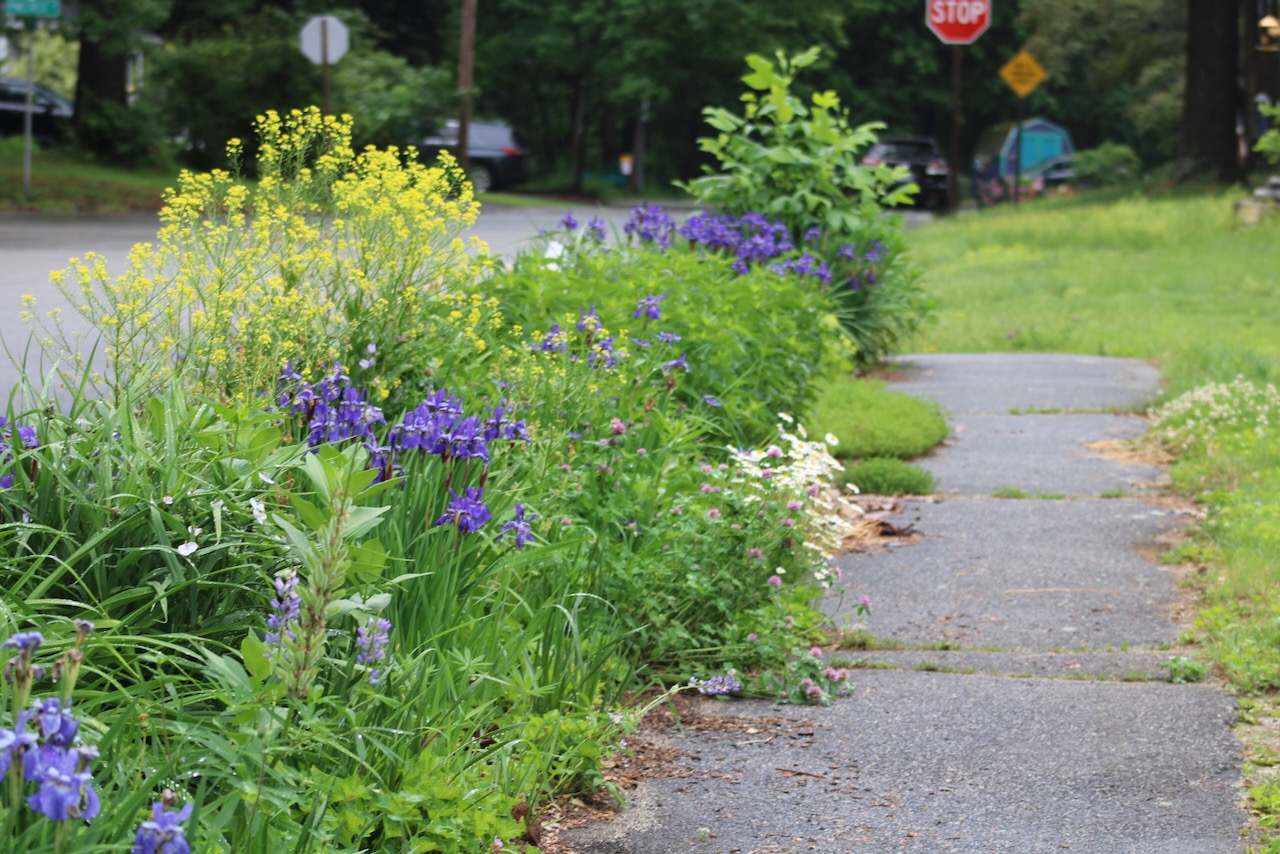
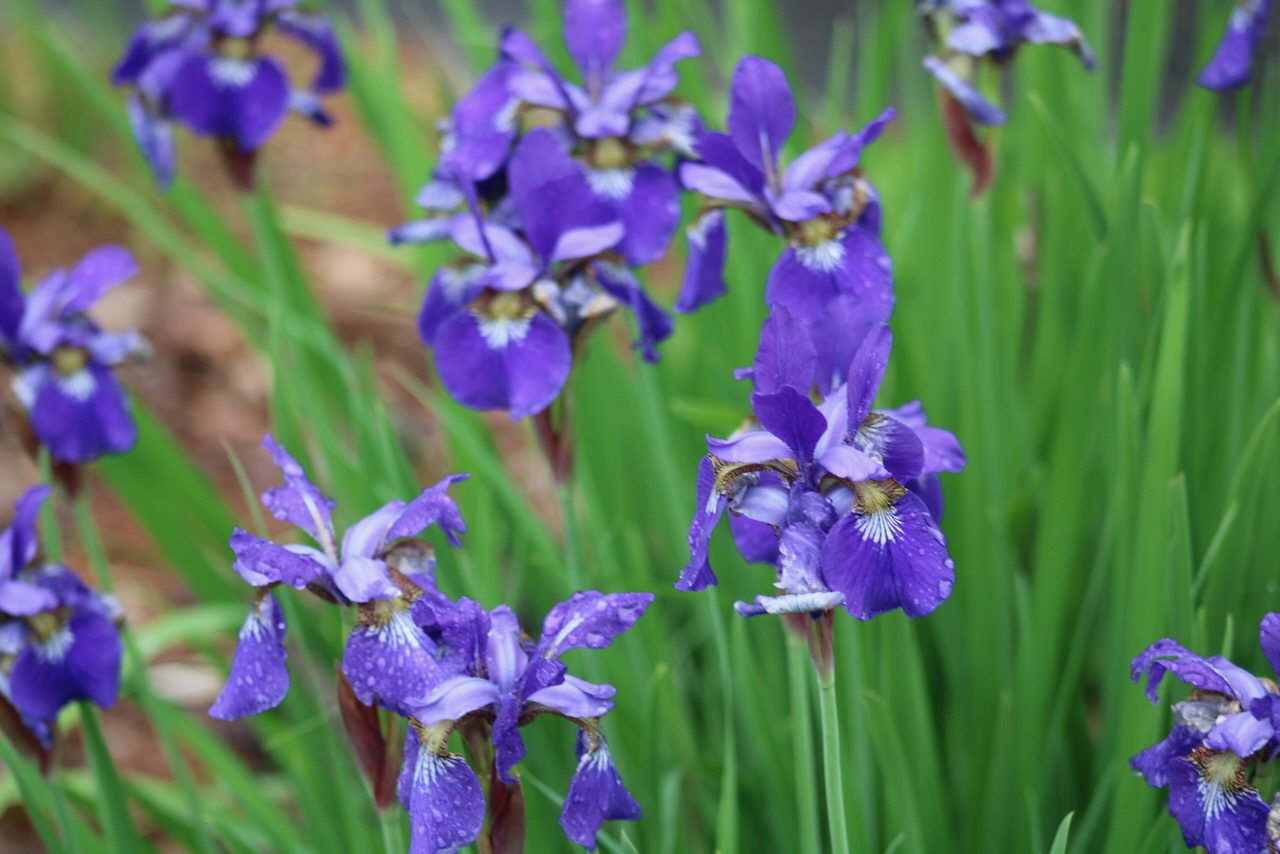
The border I created next to the road is perhaps the most beautiful it has ever been. Right now, Siberian Irises are blooming in their blue-purple glory, set off by the cloud of yellow of the Turkish rocket, volunteer white daisies and a patch of white irises, along with the green of other perennial leaves filling in the gaps. The purple is reflected in 3 patches of Bachelor Buttons/perennial blue cornflowers, and 3 patches of Spiderwort. I just love looking out our front window and seeing this flourishing of my favorite color. Later, there will be a lot of yellow flowers. That was the original theme–yellow and blue/purple hardy perennials. We also encouraged milkweed to seed itself in the in between spaces, hopefully offering nurseries for monarch butterflies.
I’ve been trying to garden this spring, bit by bit, with what energy I can muster. For the roadside border, that just meant some weeding of crabgrass this year. I appreciate plants that take care of themselves and give so much! We also harvested sea kale earlier on, and chives, and asparagus. But something about the state of the world inspired me to plant more vegetables from seed, so now we have kale and carrots in one raised bed, broccoli and beets seedlings in the hugelmound, snap peas and zucchini in one raised bed in the front yard, and beans and yellow zucchini in the other. We also have potato plants in a grow bag on the patio, and cucumbers in a pot on the deck.
What has been harder to plant, I am not sure why, has been the seeds of ideas for writing in this blog. But this week I have been reading a book by Leah Lakshmi Piepzna-Samarasinha, “Care Work: Dreaming Disability Justice.” Perhaps it is her stories of trying to write as a chronically ill queer femme of color, her openness about the ups and downs of activism, creativity, and survival. Perhaps it is the feeling of a community of writers that once upon a time I felt connected to. It is a great book for so many reasons other than those. The kind of book that sparks one to think differently about disability and justice and care. Please do check it out. But for whatever reason, each day when I read a section, I find wisdom for living the life I am living right now.
There is so much that is horrific happening in our world these days. It all feels overwhelming to me. I don’t have the capacity to write about all of that. Perhaps that is part of why I haven’t been able to write here. I can bear witness, I can pray. But it is so overwhelming. Or perhaps I can’t write because of the further diminishment of energy in this chronic but always variable illness that surrounds my living. It seems to rob me of motivation and the urge to create. Perhaps I am not sure of the connection between illness and “the spiritual journey to earth community,” which I defined as the guiding topic of this blog site. Leah Lakshmi’s voice somehow affirms the validity of illness as a topic for writing, for activism, for imagining.
So who knows if I will be able to blog some more, but for some reason, today, between the beauty of the roadside border and the beauty of Care Work, I found some inspiration, and I am grateful for that.
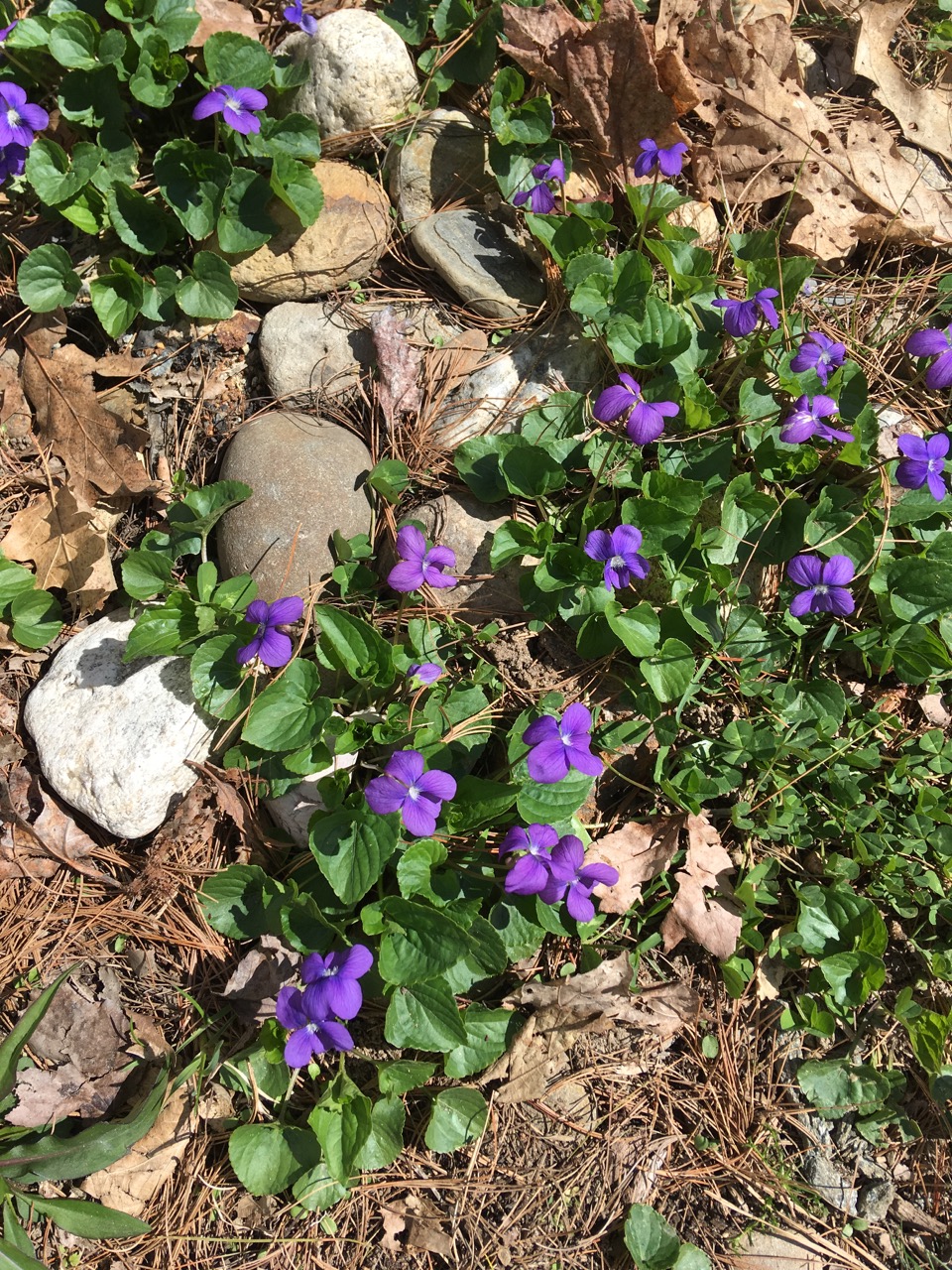 Two years ago, when I found any stones in the asparagus bed I was creating, I threw them over to a place next to the garage, until there was a pile of stones there. Then, later, as I found more stones, I added them to the pile. This spring, the violets decided they loved the microclimate it created. So now this pile of stones has become a beautiful violet rock garden.
