Pond Dig, part 4

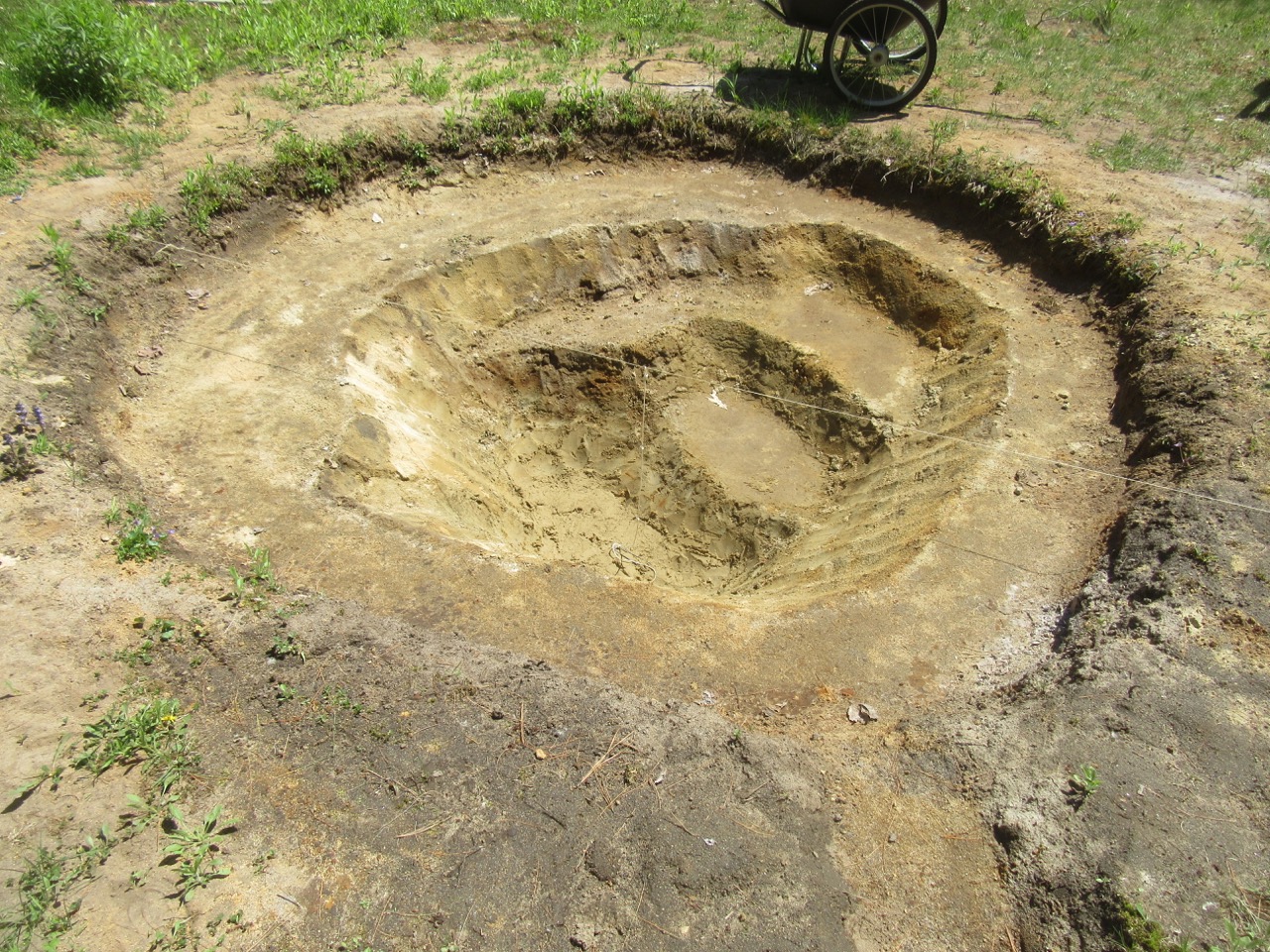
Photo: Pond, fully dug, with four levels and a measuring line across

Hurray! I’ve been back to digging the pond the last couple days, and today I finished the bottom layer! I hit clay soil at about 2 1/2 feet down, and went a little deeper in one spot. For those who were wondering about the water that showed up in the bottom, I learned, after consulting other folks, that it’s probably not really a bit deal. It might possibly lift the liner in the spring a small amount, but on the other hand, the water in the pond might have enough weight to counter that. In any case, over the last several days of not much rain, there is no standing water, though the soil I’ve dug out has been damp.

So I ended up with four levels: first level all around the edge for planting (at about 10 inches down), second for a step, plus another spot to plant pond lilies, third another step down, and fourth the very bottom. The bottom is about 2 ft. 10 inches feet deep, though more like 2 1/2 feet from the top of the water once filled, since there is an overflow channel about 4 inches down from the top. I decided to let the clay soil be my guide for stopping at that depth. The very thin white line you can see across the pond is my measuring-depth-device–a string anchored in the ground at each side, and then another string looped onto it, marked with knots at each foot, and weighted so it hangs down.

It has been a lot of hard work to do the final levels, because each damp shovel-full had to be carried up the steps to the top step to put it in the wheelbarrow. And then, when I wheeled it all to the mound where it was going, I had to shovel it onto the mound. (Eventually I will add compost to the mound, and plant some sort of ground cover.)

Photo: Mound where I put the dirt, to cover old demolition waste, then put cardboard on top, then more pond soil.

The next step will be to cut old carpet into strips, to layer over the ground to keep roots from coming through, and to protect the pond liner. And surprisingly, there were small bittersweet roots all the way down to the bottom level. I have a pile of old carpet that I collected from willing volunteers (via Freecycle and Buy Nothing) last week, that is sitting on the patio, waiting for me.

But for now, I am coming inside to rest, with sore muscles but a happy heart. It has been so satisfying to be digging down into the beautiful earth, imagining a place for water.

Prayer for Pollinators

Peach and two cherry trees

If you’ve been following my work on digging the pond, I will mention that I took a little break, first to find out what to do about the water that has seeped into the bottom, and then because I twisted my ankle on Friday while I was digging. So annoying! My ankle is not so bad–after a couple days of rest, I can hobble around now, and I will be digging again soon.

In the meantime I wanted to share this photo of the flowering peach and cherry trees in our food forest. They flowered a bit earlier this year than last. In the photo, the peach blossoms are pink, and it is hard to see the white cherry blossoms amid their green leaves in the photo. But they are so beautiful! There are more cherry blossoms this year than last, when we got just a few.

However, I’ve been concerned about pollination. Our neighbor keeps honey bee hives, and usually we have lots of her bees visiting over here, drinking nectar and drinking water from our bird baths. But this year, it has been very sparse for bees. I found out that our neighbor’s hives died in a cold snap earlier in the spring and she hasn’t replenished them yet with new bees.

One day, I did see bees of all sizes in the Lapins cherry tree (on the right in the photo), but I didn’t see them in the peach tree. (Not that I sit and stare all day.) But I’ve been doing so much TLC with the trees this year, with Kaolin clay, and holistic foliar sprays. It would be a shame if we didn’t get fruit because of pollination problems. It is too late now to try to hand-pollinate. The other potential glitch is that while the Lapins cherry is self-fertile, the Black Tartarian cherry needs the Lapins to cross-pollinate. They are both sort of blooming now, but the Lapins had peak blooms earlier, and the Black Tartarian has new blooms that just came out yesterday. So we wait and see.

It reminds me of the sad danger to pollinators everywhere because of climate change, environmental pollutants, pesticides, and development. All of our human food is dependent on these little creatures who pollinate the plants. If the bees die, so do the humans.

Today I pray for the pollinators, with gratitude and humility. Part of this prayer is offering to the bees so many other plants in our food forest: daffodils, dandelions, and violets are blooming now; soon we will also have chives, oregano, clover, thyme, and many more. All of us can do more to provide food for bees and other pollinators throughout the season. Only then can they also provide food for us. May this circle of life be blessed.

Pond Dig, part three

I had a helper yesterday for digging the pond. My friend Sylvia came by in the afternoon and the very first thing we did was drag the pond-liner in its box from near the house to back closer to the pond. (You can see it in the picture, behind the wheelbarrow.) That would have been enough help all by itself–so heavy! But then we took turns digging, hauling, and resting nearby. We got a lot done, and also enjoyed a rare COVID-time visit, walking around the yard and in the woods, looking at birds and plants.

Sylvia standing on the planting shelf, while digging in the pond!

So here is what the pond looks like now, in layers. The first layer down, about 8-10 inches, is for the planting layer. The next layer down, maybe 18 inches, is for a step layer–part of that I might take away as we go along, but some will remain to be a step into the pond going forward. In the middle, we dug to about 2 feet down, as measured with this string set-up I created. My aim is to go three feet down in the middle.

Pond layers dug out.

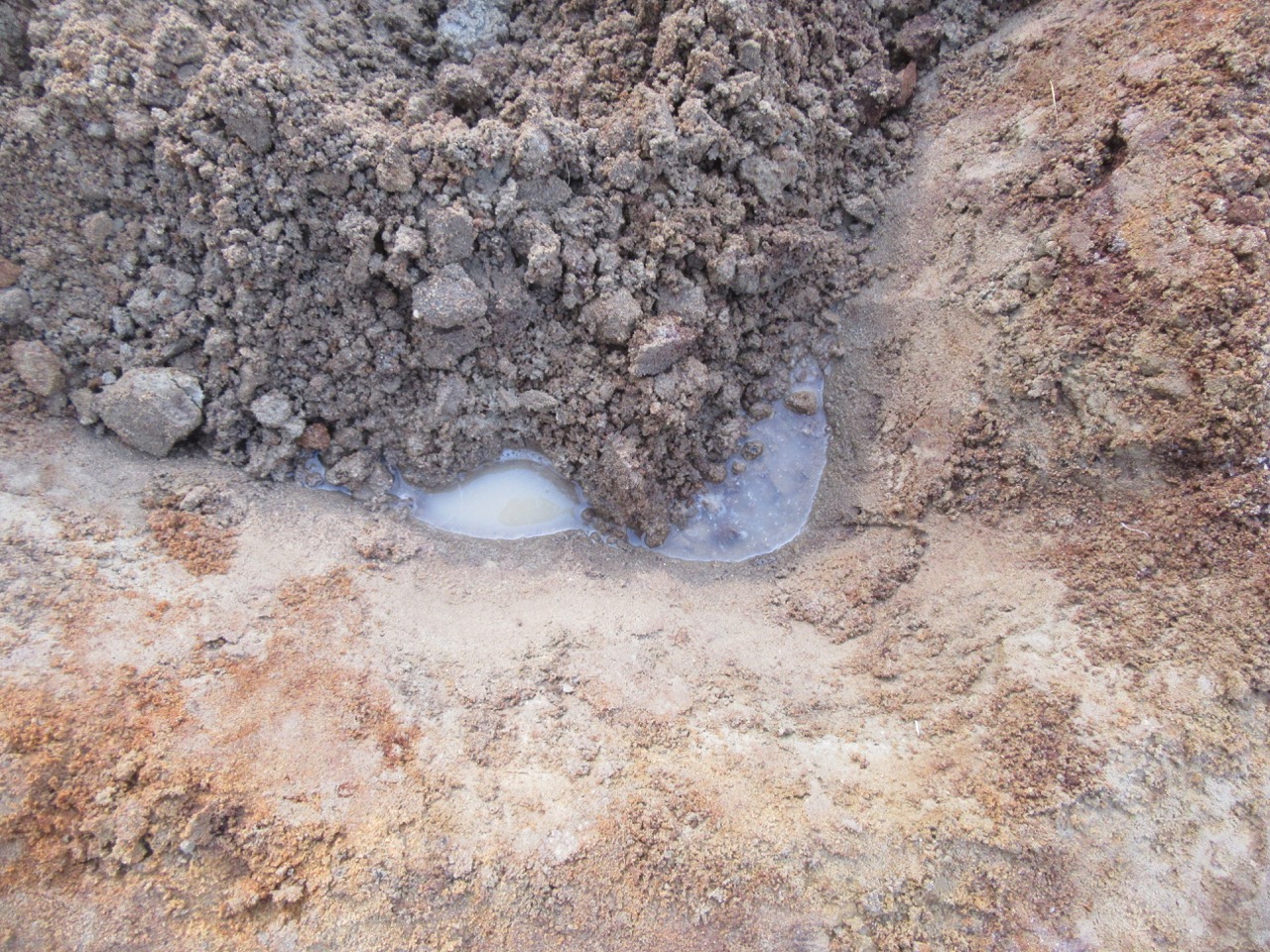
But then we came upon a problem that wasn’t mentioned in the Building Natural Ponds book by Robert Pavlis. Water started to seep up from the sandy soil. We are actually at the time of year when vernal pools abound here in Maine. We have a ditch way back behind the edge of our property and the properties next door that fills during spring rains. And we had an inch of rain last week, though generally it has been a dry winter. Does this mean we can’t go any deeper for a lined pond? Or do we need to wait until it is a bit dryer as the days go by? Will it mess up the pond to have water under the liner at the bottom? Or does it not matter at all? I am going to ask my questions in the Facebook group Building Natural Ponds, and see whether I might find some answers.

Water seeping from the soil in the bottom of the pond.

Maybe the pond just wants to be a pond so badly, that it doesn’t want to wait, lol. Meanwhile, I am going to rest today from digging, and more rain is coming tomorrow. So we will see. If you have any wisdom about this, I’d love to hear from you.

Spring Energy

The first dandelion of the season! We love dandelions and so do the bees.

Wow! It feels like spring is finally here. Last week was a flurry of activity in our yard, and I had the energy to do it! And it was warm and sunny! We had a timeline. On Tuesday, all day I was sifting the remains of the old compost pile, and putting it everywhere–in the new raised bed, on the hugelkultur mound, the asparagus beds, under many of the fruit trees, the old potato patch, and an area near the baby apple trees in which I hope to plant zucchini this year. We have had to sift the compost because roots had worked their way into the pile from the edges, including invasive bittersweet which we do not want to spread around the garden.

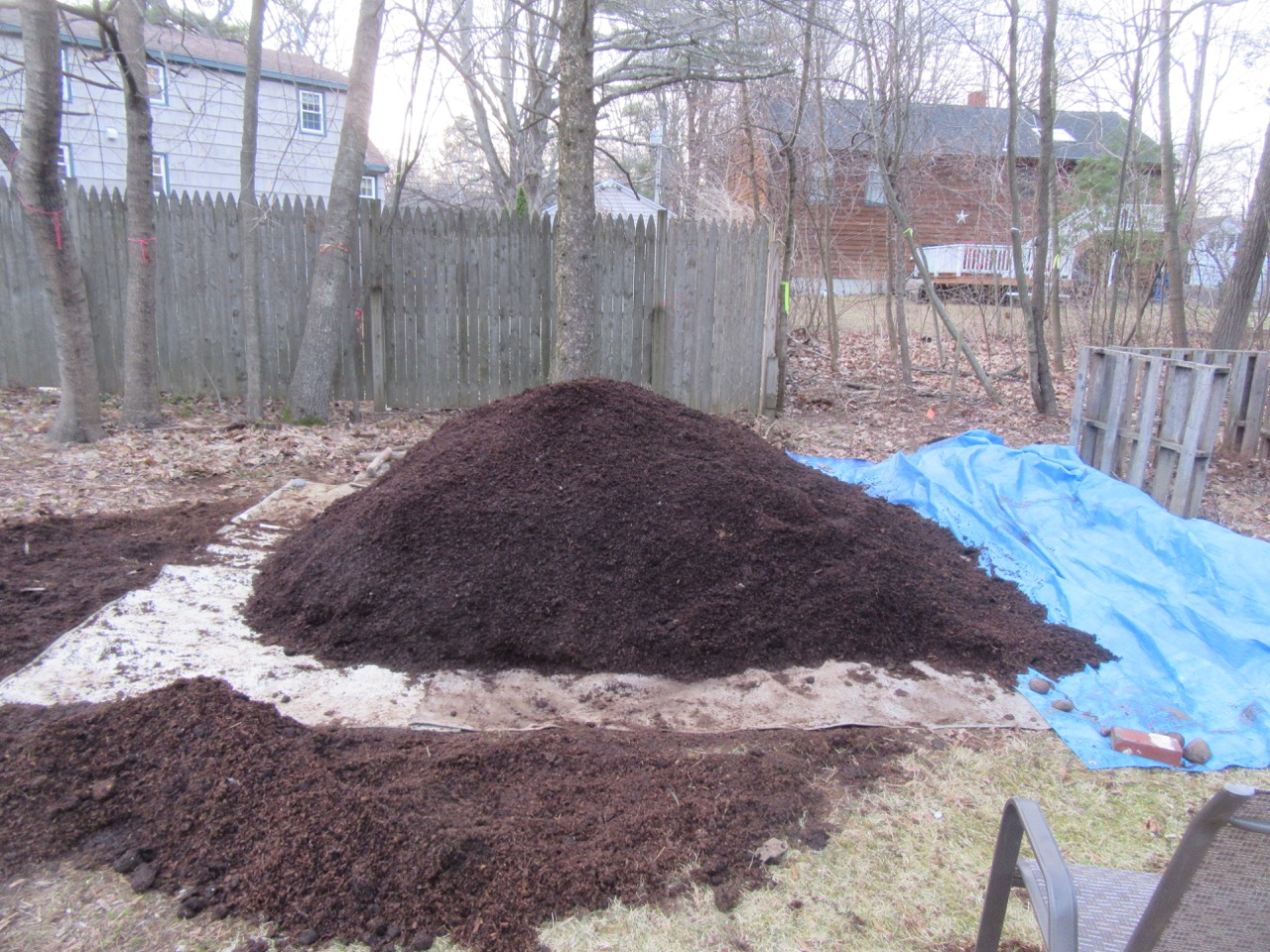
The goal was to completely empty the pile, because on Wednesday we were getting a new four cubic yards of composted manure from Wilshore farm. So I finished up Wednesday morning, and Wednesday afternoon we got our delivery. Then Margy and I were using shovels and rakes the rest of the day to slightly move that pile so it was all situated on top of old carpet, with at least a foot of clearance around the edges–so no more roots.

Composted manure on old carpet.

On Thursday morning, I finished up with what was on the edges, and spread the remains over the nearby grassy areas. On Thursday afternoon, Dan from Blue Ox Tree Service was coming to cut down three Norway maples along the fence between us and our neighbors. While we hate to cut down trees, we also have been trying to remove invasive plants, and Norway maples are invasive here. They grow like crazy and spread their seeds everywhere. Both Margy and I each had a moment with those trees earlier, to apologize for needing to cut them down, and thanking them for the shade they had given, and say goodbye. We let them know that their wood would stay in our yard to benefit the other trees in the garden.

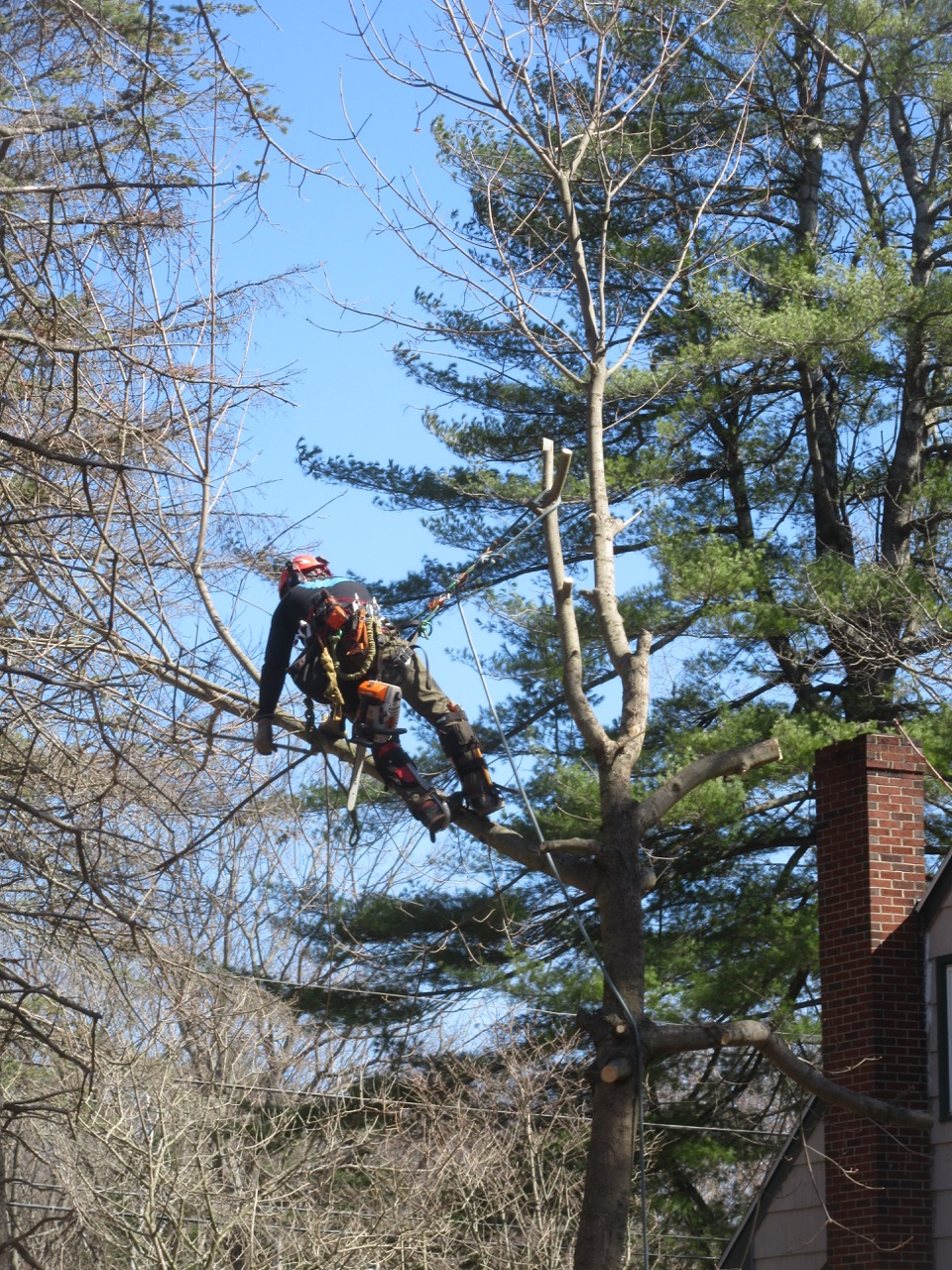
Dan up in the Norway Maple

It was amazing to watch Dan climb the trees and with a system of ropes and pulleys balance himself on the tree, and cut it from within. We really like Dan, who has delivered free wood chips to our yard many times in past years. He is very tuned into permaculture, and told us he has an arrangement to deliver wood chips to Cultivating Community gardens this summer. In fact, our whole intense timeline of last week was based on the fact that he was going to leave us a pile of wood chips from the trees, and once that pile was there, a truck couldn’t get through to deliver compost where we needed it to be.

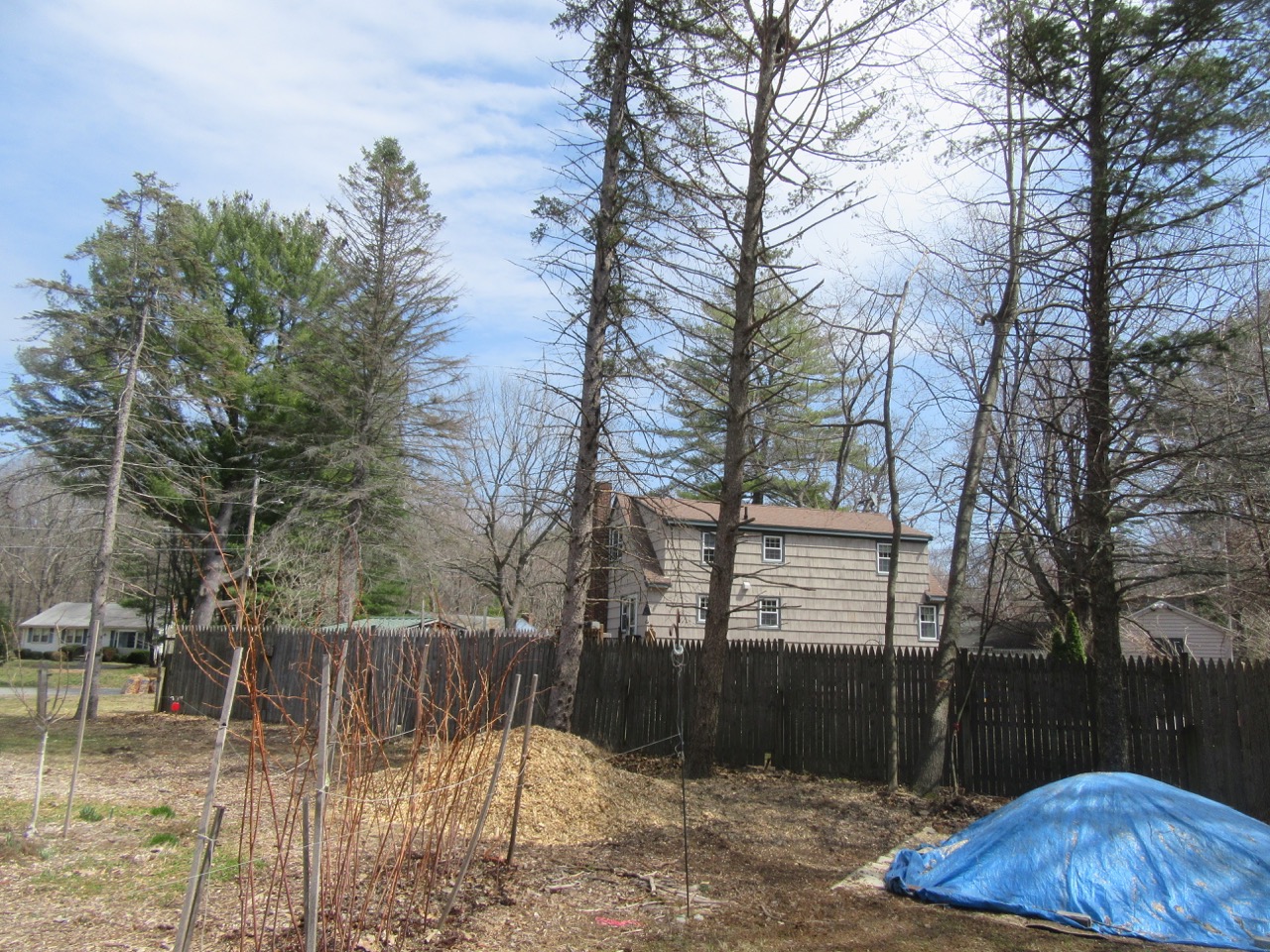
Wood chip pile on the left, compost pile on the right covered with blue tarp.

So here are our wood chip and compost piles, all set up for soil enhancement and mulching for the season. The area along the fence has opened up to offer more morning sun to the orchard–you can see four somewhat scraggy spruce trees remaining, plus a skinny red maple and oak near the right which will have more room to grow.

Now, the growing season is fully begun. I was amazed that I was able to put in so many hours of outside work each of those days–I am thinking it has something to do with the surging energy of the earth in spring, the warmth of the sun, and also with drinking iced licorice tea while I was working–a great herbal energy booster. I am remembering how exhausted I felt last fall, how much work the garden was during the long summer, and yet, spring brings new excitement and new energy, even to me with my chronic illnesses that can get in the way. May it be that way for you too!

Lessons from Other Beings

I feel a deep calling to learn from the other beings who share this earth with us. I was reminded of this calling by a new book I just started reading, Undrowned: Black Feminist Lessons from Marine Mammals, by Alexis Pauline Gumbs. She is observing dolphins, whales, and other mammals who live in the sea, and learning the wisdom they might have for human beings–especially for black women, but also for all of us. “They are queer, fierce, protective of each other, complex, shaped by conflict, and struggling to survive the extractive and militarized conditions humans impose on the ocean.” It is a beautiful and meditative book and I am so grateful. Reading a chapter each night has fed my soul, as well as helped me remember how key it has been in my own path to listen for the wisdom of other creatures–though the ones I learn from are usually closer to home than the sea.

Yesterday morning, inspired, I began to read again my own book, Finding Our Way Home: A Spiritual Journey into Earth Community, remembering. I was remembering the many quiet moments I spent in my former back yard, listening to cardinals, watching slugs crawl through the grass, paying attention to trees, to stars, to the red light of dawn. It was a yard with many mature trees, a long row of huge lilac bushes, incredible privacy, and many critters who were our neighbors–turkeys, deer, birds, squirrels, chipmunks, and occasionally skunks. I was remembering how much those creatures taught me, when I was quiet enough to listen to them.

In our current back yard–we’ve lived here five years now–we can get caught up with work: pruning, planting, soil improvement, garden permaculture projects. It is land more in need of attention from us, ragged, more depleted, invasive vines and bushes clamoring around the edges and in the soil, imbedded in city life, though still surprisingly private once the trees on the edges leaf out. There is more room for gardening–the old place was too shaded by all those mature trees. So we have planted a little food forest, herbs and perennial vegetables, made room for hugelkultur and raised beds and even shared with our friends room to grow herbs and veggies.

But it is easy to get caught up in the work of it–a lot of work. It is easy to forget that other part–the listening to the land itself and the other creatures here, the plants and animals. I remember when we first found this place, feeling from it an unmistakable message: that through making relationship with this small piece of earth, I might learn more about what it means to be in relationship to earth and all her creatures. It was time to think small–right here I could find home, I could find earth community. The work is part of it–we are here to learn to be beneficial members of this tiny ecosystem. It has weathered much neglect and abuse from human beings in its history. But the work is not the only part of it–the listening is the most important part. Sitting quietly, watching, waiting. As spring makes it easier to be outside again, I am ready. I am ready to take my lead from what the land asks, what the land teaches.

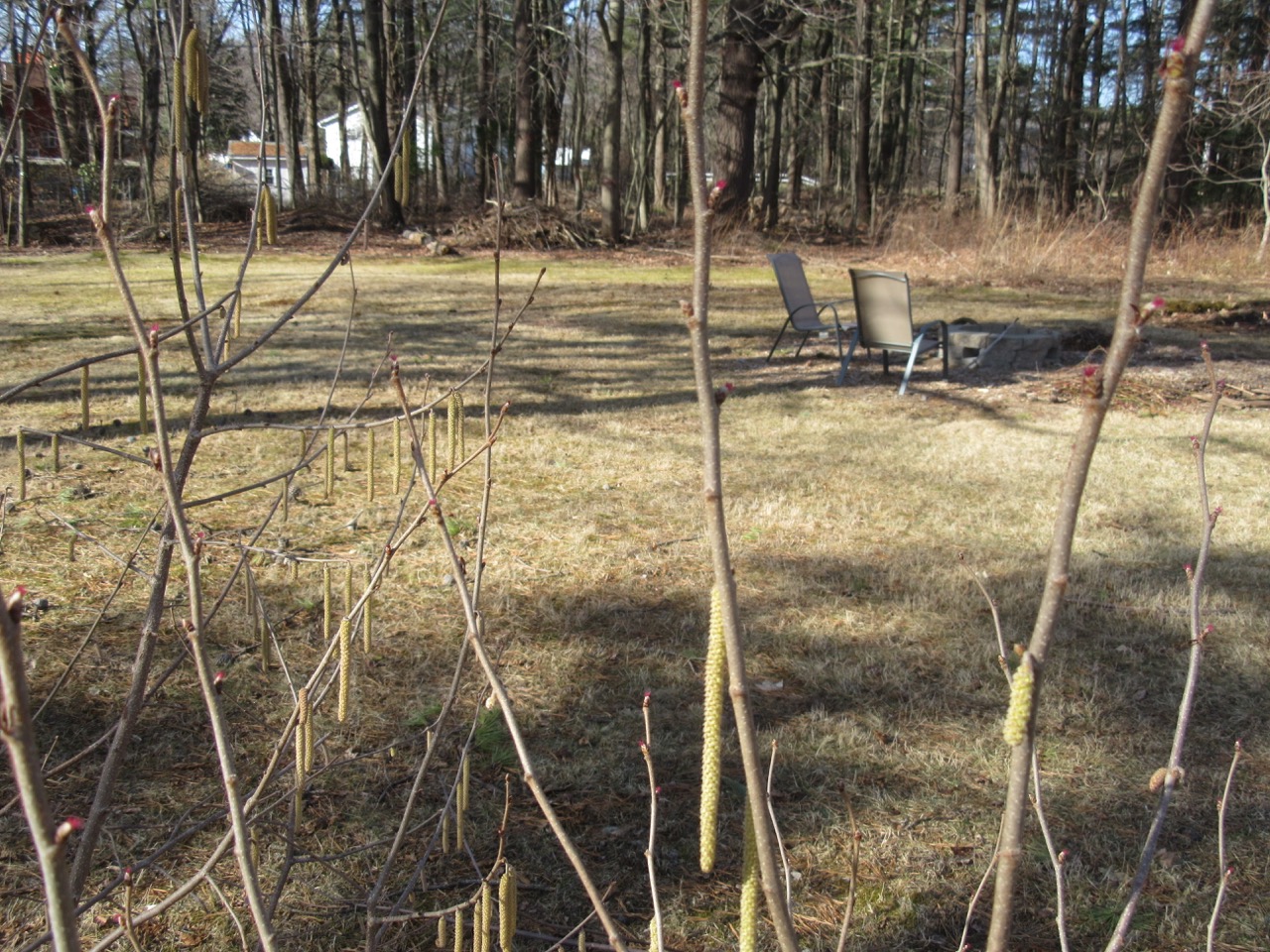
View of the back yard through hazelnut bushes with catkins.

Ice Beauty

No matter how many years I have lived, I am still brought to utter delight by the icy beauty of plants in the sunshine, after a freezing rain. There is nothing so bright, so crystalline, so shimmering!

I have lived most of my life in Northern areas of the United States (except for 6 months in Texas when I was seven.) So we here are accustomed to all sorts of wintery weather. But today I am also thinking of my relatives in Texas who are in their own icy cold, so rare in that place that they are dealing with burst water pipes, lack of heat, lack of electricity. I wish for them and all their neighbors warmth, help, and support to face the challenges.

These are the among the dangers we face more and more from climate change, or as some say so accurately, climate catastrophe. I wish we could come together as one earth community to begin to live differently, to live as if our lives are totally dependent on our mother Earth and all of her beings. Because we are. And even working together we will face difficult days ahead. So much has already been lost and altered. And still, we must also be so compassionate during these difficult times, because unless we love, we can never come together as one earth community. And we must keep hold of joy and beauty, or we will lose hope altogether.

So I am sharing these photos from around our yard for beauty. May the beauty of nature help us in all of our troubling times!

Icy tree branches sparkling in the sun.
Icy plants against the fence.
Icy St. John’s Wort through the window.
Icy yew branches just outside the door.

Mushrooms Again

Wine Cap Mushrooms in our garden

What elements are necessary for me to experience joy? What if the forests are burning in the west? Can I feel joy here in the east where the forests are not burning? What if fascism has stolen the possibility of democracy? Can I smile and sing a song about humbling ourselves before the trees? What if migrant children are still locked in cages without their families? Can I steal a moment of joy in the morning when the mist covers the sun? When I know my beloved is asleep in our home?

Today there are mushrooms again in the food forest, wine cap mushrooms that we inoculated into our wood chips over a year ago in the spring. We started something, but we don’t have any control over what they now do. I don’t know what elements are necessary for the mycelium to decide, after these months of invisibility underground, now is the time for mushrooms. The mist in the morning? Only they seem to know, and only they decide.

Last night I fell asleep asking the question, “What elements are necessary for me to experience joy?” Or perhaps I was asking its heavy twin question, “How can I dare to feel joy while the earth is suffering, so many people are suffering, the nation is suffering?” How can I be permitted any moments of joy given the reality of our world right now?

I remember when I was part of the Women’s Peace Camp, a peaceful protest next to a nuclear weapons military base–we had many moments of joy–despite the serious nature of our witness: evenings full of music, exciting sexual liaisons, long talks planting seeds of friendship that have grown and endured through time, delicious meals. I remember our wild dance parties and Emma Goldman’s words we often paraphrased: “If I can’t dance, I don’t want to be part of the revolution.”

Someone commented on Facebook the other day that we need to prepare for a disaster–they were worried about the possibility of civil war after the November elections. But when this idea rolls around in my head at 3 in the morning, I am not even sure what disaster to imagine preparing for: no electricity? food systems cut off? hurricanes? loss of social security income? no water? no internet? people in the streets with guns? evacuation? There are so many possible disasters that cannot be “prepared” for.

With age and illness, Margy and I are more isolated now, though certainly not all alone. But I miss being at some sort of front line in community. I can say to myself–we are trying to live a dream of a life more in harmony with the Mother Earth–the downsizing, the solar panels, the food forest. And I don’t forget the importance of choosing to love a woman in the face of patriarchy. Imagining decolonization in the face of white supremacy. But I feel helpless in the face of the destruction of so many people and landscapes across the nation.

It is almost as if all I have to offer now is my profound grief.

So, is it still possible to find joy in this grief time? Is it hiding underground like mycelial networks? Can it spring forth like mushrooms when something decides there is room for it now? Is it me who decides? Can I fully honor the grief that our times require, and yet still find those moments of song, smile, lightness, beauty, gratitude?

Pesto

This past week’s big garden project was making pesto. I’m not an expert on preserving food from the garden, but discovered that while oregano and thyme were easy to dry, things like chives and basil didn’t work for me to dry. But making pesto and freezing it has been great. We just finished using the last of our pesto from last summer, and it was time to make it again.

So here is my very loose recipe for anyone who might want to try it. First of all, cut big bunches of stalks of basil, parsley, and chives from your garden. And really, any combination of these will work, though I think of basil as the primary ingredient of pesto.

Basil & chives

Basil & Chives & Olive oil

Pinch the basil leaves off the stalks and place in a salad spinner–you can wash and dry them in the spinner. Do the same for parsley–I just cut the leafy parts off the stalks. Our garden is organic, but rinsing deals with any random bugs or dry leaves or other impurities that might be attached.

Parsley

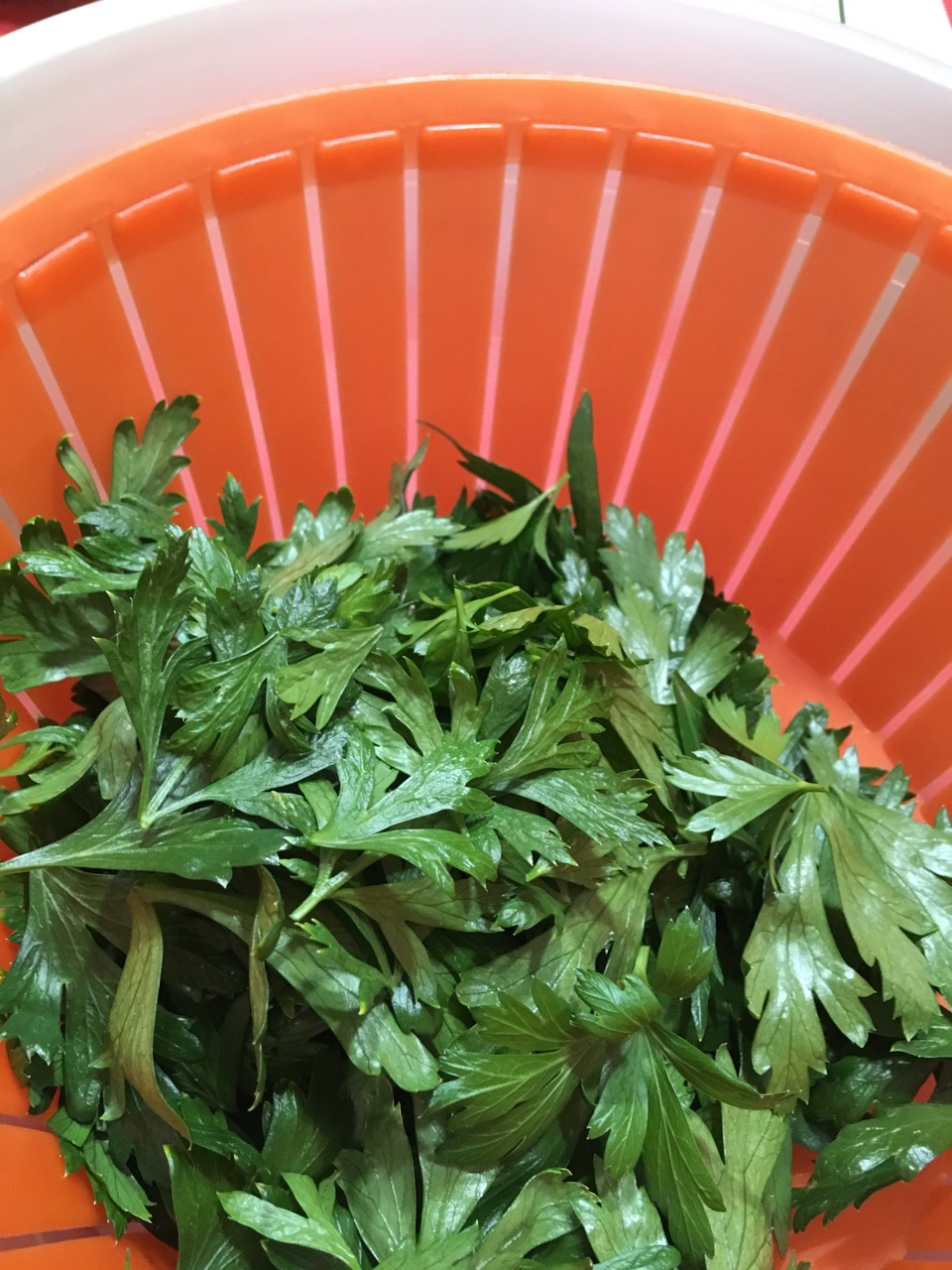
Parsley in the salad spinner.

Chives can be rinsed briefly, and cut with a knife into couple inch lengths. Once these are ready, start with a blender. First, put in 1 cup of olive oil, and then reserve 1/2 cup for use as needed to keep the blender stirring easily. Add the basil and blend, add the parsley and blend, add the chives and blend. Or do this in any order you like. I also added 4 Tablespoons of lemon juice, salt and peper, 1 clove garlic, and some garlic scapes. I don’t do well with too much garlic, but you might want to add more if you like it.

Finally, I added one cup of raw hazelnuts. Traditionally, people use pine nuts, but they are more expensive and since we have hazelnut bushes, it seemed fitting, though our bushes haven’t produced any nuts yet. Later, when we use the pesto, we will add parmesan cheese.

Finally, I line a baking pan with wax paper, and put the pesto mixture on this paper in small lumps–like cookies. Place the whole pan in the freezer until the mixtures have frozen, and then I fold them up in the wax paper and store in freezer bags.

Pesto "cookies"

Pesto “cookies”

Through the winter, we take out the pesto cookies and use as many as we need with baked chicken, with zucchini noodles, with anything that could use a bit of bright flavor. I ended up needing to make two batches because I had so much basil. And the basil plants will grow back again, so we could make more later on. So much fun.

Garden Lessons

Today is the Celtic celebration of Lammas, the early grain harvest festival. I’ve always connected it to the early corn harvest–the time to start eating local corn on the cob in the places I have lived. Our little group that celebrates earth rituals together hasn’t met since COVID, and I feel sad not to see them today. But this morning I was able to bring some zucchini and kale to the Resilience Hub, where a volunteer was collecting produce from gardeners to share with immigrant families in the Portland area. That truly felt like the best way to celebrate this holiday–sharing the surplus of our own harvest for those who need it, in the spirit of reciprocity.

Myke behind the zucchini

Myke standing behind the hugelkultur zucchini! Photo by Margy Dowzer

Lately, I’ve been feeling rather overwhelmed by the gardening endeavor. Take note of my photo behind the hugelkultur zucchini–you almost can’t see me at all. There is watering to do each morning, and I’m harvesting raspberries, the last of the snap peas, chives, zucchini, and kale. Oh–and one cucumber so far.  I learned how to freeze zoodles (zucchini noodles) so that we can save some for the future. I am also freezing most of the raspberries and chives. So all that is wonderful, but still a lot of work.

Added to that, however, has been discovering that each new plant I add to the garden seems to come with its own ecosystem of insect pests and diseases. I was used to Japanese beetles, and shaking them from the leaves of trees into soapy water. I was used to picking off cabbage worms from the kale and squishing them. But then I learned about the squash bug and the squash vine borer. I don’t see any significant damage yet on the zucchini plants, but I’ve seen the bright red and black flying parent of the grubs that can burrow into the stems. This morning, there were some zucchini leaves with powdery mildew. Another yuck.

Now we also seem to have grasshoppers eating the carrot tops and the kale–except for a new variety of kale that I got from a friend, which is too prickly for my taste. (That is ironically maddening! Why don’t you eat that one, grasshoppers?) I did some research and if I wanted I could try garlic spray, or flour on the leaves. But right now I’m just hoping they don’t eat enough to wipe out all the plants. Also, I put more bird seed in the feeder in hopes that some of those birds might also eat grasshoppers.  But there is so much to know, and so many possible pitfalls, even in the context of our organic permaculture polyculture systems.

So like I said, I’ve been feeling overwhelmed by all of it lately. I was thinking back to my original intention with this land–I wanted to restore our mutually beneficial connection to the earth, via this small piece of the earth we are lucky to live upon. And what I am learning is that it is not so easy–I’ve lost so much of the knowledge of plants and ecosystems that my ancestors might have had in the places they called home. I am sure there are long-time gardeners who find a way to learn what they need from the practice of gardening–but I am coming to it late in life, and I can feel that it could take a whole lifetime to become adept at working with ecosystems to nurture wholeness and balance.

It’s not all flowers and romance, this relationship with earth. It’s crabgrass and ticks and mosquitos and so many unknown insects, (beneficial or destructive?), not to mention diseases, viruses, bacteria.  Some aspects of earth are not so easy to love. It’s invasive species and drought and climate change. It’s beyond what I can learn and I’m discovering the limits of my capacity.  So I come to the garden like a prayer: sometimes with awe, sometimes with gratitude, but often with a cry for help, often with a deep painful longing for all that has been lost, often with loneliness. If I can pay close enough attention, finally, I come to the garden with surrender, surrender to this larger dance of life of which I am only a very small movement.

Cats and Joy

Billie sunbathing

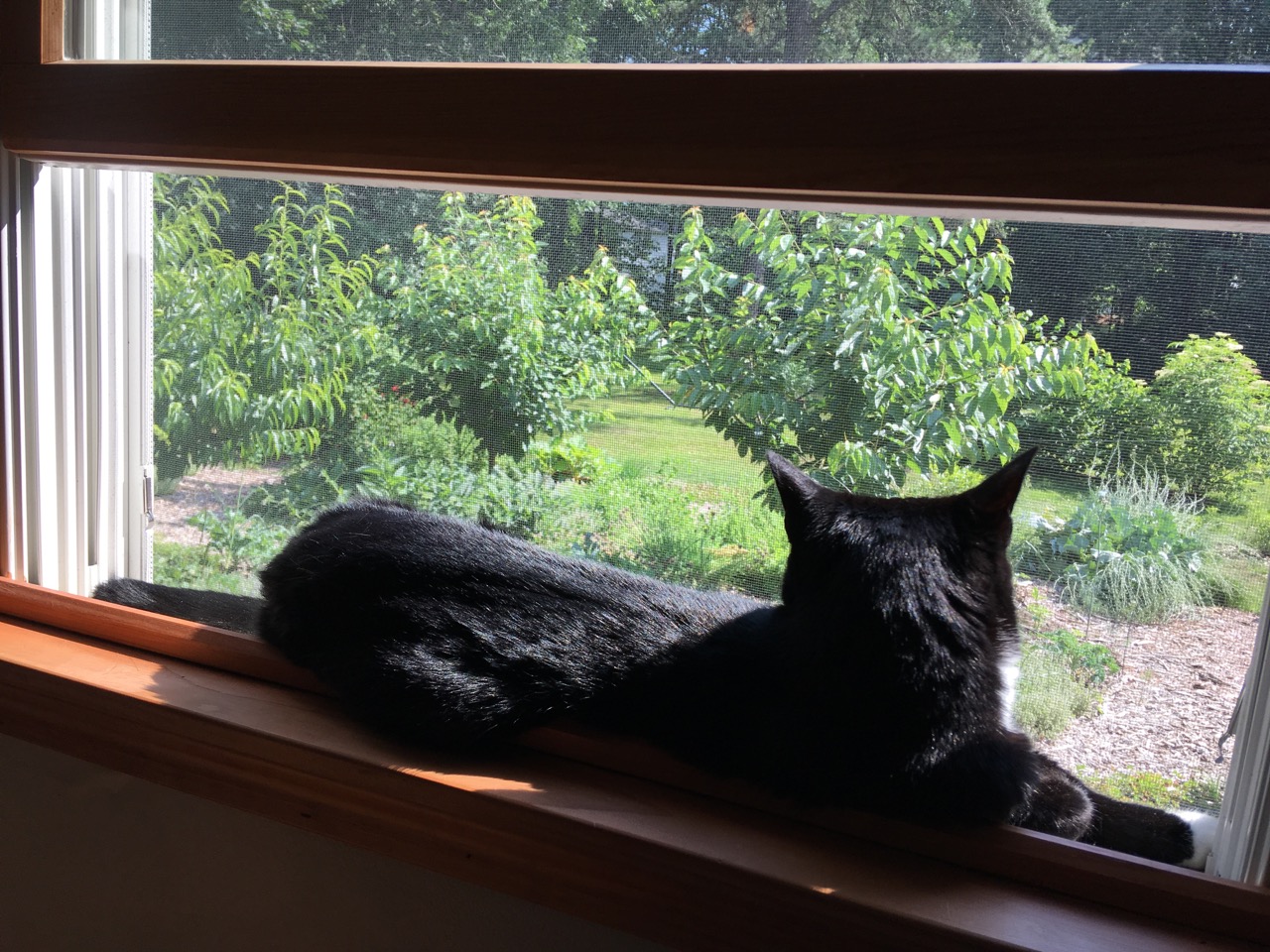
Billie sunbathing in the window, looking out at the orchard.

Cats can teach us so much about living in the present moment, about feeling the joy of life! The other day I opened the window, to let the fresh breeze come in through the screen.  Billie stretched out in the space between and luxuriated in the sun, watched the life going on in the orchard.

Meanwhile, I have to work hard to shift from a “to-do-list” mentality–we humans with our necessary projects, our ambitions, our responsibilities, our anxieties. Even the abundance of the garden can become demanding–raspberries and zucchinis each day are waiting for me to pick them, the herbs are growing crazily, weeds want my attention.

But can I take a lesson from my cat, can I enter into joy at the warmth of the sun, the refreshment of rain, the beauty of the orchard? I tell myself: “Step into that window now.” May you find such moments today.