The Theft of the Land and the Stories that Obscure It

As I wrote in my last post, European peoples are new to the land we call North America. Our history includes the theft of this land from its original people. We have tried to obscure that history through many stories, perhaps most notably our Thanksgiving myths, the stories of the Pilgrims and the Indians.Turkey DSC09718_2

The story tells us when the Pilgrims landed at Plymouth, they were welcomed by the Indian Samoset. He introduced them to Massasoit, chief of the local Indians, the Wampanoag, and to Squanto, who helped the Pilgrims to plant corn, to hunt and fish in their new home, and to survive the first hard year. In the fall, Indians and Pilgrims together celebrated a Thanksgiving for the harvest.

The story of this celebration hides other stories. It hides the plague that wiped out the village of Patuxet, and 90% of the people living on the Northeast Coast. Squanto, whose name was actually Tisquantum, was a survivor because he had been earlier carried off as a slave to England. Did you ever wonder why he could speak English to the Pilgrims? The story hides his capture as a slave, his years in Europe and his attempts to come home, only to find his people gone. But most of all, this story hides the next four hundred years, which were filled with betrayal and enmity and war.

The Pilgrims did not share the Indigenous belief in the sacredness of all beings and places. They saw their own society and ways as superior, as a progress which must be forced on other so-called “inferior” beings. This is the spirit of colonization, from which we haven’t yet recovered. From the Indian side, the colonization of North America has been a long saga of unbearable loss and grief. What irony, then, to watch as non-Indians each year have a holiday celebrating the bond between the Pilgrims and the Indians. Many Native peoples think of Thanksgiving as a Day of Mourning.

Now, the first reaction European Americans sometimes feel when we hear about this loss and grief is defensiveness. After all, we think, it wasn’t me who stole Indian land, or caused disease among the people, or killed anyone. Perhaps the second reaction that comes is a feeling of guilt, because of what our ancestors have done. But neither defensiveness nor guilt is really very helpful. We must go deeper than that. How do we acknowledge and heal the brokenness? How do we restore wholeness to this broken land and all of its people? 
An Orientation to Place

Vine Deloria, a Lakota scholar, and author of God Is Red, wrote about some of the distinctions between European ways of thinking and American Indian ways of thinking. One of the differences he believed was important is the difference between a primary orientation towards place and a primary orientation toward time. 

I remember, when I was in Catholic grade school, learning about “salvation history.” We were taught that God was working throughout time to bring humans into a higher level of existence. Deloria points out that Europeans understand the world as an evolutionary process where humankind has evolved from lower forms into higher forms, including the evolution from so-called primitive religions into monotheistic conceptions of divinity.

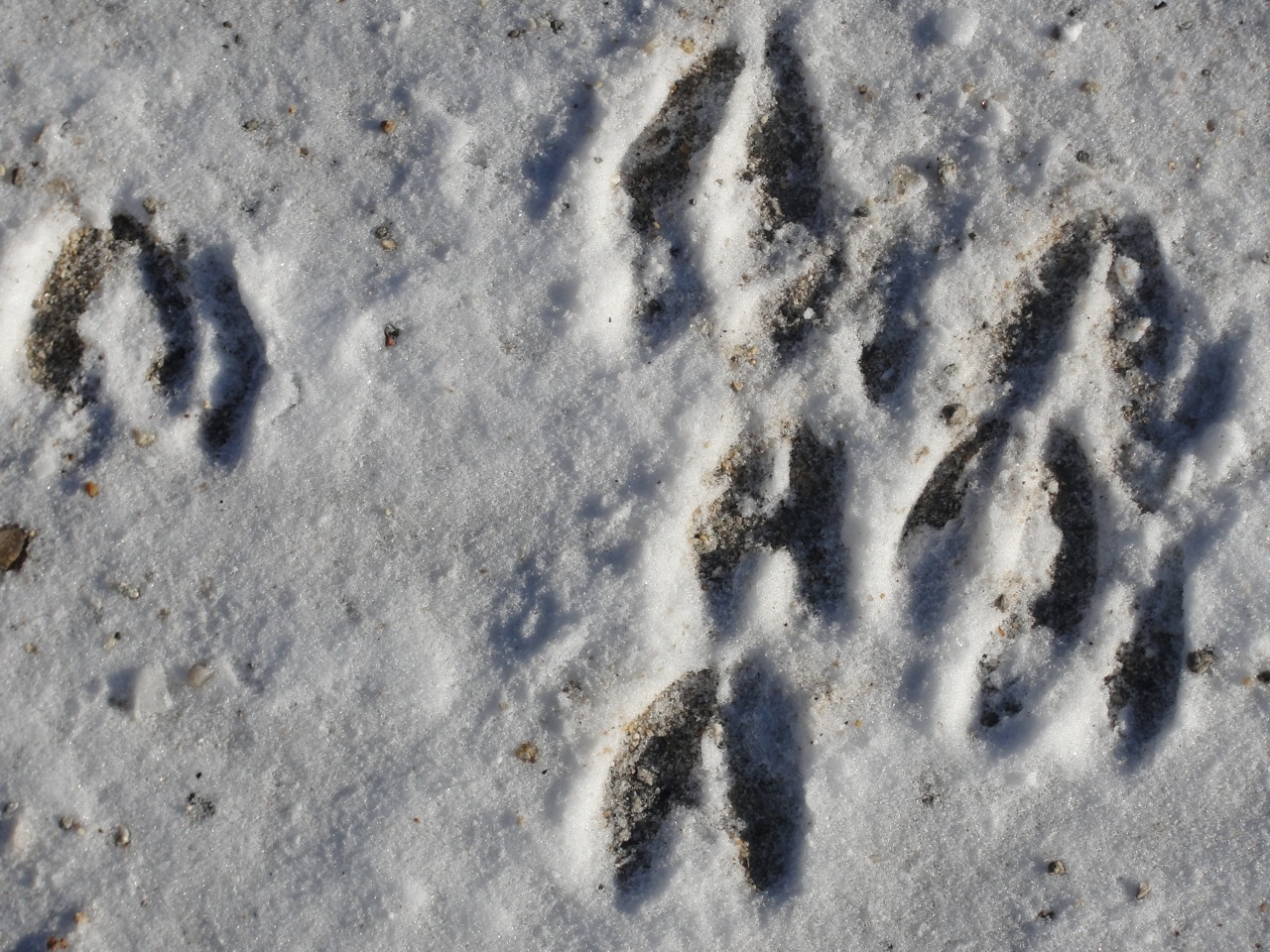
Deer Tracks MJ DSC01675American Indians are oriented to space and place, and their theological concerns are spacial concerns. Within this framework, each place has its own experiences of divinity, which may be very different from those of another place, without any contradiction. Rituals are important for connecting a people with the places in which they live, with the deeper powers of those places. This is why the land rights struggles of Native people cannot be separated from their struggles for religious freedom. Their religions are focused on nurturing their relationship to the specific land which is their land.

Another difference between American Indian views and those of mainstream society is in the conception of land as object or subject. To view the land as an object, is to see it as something to be acted upon: to be bought and sold, to be used for its minerals and plants, to be owned, to be abused, or even to be watched over carefully. To view the land as subject is to see it as we might see a person, as a being with its own actions, its own view.

The word own is an interesting one here. We use it to describe possession acquired by buying something. As in “I own a piece of property.” Yet it also can be used to describe relationship. My own mother, my own lover, my own family. To say “our land” can mean this is the land we have purchased, or it can mean this is the land we have a relationship to, we belong to it as much as it belongs to us.

European peoples are new to the land we call North America. Our history includes the theft of this land from its original people. Any work we do to reconnect to the land must pass through the entanglements of that history, must include work to heal the brokenness of that history.

Reconnecting To a Broken Land

Broken Tree DSC01792For several years, I was active in the struggle of the Cree, Inuit and Innu people against hydroelectric development in Northern Quebec. The traditional way of life for each was one of hunting and fishing and gathering. In my imagination, I had envisioned small bands of people roaming over vast wilderness areas at random, looking for game. What I learned was different.

Each small family band had very specific territory—certain rivers and waterways, certain areas whose terrain was utterly familiar to them, whose beavers were counted by them, where traplines had been set out for generations. When the LaGrande project was built in 1970, those beloved lands were flooded, and lost to them, with their ancestors’ graves, the memories and stories of love and new life and home. I learned that even the migrating birds return to the very sedges from which they had departed the previous season. They, like the Cree, had lost their homes.

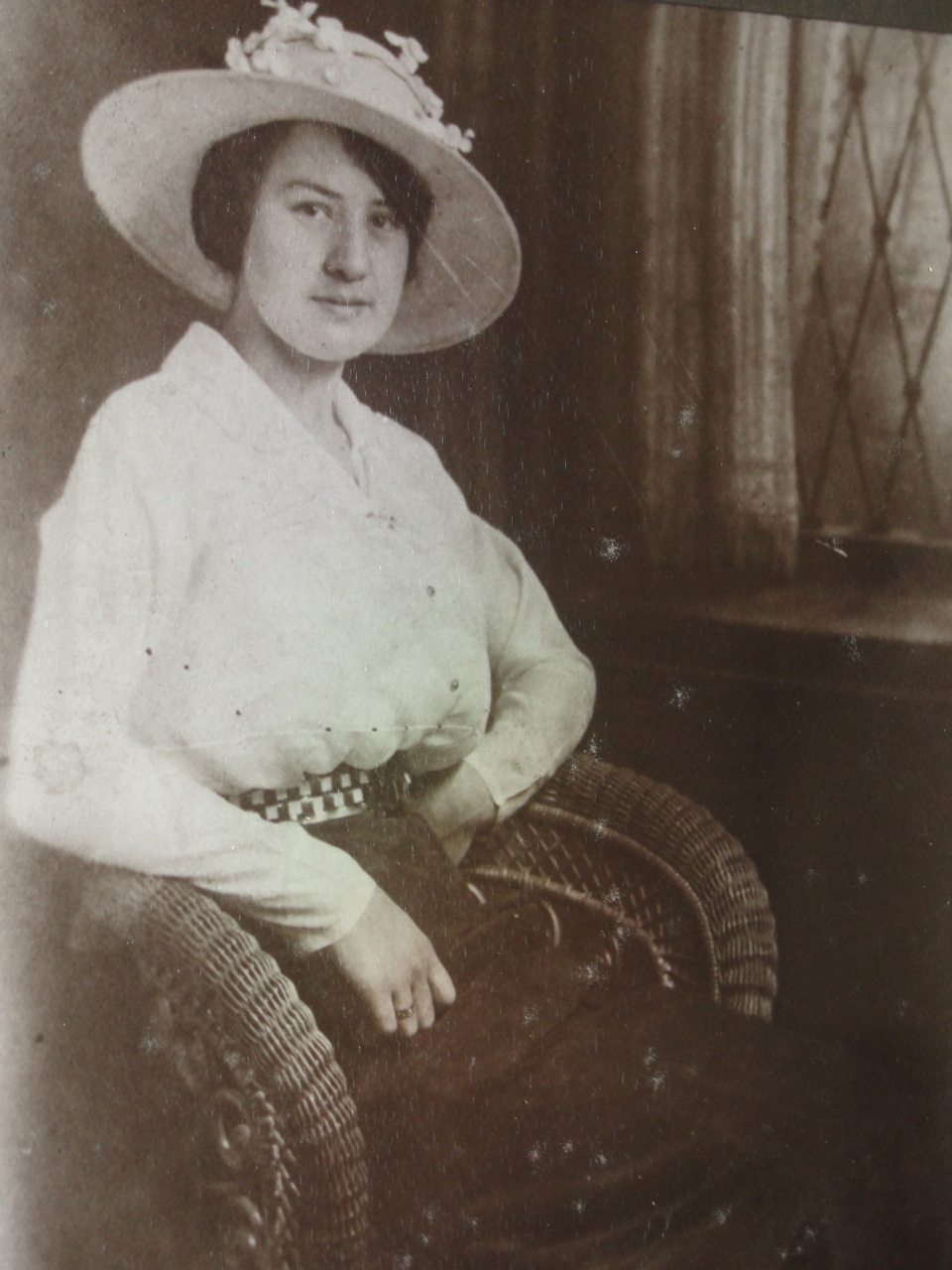
Because I am writing in a broken land, there are things I should clarify. I am a white woman, and I am also related, by matrilineal ancestry, to the Innu people who are indigenous to land now called Quebec and Labrador. My great great great grandmother was an Innu woman. She married a Scottish trapper who worked for the Hudson Bay Company in Quebec. His name was Peter Macleod, and he called her Marie de Terre Rompue, which translates, Marie of Broken Land.

Yvonne DSC01872

Grandmother Yvonne arriving in Detroit

Having these Indian ancestors doesn’t make me an Indian in today’s world. My ancestors were assimilated into the white community, first in Quebec, and then in the United States when my grandmother Yvonne came to live in Detroit. Actually, assimilation itself was part of the long campaign against Indian people. 

But this story created a broken place in my heart, a need to explore and understand the history and to find healing for the present. It helped to spark in me a deep feeling for Indigenous peoples. As a young adult I was drawn into activism in solidarity with American Indian struggles, and that has remained an important influence throughout my life. When I was able to travel to Nitasinnan, the land of the Innu, I felt some sense of place, a sense of the ghosts of my ancestors in the land.

But Indian ancestry is not necessary for the work of reconnecting to the land. Indian people have a belief that every person and being on this earth are related to each other. All of us can be part of the work of rebuilding our relationships where they have become torn and frayed. 

If we wake up to the earth, we must listen to all her stories

All places and all beings of the earth are sacred. It is dangerous to designate some places sacred when all are sacred. Such compromises imply that there is a hierarchy of value, with some places and some living beings not as important as others. No part of the earth is expendable; the earth is a whole that cannot be fragmented…
Leslie Marmon Silko

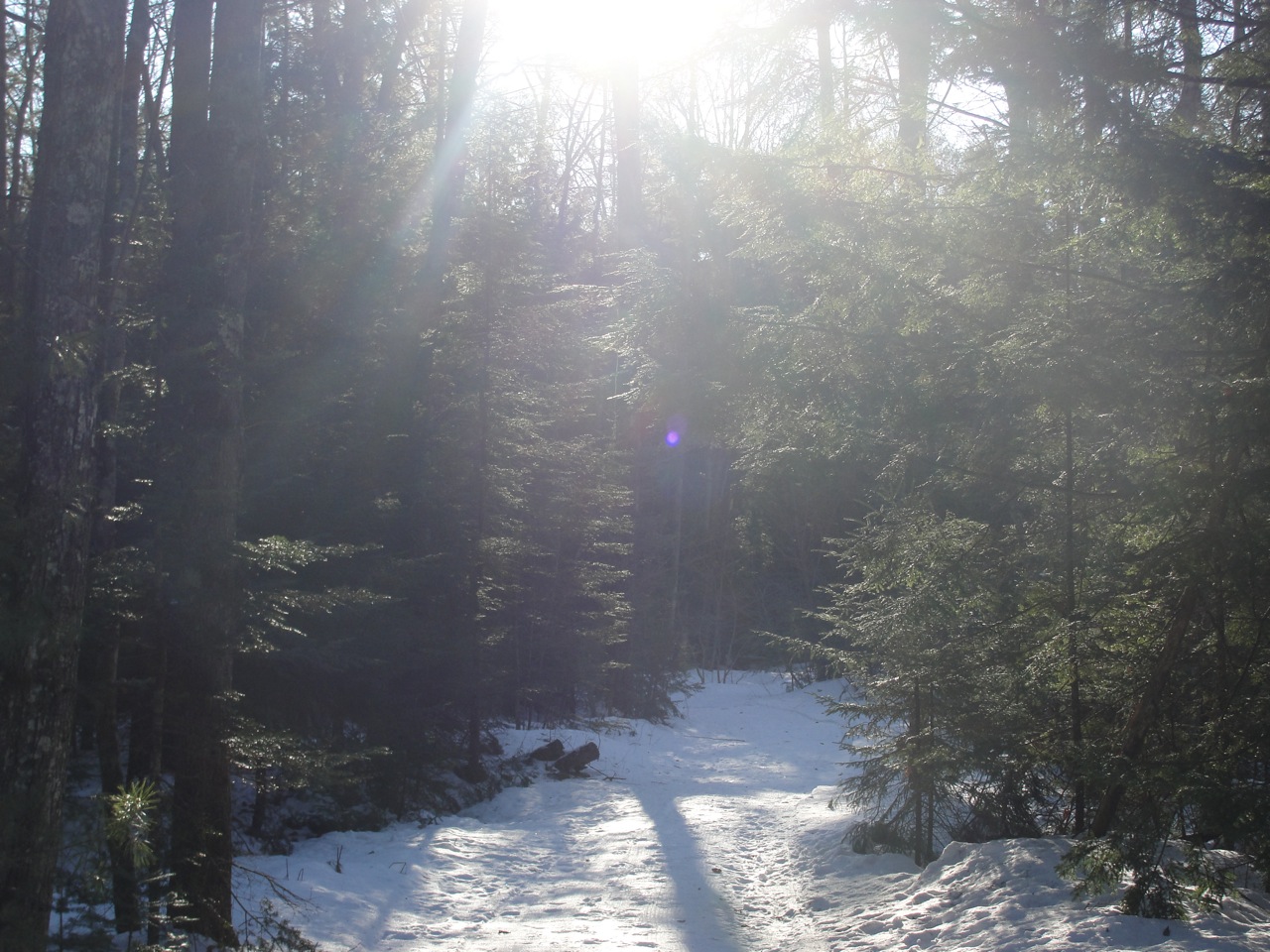
Winter Path DSC01793When I was in theological school, we spoke of the sacred texts in which people find revelation of divinity. To be open to the sacredness of earth, is to let the earth be our text: let the earth be the revelation for the presence of divinity. The earth can be teacher, the earth can be sacrament, the earth can be worship, the earth can be Goddess.

But if we wake up to the earth, we must listen to all her stories. If we live in the Americas, we must pay attention to a story of brokenness in each place because of the theft of the land from the Indigenous peoples who belong here. If we are seeking to restore our connection to the land, we must reckon with that brokenness. All of us are a part of the brokenness.

Lakota writer Luther Standing Bear said, “Men must be born and reborn to belong. Their bodies must be formed of the dust of their forefathers’ bones.” To be indigenous is to belong to a particular place, through that interweaving of dust and food and knowledge which accumulates over centuries. When I lived in Jamaica Plain, I used to walk in Forest Hills Cemetery. None of my ancestors were buried there. No familiar ghosts recognized me or called my name. I was not indigenous to that place, nor to any of the places I have lived.

I learned more about what it might mean to be indigenous to a place through the marvelous novel, Solar Storms, by Chickasaw writer Linda Hogan. Her main character, Angel, is a young woman who had been separated from the Native community of her birth, and raised in foster care after being abused by her mentally ill mother. When Angel returns with her relatives to their ancestral lands, something happens for her.

A part of me remembered this world… it seemed to embody us. We were shaped out of this land by the hands of gods. Or maybe it was that we embodied the land. And in some way I could not yet comprehend, it also embodied my mother, both of them stripped and torn…. My heart and the beat of the land, the land I should have come from, were becoming the same thing.

In the novel, Angel’s family has returned to their homeland in the north of Canada because it is being threatened with hydro-electric development. This is no pristine wilderness or unspoiled scenery to which she is responding. The land is under assault, and they feel a responsibility to fight for its protection. She speaks of how the bonds between the land and the people had been broken by the developments of many years. The elder Tulik tells Angel, “Here a person is only strong when they feel the land. Until then a person is not a human being.”

Another member of her family was a woman named Bush who was Chickasaw from Oklahoma and had become part of the family through marriage. She had also come to help in the struggle. Angel talks about how it was different for Bush. The land in the far north loved Bush, “but it did not tell her the things it told the rest of us. It kept secrets from her.” Here was another Native American, yet she was not indigenous to that particular land. Through this story I began to better understand how loving the earth was not just about loving the planet, but about loving a particular river, a particular valley or hill or peninsula.

Quote from Leslie Marmon Silko is from Yellow Woman and a Beauty of the Spirit.
Luther Standing Bear was quoted by Vine Deloria quote in God Is Red.

Meandering Toward Wholeness

If I can remember to be thankful about water, then I have the capacity to take action on its behalf as well. There are many people mobilizing on behalf of clean water. Thankfulness can be the beginning of restoring our relationship with water. And then the water itself will guide us into the next steps on the journey.

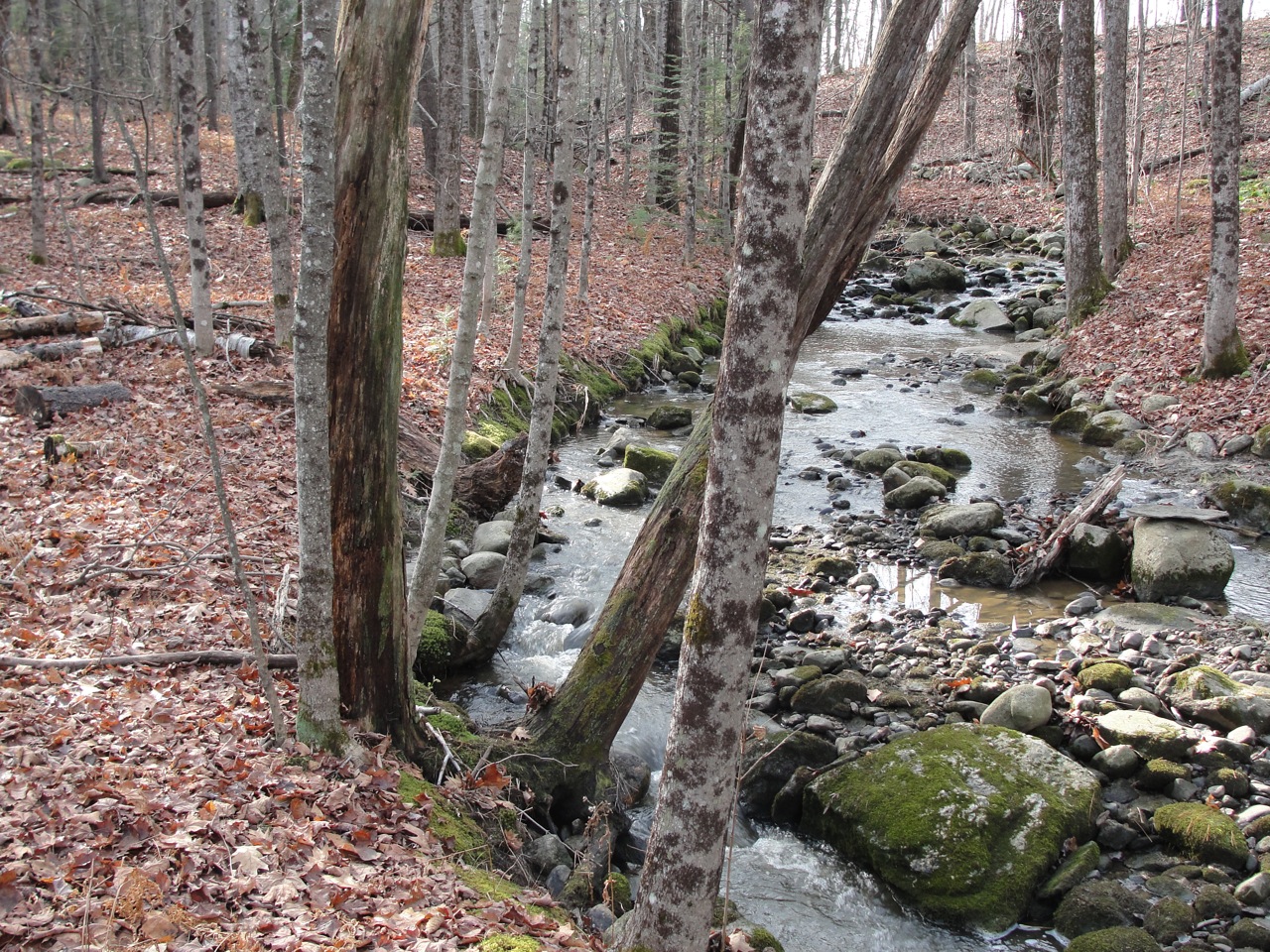
Stream DSC02225The path forward is never a straight line. I find hope in that. A river or stream meanders on its way to the sea. Starhawk explains that because of the friction of the river bed, the water on the bottom of the river moves more slowly than the water on the top. So it creates a spiraling current that wears down one bank and deposits sediment on the other, and then vice versa, as it move around and around in sweeping curves.1 Just so, our journey into a new relationship with all life on earth will meander—I imagine in this case, there is more movement at the bottom of our culture, while the top is going much slower. But since we are all connected, movement in any segment has a ripple effect on the whole.

For me, hope also comes with the choice to keeping taking steps, even small steps, in the direction of living in balance with the rest of our interdependent web. To keep meandering in the direction of wholeness. To keep learning from our elder siblings on this planet—learning from the plants, and animals, the soil and the seasons.


Photo by Margy Dowzer

Photo by Margy Dowzer

One summer, Margy and I purchased two rain barrels, as one step toward more conscious participation in the great cycle of water. We are collecting the rain-water that runs off our garage roof, for use in watering the blueberry bushes I planted in our front yard. We are learning about how high off the ground the barrels need to be, in order for gravity to pull the water all the way to the plants. We are learning that water in a rain barrel heats up rather quickly in the hot summer sun. We are learning how quickly a rainstorm can fill two fifty gallon barrels.

It is a very small step, especially here in our comparatively water abundant climate in Maine. No matter. Some people are taking bigger steps, and that gives me hope too. For example, some people are designing gray water systems that take the water from washing and showering and use it for the garden. Others are restoring rivers and lakes that once were declared dead.

All the earth is one earth. All the water is one water. We all belong to this great cycle of life. Each creative step forward will ripple out into a spiral momentum toward greater balance. I feel hopeful that so many human beings are embracing these deep truths and changing the way we imagine our futures.

We Are a Part of the Watershed

Photo by Margy Dowzer

Photo by Margy Dowzer

Analysts are predicting that water will be the number one political issue in the coming years. Just as wars are being fought over oil, so increasingly there are conflicts over access to water. The business solution is to introduce the “privatization” of water: the theory is that if water is a scarce resource, then the market should determine its price, and price will regulate its use. But citizen’s groups are fighting back to say that water cannot be commodified, because it is an absolute necessity for life. Rather, water must be recognized as a fundamental right and provided equitably to all.

The danger in the privatization of water is that it takes water out of its relationship to all living beings, and into the hands of a system which is set up to think only in terms of profit. Water is not something separate from us, something we have made, that we might think of it in terms of selling and buying. Water is in us and we are in water. We must think of ourselves as part of the watershed.

The water we drink passes through us, and is returned to the earth. When we open our hearts to the wonder of this cycle, we can begin to heal from the out-of-balance patterns we all have learned in our society. Weeping is a part of it too. The water of tears moves our grief, heals and cleanses, as water does, moves us on the journey. The cycles of water teach us that we are all related.

Each of us has a choice. Will we approach water as a commodity to be used, or as a blessing to be honored? If we acknowledge water as a blessing, we recognize its essential importance. Water is the mother of all life. There is no life without water. Whether we view it scientifically or spiritually, water is the womb from which all living beings have been born. We are made of water and we need the constant flowing through of water to remain alive in this world. When I made the conscious choice to regard water as a blessing, I decided to stop using plastic bottled water as much as I was able. I like to carry water with me, so now I carry tap water in a special reusable metal bottle. Anytime I drink water, I am reminded to offer thanks for the blessing.

All religious traditions have recognized the sacredness of water in some way. The old earth religions always revered a god or goddess of the waters—usually certain spirits were associated with salt water and others with fresh water. I learned about some of these water spirits from Mandaza, a healer from Zimbabwe who visited my previous congregation. According to Mandaza, the water spirits offer us healing and peacemaking. There are rituals for people to go into the water when they desire to be restored to wholeness or to find guidance for their spiritual journey.

According to my friend, gkisedtanamoogk, water is considered a Manito, a mysterious life force that has its own life. Water is also medicine, the most important medicine in Creation. The Wampanoag people know fresh water as Nipinapizek, and regard her as a grandmother. He wrote to me, “i think that we humans only exist because there is a significant number of people who remember to Give Thanks to all Those Ones who are the Keepers of Life, one of Those being, NIPINAPIZEK. May we continue to Give Thanks…..”

When I was growing up as a Catholic, we used to bless ourselves by touching our fingers in holy water. I associated it with purifying ourselves because we were in some way unclean. But now, the blessing of water feels more like remembering our heritage. We come from water. Since all water is holy, we are holy too. We are washed by water, we are restored by water, we are nourished by water. 

Water Is a Teacher

Water is a teacher. Water teaches us about the unity of all creation. All life comes from water, and needs water to survive. Water moves through the whole ecosystem, nurturing and transforming life as it moves. It rises from the ocean in evaporation, forming clouds in the sky, and, blown by the winds, it returns to the land in the form of rain. The rain falls into the soil, and gathers in streams and aquifers. In the midst of this journey, it also travels through the bodies of every living thing.

Margy and I have a bird bath outside our back door. Many kinds of birds come to drink the water we keep filled there, but we’ve also seen squirrels, chipmunks and bees. Every being needs water: insects, birds, mammals, fish, humans. Water rises up into the stems of plants and the trunks of tall trees.Chickadee at Bird Bath MJ DSC00964

Our bodies are 70% water—so it would be accurate to say that we ourselves are one form of water. But none of the water stays isolated from the rest—we drink it in, it moves through our blood, we sweat it out or pee it out. Sometimes we weep with wet salty tears. The water goes back to the earth and continues in streams and rivers on its way to the ocean.

When I was ten, my family went on vacation in the mountains of Wyoming. I remember coming upon a stream that had a little sign saying the water was drinkable. My sisters and I were very excited that we could drink right out of the stream. The water tasted funny to us, with its enhanced mineral content, but it was cool and refreshing none the less. Now, looking back on that event, I am saddened by our amazement at drinking water directly from the earth. For millennia, all people drank from rivers and streams, and animals still do. But in the memories of most of us, this no longer is a part of our expectations about water. We take for granted that pollution has made most water undrinkable unless it is purified.

It may seem as if there is an endless supply of water on the earth. But of all the water on the earth, only one percent is fresh water. More and more water is being polluted, or being diverted to industrial or agricultural use. We have now reached the stage where there is a global crisis looming as drinkable water becomes increasingly scarce.

Oren Lyons, Faithkeeper of the Turtle Clan of the Onandaga Nation, has said:

One of the Natural laws is that you’ve got to keep things pure. Especially the water. Keeping the water pure is one of the first laws of life. If you destroy the water, you destroy life. That’s what I mean about common sense. Anybody can see that. All life on Mother Earth depends on pure water, yet we spill every kind of dirt and filth and poison into it.

Human Beings Are Part of Nature

Many of the ecological problems we face are rooted in a foundational assumption of western culture that human beings are separate from nature. We see ourselves as distinct and superior to nature, and imagine that the earth is like a resource bank to exploit for our own use.

Starhawk, in The Earth Path, notes that some environmentalists go the opposite extreme. Because of the devastation that human actions have caused, they see human beings as a “blight on the planet,” and suppose that the earth would be better off without us. But, as she points out, “it’s hard to get people enthused about a movement that …envisions their extinction as a good.”

What we need to understand—emotionally, intellectually, physically, spiritually—is that we are not separate from nature at all. We are part of nature. She passes on a story from Allan Savory, about land management in Zambia and Zimbabwe in the 1950’s.

People had lived in those areas since time immemorial in clusters of huts away from the main rivers because of the mosquitoes and wet season flooding. Near their huts they kept gardens that they protected from elephants and other raiders by beating drums throughout much of the night… [T]he people hunted and trapped animals throughout the year as well.

The herds remained strong and the river banks lush …until the government removed the people in order to make national parks.” The parks set up rules to protect all the animals and vegetation from any sort of disturbance. Within a few decades, the vegetation had disappeared from miles of riverbanks. What they discovered was that the fear of human beings kept certain grazing animals on the move, and that prevented over-feeding that damaged soils and vegetation. With the removal of one species—the human farmers and hunters—the ecosystem had lost its balance.

Photo by Margy Dowzer

Photo by Margy Dowzer

This story illustrates the truth that human beings belong to this earth—we are a part of the ecosystem, for good or ill. We can be a part of the balance as well as a cause of the imbalance.

Some Indigenous stories of North America say that we are like a younger sibling on this earth. The other beings and species are more acclimated to their purpose and their relationship to the whole. And so, when we are feeling overwhelmed by these messes we have created, we might turn to our older relatives on the earth to find wisdom for our journey.

Ecological Connection and the Wall of Grief

Jon Young, founder of the Wilderness Awareness School, teaches young people the skills of wildlife tracking and plant identification, fostering an ecological connection to nature. Many skills and techniques are easy to learn, and there is a deepening sense of wonder and gratitude that grows along with their skills. But when the youth reach a certain stage in their learning, they hit what he calls the “wall of grief,” an experience of being overwhelmed with sorrow at the loss and degradation of the natural world around us. That grief is the most difficult challenge the young people face in all of the school’s programs.

Live-video-of-BP-oil-spil-004I felt such a wall of grief, during the spring and summer of 2010 watching millions of gallons of oil pouring into the Gulf of Mexico from the broken BP oil well. It seemed as if the earth itself was bleeding from this gaping human-made wound deep below the waters of the sea.

I believe that our spiritual growth depends on deepening our connection to the interdependent web of all existence, of which we are a part. The natural world is vital to our spiritual journey. We might say that the earth is our Bible, our Quran, our sacred revelation, and our paradise. We echo this principle in the mission statement of my own congregation, when we say, simply, that we walk with care on this earth.

But there are times when that careful walk awakens deep sorrow and anguish. We know so much more than human beings have known before. We know what is happening all over the globe. We see the melting of ancient glaciers, as the climate heats up from greenhouse gases. We know there is a vast soup of plastic refuse possibly twice the size of the continental United States floating in the Pacific Ocean. We know that the topsoil in which our food grows is being depleted, and the rain forests which renew the world’s oxygen are being cut down. We know that increasing numbers of species are threatened with extinction. We know that there are nuclear stockpiles that could destroy most life on earth many times over.

We know so much more than human beings have known before, but we don’t know the solutions to these problems that threaten our future. And that is a wall of grief that can stop us in our tracks as we seek to walk with care on this earth. How do we live with the painful questions that do not yet have answers?  

I learned the story of the Wall of Grief in Starhawk, The Earth Path