Kindness or cruelty?

White woman on left of phot with tan baseball cap and rust shirt, just visible at hands, holding a phone facing pebbled shoreline with horseshoe crabs in the water mating, and huge boulders on the other side.

The other day, Margy and I went to Maquoit Bay to see horseshoe crabs that had come to shore to mate. Margy especially loves horseshoe crabs and has learned a great deal about them. It was shortly after high tide, and we noticed that a few of the crabs had wandered behind and between big boulders placed on the site, in a way that they were trapped. (Much worse than what can be seen in the photo above.) As the tide continued to go out, it was likely that they would be stuck high and dry. So we very carefully lifted them out by the sides of their shells, (never lift them by their spikey tails!) and placed them in the water where they were free to move where they wanted.

To us, it felt like a simple act of kindness for a fellow creature on this planet. We see someone in a vulnerable position, and do our best to be a helper.

I have been astonished and horrified by the cruelty I’ve witnessed (as reported via social media) of people in positions of power in our government. Separating families as they come out from immigration courts. Detaining a young child with leukemia. Sending migrants to horrible prisons in countries to which they have no connection. Terrorizing people as they garden, or shop, or go to work, while wearing masks and refusing identification. Detaining a pregnant woman and offering no medical care. Such is the state of DHS and ICE activity in our country. Cruelty seems to be the point.

I am thinking also of the people in Gaza, who are still being starved and bombed, and shot by IDF soldiers even as they line up to try to get food. Some soldiers even admitted that they were ordered to shoot deliberately at unarmed Gazans waiting for humanitarian aid. I feel so helpless to stop the harm, to stop the genocide.

It seems there is no end to cruelty. It has been troubling me greatly. And I wonder why? Why be as cruel as a human can be to fellow human beings? Don’t all religious and ethical traditions lift up our common human bonds and encourage us to love our neighbor, and love the stranger in our midst? What does it do to the human beings behind the masks or the guns to act with violence and cruelty every day?

Are the people in charge in our country trying to instigate retaliatory violence to justify further oppression? Is it some oligarchic strategy of conquest? Is it a way to convince themselves that some human beings are not really human beings? Are they truly this cruel and this evil? And then, how can they convince ordinary people to follow along? Ordinary people who might value kindness over cruelty.

All I can do is to keep speaking out about it, to share the daily reports of the people who have been detained or killed, to see their names, to weep. I recently decided to do one more thing, to purchase a keffiyeh from Palestine. This traditional scarf was worn as a headdress or face covering, and in recent years has come to symbolize the Palestinian yearning for freedom. For those of us who are not Palestinian, it symbolizes solidarity. For me, I am moved by the fact that it was made by Palestinians in the West Bank, touched by their hands, their hopes. And now it is touched by my hands, my hopes for them. I feel that spiritual and physical connection. I wear it for the children being starved in Gaza, for the families being bombed in their tents or apartments. I wear it for all the helpers who do whatever they can to help, in the midst of so much cruelty. I wear it as a symbol of connection between human beings,

Myke, a white woman with reddish gray hair, wearing a black and white Palestinian keffiyeh wrapped over her shoulders.

On June 14, Margy and I couldn’t go to one of the thousands of No Kings rallies to protest the usurping of power that this regime is attempting. (This is life with chronic illness…) So we decided to sit in our own driveway with a sign, and bear witness in our neighborhood. During that hour and a half, we had about 20 positive responses from people driving by or walking by. A few people looked away but no one was angry or negative. Because we were out there, we also learned that a few neighbors had gone downtown to the rally as well. This photo was taken by Margy… it is her empty chair on the right. So we were two of the millions who protested that day!
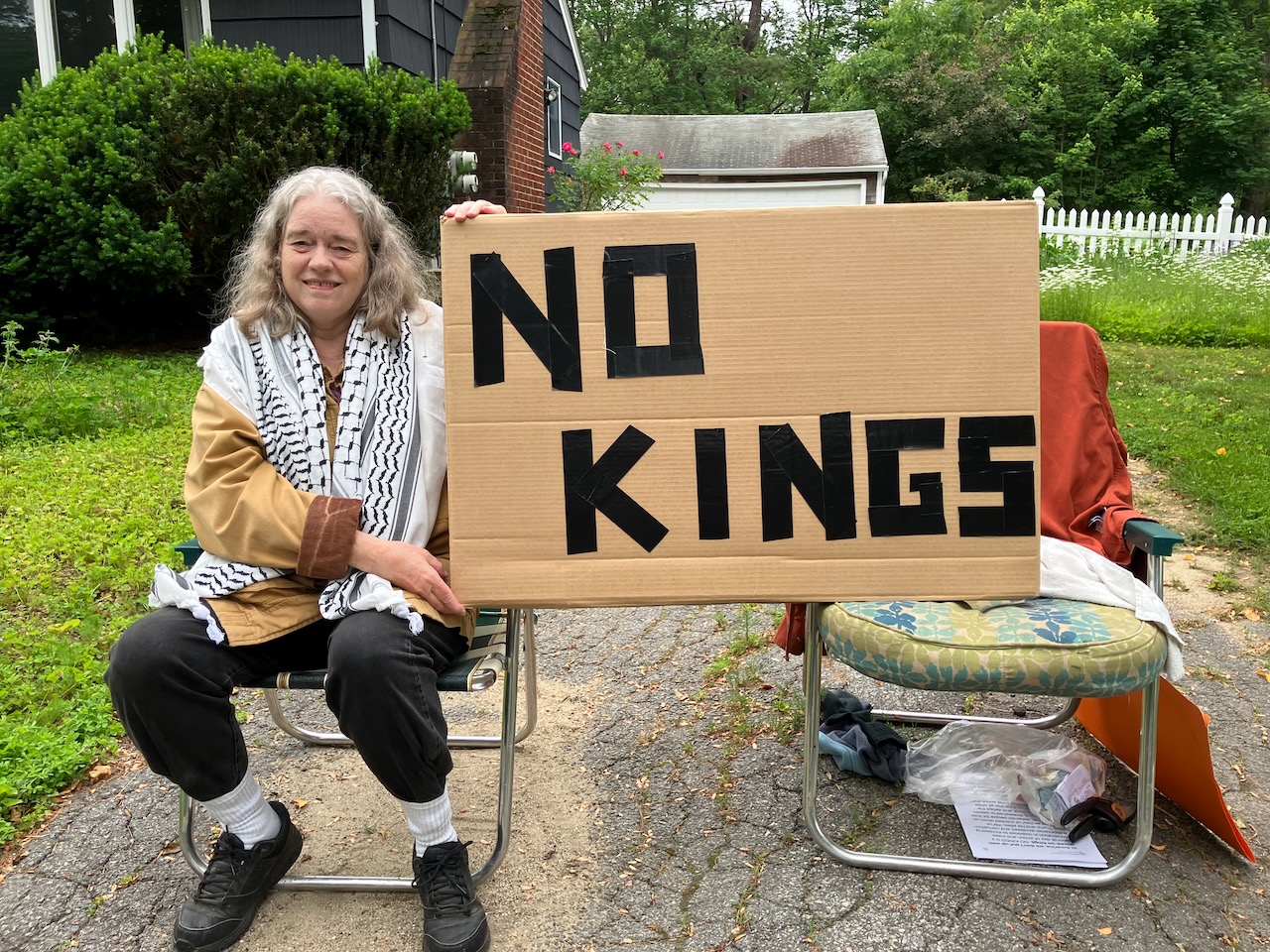
Big cardboard sign saying "no Kings" held by Myke, seated, wearing keffiyeh, resting on second chair.

I hope that if I keep speaking up, it will inspire others to speak up as well. I think of the Ella Baker quote in the song by Sweet Honey in the Rock: “I want to be one in the number as we stand against tyranny.” Never let their cruelty cause us to lose our kindness. Never let their cruelty cause us to lose our sense of human connection.

Robin survivor?

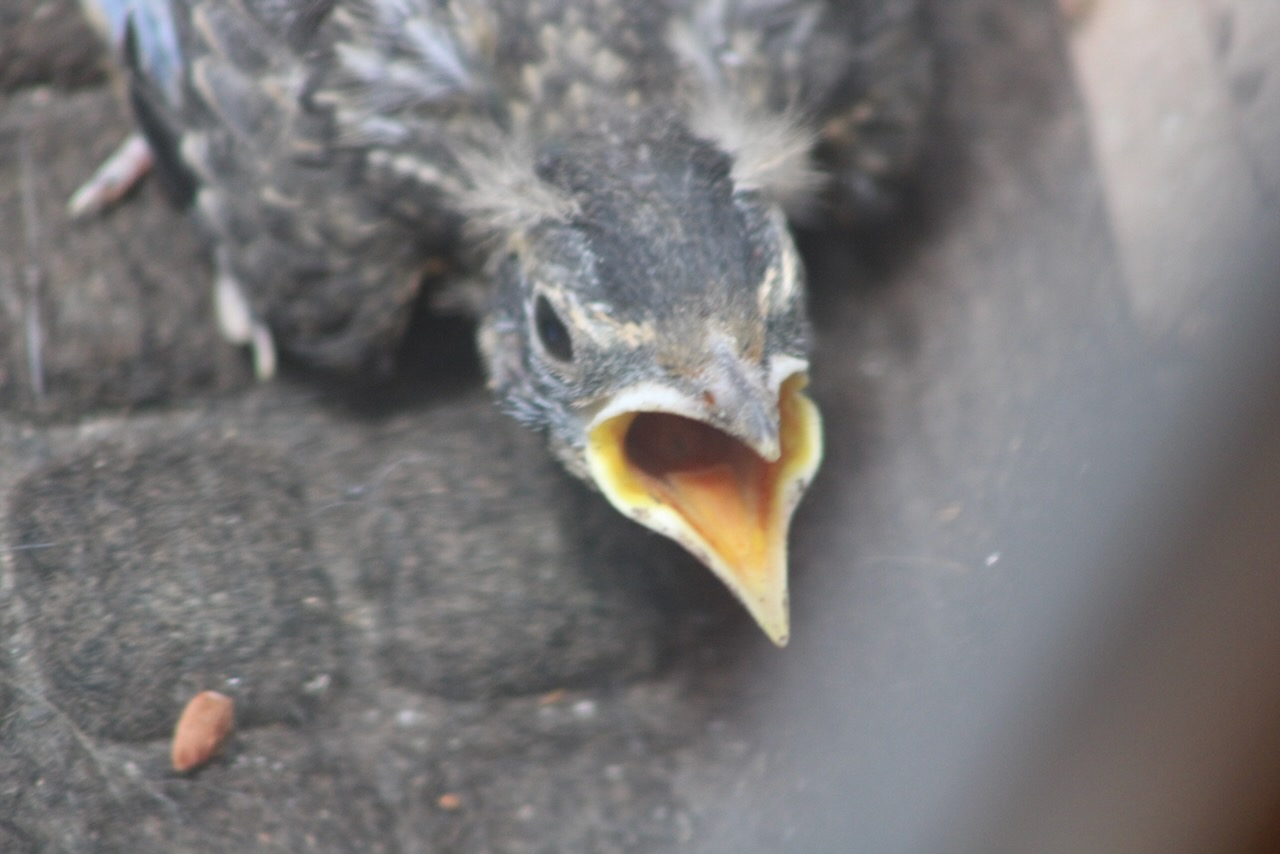
This morning there was more excitement concerning the sole surviving baby robin. It had walked out from the nest onto the nearby beam, even into the next section of beam. So it was alive! But the parents went back and forth calling several times. I was watching through the glass of the back door, hoping that they would find it and feed it. Then, finally, one of the parents brought the baby a big mouthful of worms–and just as it got them it its mouth, it fell down to the deck below. There it sat, seemingly stunned for a long time. I kept watch, not wanting it to be gotten by some predator, but also not knowing what to do. I even put in a call to Avian Haven, but it was before business hours. (8:30 a.m.) I wondered if it was injured.

Finally, I went outside, and went near to it, and it started to walk away. It seemed able to walk, but it never flapped its wings like it was trying to fly. Too young I think. Only 9 days old. So I gently picked it up and put it back up into the nest. And it seemed like that might work, and the parents came back and forth, and fed it up on the ledge, where it had once again walked on to. The parents were both very solicitous and sometimes called to the chick, and sometimes scolded at me. When Avian Haven called back (after I had put it back in the nest) they suggested that if the parents were still attending to the chick, it was best to leave it with them, and not take it away.

However, would you believe it? It once again fell or jumped from the beam and landed on the deck again. It was lying on its side but then righted itself quickly and literally walked over to our glass door and looked up at me. As if to say, “help, here I am on the deck again.” So fierce its little face!

Margy was here by now, and we knew a grocery delivery would be coming soon to the back porch, so there was that pressure. So finally I went out on the deck with a shoebox, thinking to put it in that for safety, but it quickly walked away along the wall and jumped off the deck (about 2 1/2 feet down maybe) and was in a little side corner near the steps with no way out. I thought I’d try to get it to jump in the box–but by now it was acting more lively. When my hand came over its head, though, it opened its beak as if I might feed it. I was able to shoo it toward the open box, but once in the box it did not like that at all, so I quickly brought it over to the other side of the porch steps and set it onto a patch of ground cover plants. Then it decided to walk under the deck, out of my sight.

The whole morning I was never sure what to do, to leave everything alone, or to help, and in what way. I don’t know why the parents kept calling to the chick. It reminded me of when they were trying to get their previous set of chicks to fledge, but this one was obviously too young to fly. I wondered if whatever trauma had happened the night before, that left two chicks dead, and one missing, might have freaked them out so they wanted to get their chick away from that nest. Or maybe they were giving protective warnings to whatever might have disturbed the nest before. (For example, the chipmunk that frequents the area.) As a human neighbor, is my presence helpful or harmful?

The parents have come back now and are calling repeatedly, but at least one of them was down on the ground, so maybe they’ve figured out that the chick is underneath the deck. I hope so. It is too dark under there for me to see. So I may never know the fate of the chick. But I do take comfort in how fierce it was in those last moments of our interaction. It probably only needs a few more days to grow before it would be ready to fly.

Pond Stones, Stones, Stones

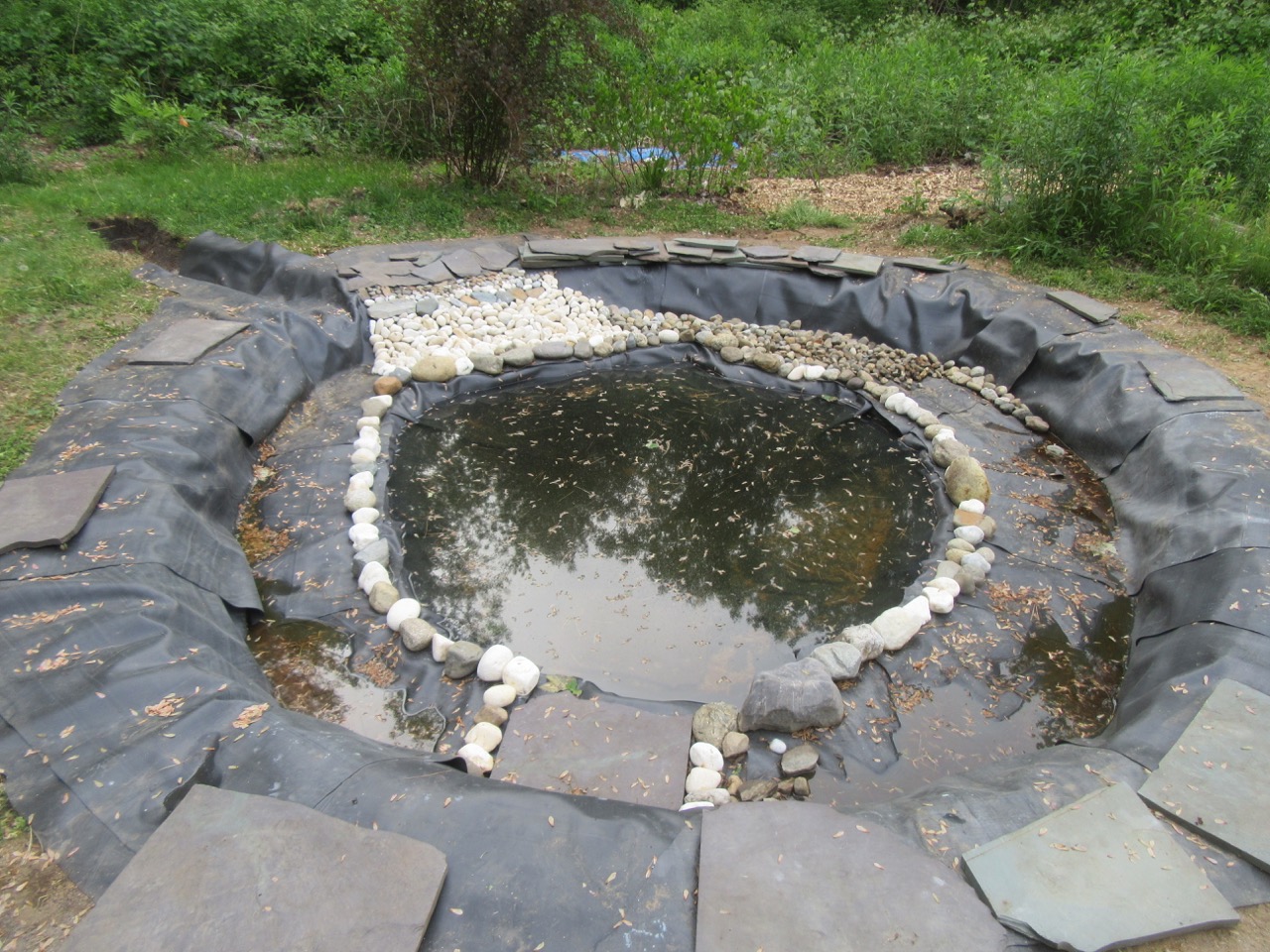
Finding stones for the pond project is proving to be an adventure. It is raining here today, and was yesterday too. The days before that I was able to place all the stones I had previously gathered onto the pond planting ledge. I also bought some white stones in small bags–they were supposed to be 3 to 5 inch stones, but at least half were much smaller than that. Maybe not such a great buy. But I had enough to finish a ring around the center of the planting ledge. These stones will be large enough to stabilize smaller stones behind them. Once the pond is filled, all of them will be below the water.

Pond with stones in a ring around the ledge, plus “beach.”

I worked on the “beach,” which is an incline for critters to be able to reach the water easily. I did it early in the process because It seemed like this might be the trickiest part, and I wasn’t wrong. In the photo it is at the back, with mostly white stones. I had gently placed each stone one by one. However, I am thinking I might need to redo the upper part of it because when I imagine little critters walking on those stones, it seems like they are not stable enough–the incline being slightly too steep. But to redo it, I’ll have to move the upper stones, and go beneath the liner and the carpet, and take out a bit more soil so the slope is more gradual. When the pond is filled, the water will cover the white stones and come to the level of the row of larger stones behind them.

Close up of pond “beach”

After I finished the (imperfect) beach, I put all of my smaller stones on the ledge to the right of the beach. As you can see in the first photo, they didn’t cover very much. So I will have to buy more small stones for the planting shelves, but I am now looking at 1-2 inch round stones, not “pea stones”. I discovered that a nearby nursery has such stones available in bulk–but that means either borrowing or renting a pickup truck to be able to collect them. I can get a half-yard of them for a good price, which should do it. It is just a big project to rent a truck, get stones, unload them at my house, and return the truck. I don’t mean to complain! If anyone locally (Portland Maine) has a pickup truck (with an open bed) who is willing to loan it, can you let me know? For some reason, this part feels challenging to me.

So, in the meantime, last night I suddenly had an idea of where I could find some more bigger stones. In our old neighborhood there were rural roads with no houses nearby, and I thought I remembered seeing stones on the side of those roads. Today before the rain came, I drove over there with two intentions. Get some stones, but also, look to see if the lady slipper plants we use to find in the woods there were still blooming. And they were. And I did get some good stones by the side of the road! I have a feeling this gathering of stones will continue for some time.

Pink lady slipper

Pond decisions

Sometimes the mental work is as hard as the physical work of building the pond. If you’ve been following along with this project, you know that after digging the hole, after putting down old carpet to protect against invasive bittersweet roots, after placing the underlayment and then the pond liner, we started filling the pond with water a few days ago. That felt so great! But then I felt stuck. The Building Natural Ponds book, by Robert Pavlis, which has been such a great guide to this whole project, suggested using old carpet as an “overlayment” on the planting shelves, to protect against the stones that were to go there. But I had run out of most of the carpet, and also had misgivings about putting old carpet into the actual water of the pond. So what to do?

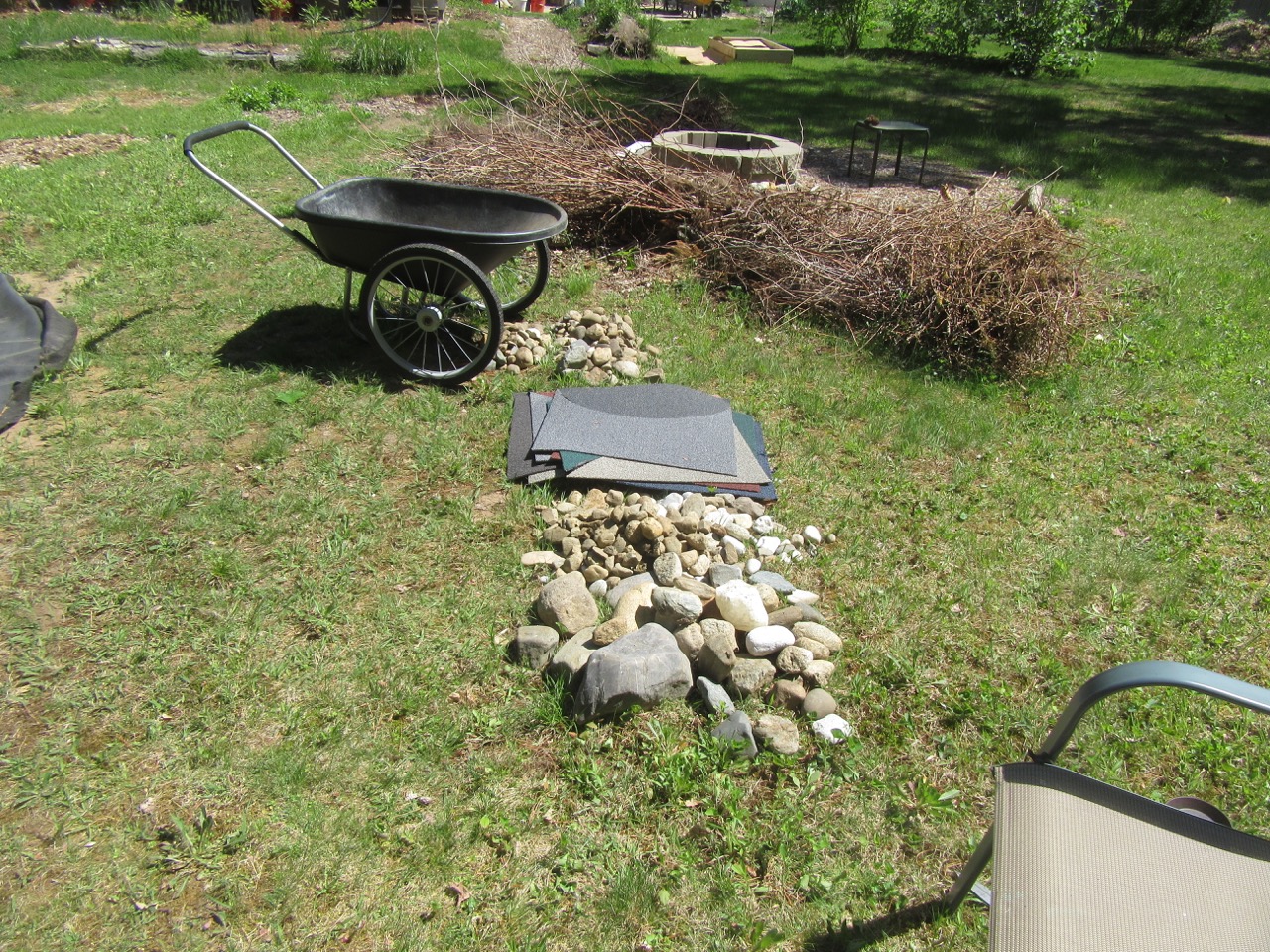
I thought and thought and then posed the question in two Facebook groups–the Building Natural Ponds group and the Northeast Permaculture Network. Then, I went outside and started gathering all the stones I’d been saving for the last five years from around the yard. I had some in five gallon buckets, and some in a pile next to the garage where violets had decided it was the perfect place to bloom. I had to dig under the roots to get all of those stones. But violets are very prolific in our yard, so I wasn’t worried about them. I also brought back the final bits of carpet I had–2 by 2 squares made of eco-friendly nylon.

Photo: Gathering all the stones to use in the pond.

Once that was done, I came back inside and checked my Facebook posts. I had gotten a variety of answers and suggestions from folks, and finally came up with my answer. I would use extra pond liner as an overlayment. Robert Pavlis had thought that idea would work well, so that gave me the confidence to do it. Some folks didn’t bother with any overlayment, but it gives just that added layer of protection against cuts or punctures from stones or little animal claws. So I went back outside, and I bravely made the first snips to cut off the extra pond liner around the edges of the pond. Because the pond wasn’t quite as deep as originally planned, there was quite a bit of extra liner.

Photo: extra pond liner

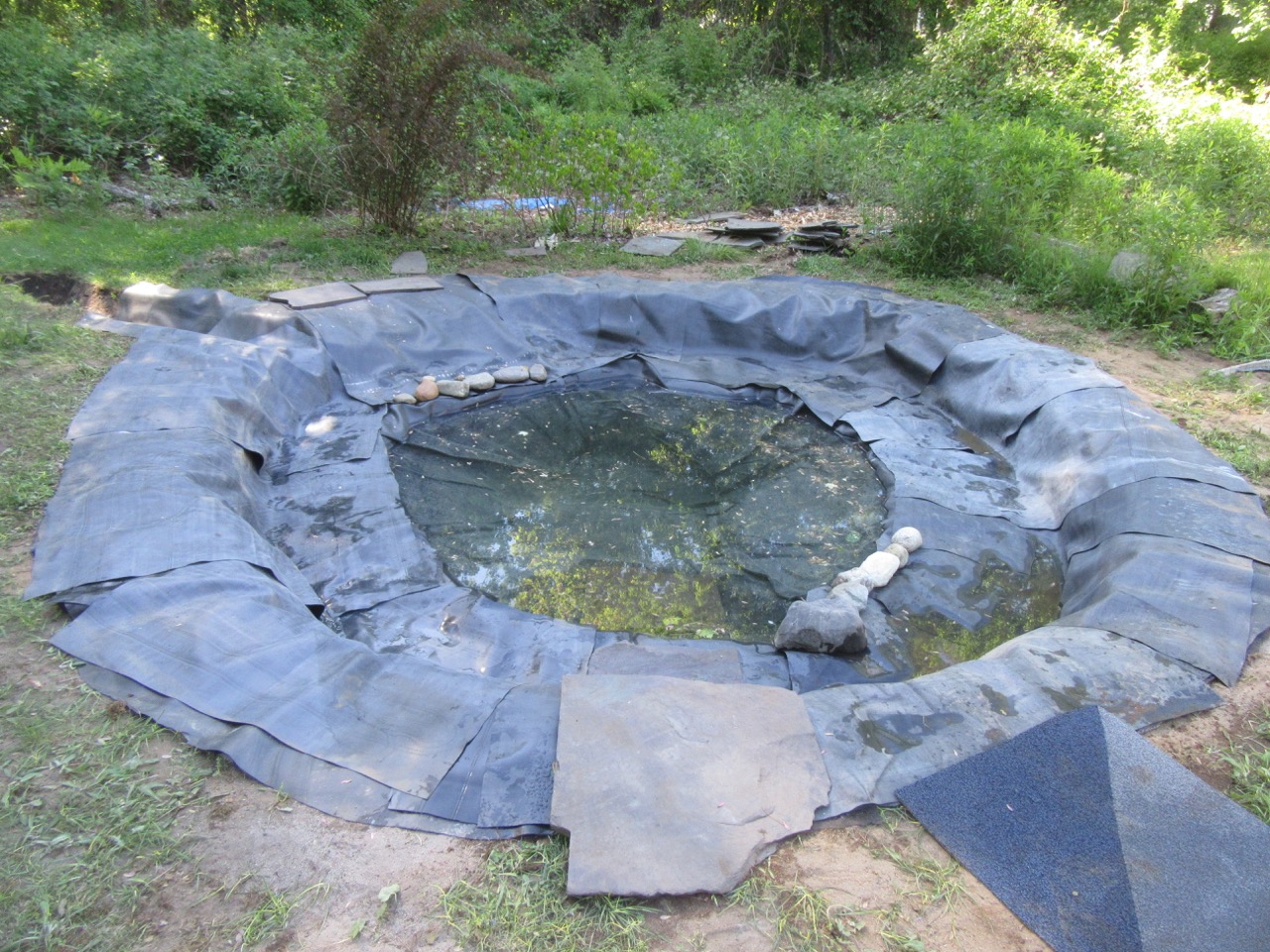
I started cutting it up and laying pieces of it all around the planting ledge, starting with the spot that I hope will be a little incline “beach” for animals to be able to approach. And as it happened, I had just enough liner to cover everything I needed. Then I started putting some stones into place. I did that in bare feet, and an old carpet square worked as a place to wipe off my feet before getting onto the planting ledge. We had some slate pieces that we found here when we first moved here, so I am hoping to use them around the edges of at least part of the circle. But I am also trying out using them for steps into the pond. Once the pond is full of life, it will be slippery, so maybe not. Decisions for later.

Photo: pond with liner overlay done, and stones begun to be placed.

I worked into the late afternoon, but finally came inside for another commitment. Today I am feeling all that work in my body–sore hands, sore muscles. I am eager to continue laying the stones I have–and then I will see how many more I will need. More decisions. The basic idea is to put larger stones around the center of the planting ledge, and larger stones near the outer ring of the planting ledge, then pea stones to fill in–those will be the growing medium for bacteria that clean and filter the water and aquatic plants that clean and filter the water. But as with this whole process, I am taking it step by step. I think if I had really known how much work it would be, I might not have had the temerity to begin. But here I am.

Pond Dig, part two

More on my adventures in digging a small pond! Yesterday I finished digging the first layer of the pond, down to the level of the planting shelf, about 1 foot. I checked whether it was fairly level after I was done. And then I did some math to figure out what 1/2 to 1/3 of the total surface area would be, which is the best size for the planting shelves.

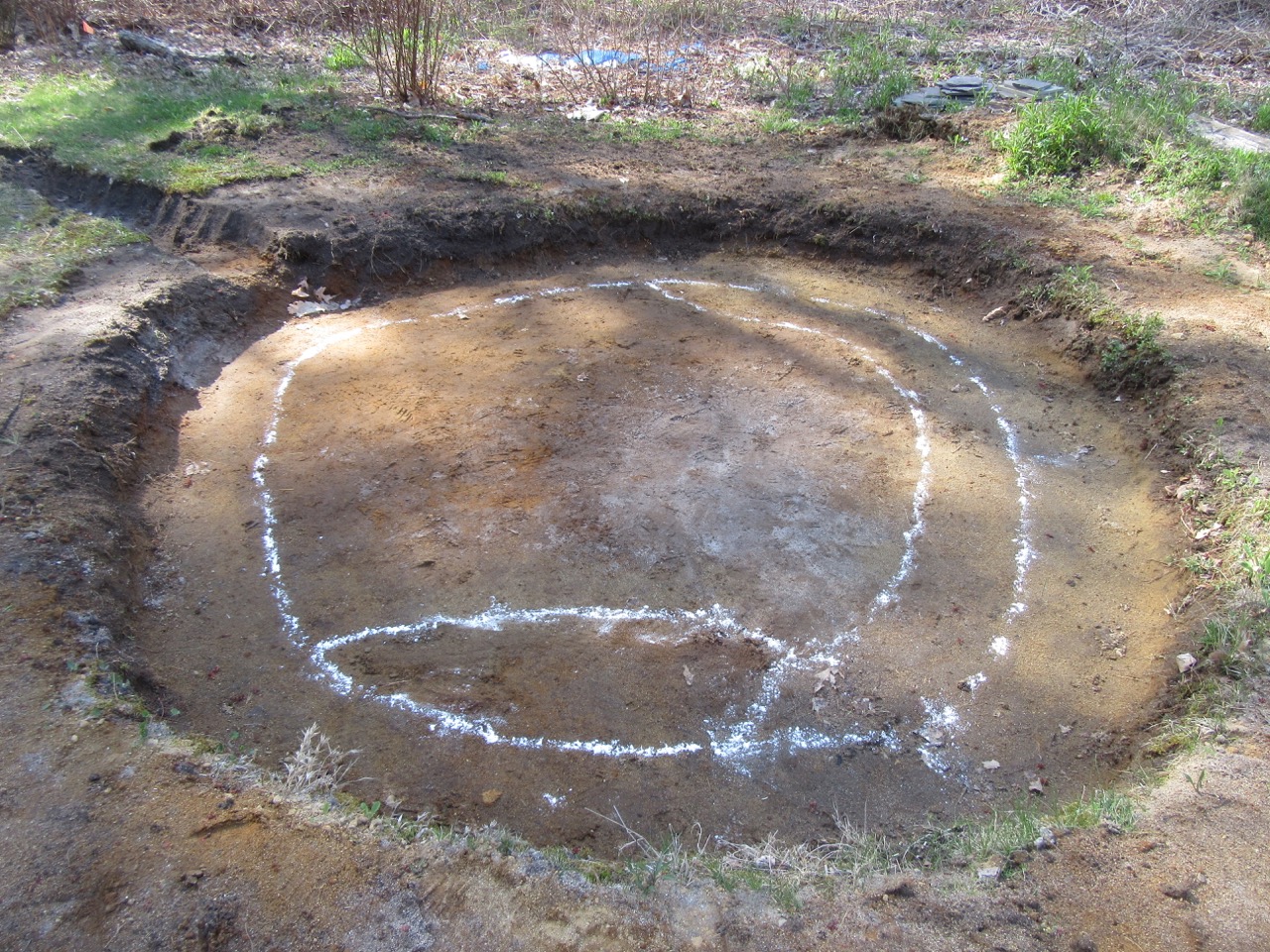
For those who might wonder, here is how I worked on that: Using a website that computes circle area, I found that for my 11′ by 11.5′ pond, the total surface area was about 100 square feet. If I made a planting shelf one foot deep, the resulting circle would be 9′ by 9.5′, with a surface area of 67 square feet, meaning the planting shelf included 33 square feet. I was surprised that just 1 foot at the edge already brought it to 1/3 of the area. Doing two feet would leave a circle of 7′ by 7.5′, or 41 square feet, with 59 square feet for planting. So I took half of that, and decided to do 1 foot wide on one half, with 2 feet wide on the other half, approximately. Even though the math is exact, the actual pond will be less so, but it gave me an idea of what I was aiming for. I marked it out with white flour, including a spot for a step, that would be dug to 1 more foot down, to make it easier to get in and out of the pond center.

Pond layer one, with my rough markings for planting shelves and a step

Meanwhile, I’ve heard back from folks who have bits and pieces of carpet–I had asked for at least 2 feet wide, and the responses have ranged from 2′ by 2′, to a medium size carpet. I picked up some yesterday, and will do more today. It has been fun to have these interactions with folks, limited as they are–so rare for me in a time of COVID. Since I don’t have a truck, the smaller pieces actually work because they fit in the back of my car.

Meanwhile, the pond liner was delivered yesterday too! A very heavy box was dropped in our driveway by UPS. (I think I remember that it was going to be 138 pounds) Unable to lift it myself, or even together with Margy, she had the idea to roll it onto a larger piece of cardboard (which we always have in our garage for various garden projects) and then we could pull that cardboard together along the driveway to a better spot–and it worked. So it is waiting by the side of our house. It made me realize, though, that when I actually install the liner in the pond, I will definitely need help from a few friends.

Four years ago, the pond was part of our original plan for our permablitz–when twenty-some people came by and helped us with all manner of garden projects. (If you are curious about that, you can find more here.) It was such a humbling and gratifying experience to be gifted with the energy of so many to begin to create this permaculture garden where we live. With everything else going on that day, it was decided that the pond would be too much to attempt. But it is wonderful to remember how community enables us to live better with our land, how the gift of each other’s time and energy enriches all who participate. With COVID we’ve been on our own so much, and yet even so, we rely on the help of others–delivery people, for example, and neighbors who have picked up needed items in stores. It has brought us closer together with our neighbors actually. We are so programmed by our society to try to be self-sufficient. It is hard to be reminded of our need for each other–and yet that need is a blessing.

Meanwhile, it was also a blessing to be digging on my own, outside in a beautiful sunny day. Squirrels were playing, birds singing, daffodils shining bright yellow, and the cherry and peach trees are beginning to blossom. I started on the next layer of the pond. Our soil is very sandy and compacted–we had an inch of rain fall on Friday, and none of it stayed in the depression that I had already dug. So the recommendation is to slope the sides as we go down so it doesn’t collapse. Step by step, and with a little help, I think it can be done.

Digging begun on second level.

Future Fruit Trees

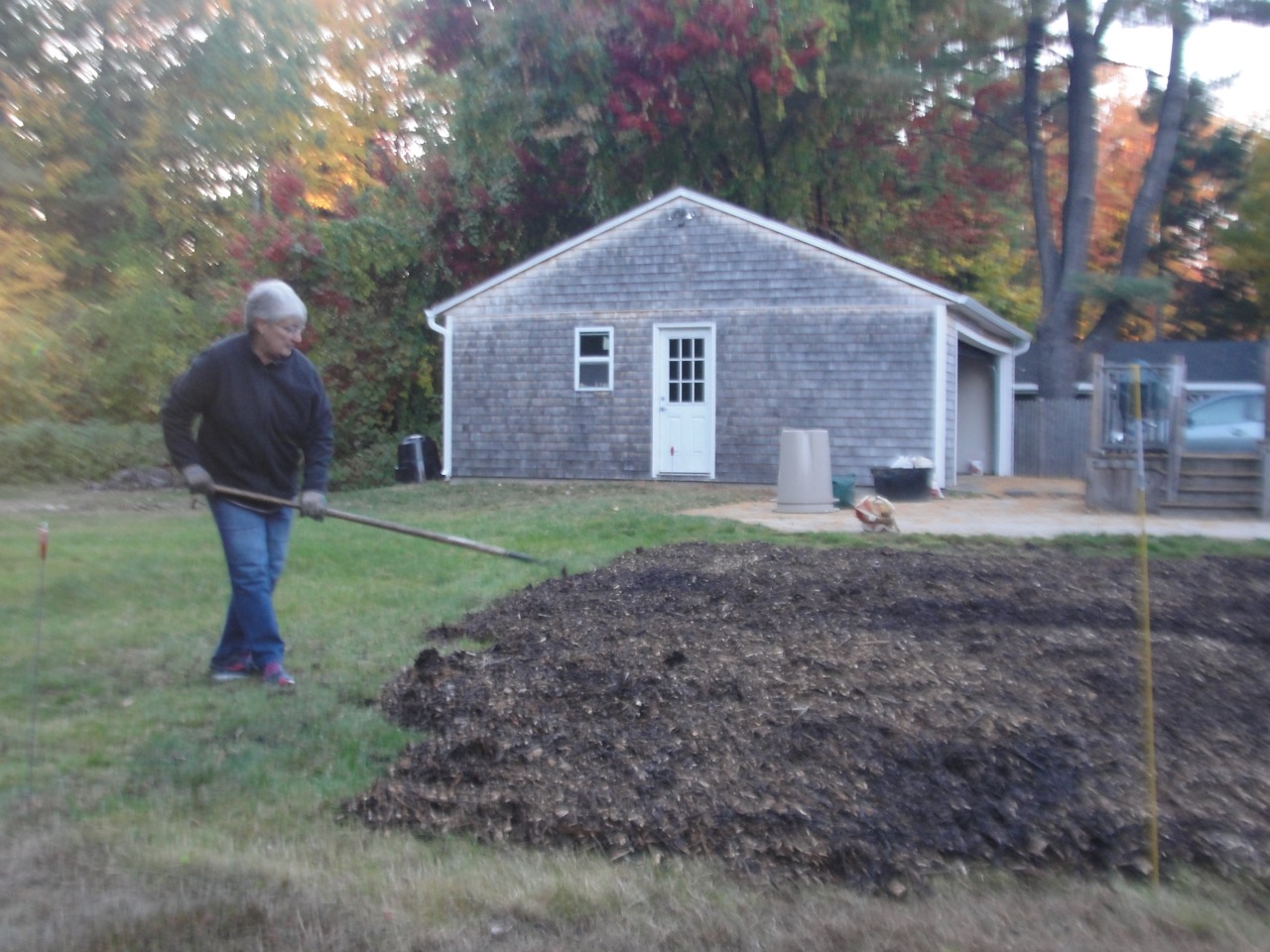
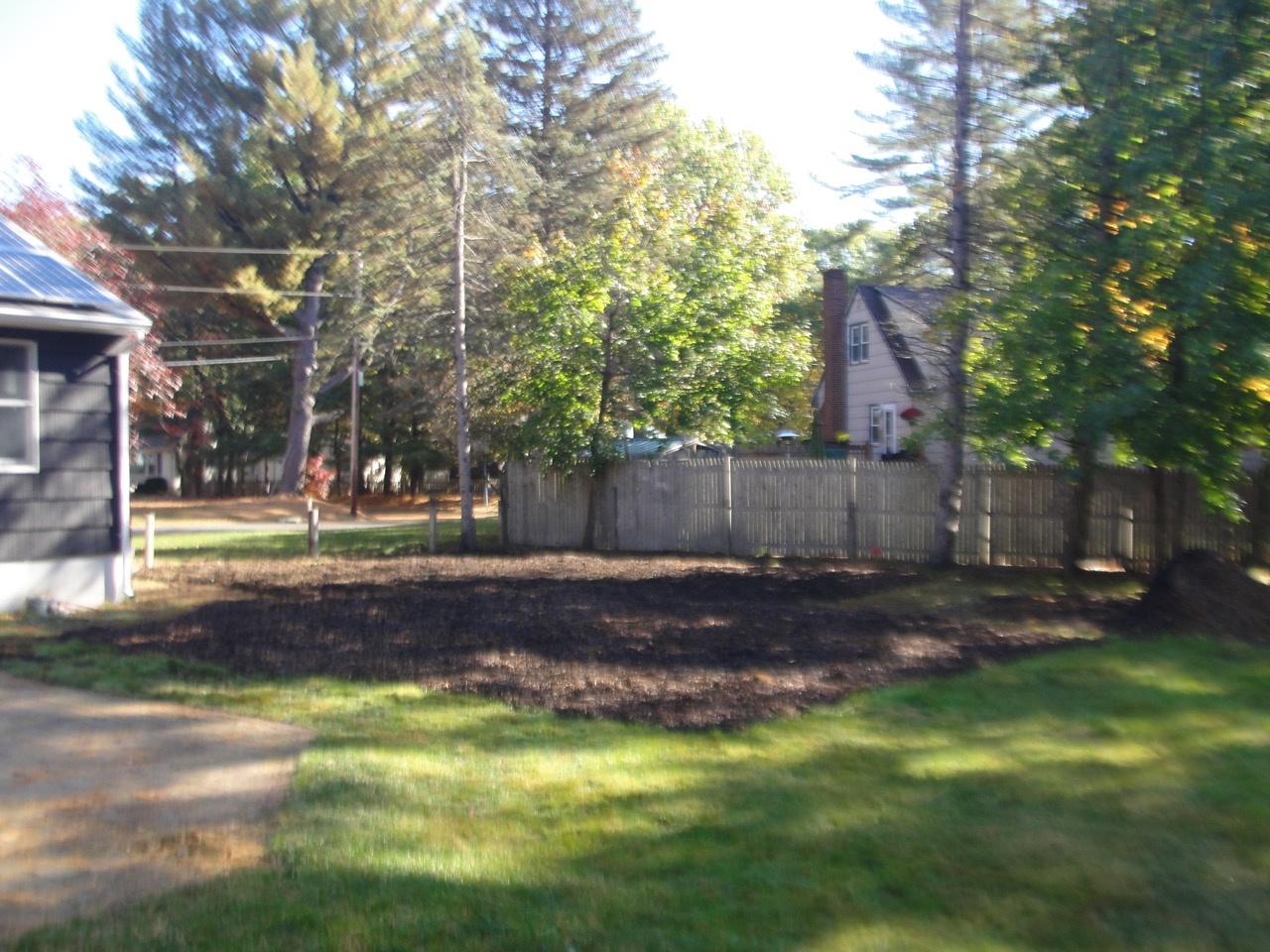
Wood chips JackWood chips LizThanks to help from Margy’s sister Liz and brother-in-law, Jack, we were able to spread wood chips over a part of our yard that we are envisioning for future fruit trees.  The soil in the yard is quite compacted, and we have a big pile of wood chips from the old maple tree that was cut down last year.  Lisa Fernandes of Resilience Hub had suggested that the best easy way to start improving the soil for growing trees was to spread wood chips now so they can percolate over the winter, and help the soil to develop fungal infrastructure.

It seemed like a huge job, and Margy and I hadn’t been able to start it on our own.  But when Liz and Jack came to visit for the weekend, they offered to help with a project.  Margy immediately thought of the wood chips.  The three of them began on Saturday afternoon, and then we all worked on Sunday afternoon to expand it and finish it.  Margy coordinated our efforts and documented it with these photos.

We had a wonderful visit, and this morning I feel so happy looking at the space that is no longer raggedy lawn, but imagined and hoped for cherries, apples and peaches, imbued with the spirit of the old maple, and the loving hands of family.dsc06784


dsc06809

Boxes

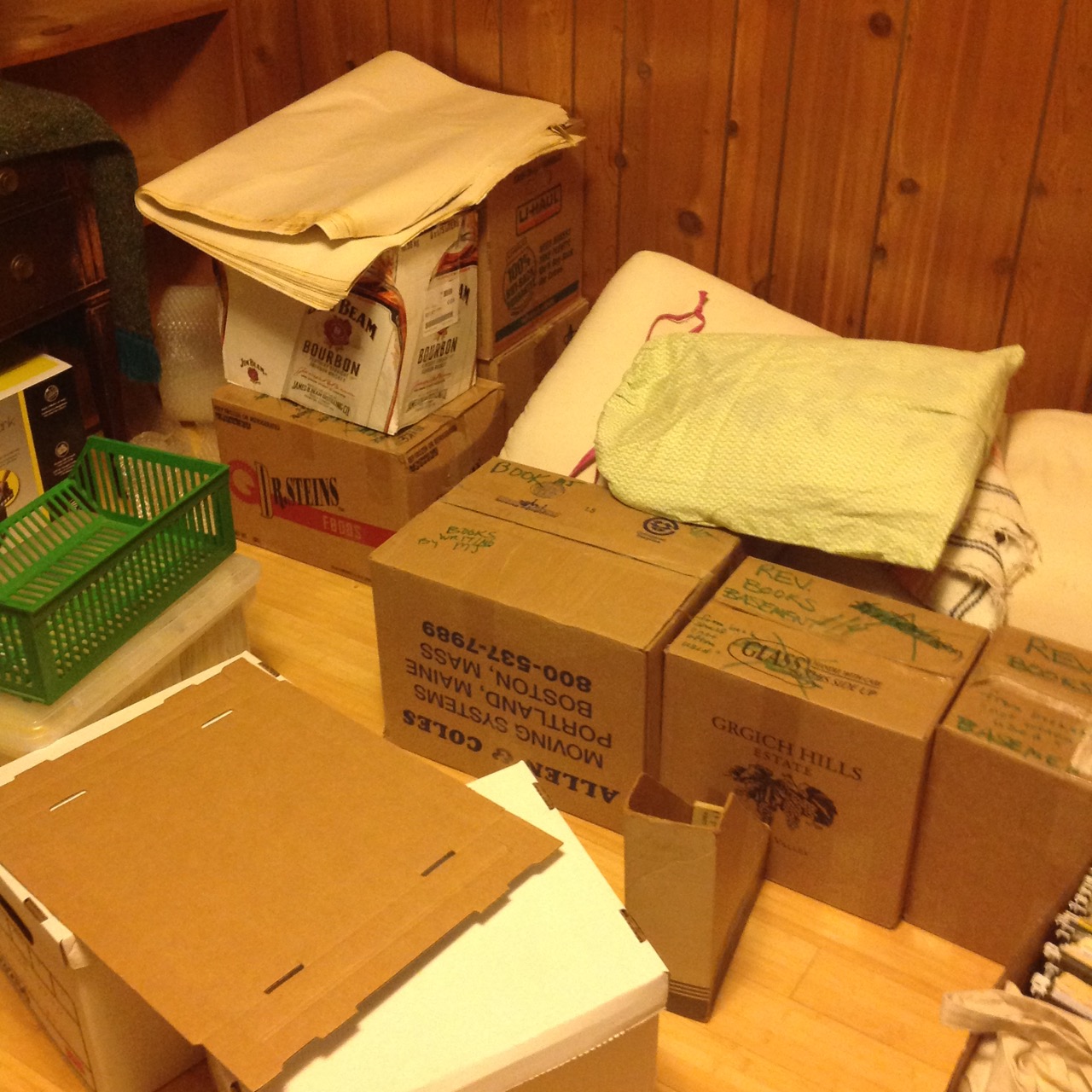
IMG_0774Our house is filling up with boxes and more boxes, as another helper (Thank you!) came today, and we packed and packed.  Then, she left a lovely dinner that I could heat up in the oven. Yum!
Tomorrow, there are a few more helpers coming over to do more packing. Love all these recycled boxes from the people who moved before we did–who are also among the helpers. (Thank you!)  One step after the other, and then resting in between.

Dinner!

Dinner!


IMG_0770

Ready for tomorrow.

Helpers!

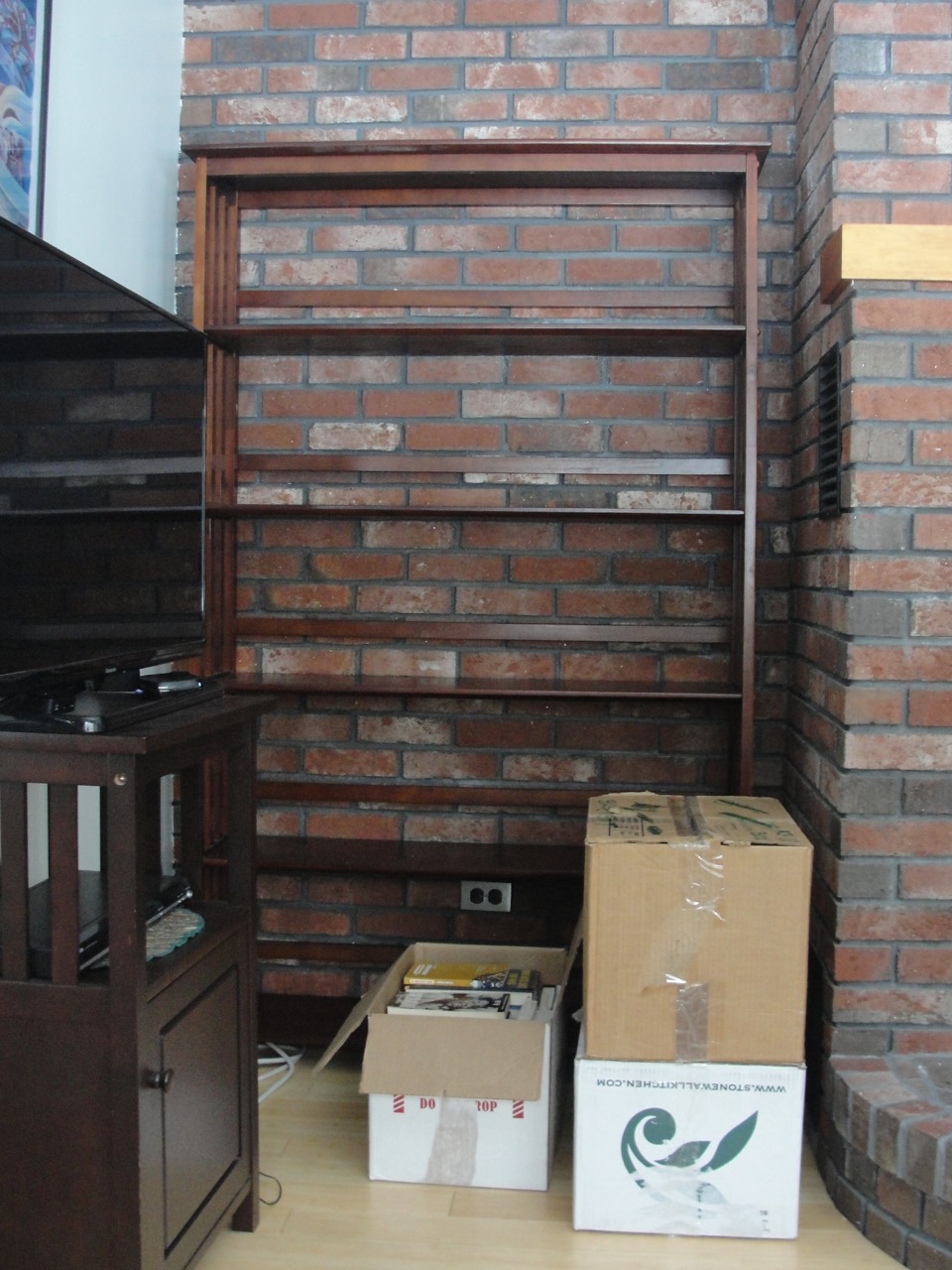
Our moving date is Feb 26.  Yesterday we began packing in earnest.  I rarely take the Monday holidays off work, but I was able to this time. Surveying the situation felt overwhelming, until two wonderful helpers came over and started putting books and record albums into boxes.Empty bookcase

Their energy gave us energy, and between the four of us, we packed over 35 boxes!  Today I am back to ministry work, but next week I will be taking unused vacation days from February 23rd to March 2nd in order to do the final packing push.  Other folks have offered to help us during the three day packing spree before the movers arrive.

This help is such a marvelous thing!  There are so many moments when we feel overwhelmed by the weight of all we have to box up and carry to a new home.  We did a fair amount of sorting and recycling and giving away, but at a certain point–and I think we have reached it–we just have to put things in boxes and not worry about the de-cluttering project until we arrive at our new place. We will have a few weeks overlap, so we can leave some things here that we want to go through more carefully, or give away.

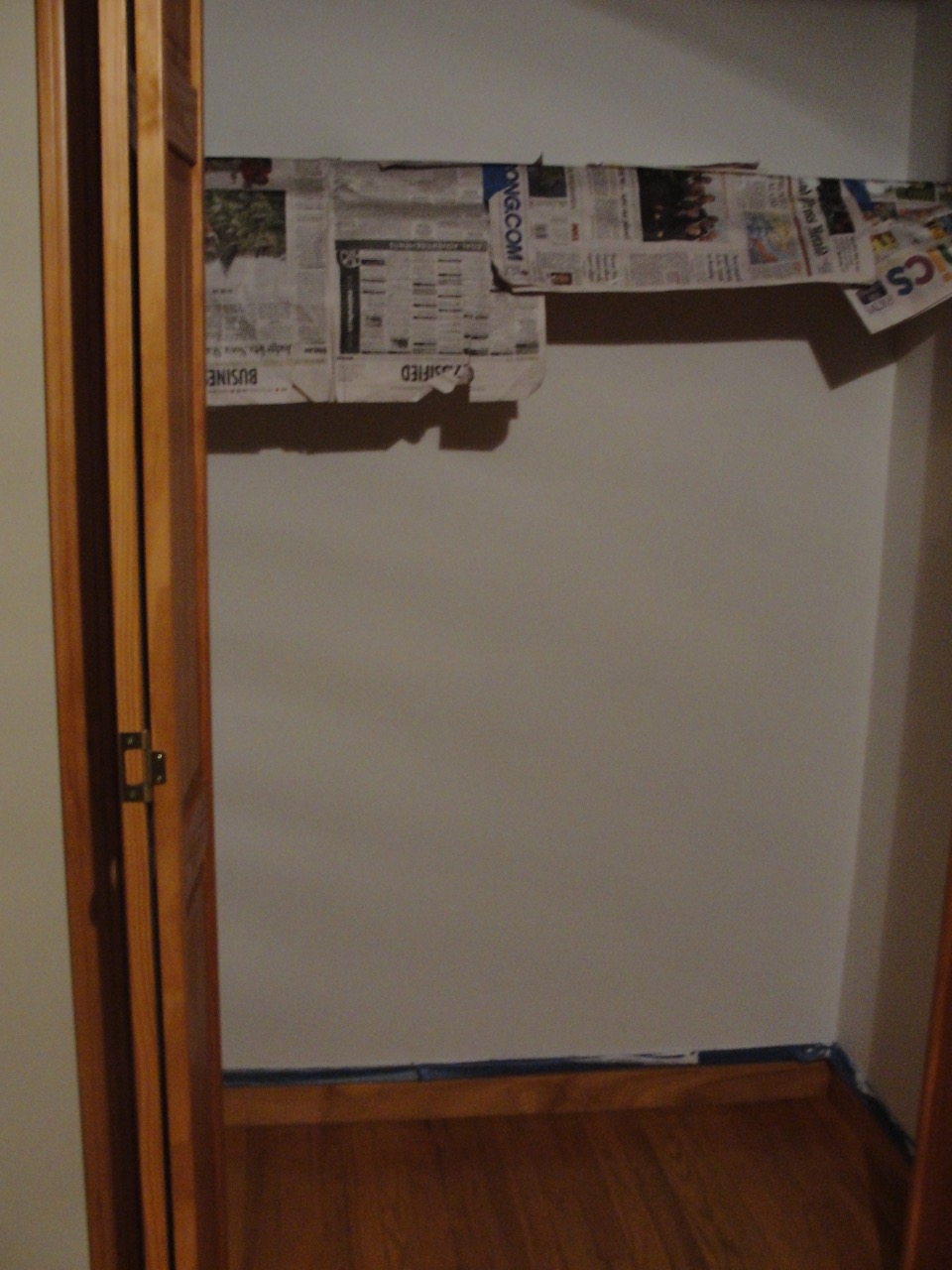
Painted closetMeanwhile, at the new place, Margy has been painting the closets and cupboards, so that they’ll be ready for us to fill with our clothes and dishes. (She took this picture after her work on one closet.)

AND we still have more radon mitigation work to do in our old basement.  The tests came back too high, so we renegotiated with the buyers, and we are paying an air quality company to come this week to expand the current radon mitigation system.

Our realtor also made an important discovery. Our boiler has a barometric damper, and he noticed it was in the wide open position, even when the boiler wasn’t running. This means it would have been constantly drawing air from the basement up into the chimney, creating negative pressure that could literally be sucking radon into the space.  He also noticed that the weights were positioned incorrectly for the type of damper, so we shifted the weights, and adjusted them so that it closes when the furnace is off and opens a small amount when it is on. At some point, we may have someone come out to calibrate it more exactly, but for now, we hope this will help with radon mitigation. We have heard that the buyers are planning to replace the heating system, so it doesn’t make sense to put a lot into it now. It is a bit of a catch-22.  If we can’t get the radon levels down to acceptable numbers, the sale of the house won’t go through.  So, fingers crossed.

A colleague who has moved a lot suggested I might think of moving as a spiritual practice. There are so many ways that this makes sense.  There is so much outside of our control.  And yet there is so much work that we have to do to make it happen.  This balancing act between vulnerability and effort is such a metaphor for all of what is important in life.

I come back to Gratitude for the helpers who enter our lives, and enable us to keep on this journey.  Some of the helpers are those we enlist professionally for a fee.  But most are kindhearted souls who we are privileged to know, who make such a difference.