What the garden does with us

Monarch caterpillar on milkweed

While on my morning walk, I suddenly saw a monarch caterpillar on a milkweed that had planted itself in our roadside strip. The next day (today), I saw three more. All we did with the milkweed was let it keep growing where it showed up on its own. There are two plants by the road, and three or four more in a patch out back near the pond. But the monarchs found them all the same.

I have been feeling discouraged lately about my ability to garden. First of all there is the challenge of chronic fatigue that limits my energy such that even one small project outside in the morning can wipe me out for the rest of the day. But then there is the limitation of my own knowledge about the green growing beings. Right now, it is the cherry trees that are struggling with some disease. I am thankful to Aaron Parker of Edgewood Nursery who suggested, after seeing photos, that they are most likely dealing with Cherry Leaf Spot.
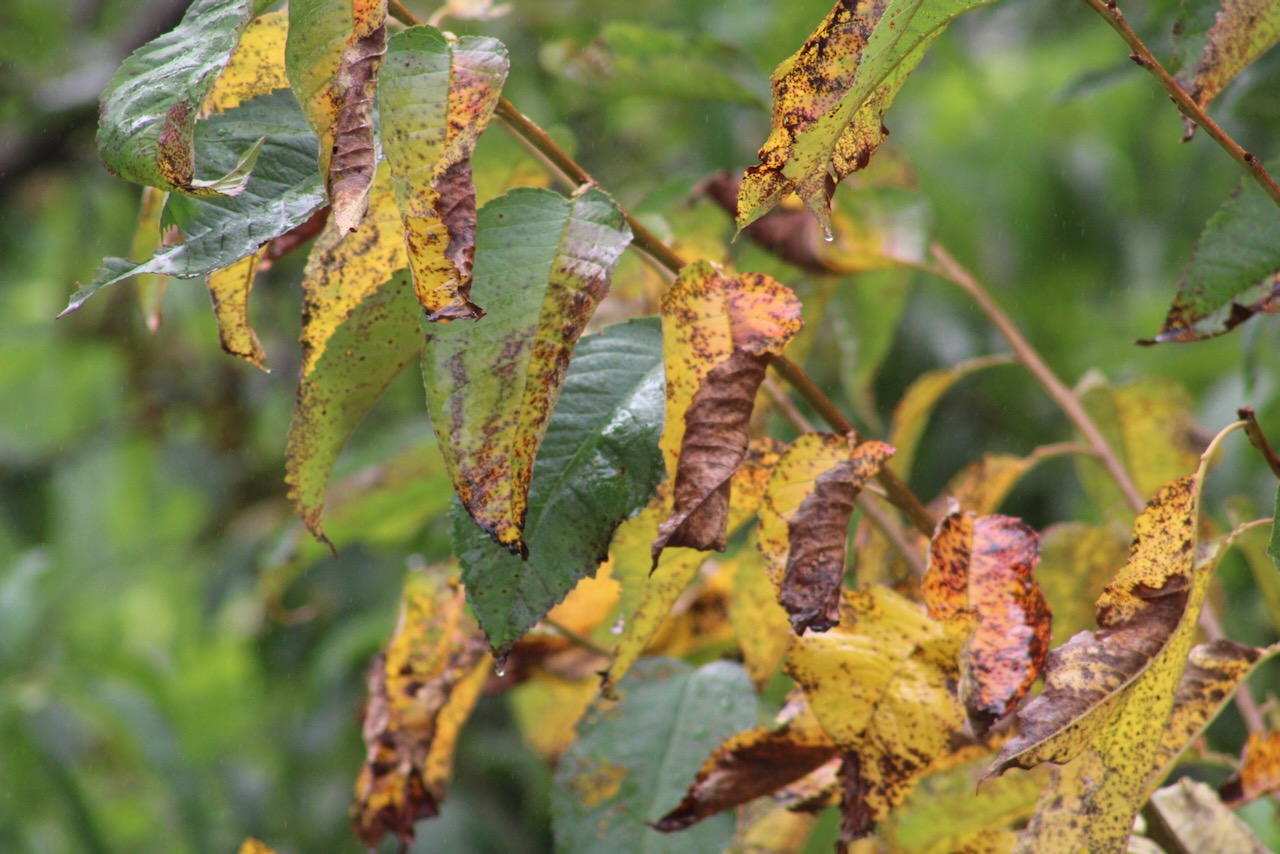
The possible answer is to clean up all the infected leaves on the ground and on the tree, and use an organic probiotic “Monterey complete disease control.” But even so, it might not work. Another website suggests natural remedies such as neem oil, potassium bicarbonate, and copper fungicides, which can be used to manage fungal infections like leaf spot. This season, I hadn’t done any holistic sprays because the sprayer takes a lot of personal energy to use. So I feel sad about the cherry trees, and even though I ordered some of the Monterey remedy, I feel discouraged about how much more work I’ve made for myself. Will it even help?

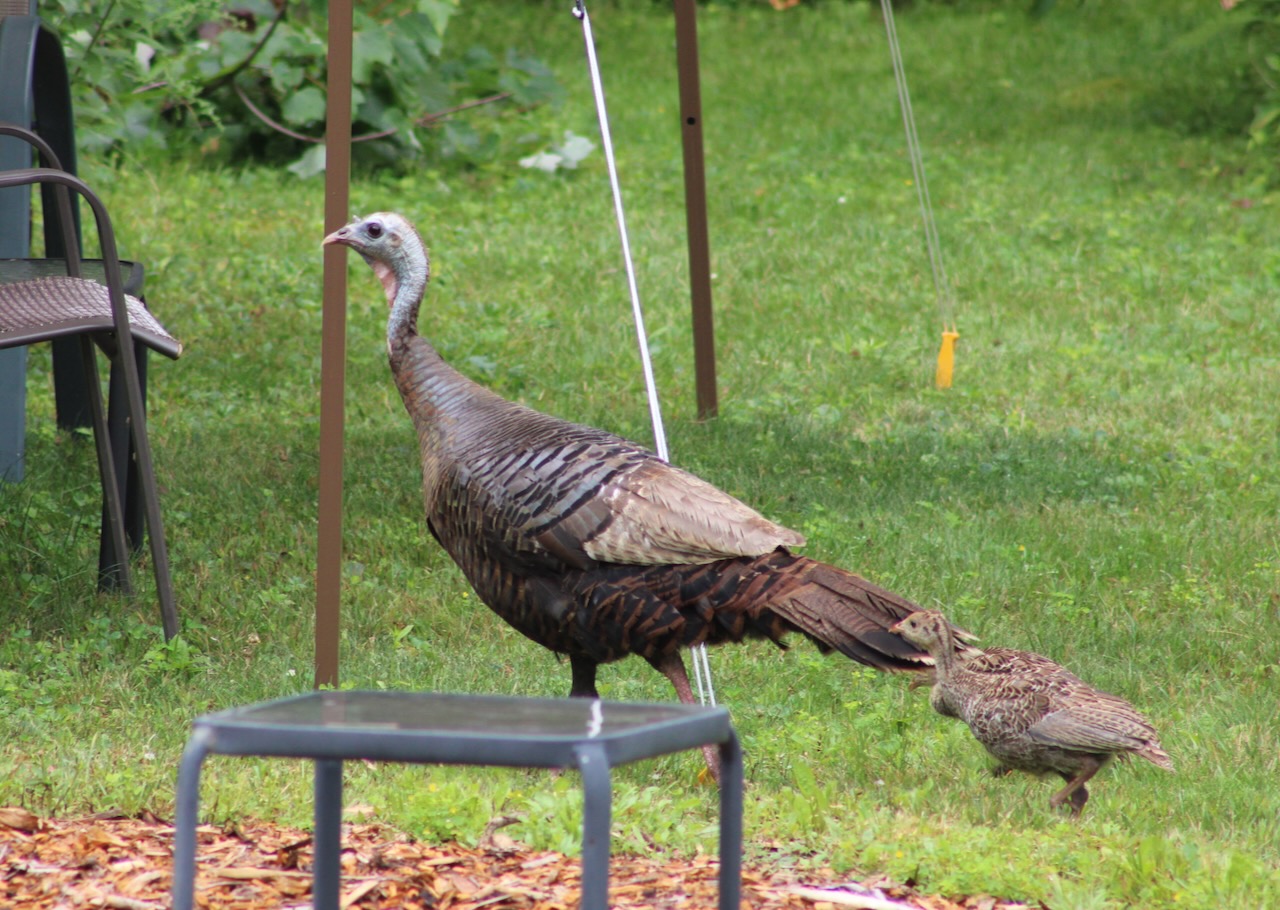
But in the midst of this discouragement, the caterpillars showed up on their own. And meanwhile, a turkey mom and her three babies have wandered through the yard a few times. Here we see them scooting under our canopy where we sit outside in some shade.
Meanwhile, the front raised bed that we didn’t plant decided to grow evening primrose on its own, and today I saw a gold finch happily checking out the yellow flowers. He was too quick to get into the photo. So I guess as a wildlife habitat, we are doing okay!

Then I saw this quote on Facebook this morning, posted by a colleague, and it was a good reminder that it isn’t really about how well we can garden. Something more magical is going on, and I must remember that.

“There was one thing I suddenly knew with absolute certainty: magic is not just something you do or make, it is something the universe does with you. It is our relationship to the Divine. There is nothing more magical than the presence of the sacred in one’s life. It changes everything. … It isn’t something one does to the universe; it’s what a living universe does with us once we have awakened to its Divinity.” Phyllis Curott in Book of Shadows

And maybe, it’s what the garden does with us once we have awakened to its Divinity.

Walking in Storms

Early morning at Capisic Brook Jan 8

A little magic has emerged in my life. For a long time, I didn’t have the energy to go on walks, except for a minimal 5-minute walk to the end of our street. But somehow my energy has lifted a little, and for the last several days I have been able to walk to Capisic Brook, where it goes under the walkway to the elementary school, about 15 minutes total. It started January 2nd when, as I entered my driveway, I felt the presence of the Marie Madeleines, my ancestors from Îlets-Jérémie. “We are still with you.” They would have spent so much time walking in their lives. So I felt them walking with me in the early morning, greeting the dawn.

I heard the message from these ancestors: “You need new boots. Walking will be needed.” It was true that my boots were quite old and my feet were feeling it. So when I got back home, I did some online research, and then called a local store. After arranging it, I went in with a mask on, tried them on and bought myself some new boots. (The ones I wanted were on sale!) When I am lucky enough to hear a clear directive, I find it is so beneficial to follow it. And so I have kept walking almost every morning before breakfast. Even in the snowstorm, even in the first rainstorm. Yesterday I couldn’t get myself out there, but today the sun helped.

All these storms have been a challenge. We expect snow in winter in Maine. I like snow. But we’ve only had one snowstorm. There have been at least three huge rain and wind storms–first, when the spruce tree fell into the orchard, another January 9th into the 10th, and then yesterday which mostly caused damage at the shore during high tide. I took this photo of the brook at flood level on the 10th–because the branches of Capisic Brook flow through deep ravines, it doesn’t come onto roads in our neighborhood.

After the rainstorm, January 10

I can’t help but wonder what these weather changes mean for the future. Will rain and wind be the new winter, alternating with snow and cold? Someone posted (on Facebook-but no attribution) this little diagram that showed how climate warming destabilizes the polar vortex causing the extreme colds and unusual warms we are seeing right now. My sister in Montana reported -34 degrees, and Texas at 40 degrees, while we were up to 50 degrees.

While often I am most inclined to grieve or be afraid of all of this, I am also hearing the message that we must find a way to keep loving our changing earth mother, keep loving through the ups and downs. Perhaps it is also about the magic of walking–keep walking through the storms. I don’t know the answers but I am so grateful for the moments of connection and care.

Fallen Spruce

It is raining here in the northeast and the wind is blowing mightily, with gusts past 50 miles per hour. This healthy spruce tree suddenly fell down from its very roots. I was inside and heard something, but didn’t realize what had happened until I poked my nose out the door. Thankfully, it just missed our deck! And our house! 

I found this little squirrel within the branches, perched on a cherry tree branch, probably wondering what the heck just happened! And also eating a seed. The spruces are like squirrel highways over here.

I went fully outside into the rain to survey the damage and was amazed by how we lucked out. The spruce landed in the orchard, tucked neatly between the trees. Some orchard tree branches are bent or broken, but not the trunks. Also, it could have hit our house if it had fallen in a different direction, but it did not.

Earlier, I had been worrying about an entirely different spruce–a dead one with a squirrels nest. That one is still standing so far, but this one took me by surprise. The whole root ball had come out of the ground. This photo is from that root, from the bottom of the tree, looking to the top, where you can see how it landed between the white painted trunks of apple and peach. The patterns of the branches are so beautiful, even in its dying.

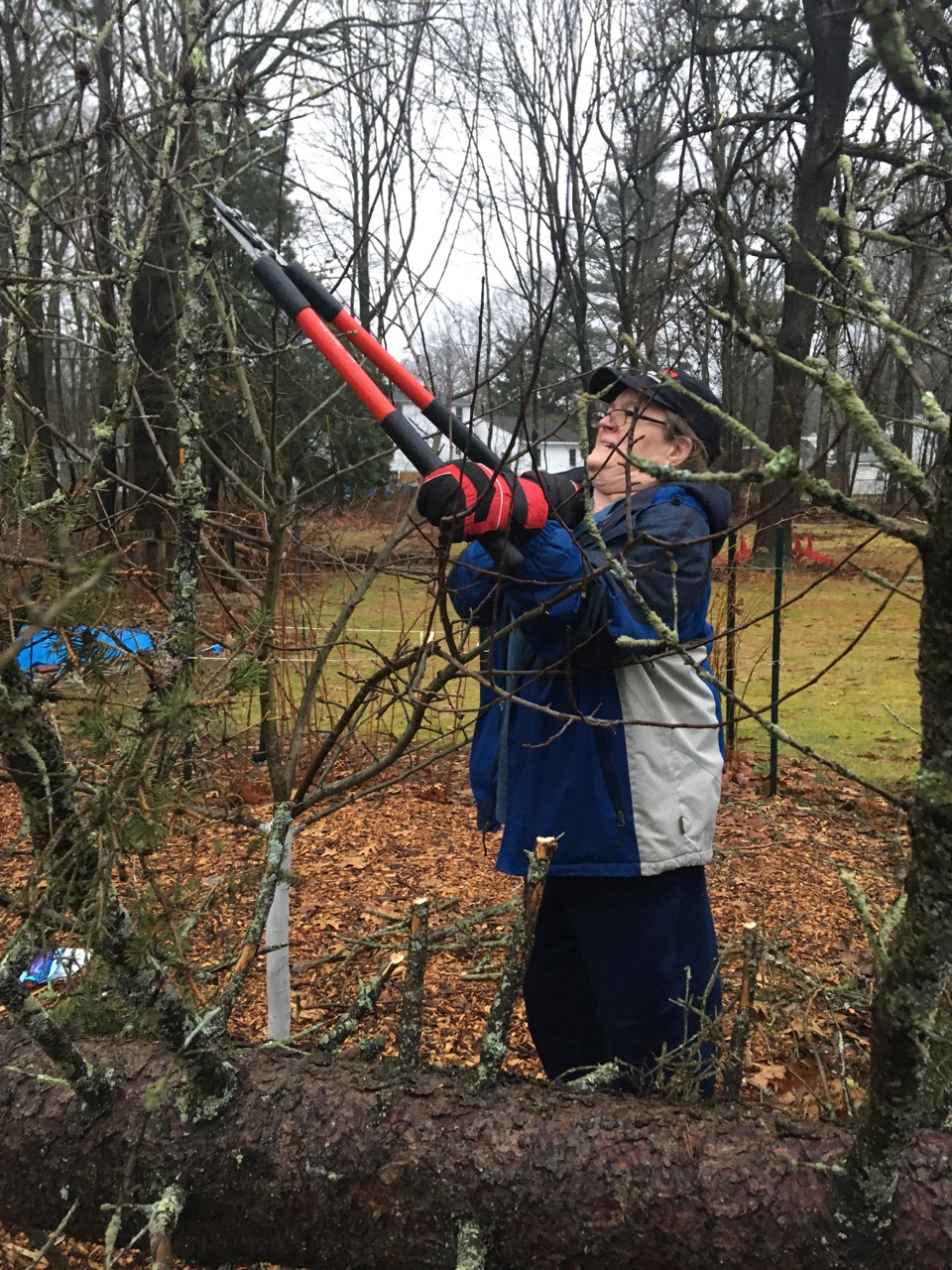
I don’t know how much damage the orchard trees suffered. When Margy got home from an appointment, she went out in the rain immediately to begin cutting spruce branches that were interfering with orchard tree branches. I guess that is something else that I love about her. Going outside in all sorts of weather, and caring about trees. I think if the branches can be freed from where they are bent, they might have a better chance of recovering.

Meanwhile, I am inside thinking about how vulnerable we all are to the wind and weather. How even with so much care put into this orchard, it could be wiped out with a storm. Or a tree could fall on our house. I tend to worry, to imagining worst case scenarios. Yet, I have been so blessed in so many ways, protected from harm by what magic? I can’t put it on “being blessed,” because I don’t think people who face tragedy or catastrophe do so because of not “being blessed.” (I don’t think people being killed in Gaza are outside of the view of that Mystery who blesses all, and who is especially with those who are suffering.)

Luck? Fate? I am reminded of the Chinese story about a farmer whose horse escaped into the hills. When his neighbors came by to sympathize with the old man over his bad luck, the farmer replied, “Bad luck? Good luck? Who knows?” The next day, the horse returned with a beautiful wild stallion. This time the neighbors congratulated the farmer on his good luck. His reply was, “Good luck? Bad luck? Who knows?” Then, when the farmer’s son was attempting to tame the stallion, he fell off its back and broke his leg. Everyone thought this very bad luck. But the farmer again replied, “Bad luck? Good luck? Who knows?”

Some weeks later, the army marched into the village and conscripted every able-bodied youth they found there. When they saw the farmer’s son with his broken leg, they let him off. Now was that good luck or bad luck? Who knows?

When a tree falls I am reminded that the world we live in is much bigger than we can understand or imagine. 

Interrupted by Ancestors

Full moon shining between dark pine branches on a dark sky

Yesterday, going through old files on my laptop, I found a letter from October 1994 that I never sent–so really, more of a letter to myself. It described how my Innu ancestors would interrupt my daily life with their insistence on being recognized and acknowledged. I hadn’t thought about that for a long time, and wanted to remember it by including some excerpts of those reflections here. What a magical time it was.

“A few weeks ago, a friend from Vermont told me he had heard a rumor that Yvette Michel, an Innu leader from Maliotenam, was coming to visit me in Boston. This was the first odd thing. I certainly hadn’t heard anything about it. I had met her very briefly but didn’t expect her to remember me. A few days later I learned from someone else that she was doing a speaking tour in New England for the Coalition for Nitassinan. The Coalition was a group of activist traditionalists. Nitassinan is the Innu name for Innu territory, meaning ‘our land.’

“Then, I got a message from Mary Frongillo, a white woman who has been living in the community of Maliotenam for a couple years. We had spoken once before by phone. She said they had heard there was a Native spiritual gathering of some kind in Boston the coming weekend, and someone had told them I would know about it. Well, I didn’t know anything, but I made a few phone calls and found out about a gathering a couple hours away from Boston. That’s when I got a hint that maybe I should go too. But I didn’t know how I’d be able to get there, and I couldn’t afford a donation (to help with food for the elders), etc.

“Still, it felt like spirits were interrupting my regularly scheduled programs for a special bulletin. So when I called Mary back, I told her all the info, and that I was thinking about coming. She said they would be near Boston before hand and could give me a ride there and back, and we could be a camp together. So that’s when I cancelled everything, and decided to go for it. By Friday afternoon I was sitting in the sun in front of our two little tents, watching eagles fly overhead, trying to follow French (Yvette speaks French and Innu) through a mixture of translation and memory. The weekend weather seemed totally in love with us–it was sunny and warm during the day, cold and clear at night. I felt afraid at first, being shy, and especially without my favorite power: easy words.

“But eventually, I relaxed into a bilingual state of consciousness, full of the earth again and taking in so many little stories and practices of Innu culture, in a way in which I had never before had the opportunity. Things like bannock, a simple Innu bread, which we ate with our meals. I watched Yvette make two loaves, stirring flour and salt and baking powder together with water, forming a flat round loaf, pressed into a cast iron pan with flour in it, cooked about half an hour on each side. Mary was a wonderful translator, in the wider sense of the term, for she told me many things from her experience, things which someone notices because they are not from that place.

“During the last two years, the more I reckon with being white, the more the Innu part of me asserts its presence. I now believe I need both of those parts. The better white person I can be, the better I can also be Innu. So the white person fights the racism I see in the New Age theft of symbol and ritual, and searches out the spiritual wisdoms of European ancestors. And I do believe white women need to be doing this–we need to search out our own ancestral traditions and powers of the earth, rather than turn to Native or African American women as a kind of ‘spiritual surrogate.’

“But in the meantime, whenever I have thought I should let go of my desire for the Innu part of me (‘I’m not Indian enough for it to count–five generations back.’ ‘Don’t be a wannabe.’ ‘I should just be white, acknowledge my privilege and leave it at that.’) it hasn’t been supported by the spirits. It was after I was learning the Runes, and creating a link to Freya, ancestor goddess of Northern Europe, that I first met people who were helping the Innu and learned about their struggle against hydrodams. I said to myself, I am chasing after my European ancestors, but the Innu ancestors are chasing after me. A month later I was in Quebec city testifying against the dams, and meeting members of the Coalition for Nitassinan. That was another spirit interruption.

“So even as I was trying to be more ‘successful’ as a white person–ie. using my educational privilege, trying to make more money than just barely getting by, still in service to my values–I was interrupted to spend a weekend on the earth, on Indian time, in a setting where people don’t have much at all but share what they have with who needs it–all these values that exist in Innu culture, (and in other Native cultures), and which I wish existed more in our culture.”

The Innu ancestors won’t let me go.

How to find the magic?

Evergreen tree inside our house, decorated with lights and little ornaments, with wood stove to the right in a brick hearth.

Almost Winter Solstice here! We got our first snow the other day, just a few inches, but enough to brighten the ground. It is good. It seems the long cold nights are infiltrating my spirit, and I feel weary. As I get older, it is harder to rejoice in the season of winter–ice has tripped me up on prior walks, and bruised my bones. COVID has limited our ability to welcome guests into our home, and it is too frigid for visits in the garden. Last week, our heat pumps suddenly stopped working, and we turned to our back-up boiler, but it seemed a little clanky from disuse, so we fired up our wood stove. That sounds cozy, but I find the wood smoke gives me headaches. (Thankfully, the heat pumps were repaired in two days.)

I feel old and cranky and tired with this season. It is ironic that pagan myths often assign this season to an old woman. I wonder if the winter crone is cranky? I am wrestling with how to find the magic of this cold dark season.

I didn’t really feel like getting a holiday tree. But Margy did, so we got this tree from our local food coop. I don’t feel guilty for it being cut, because it was grown for this purpose on an organic tree farm. Seeing how many seedlings try to grow into a new forest in our yard, I know that there can be an abundance of seedlings that naturally never grow up–so this one got to grow to eight feet and then be celebrated. I find myself surprised by how good it feels to have this little tree with us in the house, like a connection to the natural world during a time when that connection is harder to feel. I feel grateful to Margy for pulling us into its sweet magic.

That is my question. How to find the magic of this cold dark season? Can I quiet my mind, rather than merely entertaining it with stories in books or on screen? (though this has often been a season of stories) Can I open my heart, even if I am far away from most friends and family and other loved ones? (reaching out with letters and cards?) Can I embrace the sorrows and fears of age, of my age, my sorrows and fears, and give them a home in this moment? (hospitality has many forms) Can I embrace the silence? Let myself sink into it, floating down like a snowflake, bury myself in the silence like the plants are buried in snow? Silent night.

More Ordinary Magic

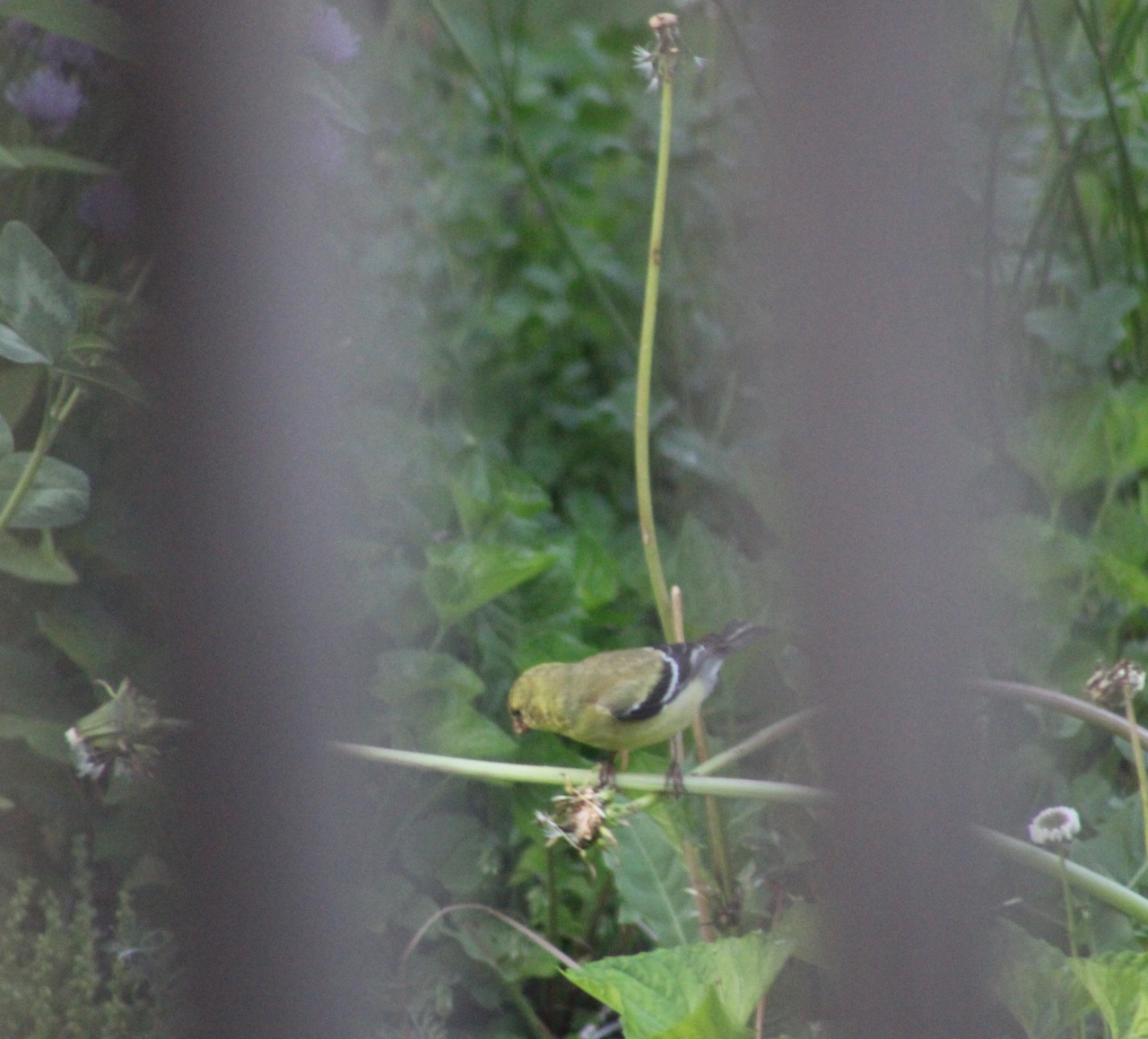
Goldfinch on dandelion stem, through deck rails

Remember when I described the beauty of seeing a goldfinch climb over a dandelion stem to get the seeds? But I didn’t get a picture then? A little magic happened again, and this time I was able to get this photo from our deck. The more wild and plant-filled our yard has been, the more birds of all kinds we see. They bring so much delight. (Sadly, we’ve also seen more ticks than before as well.)

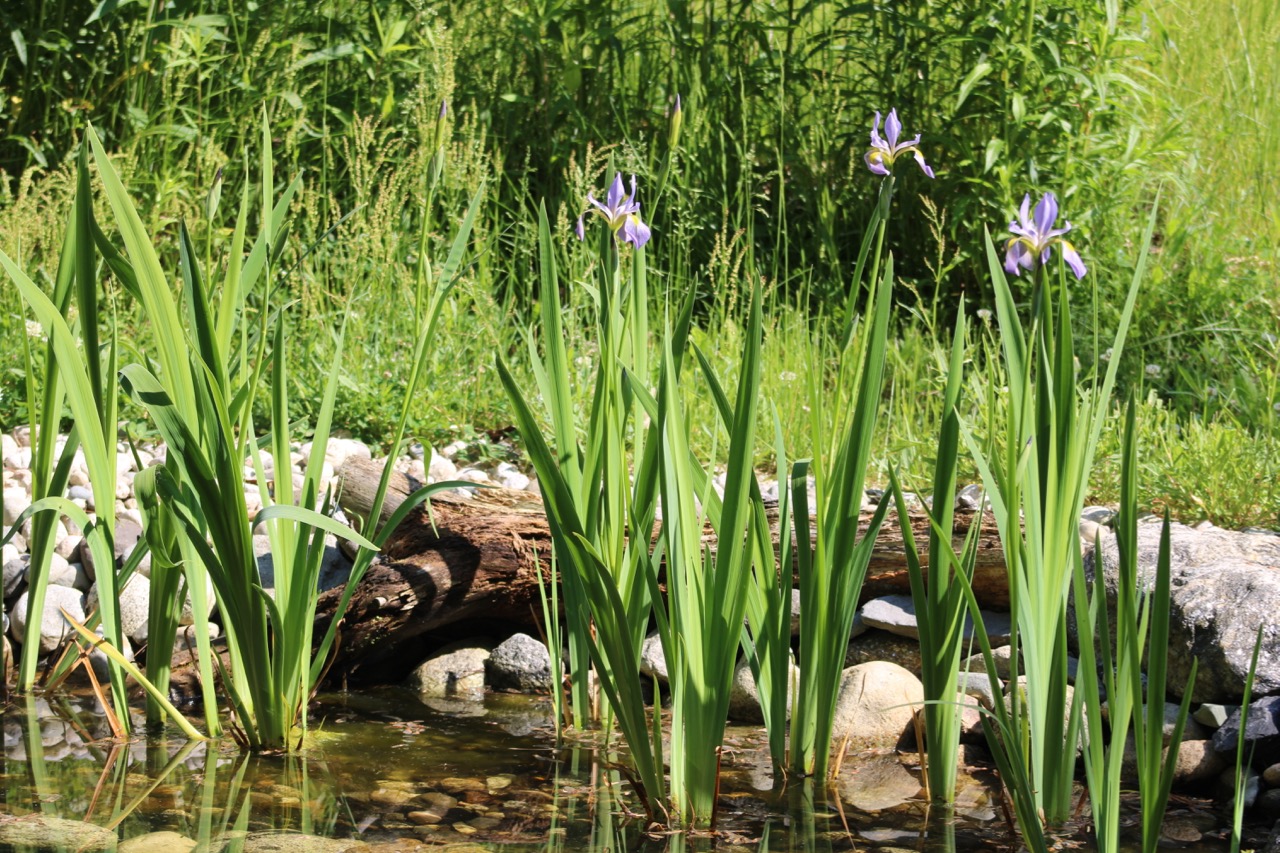
In other news, the blue flag iris in the pond are blooming for the first time! We also have a lot of algae–likely because there are not enough plants, since several didn’t come back. But I am not too worried. I skimmed some out and I hope I can keep doing that until the plants expand, or I can add some more.

Blue flag iris blooming

I also finally was able to plant–in three different short spurts of time and energy–some kale and broccoli seedlings, and seeds of cucumber and zucchini. Lots of rain today, so they all got watered. I am humbled by this process of observing, doing small things that I am able to do, and hoping for the best. One thing is sure. Plants will grow!

Tiny Magical Moments

Dandelions with puffy seed heads, after the birds were gone

Sometimes the best pictures are only in the mind, never caught on a camera. I was sitting with Billie in my blue easy chair in the bedroom, and something caught my eye outside the window. It was a goldfinch couple, perching in the peach tree, and then hopping down to the plants beneath. The bright yellow male landed on a dandelion stem–it was a long stem with the flower already gone to seed in a fluffy sphere. The olive green female was perched nearby on another long stem, with a closed flower head above her.

The male carefully made his way up the stem, even as it was bending down under his weight. He made a few tries on different stems. Finally, he succeeded in reaching the fluffy sphere and began pecking at the seeds. I never knew that dandelion seeds were a source of food for goldfinches. I’m glad that I didn’t cut them down! A short while later, they had gone, but I took this photo of the place where they had been. Even though you can’t see them there, in my mind, I can’t forget his purposeful climb along the stem.

Later, I went to sit by the pond, and noticed something tiny and new and green. Several of the perennial pond plants that I planted last year haven’t come back at all. Cardinal flower, blue-eyed grass, arrowhead, and pickerel rush. They were supposed to survive Maine winters so it was a great disappointment, but I kept waiting and watching, since this is the first spring for the pond. Well, today, I found three new tiny stems with distinctive leaves. There are three new arrowhead plants coming up. They are near where the previous plants were, but don’t seem to be emerging from the roots. Maybe they are sprouting from seeds that fell into the water last fall?

You never know when something new might emerge from the hard work that you did before.

New arrowhead shoot with one leaf, enlarged photo

Climate Catastrophe in Disguise

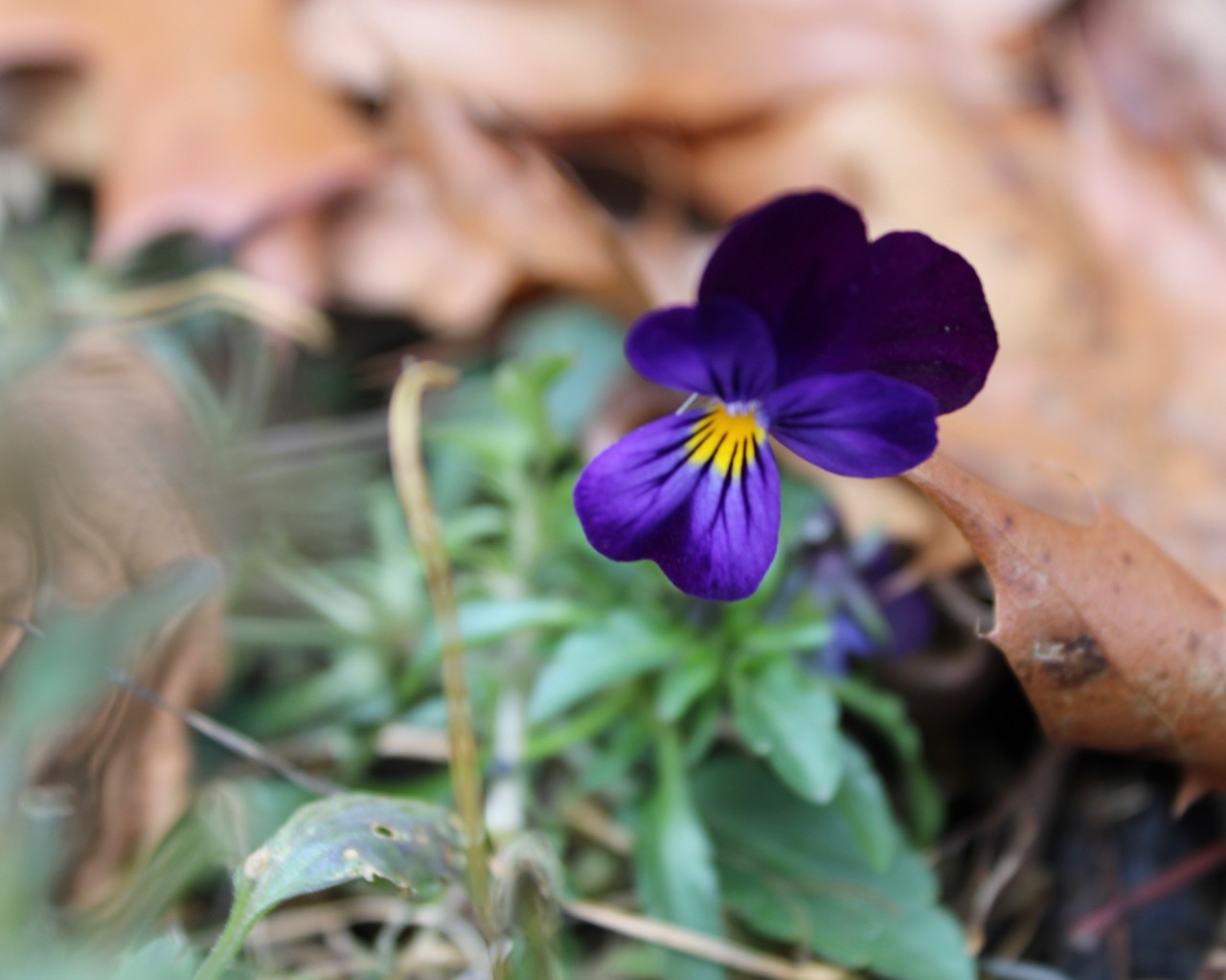
Wild pansy purple and yellow, blooming in December

A climate catastrophe sometimes shows up as the fragile beauty of a wild pansy blooming in mid-December in Maine. I took a photo this morning, before the snow arrived this afternoon, our likely first plowable snow of the season. Very late for us. The unseasonably warm days feel bright and pleasant, nothing dangerous. But I am thinking of the deadly storms that blasted through the midwest last week, tornadoes killing dozens of people in an unprecedented long trail of destruction. I am thinking of giant raging wildfires in the west, and monster hurricanes in the Atlantic. Sometimes the change feels like nothing much at all, unless I stretch my eyes to take in the bigger picture.

We arrived at our current house and yard six years ago after a 4 month search to find greener housing. We were able to downsize, to add insulation, to cover the south facing roof with solar panels, to install energy efficient heat pumps, to create a garden. Our actions fit the best choices we could make at that time, to align with our love for the earth and all her creatures. In that, they were like a prayer, like a magical spell to further the possibilities of earth community based in mutual respect. On a spiritual level, I have to hope that our small choices can ripple out for good.

But these individual actions don’t make a dent in the greater physical scheme of things. The giant polluters of greenhouse gases continue to ignore the limits of earth to push for expanding profits. We, as a planet, have already exceeded the hopeful atmospheric carbon dioxide goals of environmental organizations like 350.org. Now we’re at 415 parts per million. We’re on the way to unmitigated disasters that we can no longer walk our way back from. Scientists can make some predictions, but no one really knows how the increase in global temperature will play out in the next years and decades.

From where I sit, I can feel overwhelmed and helpless. I don’t have the energy to be out in the streets anymore, an activist like in my younger days. I don’t have the money to donate to activist organizations like I used to when I was working. Many activists I respect talk about the coming collapse of economies and civilizations, even within the next decade. I don’t imagine that I have the physical capacity to survive such a collapse, given my age and health. So what is there to do?

What helps is to recognize my limitations, to take in the very smallness of my being. What helps is to see young activists in the street, sharing their anger and love with loud voices. What helps is to remember that Indigenous people the world over have already experienced the collapse of their economies and civilizations. Pay attention to their advice. What helps is to recognize the smallness of my being, and yet remember how I am interwoven with the ancestors and all the interrelated beings of earth. What helps is to keep on loving the trees and birds and frogs and even the squirrels of this small place we are lucky to share with them. What helps is to offer bird seed as a prayer in the morning. What helps is to imagine the unimaginable largeness of the Earth, our mother, and her mysterious powers that we cannot measure or predict.

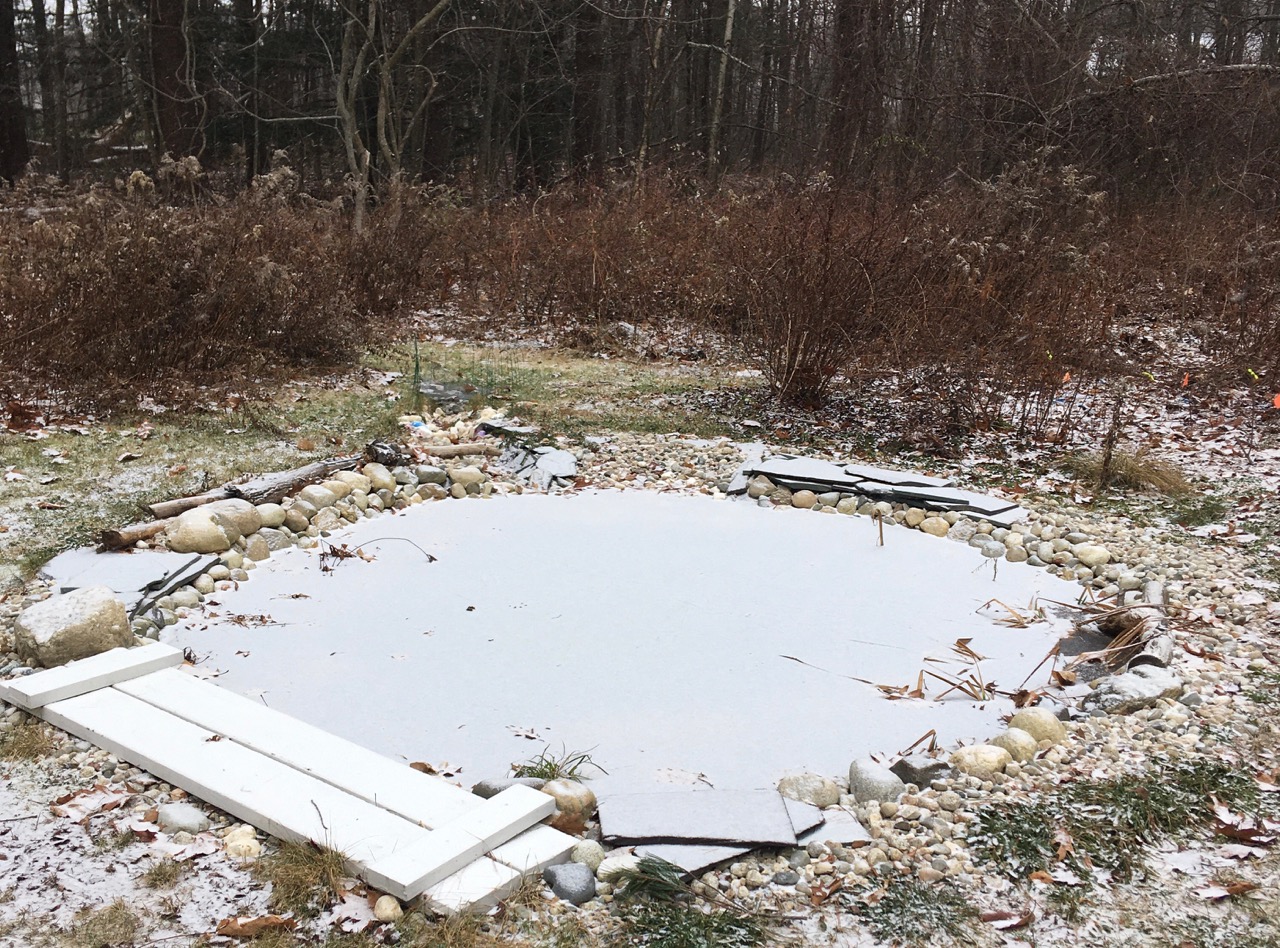
Our pond, frozen, with light snow cover.

A Kettle of Hawks

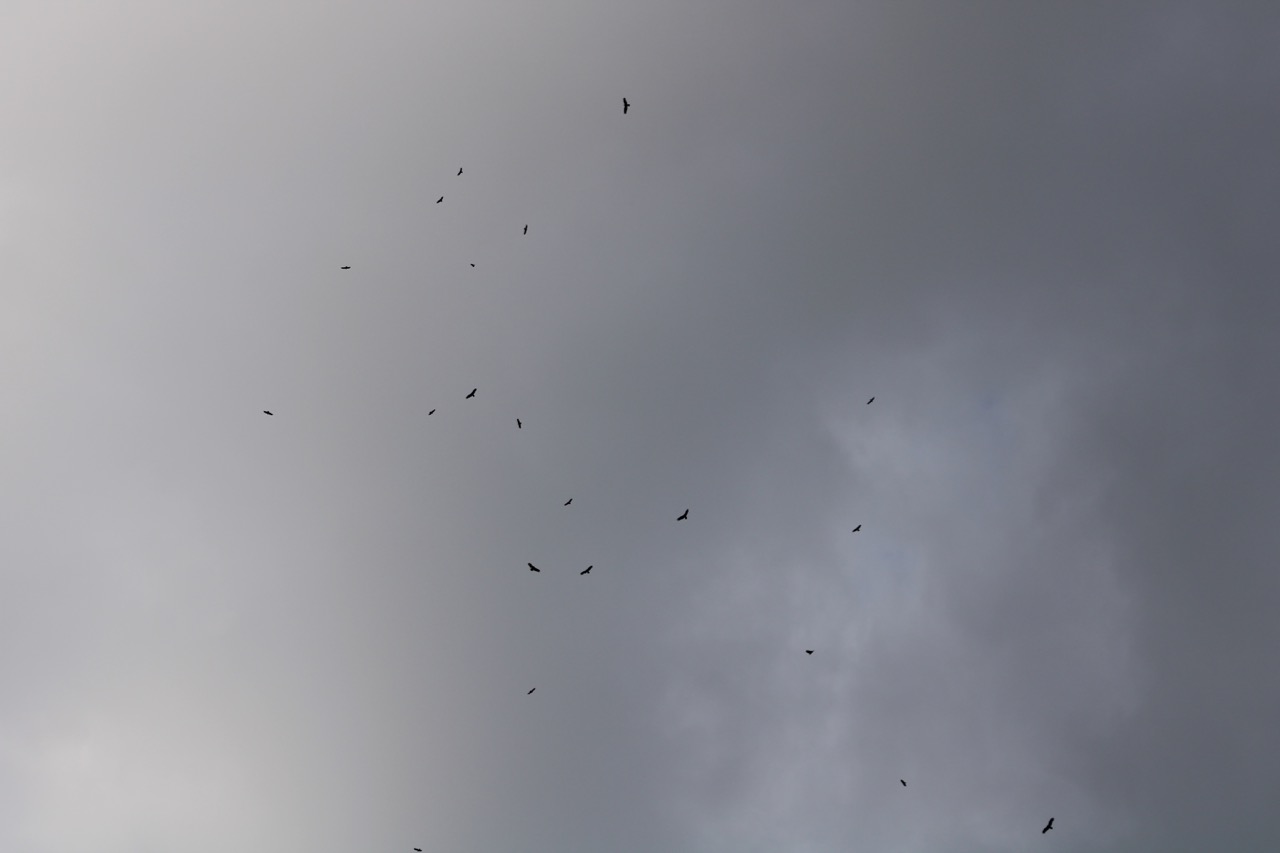
Over 20 hawks high in a cloudy sky.

I was outside lying in the hammock two days ago, when I saw a hawk flying overhead, and then more and more hawks, higher and higher. I understand that a group of hawks is called a kettle of hawks, and only occurs during migration. It was amazing to see! A reminder that the seasons are changing. I am writing this outside today on a sunny day, but wearing my winter jacket.

I think I may have found an important clue in my search for the roots of my third great-grandmother Marie Madeleine. In the record for the baptism of her son Simon, in 1833, in Jeremy Islets, she is identified as “sauvage du dit poste,” which means, translating the racist imagery, “Indian of said post.” And just above that record, Jeremy Islets is the post in question. I just want to say that it took a lot of close handwriting inspection to pull out those four words, but I am fairly confident in them now. And so it seemed to me it might be identifying her place of origin. (Now, on the other side, I know that her husband Peter McLeod was a clerk of that post in 1833. But she, along with two other Indian couples baptizing their children were all identified as Indians of that post.)

To further clarify, generally speaking the Innu went into the woods in fall, winter, and spring to hunt, and came to the posts to trade and to connect with the priests who did the baptisms, marriages, burials, and such. And they didn’t just go to one post, while necessarily avoiding others. But following the clue, of the several Marie Madeleines in my list of possibilities, one was connected to Jeremy Islets, in the right time frame. She was identified in her baptismal record as Marie Madeleine Napeteiashu, baptised June 26, 1803, when she was about 7 years old, they said, which would put her birth about 1796. Napeteiashu was actually said to be her father’s name, with no Christian name attached, and her mother was identified as Catherine Mitisku.

After searching through hundreds of other records, I found a Catherine Mistiku, born in 1773, and baptized in 1786 in Jeremy Islets. She was married to Stanislaus Mishtanapeu, baptized in 1778 in Jeremy Islets. In other records, they are identified as Catherine Mistigu or Mitigu, or Stanislas Tshiuapan (actually the name of his son Paul). I think this is likely the same couple, though in this process, one can’t be positive. I found baptism and marriage records for sons Simon (b 1794, bap 1796) and Paul (b 1798), but no other links for Marie-Madeleine. (And why would Paul be baptized in 1798, but not Marie Madeleine until 1803?) In the marriage record for Paul, in 1817, Catherine is said to be deceased.

Along with the genealogy hunt, I have also been exploring the possible meanings of their Innu names. Mistiku (likely now spelled Mishtiku) can mean, a tree (animate), or a log (inanimate), or possibly a French Canadian or white person-(though Catherine would not be French, but someone might be called this perhaps because she was hanging around the French?) (I think the French were called this because of wearing wooden clogs.) Mishtanapeu means a remarkable man. Napeteiashu was harder to decipher–“nape” refers to a male, and if I stretch the spelling, it could mean a male fox–napeiatsheshu. Spelling was not a hard science in those days. I couldn’t find any other references to Napeteiashu. The one possibility was a marriage with no details attached of Catharina Matshiskueu to Nipituashu. No dates/places/or parents. Matshiskueu means “she is an ugly woman”. So you see, it’s all very mysterious and uncertain.

By the way, several of the names I was researching seemed to have “negative” connotations. I wondered if it was some kind of internalized oppression, or if maybe there was a function of the name to protect the child by acting as if it were not valuable in some way. There was a lot of oppression by the priests. For example, when an “illegitimate” child was baptized, often they did not even name either of the parents at all in the record. Some priests took more care than others. I think the earlier Jesuits learned the Innu language and taught people to read and write in their language. Later priests did not know the language at all.

But as for me, I was so excited to find this possibility. Maybe it was really her, with a place and parents! Then today, I was slowing down to remember that this process of search will continue, and I have to pace myself, to live with each possibility as it emerges. There are hundreds of pages of records, much of it not indexed, so I go through page by page looking for names–and with new names, that means all new searches. Still, I am amazed that these ancestors feel closer to me now, even if they are still like the hawks flying in the sky so far above me that I can’t see the individuals very well. Am I related to a tree, a fox, an ugly woman, a very remarkable man? Am I related to the place called Jeremy Islets? In Innu, Ishkuamishkᵘ, which is similar to the word for a female beaver ishkuemishkᵘ. And how does this all relate to my life as a white woman in Maine, in Wabanaki territory? Still, it does feel like one part of my own journey of finding our way home into the earth community.

A fox near the Capisic brook, surround by trees and other greenery. (This photo was taken in 2018)

Magic Happens!

Yesterday, I wrote, concerning my search for my matrilineal ancestor Marie-Madeleine:

“Why do I write about it here? I’m putting some magic out into the universe, hoping that some kind of thunder might open the cloudy skies between me and the past, between me and the place my ancestors are from. … It has been my experience that when I reach out to my ancestors, they reach back—more so when I have actually traveled to Quebec, but since that is not possible, I hope they will reach across the border.”

And then some magic did happen!

After being stuck not finding people on the GénéalogieQuebec website, I meandered around some more, and some records of the Postes du Roi index of people, not related to my ancestors, linked to images from the actual Postes du Roi records. If I went to those images, I could move back and forth from page to page in the images of actual records. And by doing that, I found the baptism records of six of the Marie Madeleines or Madeleines, from the list I had, from 1800 to 1805, even though they were not “indexed.” Also, I was able to download all the images as I accessed them, to be able to look back as I needed. So now I am able to keep researching, a way opened up.

Some magic happened!

Sometimes it is easy to forget—in my intellectual research mode, in our rather secular world—that magic is alive, that ancestors reach out to us. Even though I have experienced it in the past, and believe in its power. So easy to forget.

And the intellectual research is part of the magic, not separate from it. It is a lot of work to attempt to decipher 200-year-old writing in funny penmanship, in French. But I am so thankful to be able to attempt it. And to learn as much as I can about the lives of all of these women. I also learned that for some of them, the Innu name is that of their father—at some point (1803?), the Innu names switched from being a descriptive personal name to function more like a surname. (Those are in parentheses)

Marie Madeleine Katshisheiskueit, b. 1795 in the woods, baptized 1796 Portneuf

Marie Madeleine (Napeteiashu), b. 1796, baptized in 1803 Îlets-Jérémie

Madeleine Peshmekueu, b. 1799 Sept-Iles, baptized 1800 Sept-Iles

Madeleine Pishikuskueue, b. 1801 Pointe-des-Monts, baptized Godbout

Marie Madeleine (Utsinitsiu), b. 1801, baptized 1805 Chicoutimi

Madeleine Moistashinagusiu, b. 1802 Rivière Godbout, baptized Godbout

Marie Madeleine (Arishinapeu), b. 1805, baptized Tadoussac

Magic happens! May I keep being open to the magic, and may you feel it opening where you need it too.

Close up of hazelnut leaves in full color.