Itsy-bitsy Statues

When we give our lives to a larger purpose, whether we name it God, or kindness, or the earth, or Mystery, we can find meaning and transformation and spiritual growth. To worship something too small can distort and cheapen our lives. Even spiritual or religious things can be too small. Thomas Merton, who was a Trappist monk as well as a writer, said, “there is always a temptation to diddle around in the contemplative life, making itsy-bitsy statues.”

Yard Statues DSC09950

When we get attached to our ideas, or images, or even our ways of praying, we can forget the largeness of what it’s all about. We can forget that spirituality is meant to awaken us to the larger whole of reality, of which we are a part. Rumi, the Sufi poet, put it this way: “Don’t be a cat toying with a mouse. Go after the love lion.”

Writer Annie Dillard, reflecting on Merton, said:

There is always an enormous temptation in all of life to diddle around making itsy-bitsy friends and meals and journeys for itsy-bitsy years on end. It is all so self conscious, so apparently moral, simply to step aside from the gaps where the creeks and winds pour down… I won’t have it. The world is wilder than that in all directions, more dangerous and bitter, more extravagant and bright.

Reality is bigger and more mysterious than the things we do, or the ideas we think, or the stuff we buy. If we get too attached to any small thing—wearing the right clothes, or going to the right parties, or having the latest gadget, or even going to the right church—we are filling up our temple with junk. If we fill up our temple with junk, we will miss the “gaps,” the wild places where the “winds pour down.” We will miss the magic.

Thomas Merton was quoted by Annie Dillard in Pilgrim at Tinker Creek
Rumi quote is from Coleman Barks, The Soul of Rumi

Latent Divinity

During our ministry retreat, Rev. Ray Tetrault invited us to move beneath the turmoil of politics, beneath the struggle of winning or losing elections, to the place where all that we value finds its roots. He called it “latent divinity.” I knew that he meant what I have been calling the Mystery Seed. Sometimes we get caught up in words, but at our retreat we were not worrying about that. We were letting ourselves go to the deeper place that Ray was invoking. Latent divinity is like a spark of the sacred, hidden inside each of us, burning like a glimmer of light and beauty and possibility.

I had written in my email to my family, “I believe that the presence of God is in every being on earth, every shoreline, every tree, every rainfall, every turtle, every person.  Even the word God is incomplete. The doors of my heart have expanded open like that. We are all bright sparks of light.” 

Photo by Margy Dowzer

Photo by Margy Dowzer

In the silence of the retreat, I could feel that spark in my heart, that Mystery Seed of life and love. I could imagine that seed of divinity in every person alive, pulsing to grow, laboring to be born, and I realized just a glimpse of how beautiful we are. In that place of Mystery, we are all connected, and anything is possible. In that place of Mystery, there is hope for the problems facing our world.

I could also feel how the seed of divinity in me was surrounded by an old husk of separation and division. I was attached to that old husk, that part of me that needs to feel separate from others. That old husk didn’t want to be connected with those who disagreed with me, or to see divinity in people who believed differently from me. I just wanted my side to win. But in order for divinity to grow in me, I would have to let go of the husk of separation.

What Is Really Going On?

Tree Reflection DSC03816One fall, I was on retreat with other ministers, and our retreat leader was a priest, Rev. Ray Tetrault. He was a friend of one of my colleagues and known to us as a passionate advocate for social justice. Our task together was to reflect on the politics of our time, in light of our role as spiritual leaders.

He started us off with an unlikely reference from the gospel of Luke, familiar from the Christmas story. Luke tells us that a census was called during the time when Herod was the king of Judea, Augustus was caesar of the Roman Empire, and Quirinius was the governor of Syria. Ray reminded us that they were the politicians in charge of the regional and imperial governments some two thousand years ago.

But what was really going on?” he asked. Something mysterious. In a small town, a baby had just been born—we know him as John the Baptist—and something new was beginning that would literally transform the world. This new thing emerged, not from those at the top, but from underneath, from an unexpected and hidden place.

Since our retreat was happening just before the national elections, all of us were sitting there with many stirred up feelings about the issues facing our country. It would have been easy to talk together about our political leaders, our concerns and our analysis. But Ray invited us instead to be silent, to listen deep in the quiet of our hearts, underneath our thoughts and feelings. He invited us to reflect on the question: “What is really going on?” What else might be happening here in our own time and country, underneath, unseen, and yet full of potential significance? What is really going on?

We kept the silence for an hour, and then we shared from our hearts. The next day we went back into silence, and then shared again from that deeper place. When I went into the silence, I felt something like a seed in my heart that was swelling and expanding, and also something like a shell cracking open, something like an old husk.

I remembered an email that I had sent a few days earlier to my family members. I am the oldest of nine siblings, and my parents are both still alive. I have family living in Michigan, Texas, Montana, and West Virginia. I remember that my family was excited when John F. Kennedy became the first Catholic president, but mostly we had not been very involved in politics. Now we have vast disagreements among us. In fact, the deep religious and political divisions in our country are directly mirrored in my family.

I had been moved to send an email to my family members about my feelings and concerns about the elections, and about the spiritual beliefs underlying my hopes and fears. Then others started replying: several of my sisters, my father, a niece and a nephew sent emails to all the others. Many began by expressing fear that if they shared their beliefs, others might reject them, but still they wanted to take the risk. And even those with very strong views kept repeating that, in spite of these differences, they loved each member of the family and hoped that everyone still loved them.

Somehow, in the midst of the cultural divisions facing our nation, we had ventured across the walls of politics and religion, painfully but hopefully, to share our truths with love. Our differences were deep, and our emails did not make them go away. But we were touching each other at a deeper level than our differences. And that gave me hope for facing the divide in our nation. In the silence of the retreat, I was realizing the mysterious unfolding that had taken place in our email conversation. It felt something like a seed in my heart swelling and expanding, something like a shell cracking open, something like an old husk.
Growing a Soul

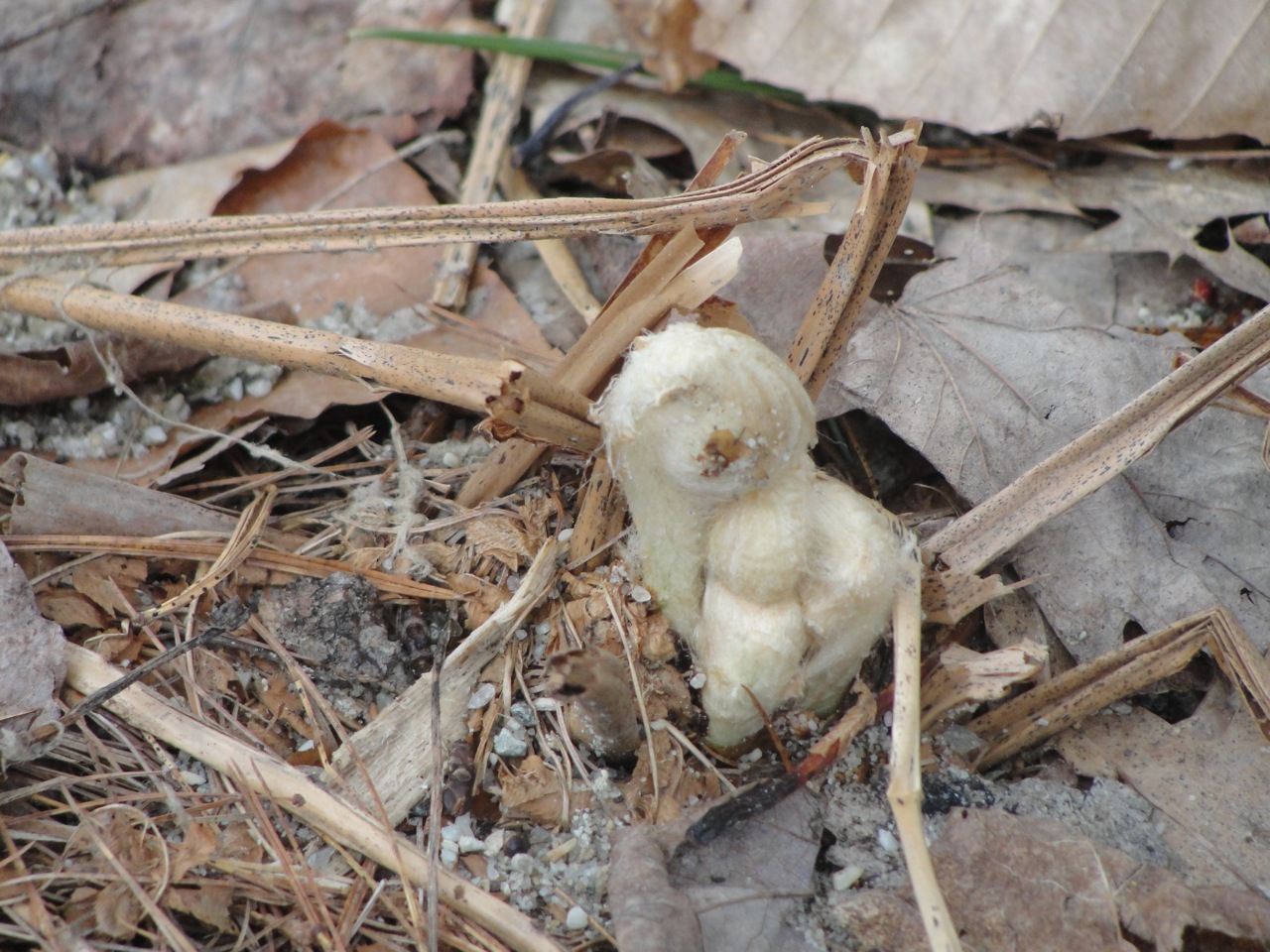
Fiddlehead New DSC00242Unitarian minister A. Powell Davies said “Life is just a chance to grow a soul.” He was known for standing up against injustice, and working on behalf of freedom, democracy and equality. For Davies, being fully alive meant living according to these values, and shaping the future toward a vision of connection and community. He spoke of the inner life at the heart of his actions:

“There is no mystery greater than our own mystery. We are, to ourselves, unknown. And yet we do know. The thought we cannot quite think is nevertheless somehow a thought, and it lives in us without our being able to think it. We are a mystery, but we are a living mystery… Fern Grow DSC03761_2In the mind’s dimness a light will shine; in the spirit’s stillness it will be as though a voice had spoken; the heart that was lonely will know who it was it yearned for, and the life of the soul will be one with the life that is God.”

For Davies, growing the soul means attuning ourselves to this inner light, becoming one with the life that is God.

The soul is not a passive object of salvation or protection, but a living capacity within all of us for a deepening awareness of connection and mystery. The Mystery Seed is another name for the soul. A seed is meant to be planted and to grow. To grow our souls means to foster our inner awareness of the connections between all beings, our inner awareness of the Mystery that is within us and within all.

Quotes from Davies from an article by Manish Mishra

The Mystery Seed

AcornsWhat shape
waits in the seed
of you to grow
and spread
its branches
against a future sky?
                          David Whyte

Soul is another spiritual word with a lot of baggage. As a child, I learned that my soul was the part of me that lived after I died. If I was good, my soul would go to heaven. If I was bad, it might go to hell. If I was somewhere in between, my soul would go to purgatory before it could go to heaven. And the souls of babies that hadn’t been baptized went to limbo. There was a complex geography of souls to learn, and a lot of fear about what happened after we died.

Many churches tell us they want to save our souls, and I have heard old stories about people selling their soul to the devil in exchange for some favor. A while back, I heard a story of a young atheist who sold his soul on eBay. He got $504 from the highest bidder. I wondered how the highest bidder was expected to take possession of his soul? It turned out that what he actually auctioned off was the chance for the highest bidder to send him to the church of their choice.

Just what is the soul anyway? Is it something we can buy and sell? Is it something to be saved or lost? Just for a little while, try to set aside the definitions of the soul that you may have learned but that don’t work for you. Let us see if we can find some better uses for the word. I want to think of soul in the context of spirituality as we have redefined it. Our soul is our capacity to experience our connection to the larger reality of which we are a part. Our soul is our point of connection to the earth, to each other, and to the Mystery within all that is.

Come with me into the fairy tale of Jack and the Beanstalk. When his mother and he are in desperate straits, Jack trades their cow for some magical bean seeds. The bean seeds grow overnight into a vine that reaches up to heaven. There he encounters an evil giant, who eats human beings, but Jack is able to escape with a magical hen that lays golden eggs, and a golden harp that plays by itself. He learns from a fairy that the giant’s castle is actually his very own—he is really a prince whose father was killed by the giant. In the end, he kills the giant, and recovers his hidden inheritance.

So what does this have to do with our soul? The bean seeds enable Jack to connect with who he really is, and with a larger reality beyond the small cabin he shares with his mother. The soul is like those magical bean seeds. We are so much more than we can imagine! We might say that inside each of us is a Mystery Seed, a seed of what we might become, fully alive. This Mystery Seed is our potential to connect with the larger Mystery of which we are a part. This seed is not just in some of us, not just in fairy tales or kings or saints, but in every one of us.

Poem from “What To Remember When Waking,” in The House of Belonging

Dancing Out of Time

Fireworks

Photo by Margy Dowzer

Individual consciousness is simultaneously familiar and mysterious. Rene DesCartes said, “I think, therefore I am.” Jill Bolte Taylor was a brain scientist who had a debilitating stroke at the age of thirty-seven. A blood vessel burst in the left side of her brain. Because of her training, she was able to observe her own mind deteriorate as she lost the capacity to think, talk, read, write, or recall any of her life.

But there was a surprise in this—as her left brain shut down, her right brain took over, and she experienced a different form of consciousness—an all-encompassing sense of bliss, a sense of timeless unity with the universe. Years later, after she recovered the skills of the left brain, she wrote the book, My Stroke of Insight, to describe her journey and what she learned. She said:

To the right mind, no time exists other than the present moment, and each moment is vibrant with sensation. Life or death occurs in the present moment. The experience of joy happens in the present moment. Our perception and experience of connection with something that is greater than ourselves occurs in the present moment. To our right mind, the moment of now is timeless and abundant.

During her stroke, Taylor lost the sense of herself as a separate being, she lost the memories that identified her self to her self, yet she gained an experience of herself as the whole universe—there were no boundaries that separated her from everything else. What she describes resonates with the Buddhist understanding of enlightenment, or Nirvana, a shift of consciousness from experiencing time, to experiencing “all is now,” from experiencing space, to experiencing “all is one.”

When I was growing up, eternity was described as what happened to us after we died. But Taylor speaks of eternity as something that can be experienced right now within our own minds. The experience of total peace and total connection is available at any moment. She writes:

The first thing I do to experience my inner peace is to remember that I am part of a greater structure, an eternal flow of energy and molecules from which I cannot be separated. Knowing that I am a part of the cosmic flow makes me feel innately safe and experience my life as heaven on earth. How can I feel vulnerable when I cannot be separated from the greater whole? My left mind thinks of me as a fragile individual capable of losing my life. My right mind realizes that the essence of my being has eternal life.

Since Taylor is a scientist, she brings a different perspective to what is usually perceived as the mystical. She can help our left brain understand and make sense out of the right brain. She can help us to rationally comprehend what the mystics speak of when they talk of being one with the universe, or finding eternity in the present moment. And so perhaps we must reshape our understanding of the spiritual journey. It may be not so much a journey through time, as a journey out of time, from one form of consciousness to another.

Quotes from Jill Bolte Taylor, My Stroke of Insight: A Brain Scientist’s Personal Journey, p. 30 &160.

Words about God: Reason vs. Myth

People have been searching for God, and making idols about God for a very long time. But we have some particular ways of doing it in the modern era. I believe one such phenomenon that has become an idolatry of our time is Biblical literalism. Fundamentalists claim to be bringing back the fundamentals of ancient Christianity, but in fact, their version of Christianity has not existed anywhere prior to the last one hundred years or so. They claim that every word in the Bible is the literal and factual truth. But scholar of religion Karen Armstrong reminds us that literalism is a very modern way to read the Bible, a way that was unheard of prior to this era. In A Case for God, she talks about the historical context for our modern idols.

After the destruction by the Romans of the Jewish Temple in Jerusalem, during the first century of what we call the Christian Era, there were various groups of Jews wrestling with their new religious predicament—much of the Hebrew Scriptures were centered around the temple, and the rites and rituals of the temple, but now there was no temple.

One group of rabbis began to re-work their faith into a guide for living as if the temple was everywhere, and how they lived should reflect the priestly status of all the Jewish people. They began to develop new practices for living, and created the beginnings of classical Judaism. They felt perfectly free to re-arrange the Biblical texts, or draw new meaning out of them, use them metaphorically, or even disagree with them. Eventually, a body of literature grew up around this effort, that we now call the Talmud.

There was also another group of Jews making new meaning out of the old scriptures. They were re-interpreting the old texts around the person of their teacher Jesus, whom they saw as the Messiah, who had been crucified by the Romans. They too re-arranged texts, interpreted them metaphorically, and added new writings and practices. They too were grappling as Jews with a temple-less Jewish faith, though now we call them the early Christians. But neither these early Christians, nor the rabbis who shaped the faith of Judaism, were biblical literalists.

Karen Armstrong writes that before the modern era, which was beginning about the time that Columbus set sail for America,

“religious discourse was not intended to be understood literally because [they believed] it was only possible to speak about a reality that transcended language in symbolic terms.”

Armstrong talks about how in premodern cultures there were two recognized ways of acquiring knowledge. Logos, or reason, “was the pragmatic mode of thought that enabled people to function effectively in the world.” Mythos, or myth, “focused on the more elusive, puzzling, and tragic aspects of the human predicament that lay outside of the remit of logos.” The modern world is a world devoted to scientific reason, and has lost track of the meaning of myth—in fact, myth is now defined as something that is not true. But in pre-modern times, myth was the common language of religion, and helped people to wrestle with the challenges that were not so easily solved by reason. Mythic words were meant to be a doorway into that which was beyond words.

The language of myth was linked to the practice of ritual, in which people entered into a communal experience of story in a way that transcended logical thought or emotion. They were brought to the limits of their rational understanding, into the presence of the mysterious and ineffable, and emerged with a new capacity for living within the tragedy and bliss of this world. Religion was not something that people thought, but something that they did. People who put in the hard work and perseverance it required “discovered a transcendent dimension of life” that was also “identical with the deepest levels of their being.” Potholes flow DSC00653

Reality is a Dance

Kayaker Reality is a dance between making plans, and responding to small and large disruptions. So to embark on a spiritual journey is to grow our capacity to practice, to plan, to wait outside, and then to embrace all that reality offers.

A spiritual practice is meant to help us develop the skill of embracing what comes to us as an opportunity to wake up. A spiritual practice helps us to be fully present and to pay attention. If we have not been practicing, we can get thrown off by life’s disruptions, become grumpy and anxious, shut down or reactive. In fact, that can happen even when we have been practicing. Kayak Tipped OverBut I know from long experience that the more I practice this embrace of reality, the easier it becomes to shift from resistance to curiosity, from crankiness to compassion.

The spiritual journey is our search for an immediate, personal experience of the larger reality, our connection to the earth, to each other, and to the Mystery that connects and upholds life. Let us go back for a moment to an experiment.

Notice the energy in your heart right now.
If you wish, create an invitation in your heart, open your heart to experience the larger Mystery that connects and upholds all life.

As feelings come up, imagine your breath filling and embracing those feelings. Be present to what emerges in your heart. If you feel emptiness, breathe into the emptiness. If you feel joy, breathe into the joy. If you feel confused, breathe into the confusion.

The beginning and the ending of spiritual practice are in paying attention to the energy of the present moment.

After the wondrous, after the experience of Mystery, we must always come back to the everyday. In pagan rituals, they say we must “ground the energy.” We remember to eat food or have a drink of water. In Buddhism, there is a saying, “after the ecstasy, the laundry.” Sanity is being able to switch our consciousness from the mysterious to the ordinary. Life is not static, it keeps moving. We are not meant to remain in emptiness or in ecstatic feelings. We are meant to be fully involved in all that life is about. Says one Western lama, “What became clear is that spiritual practice is only what you’re doing now. Anything else is a fantasy.”

The most important grounding is how our spiritual experience affects the rest of our living. In the end, we may ask, What is spirituality for? I would answer that our experience of the Mystery that connects and upholds life is meant to bring greater power and resources into growing in community with all that lives. Authentic spiritual practice will energize us for greater kindness, compassion, peace, and humility. May it be so.

In the waterQuote from Jack Kornfield, After the Ecstasy the Laundry, (New York: Bantam, 2000). p. 126

Emptiness

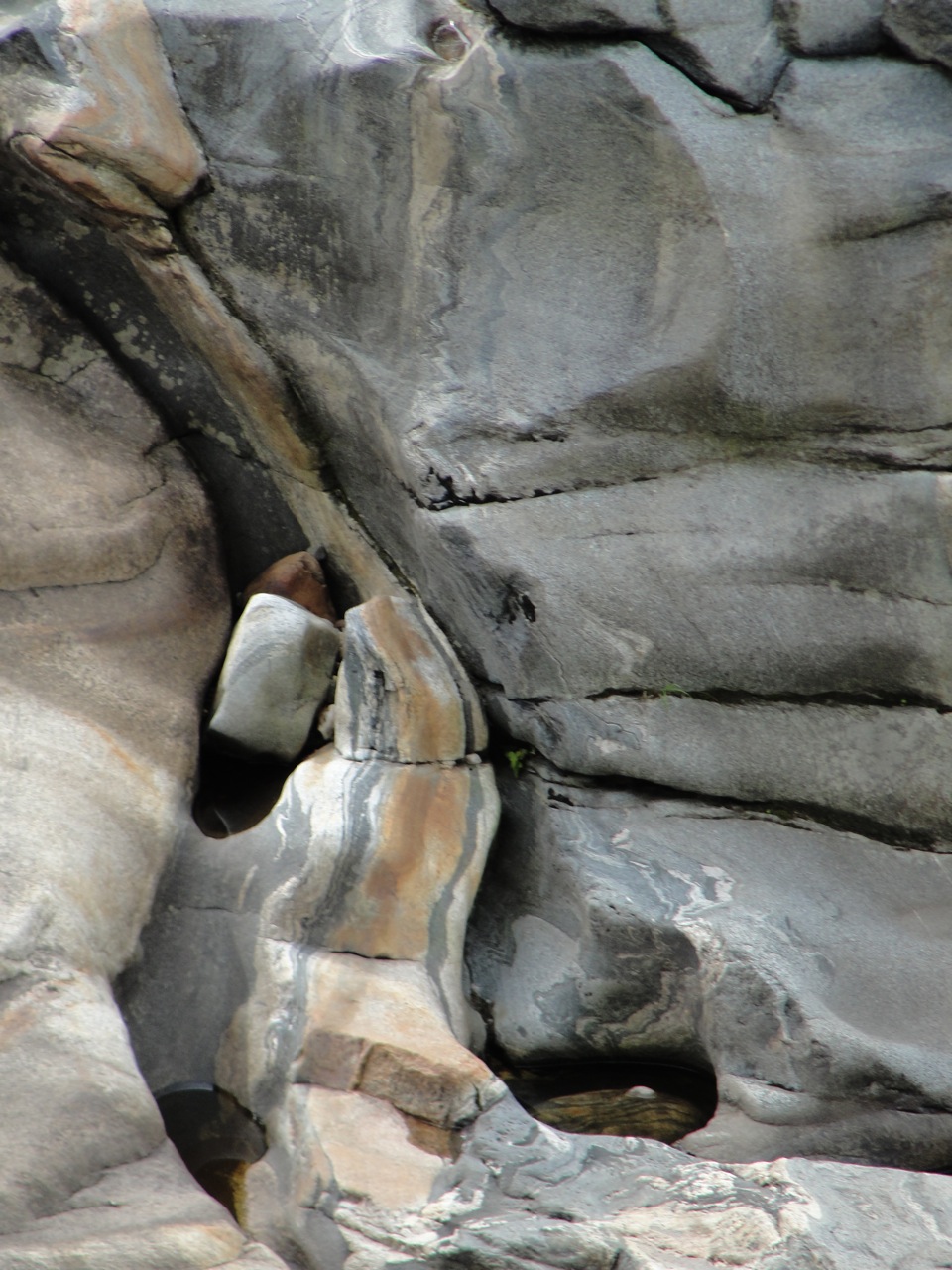
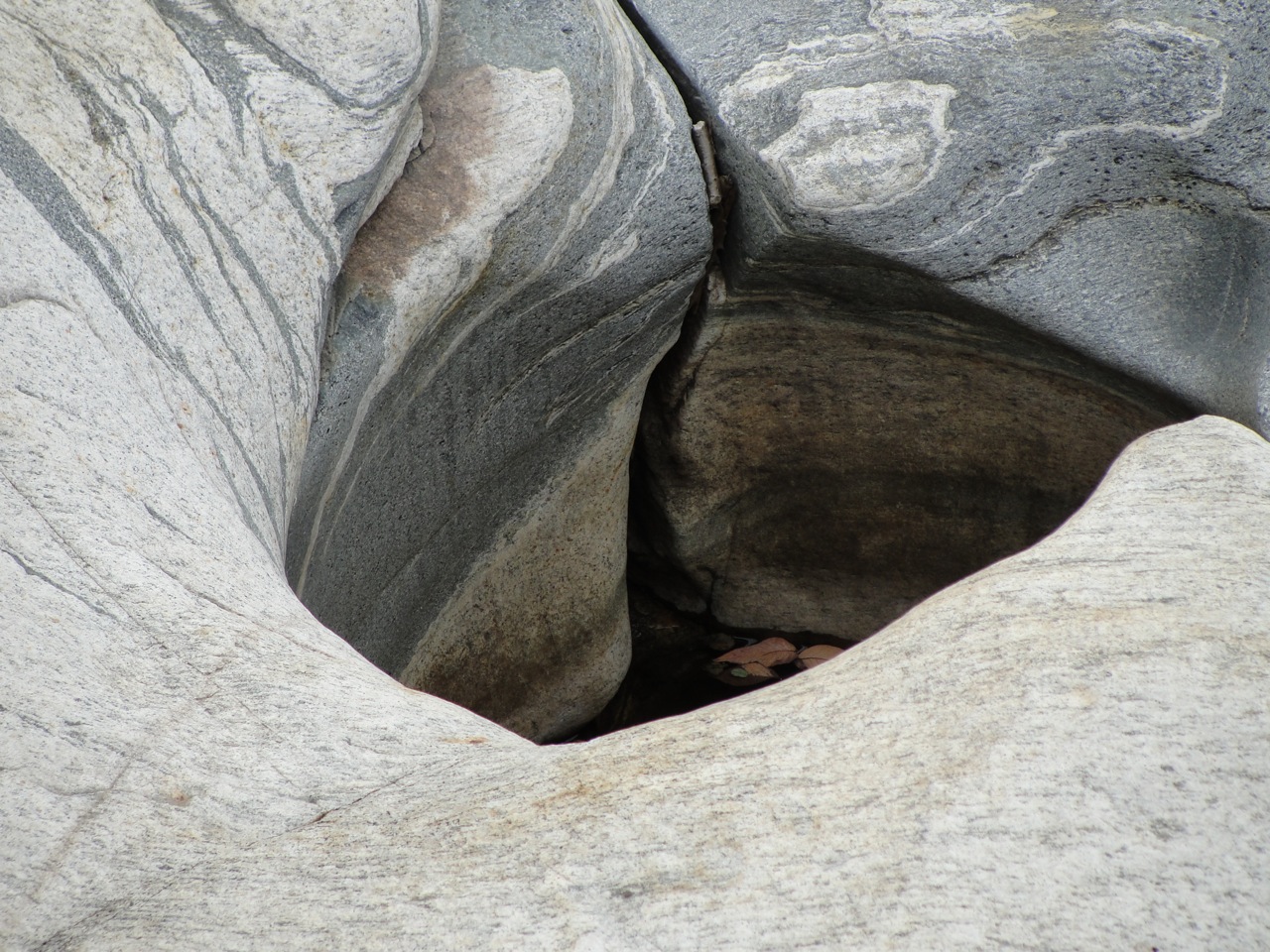
What comes next? If we wait in the darkness, if we succeed in opening our heart to awareness of the present moment, we may discover within us certain empty feelings, a kind of spiritual hunger. That does not mean we have failed in our search. Rather, it means we have found the next step. An experience of yearning may feel like a hole deep in our being. Hole in RocksWe may be tempted to try to fill it quickly with some new type of ritual or escape into some other sensation. It may feel painful and lonely, like an absence of something we need. But this emptiness is itself a kind of window or doorway.

The Buddhist teacher Kinrei Bassis says:

“the deepest form of prayer is really just the willingness to be still and let the longing in your heart go out without defining or understanding where it is going. Meditation is the willingness to let go and learn to trust so that we may enter into this seeming darkness.”

The emptiness itself, if we embrace it fully, can become the doorway into the larger reality. The practice of paying attention to the present moment helps us to cultivate the capacity to remain present to our feelings. We grow more at ease with anger, fear, sadness, and longing. We are able to breathe into these feelings, rather than run away from them.

If we breathe into the longing, breathe into the emptiness, there comes a time when it may open up into an experience of communion, an experience of our connection with the earth, with each other, with the Mystery within all reality. It may feel something like dissolving into Mystery. This experience goes beyond the capacity of words to describe. We may feel deep joy, even ecstasy, an intense awareness of being one with Love. An old hymn described it as “Leaning on the Everlasting Arms.”

Sometimes, that feeling may come unexpectedly, without any spiritual practice at all. The Mystery is funny like that. It surprises us. Sometimes it comes when trouble or grief has opened a chasm in our hearts and the pain of yearning fills our being to the core. It has been in the lowest moments of my life, that I most experienced the presence of the Mystery, holding me in love and connection and carrying me through.

Quote from “The Buddha Calling the Buddha,” by Kinrei Bassis, in Parabola, Summer 2006.

Waiting In the Dark

Milky Way

Image courtesy Wikimedia Commons

I want to share with you a little story. I went outside to watch the meteor shower during an August night. I was just sitting in my driveway, on a reclining lounger, watching and waiting. Every so often, I would see a streak of light flash across the sky. But mostly it was just quiet and dark. I was thinking about the Milky Way, and how far the stars were spread out, and how long it took for their light to reach my eyes. I was thinking about the fact that the light from these stars was reaching my two eyes in an ordinary driveway in Maine. Suddenly the sky seemed so much larger than I remembered, and I felt so much smaller, an infinitesimal speck. And yet I was seeing everything, and my seeing was as large as the sky. I was a part of the mystery. What was inside of me felt as large as the sky.

To experience that feeling, I had to go outside in the night and wait. I had the intention of looking for meteors, but there were only a few of those. However, if I hadn’t been waiting in the dark, I wouldn’t have experienced the mystery of that night. To embark on a spiritual journey is like finding opportunities to wait in the dark, however we might do that—waiting in the dark, looking for what we think we are looking for, but sometimes finding so much more.

The goal of any spiritual journey is to lead us into that depth, that place where the known crosses into the unknown. There is a part of the spiritual journey which must be intentional. We must choose to wait in the dark. But the inner purpose of a spiritual journey is to move beyond the capacity of our own intentions, to discover something larger than what we could imagine—a larger reality, a larger love, a larger mystery.

The method by which we choose to wait in the dark we call a spiritual practice. It does not matter so much how we do it, but that we take the time to do it—that we take the time to be quiet with ourselves, or to pay attention to the world around us, or to stretch the muscles of our mind and heart in the questions that we cannot answer.

For some of us, silent meditation may provide a discipline for that inner attentiveness. For others, the practice of journaling may become a tool for deep reflection.
What did I dream last night? What am I feeling today?
What am I worried about? What am I thankful for?
Another practice is to read poetry and collect the words that inspire us, so that we can memorize them, and ponder them in our hearts.
We might walk in the woods or along the shore of the ocean.

Again, it does not matter so much how we do it, but that we take the time to do it.