Lessons from a Small Bird

Cardinal

Photo by Margy Dowzer

The cardinal has been the species that has most taught me connection to the earth. It began unexpectedly in the winter of 1985, when I was going through a difficult transition. My marriage had ended at the close of 1984, and I was deep in grief about that loss. One winter afternoon, sunk in sadness, I heard a curious sound outside my window. When I looked out to investigate, I saw the bright red plumage of a male cardinal. Its song was distinctive and joyful, and its color shown brilliant against the gray Chicago snow. My heart was lifted by its melody.

Ever since that moment, the cardinal has signaled for me beauty and hope in the midst of suffering. So you can imagine my chagrin when, early in the summer of 2011, my partner Margy found a dead cardinal beneath one of the windows of our house. We always feel sad when a bird flies into a window—but this was a young female cardinal, and Margy knew I’d be very downhearted about it. I wondered what sort of message it was bringing, or even what bad omen it might portend. I know that sounds superstitious, but after we have associated one of our fellow creatures with a sense of blessing, it is unnerving when something like this happens.

A friend reminded me that death is a part of life. She said, pay attention for the blessing here. So I blessed the cardinal’s small body with incense, and buried it in the composting leaves at the back of our yard. I thanked the cardinal for the joy her species had brought into my life, and wished her well in the great cycle of life. I decided to put hanging streamers around our windows, to help deter future bird accidents.

During this time, I had begun reading Leslie Marmon Silko’s book, The Turquoise Ledge. It was a memoir of her days walking the arroyos near her home in Arizona. I found it a strangely quiet book. She writes about going for walks, and the creatures around her house. She talks about making peace with the creatures who live in the same place she lives—in her case, that included rattlesnakes and grasshoppers. Sometimes creatures died near her house, too, and she felt sad about it, like I felt about the cardinal. In our yard, we have chipmunks and birds and squirrels and toads. Sometimes deer or turkeys wander through, and neighbor cats. One has to slow down and be quiet to notice the creatures of the earth.

It seemed to me that the dead cardinal might be saying: Stop! Stop pushing, stop trying, stop doing, let go. Be still. Be outside. Listen. Everything is a blessing. Everyday you can go out among the trees right here. Stopping is a way to pray.


A Finger Pointing to the Moon

Moon in branches DSC02496The Zen Buddhists tell this story:

The nun Wu Jincang said to the Sixth Patriarch Huineng, “I have studied the Mahapari-nirvana sutra for many years, yet there are many areas I do not quite understand. Please enlighten me.”

The patriarch responded, “I am illiterate. Please read out the characters to me and perhaps I will be able to explain the meaning.”

Said the nun, “You cannot even recognize the characters. How are you able then to understand the meaning?”

“Truth has nothing to do with words. Truth can be likened to the bright moon in the sky. Words, in this case, can be likened to a finger. The finger can point to the moon’s location. However, the finger is not the moon. To look at the moon, it is necessary to gaze beyond the finger…”

I want to call us to a deeper appreciation of truth—that we not be attached to any ideology in a way that becomes a kind of idolatry of the mind. Words and ideas about spirituality are not meant to be literal. They are like the finger pointing to the moon. If we spend a lot of energy debating the nature of the finger—what good will that do for us? If we defend the finger, or try to ridicule the finger, or argue about the finger—we’re missing the point. The point is that the finger is pointing to the moon. I hope that we might learn to shift our gaze, and discover that beauty and mystery!

Reality is a Dance

Kayaker Reality is a dance between making plans, and responding to small and large disruptions. So to embark on a spiritual journey is to grow our capacity to practice, to plan, to wait outside, and then to embrace all that reality offers.

A spiritual practice is meant to help us develop the skill of embracing what comes to us as an opportunity to wake up. A spiritual practice helps us to be fully present and to pay attention. If we have not been practicing, we can get thrown off by life’s disruptions, become grumpy and anxious, shut down or reactive. In fact, that can happen even when we have been practicing. Kayak Tipped OverBut I know from long experience that the more I practice this embrace of reality, the easier it becomes to shift from resistance to curiosity, from crankiness to compassion.

The spiritual journey is our search for an immediate, personal experience of the larger reality, our connection to the earth, to each other, and to the Mystery that connects and upholds life. Let us go back for a moment to an experiment.

Notice the energy in your heart right now.
If you wish, create an invitation in your heart, open your heart to experience the larger Mystery that connects and upholds all life.

As feelings come up, imagine your breath filling and embracing those feelings. Be present to what emerges in your heart. If you feel emptiness, breathe into the emptiness. If you feel joy, breathe into the joy. If you feel confused, breathe into the confusion.

The beginning and the ending of spiritual practice are in paying attention to the energy of the present moment.

After the wondrous, after the experience of Mystery, we must always come back to the everyday. In pagan rituals, they say we must “ground the energy.” We remember to eat food or have a drink of water. In Buddhism, there is a saying, “after the ecstasy, the laundry.” Sanity is being able to switch our consciousness from the mysterious to the ordinary. Life is not static, it keeps moving. We are not meant to remain in emptiness or in ecstatic feelings. We are meant to be fully involved in all that life is about. Says one Western lama, “What became clear is that spiritual practice is only what you’re doing now. Anything else is a fantasy.”

The most important grounding is how our spiritual experience affects the rest of our living. In the end, we may ask, What is spirituality for? I would answer that our experience of the Mystery that connects and upholds life is meant to bring greater power and resources into growing in community with all that lives. Authentic spiritual practice will energize us for greater kindness, compassion, peace, and humility. May it be so.

In the waterQuote from Jack Kornfield, After the Ecstasy the Laundry, (New York: Bantam, 2000). p. 126

Emptiness

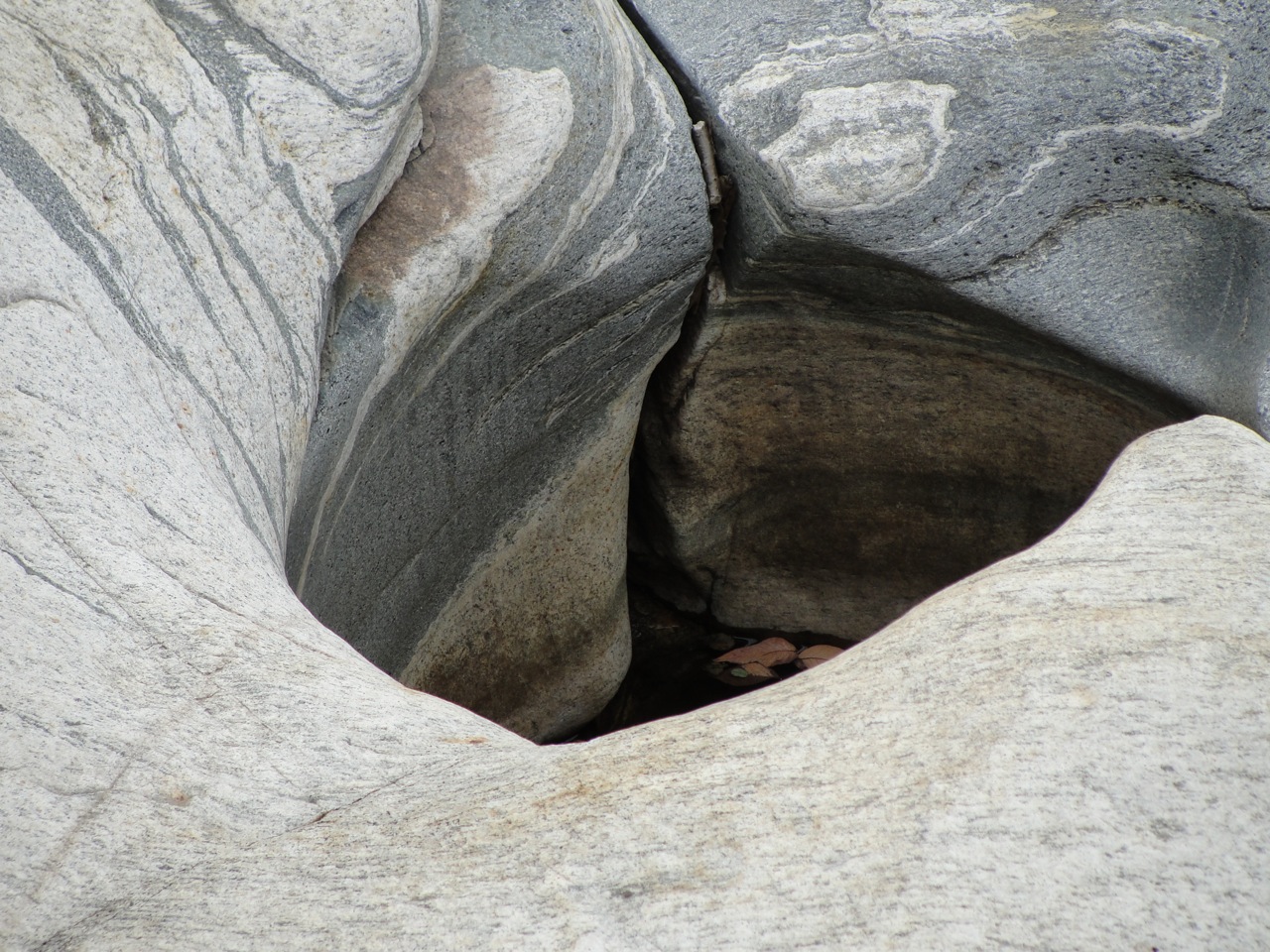
What comes next? If we wait in the darkness, if we succeed in opening our heart to awareness of the present moment, we may discover within us certain empty feelings, a kind of spiritual hunger. That does not mean we have failed in our search. Rather, it means we have found the next step. An experience of yearning may feel like a hole deep in our being. Hole in RocksWe may be tempted to try to fill it quickly with some new type of ritual or escape into some other sensation. It may feel painful and lonely, like an absence of something we need. But this emptiness is itself a kind of window or doorway.

The Buddhist teacher Kinrei Bassis says:

“the deepest form of prayer is really just the willingness to be still and let the longing in your heart go out without defining or understanding where it is going. Meditation is the willingness to let go and learn to trust so that we may enter into this seeming darkness.”

The emptiness itself, if we embrace it fully, can become the doorway into the larger reality. The practice of paying attention to the present moment helps us to cultivate the capacity to remain present to our feelings. We grow more at ease with anger, fear, sadness, and longing. We are able to breathe into these feelings, rather than run away from them.

If we breathe into the longing, breathe into the emptiness, there comes a time when it may open up into an experience of communion, an experience of our connection with the earth, with each other, with the Mystery within all reality. It may feel something like dissolving into Mystery. This experience goes beyond the capacity of words to describe. We may feel deep joy, even ecstasy, an intense awareness of being one with Love. An old hymn described it as “Leaning on the Everlasting Arms.”

Sometimes, that feeling may come unexpectedly, without any spiritual practice at all. The Mystery is funny like that. It surprises us. Sometimes it comes when trouble or grief has opened a chasm in our hearts and the pain of yearning fills our being to the core. It has been in the lowest moments of my life, that I most experienced the presence of the Mystery, holding me in love and connection and carrying me through.

Quote from “The Buddha Calling the Buddha,” by Kinrei Bassis, in Parabola, Summer 2006.

No One Way

If some of this talk about spirituality doesn’t make sense for you, remember that we bring our diverse personalities to our experience of spirituality. We will not all resonate with every approach to spirituality. My colleague, Rev. Peter Richardson, outlined four possible approaches to spirituality corresponding to traits from the Myers Briggs personality inventory.  His framework is just one example of how our spiritual experience might be diverse. We all have natural inclinations to tune into different frequencies.

He suggests that those of a more intellectual bent may be primarily drawn to the search for great truths. Einstein is one such mystic of the scientific realms. He felt awe and wonder at the mysteries of life revealed through science. A first step for an intellectual might be to appreciate the intricacy and beauty of the natural world, to pay attention to those moments of wonder.

Those of a more practical bent may be drawn to the works of goodness. They might find inspiration in the path that Gandhi shaped, to live out the connectedness of life by organizing for justice on behalf of the oppressed. A first step might be to volunteer for a soup kitchen, to pay attention to the larger reality in the gift of soup that connects us to someone who is hungry.

Those of an emotional bent are more likely to be drawn by love and devotion to divine or spiritual beings. The Sufi poet Rumi wrote thousands of love poems to the divine Friend, whom he felt most closely through his relationship with his human friend Shams. These are the folk who might especially benefit by reading the poems of the mystics, by music and incense and sacred ritual.

Finally, there are those of an intuitive bent, who may be drawn to the unfolding and transformation of the self into the larger self. The writings of Ralph Waldo Emerson might be a guide for those in this visionary orientation. These folk may be drawn to a diversity of practices and rituals, and may find their spiritual experience changing greatly over time.

There is no one way to practice spirituality. We begin by being aware of the present moment, by inviting our hearts to pay attention. We can notice those activities that help us to feel a sense of connection and wonder and gratitude, that help our hearts to feel most alive. We can invite the larger reality into our lives, by choosing to bring more of these activities into our daily lives.

Path

Photo by Margy Dowzer

Peter Richardson, Four Spiritualities, (1996.) Find it here.

Imagination as a Tool

Imagination can play an important role in shifting our attention. If we want to find that which is larger than words, that which we cannot define or explain by words, we need to access the playfulness of the non-verbal mind. Images are one way that we can experience the non-verbal realms. Carl Jung taught us about the power of dream images to express realities which could not be expressed in words. In my dreams, I have experienced the power to fly, to light candles from across the room, to heal with fire in my hands. Our dreams can be a pathway into a different consciousness.

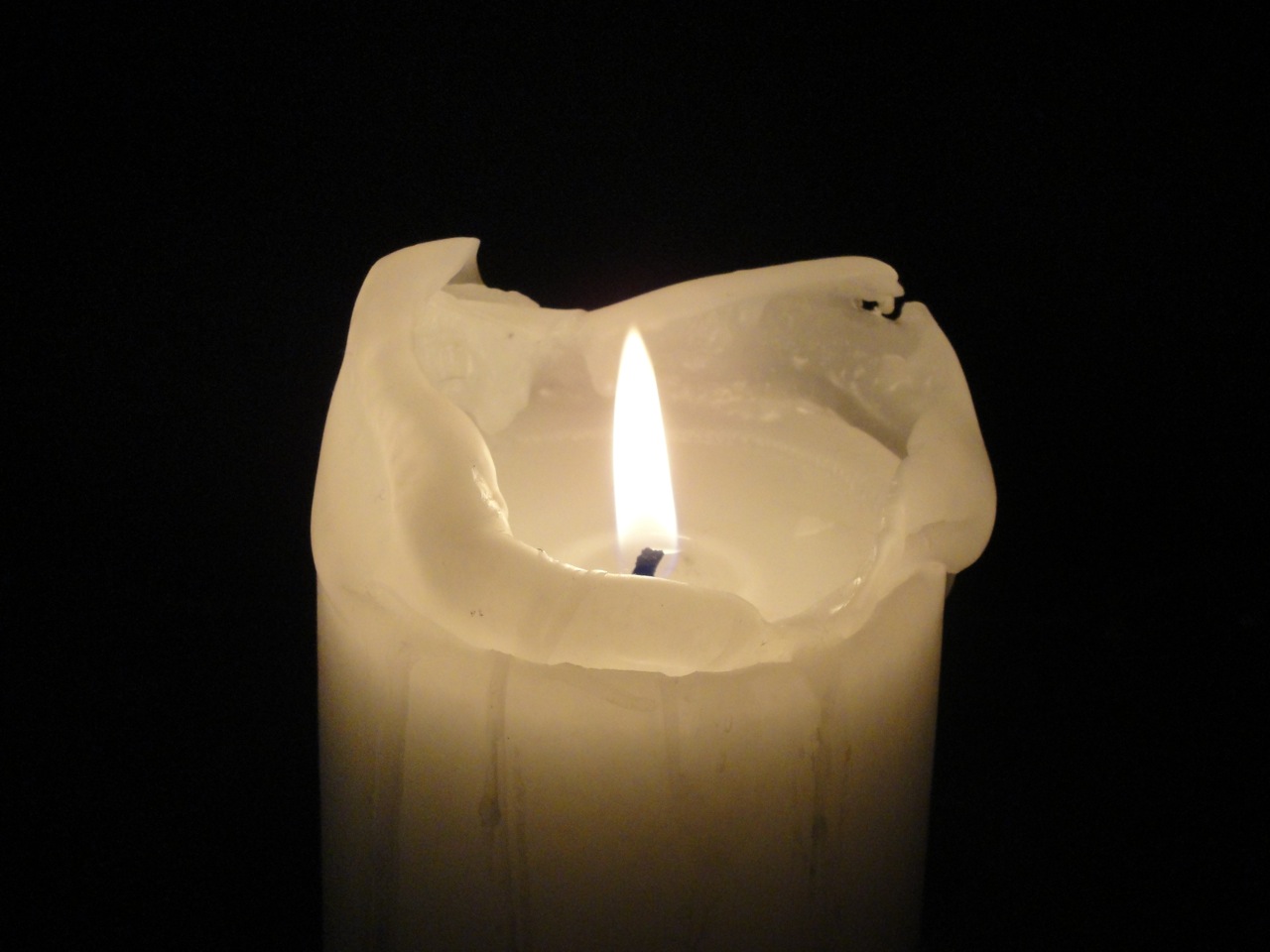
Candle flameSometimes, people shift their attention by calling upon an image of the larger reality. Some people call upon God to hear them and to speak to them. Others invite the goddess to enter the circle. Or we might say, Infinite Light, be here now, and light a candle. These invitations are also called invocations. It might feel silly to us to call out to someone or something that we don’t even know is there. But any time we invite the larger reality into the room, what we are really doing is inviting our hearts to shift their attention. We are re-tuning our hearts to notice the light that is already there.

The images are meant not to be objects to grasp in our minds, but tools for the imagination to awaken the mysteries of connection within us. So, if I say, “Spirit of Life, please open my heart to the wonders of your world,” I create an intention, a form that can hold the energies in a certain rhythm or shape. I open a window in my consciousness, to see what my literal eyes cannot. When we open the door, there is something that wakes up, something beyond what we can expect or explain. If we don’t open the door, we will never know what is out there, or in here.

Spiritual Practice

Windy Sails

Photo by Margy Dowzer

As we grow older, we begin to understand non-object realities such as the wind, or electricity, or heat. We experience the wind through clues such as blowing leaves, or the feeling of its force on our faces in the cold, or the tug on a kite at it rises into the sky. There are many forces of connection that are so ever present that we might never notice them without flashes of insight. One of these is gravity. 

We are used to being held to the ground, we are used to thinking in terms of up and down. Let yourselves notice the force of gravity on your body right now.

Do you feel the heaviness of your body?
Imagine floating up out of your chair into the air above you.

Try to do it.
(Do you need more time?)

Now can you feel the pull of the earth keeping you attached?
What would it be like if we all just floated off the earth into the vast reaches of empty space?

If we wish to begin a spiritual journey, we need a way to shift our attention, to tune in to the larger reality of which we are a part, to the mysterious forces that connect and uphold life. A method for shifting our attention is called a spiritual practice.

We usually don’t notice radio waves which surround us all the time. But if we turn on a radio, and tune into a particular frequency, we will hear the sounds of music. The radio waves are always there—it is us who need to tune in to hear them. Spiritual practices are the radio tuners that help us to tune into the music of the universe. We are trying to move beyond our ordinary experience of everyday life, into a different channel of consciousness. The very beginning of spiritual practice is to shift our attention to the energy of the present moment. 

Beginning a Spiritual Journey

A spiritual journey is our path of waking up our awareness to the larger reality of which we are a part. It is simpler than we think. It is so simple, that if we don’t pay attention, we can miss it entirely. I invite you to experiment with me:

Start by noticing the energy level wherever you are at this moment, both around you and within you. Are you alert? Restless? Calm or anxious? Tense or relaxed?

Now, sit up as erect as you can without straining. Notice how the energy level changes.

Now I invite you to breathe deeply, breathe all the way down into your belly. As you breathe in and out, let go of whatever might be on your mind, and let yourself relax and recharge. Just pay attention to your breathing in and out, as you sit quietly for a minute in the silence.

Now pay attention to the energy around you and within you. Do you notice any changes?

The very beginnings of a spiritual journey are in the practice of paying attention to the energy of the present moment. When we are first born, we see and hear everything around us without definition or understanding. Gradually, we come to assign meaning to shapes and colors and sounds. We say mama, or daddy, or ball, or doggie. We separate the world into smaller objects that we can name and grasp. Perhaps we learn about God as a kind of separate object that we might name and grasp.

But once we assign such names, once we divide the world into objects, we sometimes forget to see what is actually before us. When I was in high school, I took several drawing classes. Our first lesson was to stop drawing objects, and to start sketching out shadows and light. In order to draw, we have to see at a different level from the level of objects. To pay attention, spiritually, is like that. We are shifting our consciousness from small separate objects to larger connecting energies.

Shadow & Light

Photo by Margy Dowzer

I learned the awareness meditation from Starhawk, in her book, The Spiral Dance: A Rebirth of the Ancient Religion of the Great Goddess.

The Larger Whole

Reflected SkySpirituality is our experience of connection to the larger whole of which we are a part. I believe that each being is sacred, and we are all one family, one circle. My deepest experiences convince me this is true, even though we may forget, even despite the ways we may be estranged. Linda Hogan writes that the purpose of ceremony is to remember that all things are connected. She says:

“The participants in a ceremony say the words ‘All my relations’ before and after we pray; those words create a relationship with other people, with animals, with the land. To have health it is necessary to keep all these relations in mind.”

As we begin to build bridges across the broken places within our hearts, across the broken places between peoples, across the broken places between people and the earth, we are doing the work of mending the world. We are awakening, we are remembering, the reality in which we actually live, the unity of all. The Buddhists call it inter-being. In South Africa it is called ubuntu: we are all born to belonging, and we know ourselves in just and mutual relationship to one another. We move beyond the small self of the ego, into the larger Self some call God, or what I have called Mystery. Thomas Merton writes,

“We are already one. But we imagine that we are not. And what we have to recover is our original unity. What we have to be is what we are.”

The purpose of spirituality is to remember that all things are connected and to heal the brokenness between us.

An old Rabbi once asked his pupils how they could tell when the night had ended and day had begun.
Could it be,” asked one of the students, “when you can see an animal in the distance and tell whether it is a sheep or a dog?”
No,” answered the Rabbi.
Another asked, “Is it when you can look at a tree in the distance and tell whether it’s a fig tree or a peach tree?”
No,” answered the Rabbi.
Then what is it?” the pupils demanded.
It is when you can look on the face of any man or woman and see that it is your sister or brother. Because if you cannot see this, it is still night.”
                                                                             (Hasidic Tale)

Quotes from Linda Hogan, Dwellings: A Spiritual History of the Living World, (New York: Norton, 1995)
Thomas Merton: Essential Writings, edited by Christine Bochen. (Maryknoll NY: Orbis Books, 2000)
Hasidic Tale, Quoted in Spiritual Literacy, edited by Frederic and Mary Ann Brussat, p. 502. 

Broken Histories

Mab Segrest, in her book, Born to Belonging, examined the effect that the institution of slavery has had on the self-understanding of people in America, particularly the white people of her own family. She believes that a kind of spiritual anesthesia developed—a cutting off of compassion and connection—in order for a person to own slaves.

She ponders what it did to a man’s soul to sell his own children. Though it was not openly discussed, it was true that many of the children born into slavery had been fathered by the owner of the plantation. White people had to cut off their emotions, deny their relationships, and numb their spirits, to maintain this horrible institution for four centuries.

Segrest believes that the emphasis on individualism in America is an expression of our spiritual distress. We are all born into families, each with their own histories of disconnection or oppression that can cause a numbing of the soul. It feels less painful to imagine ourselves as separate, than to acknowledge the abusive and traumatic relationships that have closed our hearts. But when we close our hearts, we also lose our capacity for deep joy. We are not fully alive without each other.

Shortly after I first came to Maine, I visited Indian Island, home of the Penobscot Nation, in a trip sponsored by the Four Directions Development Corporation. During a beautiful traditional lunch that was prepared for us, we heard about some of the long history of brokenness between white people and indigenous people in Maine, as researched by Donna Loring, who at that time was the Penobscot representative in our State House of Representatives. Near the end she spoke of her belief that America needs to remember its roots. She wasn’t speaking of its ideals of freedom and democracy. Rather she meant that we cannot find the way to peace until we revisit our brokenness.

It is uncomfortable and painful to embrace our brokenness. But if we hope to find wholeness, we must be willing to hear the stories that we tried to forget. To return to wholeness is not to paint over the past with easy brush strokes, but to make awkward and painful attempts to cross over into the experience of the other. It takes a long time, and a lot of courage. In my experience, it is often easier to feel at one with nature than to feel at one with our fellow human beings. But I have also experienced, after the awkwardness, moments of grace and connection. Moments when we talk and share from our hearts, and feel a sense of wholeness restored.

Broken Rock DSC00135

Photo by Margy Dowzer