Feeding Each Other

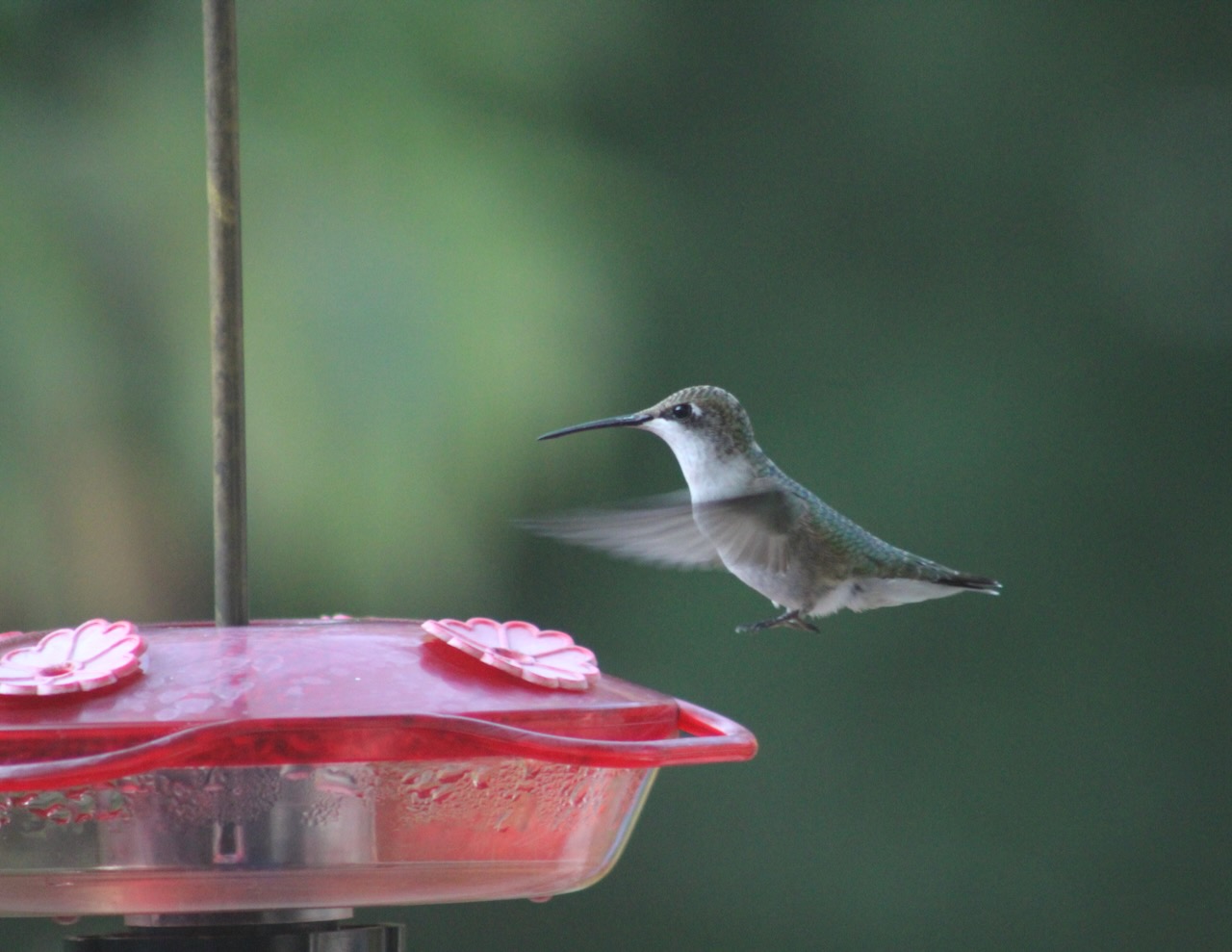
female hummingbird flying near red feeder

This summer, we’ve been blessed to feed hummingbirds in our yard, both through flowers like bee balm, and also through our little red hummingbird feeder that we fill with a sugar solution. Earth creatures feed each other. Everyone needs to eat. This happens through the incredible natural chain of life, some animals eating plants, other animals eating animals. But the deepest natural order is that all animals must eat. The interconnected circle of life. We participate in this circle, by what we eat, and by how we feed others.

Perhaps this is why forced starvation is such a horrific crime. To cut off a people from food is a crime against humanity, and also a crime against the natural order of life. I have been daily bearing witness to the forced starvation of people in Gaza by the Israeli government. There is food aid literally waiting at the border being denied entry. My heart is breaking every day. As the starvation goes on, it becomes impossible for people to heal from the damage it does to their bodies, even if they survive. Every day more people are dying and more people are reaching a point of no return. One action that is being organized is to pressure mainstream media to cover the fact that Israel is starving Gazans, which should be headline news everywhere in the world. You can find a template to flood media inboxes at https://writersagainstthewarongaza.com/action.

I also want to bear witness to the starvation happening in Sudan. I am not seeing so much about it in the news. When the current regime in Washington closed the doors on USAID, the situation there became dire. According to an article today in Closer to the Edge:

“The U.S. was once Sudan’s largest humanitarian donor. USAID funded almost half the international aid reaching the country. Then, with the flick of a legislative pen and the grinning cruelty of budget hawks who will never see a famine up close, that support was ripped away. Community kitchens—lifelines for displaced families—shut down. Nutrition programs vanished… The numbers are so obscene they should scream off the page: 25 million people acutely food insecure, over 770,000 children under five on track to suffer severe acute malnutrition this year, and nearly 100,000 cholera cases since last summer. ” 

We are all connected. I am remembering that the very first moral imperative according to the parables of Jesus, was simply this: “I was hungry and you fed me. I was thirsty and you gave me drink.”

Garden Blue

My favorite color in the garden is this blue/purple of the Siberian iris. They’ve multiplied in the roadside garden bed, and blossomed all along the way. And now they are gone. So we had maybe a week to enjoy their beauty. I feel the time rushing by with all these spring and early summer flowers. Nothing goes on and on. With photos we try to capture the moment and make it last a little longer, but nothing really lasts in that way. If we don’t pay attention to the moment, we miss it.

It is easy for me to get caught up in what needs to be done, the projects, the planting and watering, the weeding, the holistic sprays for the orchard. But probably what is most important is to walk around the yard noticing the flowers and plants and critters, noticing the birds and frogs and tadpoles. When we came to this yard, our hope was to nurture our relationship with the land, with all of the wisdom it had to teach us, with all of the tending that it asked of us. It was the tangible finding our way home that my spirit was hungry for.

We’ve been tending this particular small place for about nine years, and we feel such a bond with it. In these times of wars and rumors of wars, walking through the yard restores my soul. What must it be like to live for generations in a place? I can only begin to imagine. One of the crimes of the destruction of Gaza, along with the horrific killing of human beings, is the destruction of the land, the olive trees, the plants, the gardens. All those homes. It makes me weep.

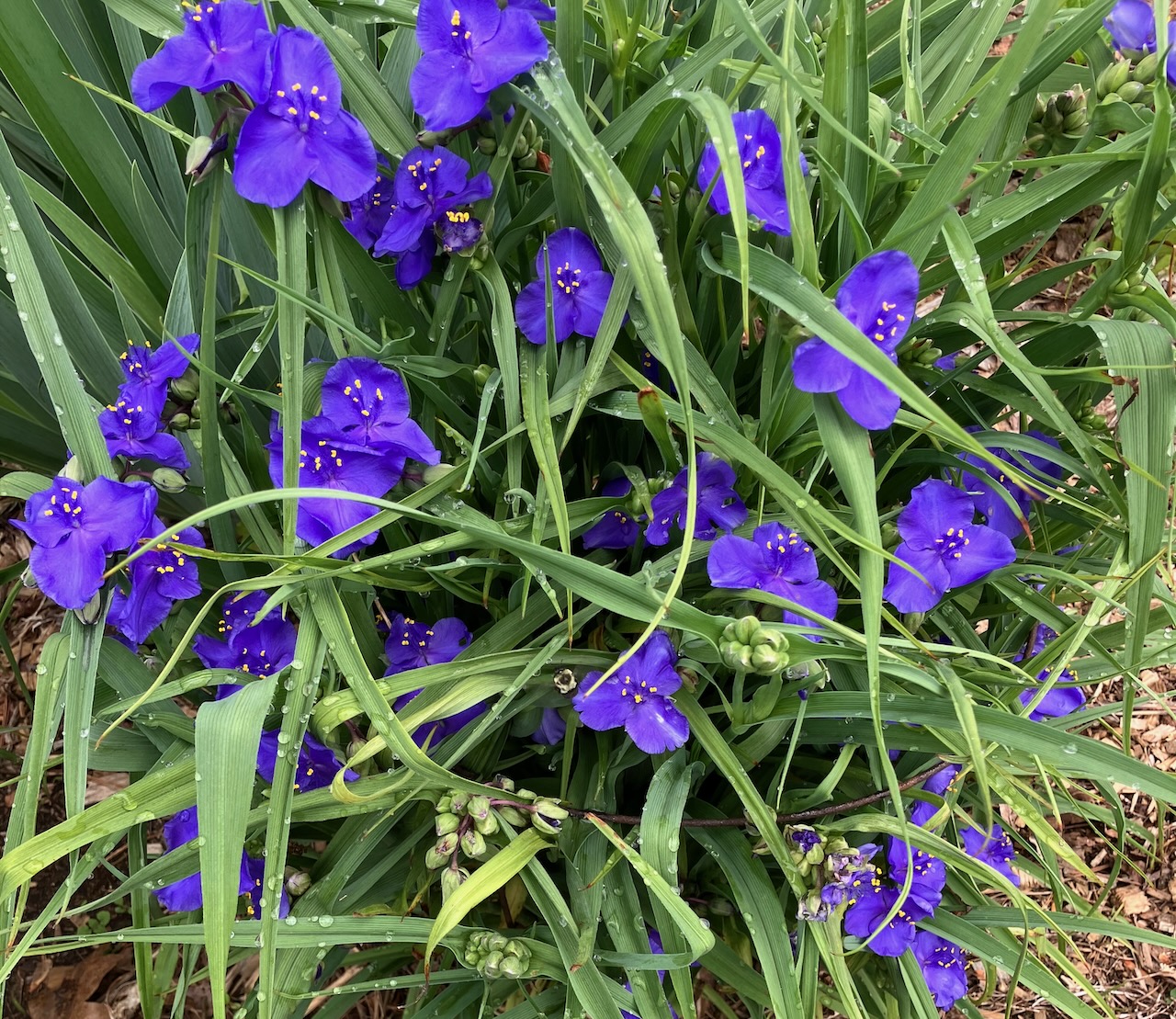
I walk around the garden in the mornings, and I pray. I give thanks for another day of living. Not just my life, but the life all around me, of which I am a part. I am happy to see that the spiderwort plants are blooming, another in that shade of blue/purple. This seems to be the very favorite flower of the bees, and it lasts for a long time, with multiple little buds on each stalk, taking their turn to shine. It is the very diversity and multiplicity of the plants that bring abundance to life in the garden.

A Child in Gaza

I haven’t been able to write for a while. My heart is shattered by the continued assault on the people of Gaza by the government of Israel, supported by my own US government. If you follow this page, you know that I have chronic illnesses that keep me unable to go out to demonstrations or vigils or do much of anything. All I have been able to do is to bear witness, to keep looking for news, to keep posting on Facebook photos and stories of the devastation. Every day more devastation. Every day, bearing witness and sharing.

I want to tell you about Lama Jamous, a nine year old child in Gaza who is documenting and interviewing and posting on Instagram–she has become the youngest journalist in Gaza.

You can follow her here on Instagram. (I first found her on Facebook, but now I am not sure if that was a real account or a copycat account. Still, it led me to know about her.) In another post she writes:

My name is Lama Jamous and I was born on November 24, 2014. I have a sister Aya and two brothers Mohmmed and Kareem. I’m the youngest of the family. I am a great student in school and I have lots of friends. I enjoy working as a group with my classmates, participating in activities. My favorite subject is Arabic. Every weekend I would go visit my grandma in Khan Younes. Then we were going to see our farm by the beach. We were going on picnics too. Our apartment on the roofs in Gaza was magnificent.
Then came October 7, 2023 and our lives changed 180 degrees. No more school, no more education, no more picnic… Very difficult to live as situation. We went to Rafah to live in a tent. From now on, we have nothing of the basic of living well like no privacy for the toilet. My whole family live right beside us.
My aunt Sana was killed along with 14 yr old Malk, 11 yr old Brea, 16 yr old Malek and 10 yr old Salam. They were civilians, my friends, my family… I have suffered tremendously from this situation and being evacuated from one place to another. So I decided to be a journalist to show the world what’s happening.
We love our country very much and would like to stay but the reality is that we are facing genocide against civilians… Many witnesses told horrible things that happened or are happening. Media is not covering this.
It’s very expensive to evacuate a family… every person needs $5,000 to $7,000 but it depends. We hope to be safe soon and we will come back when the war is over. I want the war to stop so we can get back to normal life. So many of my friends and classmates are missing and we don’t know what happened to them… Everything has gotten worse than before. This war needs to be stopped.
Lama Jamous

https://www.instagram.com/reel/C3CTcxeM-bs/?utm_source=ig_web_copy_link&igsh=MzRlODBiNWFlZA==

Lama Jamous is a child, my friends. She is now in Rafah, which was to be the safe evacuation zone, but is under attack.

I first heard about Lama through the work of Motaz Azaiza, a photo journalist who has been documenting the atrocities. He was recently evacuated from Gaza, and was interviewed in the Guardian. He expresses it so eloquently:

“To be clear, this is not a war against Hamas,” says Azaiza. “This is and has always been a war against the Palestinian people. Israel’s plan is to bury us or push us out – as we have just seen with the Rafah bombing. There is literally nowhere else for us to go.”

Azaiza urges the world not to look away. “As humans, we all have a responsibility to bear witness to what is happening in Gaza,” he says. “I tried my best to show the world our reality, now the world needs to show where it stands. It is ordinary people, men and women, who have the power to save what remains of Palestine. Our plea is simple – we just want to live.”

https://www.theguardian.com/global-development/2024/feb/16/motaz-azaiza-interview-gaza-ghosts-photojournalist

Please bear witness with me. Please do whatever you can to stop this genocide.

The Lottery

fallen-needles.jpgI had almost forgotten about the incredible doom of the draft lottery of 1969 and the years following.  But recently, I happened upon two fictional accounts of lives being undone by this lottery, and it all came back to me.  One came in the television drama This Is Us, in an episode about the back story of Jack’s time in Vietnam. (Spoiler alert!) Jack and his younger brother Nicky are at a bar on December 1, 1969, waiting to see what birthdays will be chosen for the draft call-ups. Nicky is portrayed as a gentle, glasses-wearing kid, not tough, not cut out to fight. Jack is his protector. Nicky’s birthday, October 18th, is chosen as number 5, which means he is sure to be inducted. Their dad tells him only, “Make me proud.”  Jack and Nicky consider options, maybe Canada, but Nicky succumbs to the pressure and joins up.  We learn that Jack himself had had a deferment because of a rapid heartbeat condition.  But when Nicky writes from Vietnam that he has gotten himself into trouble, Jack finds a way to enlist, so he can watch over his brother.

I had almost forgotten about the lottery.  The feeling of foreboding, its random terrors.  My own age peers were affected by the lottery of February 2, 1972.  We were freshman in college, then, and my male friends would have received college deferments, but if they dropped out, or when they graduated, they would once again be vulnerable to being called up.  My friend Tom’s birthday was September 16th. He was sorting out what options he might have as a conscientious objector to the war.  When his number was above 200, we all breathed a sigh of relief.

Before watching that episode of This Is Us, I had been reading the novel, The Rules of Magic, by Alice Hoffman.  She introduces us to a family of young witches: two sisters, Franny and Jet, and their younger brother, Vincent.  Their history included an ancestor tried for witchcraft back in the 1600s in Massachusetts, and continuing suspicion towards their magical family.  Vincent is an artist, a singer, and a young playboy, though he eventually comes out as gay and finds true love with a man.  He has eerily known for years that he faced doom: it comes in the form of the number 1 pick in the draft lottery of 1969. His birthday is September 14th.  (The actual number 1)  The family is devastated and knows he cannot serve in the military–a witch must “harm none” lest it come back three-fold.  They try to figure out a way for him to escape, but ultimately it means that he is forever cut off from his family.

Hoffman compares the lottery to the witch hunts of earlier times, and writes the most haunting description of its effects.  Her words stirred that memory in me of our fear and our relief, of the randomness of horror cast upon the lives of young men and those who loved them. How we were divided into the lucky and unlucky. How we almost took it for granted.

It came on the wind, the way wicked things must, for they are most often weighted down with spite and haven’t the strength to lift themselves.  On the first day of December 1969, the lottery was held.  Men between the ages of eighteen and twenty-six would be drafted to fight in Vietnam according to their birthdates. Lives were interrupted and fortunes were exchanged. A cold drizzle hung down and flurries of snow fell in swirls. There were no stones thrown or drownings, no pillories or burnings. Those chosen were computerized, their fates picked at random.

Life went on in spite of the lottery: traffic headed down Broadway, men and women showed up for work, children went to play. The world breathed and sighed and people fell in love and got married and fell out of love and never spoke to one another again. Still the numbers drawn had the weight of ruin and sorrow; they turned young men old in an instant. A breath in and a man was chosen to walk on a path he’d never expected to take. A breath out and he must make the decision of a lifetime.  Some would leave the country, some went to jail, some were ready to take up arms and die for the country they loved despite the heartbreak of leaving families and friends.  All were torn apart.  It was said that fate could not be altered, except by one thing, and that was war.

After Vincent watches the lottery, he gets drunk, and is brought home by two veterans, who “pitied him the war of his time. Theirs had been terrible, but it had also been just and worth fighting.”  From Vietnam onward, I believe that none of the wars fought by our country have been just or worth fighting.  In each war, so many were wounded, so many broken in body or spirit.  And always, some resisted.  So strange to recall these old tragedies that linger beneath the surface of so many new tragedies.  And as always, some resist.