Capisic Brook

brook amid brown trees and leaves in early spring
Capisic Brook in early spring

Two people have reached out to me in the last few weeks to ask about the origins of the name of our little Capisic brook. They accurately assumed that it was a Wabanaki name, as are many waterways in what is now Maine, and wondered about its original meaning. I have wondered that too, though when I asked Wabanaki friends, no one was quite sure. So recently I began some research about it.

Capisic Brook has several branches winding through our neighborhood, with three headwaters: the north branch starts east of Forest Avenue near the intersection with Allen Avenue, the main stem in a wooded area within Evergreen Cemetery, and the west branch just east of I-95 near the intersection with Warren Avenue. Sadly, it receives run-off from development and roadways, and its water quality is significantly impaired. After these feeder branches join together it crosses under Brighton Avenue, flowing into Capisic Pond, which was originally created in the 1600s by a dam for a grist mill. Eventually Capisic Brook feeds into the Fore River. [I want to note here that the Fore River was called Casco by the Wabanaki people who lived here.]

All of this land is Wabanaki land. I wrote about its history in a previous post, noting that it was the chief Skitterygusset who first made an agreement for a settler to live near Capisic Brook and its uplands. While the settlers thought of these agreements as deeds of sale, a Wabanaki interpretation was something more like a treaty: an agreement to co-exist, and to render offerings each year for the use of the land and water. Unfortunately, the settlers kept taking more and more of the land and waterways. That is the painful legacy of colonization. Any story must include this legacy.

For those of us who live here now, if we are paying attention, the presence of the brook is everywhere in the neighborhood, showing up in the patterns of the roads, and the deep ravines with trees and brush. It most likely contributes to the wildlife that still frequents our yards. When I go for a walk, I seem to find myself heading to places where I can see the brook, in one segment or another. Despite the pollution and development, the brook has its own powerful presence in this place, that cannot be denied.

So what about the name? I have been privileged to study a Wabanaki language, Passamaquoddy/Wolostoqey, for the last five years with Roger Paul. One thing I learned is that the languages are polysynthetic–words are formed from the combination of smaller syllables, with root segments, prefixes, and suffixes, that combine to form new meanings. The word “Capisic,” as such, is not in the online Passamaquoddy/Wolastoqey dictionary. So I began to look at its parts. First of all, early spellings by settlers were not consistent or necessarily accurate to the actual Wabanaki words. It is likely that it has changed over the years. But I listened to how it sounded, and converted it as well as I could to the spelling system which has been used for the last 40 years–and is used in the online dictionary: ‘Kahpisik.

Now, it is more likely that the dialect here was Abenaki, and their recent spelling system is different, but I was working with what I knew best, and all of the Wabanaki languages are intelligible to each other, so that seemed not unreasonable. Here is what I was able to find: first of all, the final two letters “ik” are most likely a “locative” signifying that the word is a location. So then I looked at Kahpis. Sometimes, an “is” signifies something small, though that is less certain in this case. “Pis” can also mean “in” or “into.” I found the syllable “Kahp” in the prefix “kahpota” meaning to climb down or disembark, and also the verb “kahpotassu,” used in the context of transportation, meaning she or he gets off, gets out, disembarks, steps down. I couldn’t find other uses for “kahp.”

Many Wabanaki location words are the descriptions of what might take place there. Because of the physical characteristics of the brook, I am wondering if Kahpisik might refer to “the [small] place where we disembark [from our canoes].” The brook was unlikely to be a navigable stream, so people traveling on the Casco (Fore) River, coming to this brook, would have to disembark. So maybe that is what the name refers to.

I want to acknowledge that I am not an expert in the language, and merely hope to be a respectful and curious student. I checked in with Roger and he thought it was possible that this meaning might be on the right track. If others can tell me a more accurate meaning, or source for a meaning, I will update this post.

But in the meantime, it is helpful to think about this place in relation to its own history, to the people who lived here, live here still, and love this land and water. I imagine it used to be great drinking water, filtered as it was through gently sloping forest. Animals and birds still drink from it today, polluted though it is. I am grateful to be able to walk to the brook, to see the water and the plants, and sometimes birds and animals who visit. I am glad to see awakening environmental consciousness that seeks to purify its waters again, or at least mitigate its pollution. We belong to our watershed, and when we can imagine ourselves located in such a way, we are more likely to care for our home.

Pond, carpet layer

Photo by Margy Dowzer: me working inside the pond, surrounded by pieces of carpet.

Yesterday, I laid down all the carpet pieces to cover the ground surface of my little future pond! (I got these pieces from kind strangers when I posted on Freecycle and Buy Nothing that I was looking for old carpet for the pond.) It was a bit like putting together a puzzle, making sure to overlay the pieces so all the ground was covered. As I mentioned before, this is one method for protecting the pond liner from roots and sharp stones–in our case, mainly from bittersweet roots. The toughest part was matching up square pieces in a circular area. That, and the dustiness–which is why I am wearing a mask and gloves. I used up all my pieces of carpet, except for some 2 by 2 squares that I plan to use over the liner on the planting shelves, to protect the liner from those stones. It was just right–I would have hated to have a bunch of leftover old carpet.

Photo: carpet layer completed!

Today, I still have to dig some more of the overflow channel, install the official “underlayment” that came with the liner, and then some neighbors are coming over to help me position the pond liner–it is too heavy for me to move it on my own. I am trying to get it in place before some rain in the forecast on Saturday, though we did get some drizzle this morning. I’ll post more pictures as the work gets done.

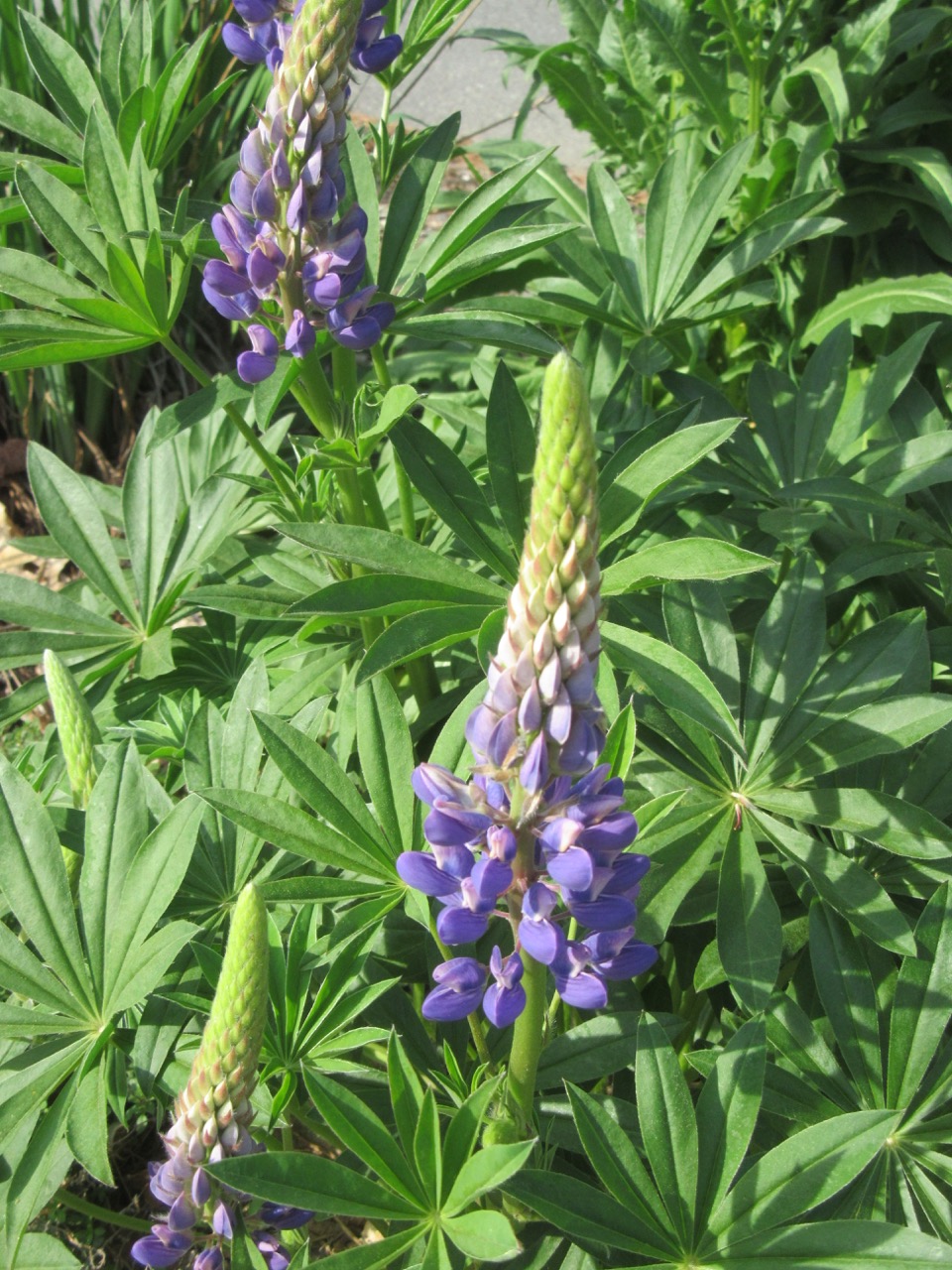
Meanwhile, these beautiful purple lupine flowers started blooming in our front road edge, with no work at all from me this year, and I just want to include them here, for anyone who’s reading this far. May you have a beautiful day!

Photo: Lupine flowers

The Little Pond

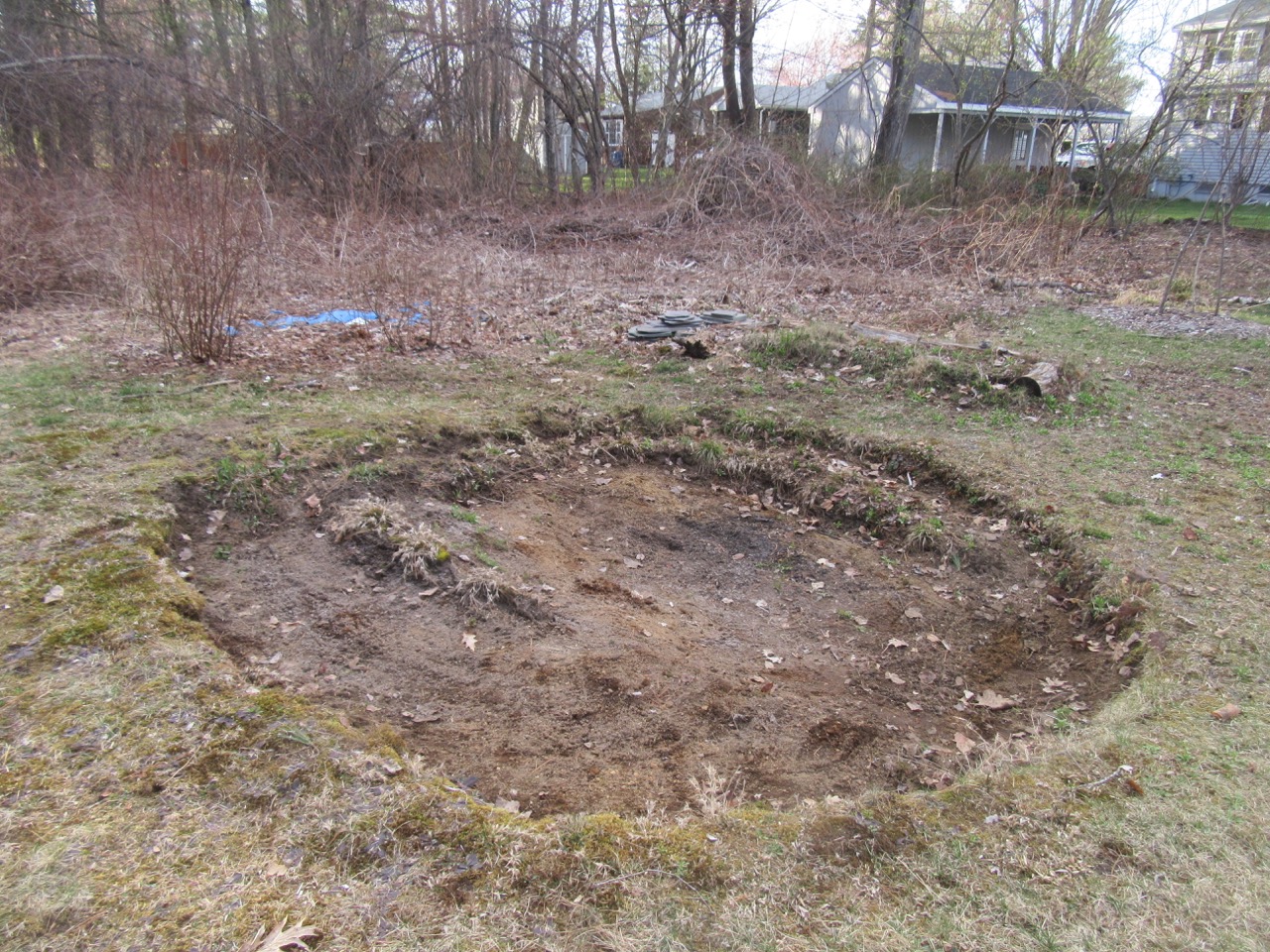
In our permaculture design for our land from 2017, we included a little pond, about 11 by 12 feet round. Every so often, I would dig in it a bit, and find a place to put that soil. Finding a spot for what is dug up is actually a major issue in digging a pond. Some of the topsoil made its way into what is now a bed for blueberries. But mostly, I didn’t have the energy to take on another big project.

The future pond, as it looked with what I dug out before this year.

However, this spring I felt a burst of energy each time I went into the yard, and I felt the future pond calling to me! So I read once again Robert Pavlis’s book Building Natural Ponds, and made a list of everything I would need. I talked it over with Margy. The biggest expense is buying a pond liner, recommended 45 mil EPDM rubber. For our size pond, with the deepest part 3 feet deep, we’d need a 20 by 20 foot liner. (Formula: width plus 2x depth plus 2 feet for edge, times length plus 2x depth plus 2 feet.) Other needs include old carpet strips to lay over the ground under the liner, to protect against roots and rocks–and we’ve got bittersweet roots, so this might be essential. It will need lots of stones to line the planting shelves and the edges, and then a number of pond plants, to serve to clean the water, and of course to look beautiful. This kind of natural pond does not have any mechanical filters–just plants. So 1/2 to 1/3 of the pond is made up of planting “shelves” that are only about 8-12 inches deep.

Why include a pond? One reason is that it brings more water into the landscape. For some sites, ponds are a way to store water, but that won’t be as big a need for our site. We have rain barrels for that. We can use water from the rain barrels to fill the pond, and refill as needed. For us, a pond will mostly be for wildlife, like frogs and birds. We are told that if you build it, the frogs will come. And for us, another reason is to be able to look at the beauty of the water and water plants, when we are sitting in the yard. What a good reminder of the sacredness of water.

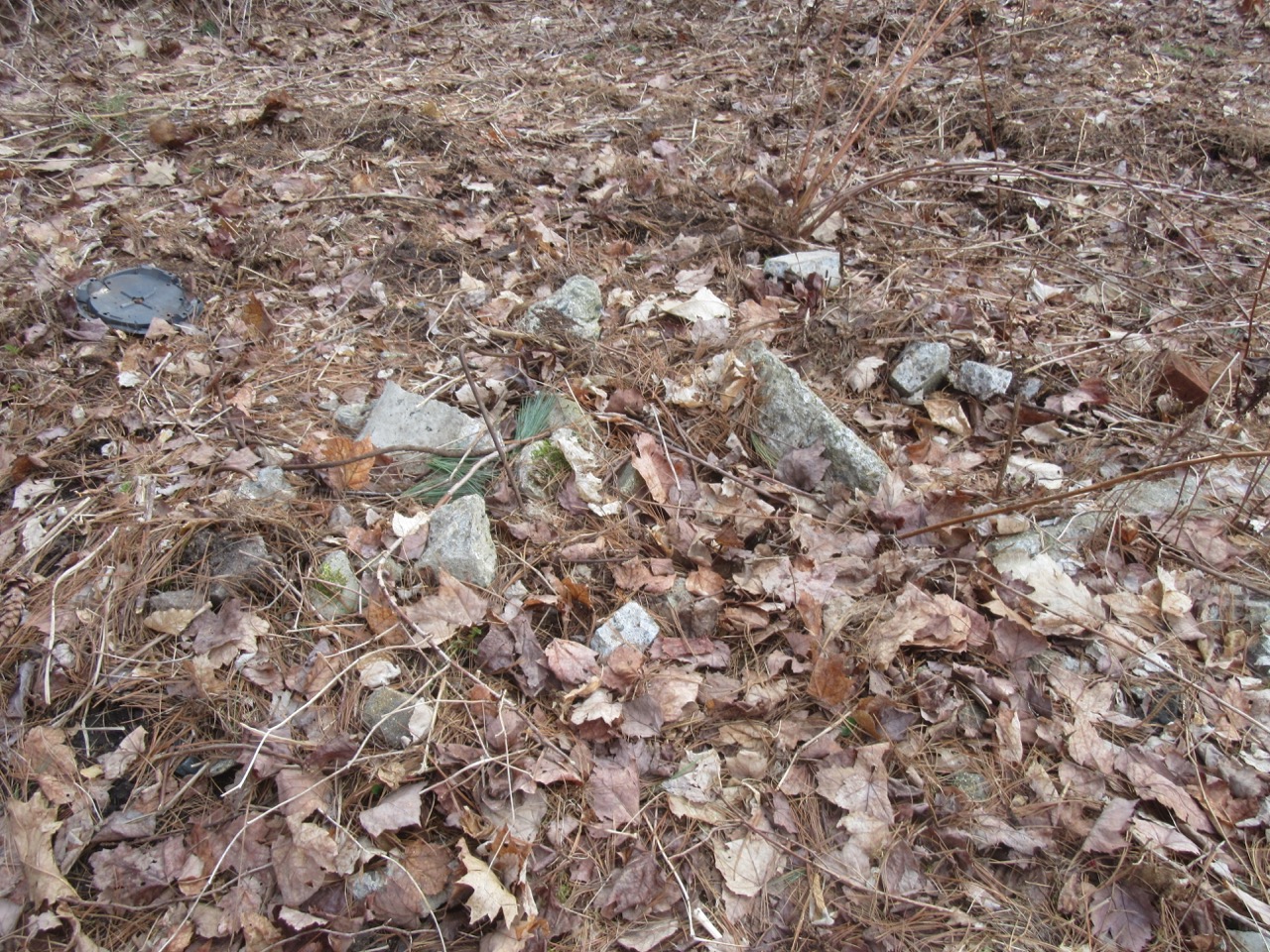
The biggest amount of work to make the pond is the digging. But we finally figured out a place to put the dirt. In the back corner of our yard, some former resident dumped a pile of concrete and metal demolition junk. We’d thought about trying to haul it away, but that would be a huge job, and cost money to take away. Most years, it has been covered with wild raspberries that don’t bear any fruit because it is too shady. This spring, I pulled out much of the raspberries and some invasives, and got a good look at the junk underneath. Concrete, metal, demolition debris.

Old demolition debris in the back of the yard.

So this is where we will put the sandy under-soil I dig from the pond. Then I’ll put cardboard over the resulting mound (to rein in the invasives), put down some compost and other soil on top of the cardboard, and then plant some shade loving plants on the mound. Another project.

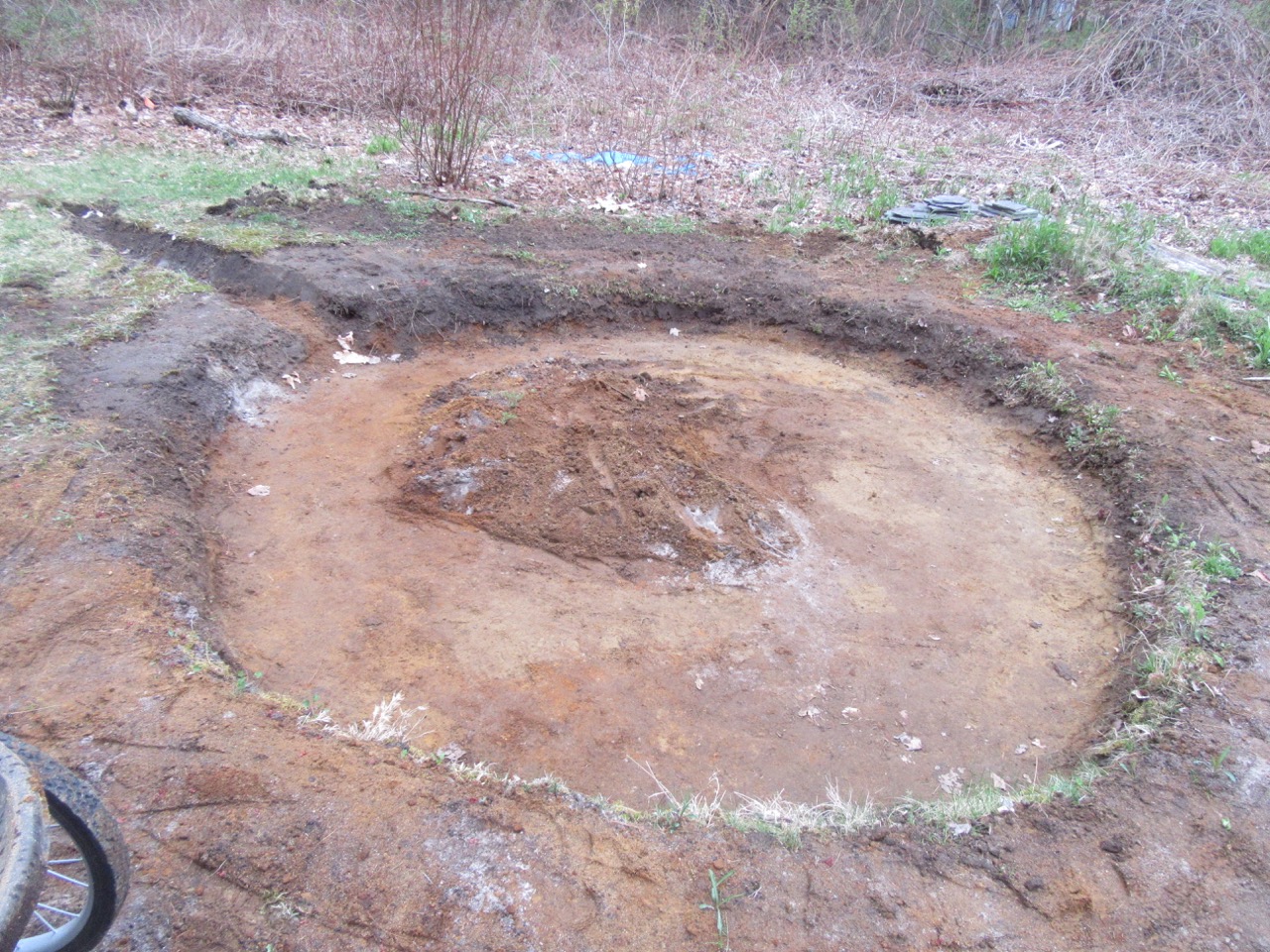
A few days ago, I started an overflow spillway, an area on the edge of the pond that is 4 inches lower, so if the pond gets too full, the water has a place to go. I figured out, from the book, that it didn’t have to go very far, maybe 8 feet away or so, where the water could sink into our sandy soil. Then, the last few days, I have been slowly digging out the first layer, to the depth of the planting shelves. Here is how much I was able to finish by today.

It’s hard to tell that the depth of the pond is now about 1 foot, except for the part in the center that I didn’t finish to that level yet.

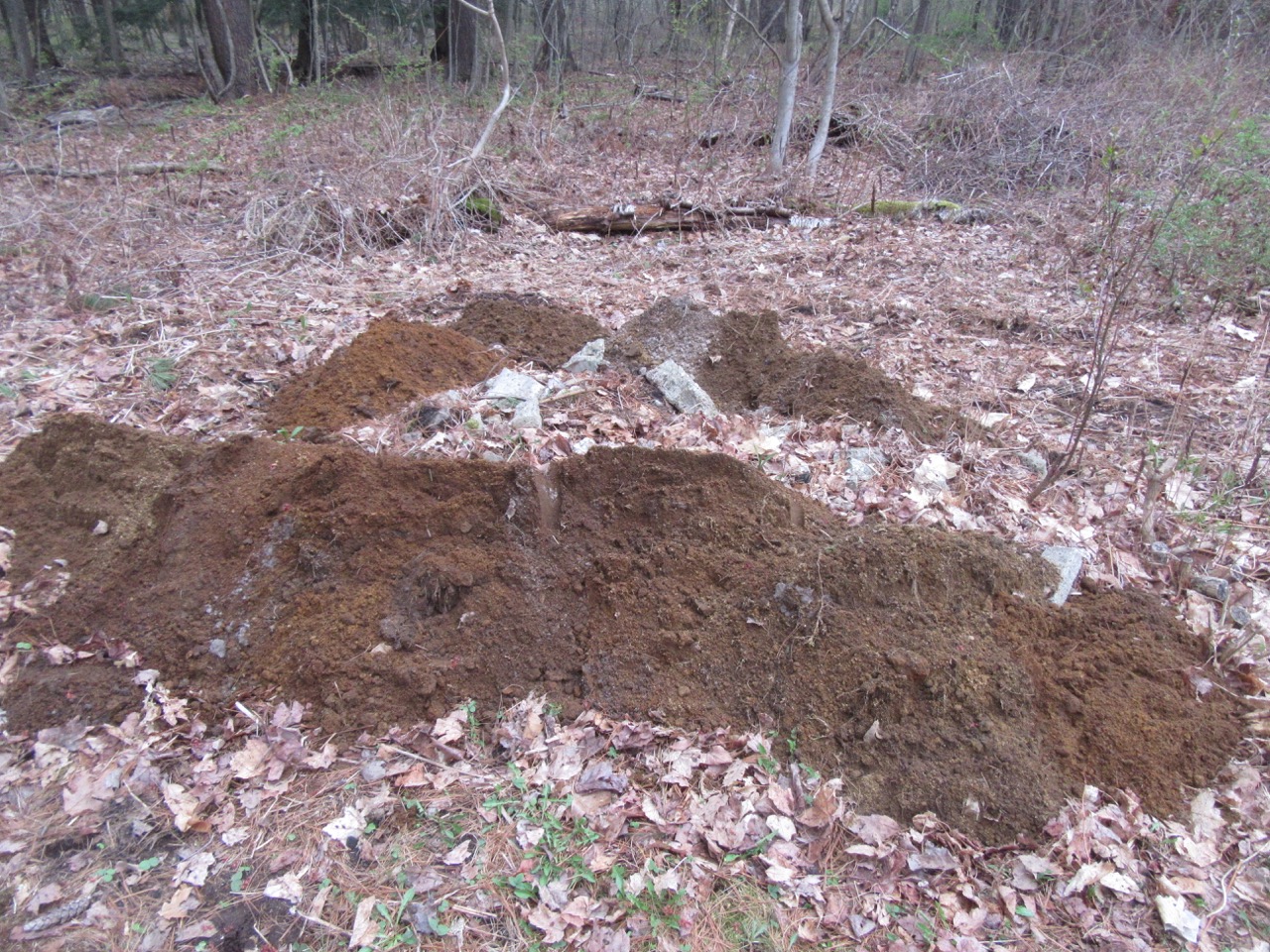
I shovel out the dirt into a wheelbarrow, using a level to try to keep the pond surface level–which will be important–then I bring that dirt over to the demolition pile, and dump it there. It doesn’t actually look like that much, but I hauled away several wheelbarrows full just in the last couple days. I don’t know what the former residents did with this part of the yard, but it seems like there are some ashes and charcoal buried in the future pond, along with a very rusty sandy soil. Oh, and here is what the junk corner looks like now.

Junk pile beginning to disappear under dirt piles.

So, yesterday, I ordered a pond liner. I was able to find a liner, with an underlayer, for $438. I also posted on “buy nothing” and “freecycle” pages requesting old carpet strips. I’ll keep you updated. This is going to happen!

It’s Called Penobscot for a Reason

Kirk Francis

[Penobscot chief, Kirk Francis, speaking at the rally]

Yesterday, I went up to Bangor for a Penobscot River Sovereignty Rally.  This was in response to a recent Appeals Court ruling that stated that the Penobscot River is not a part of the Penobscot Nation–despite the history, despite the fact that the water has never been ceded by any treaty.  This description is from the Event Page:

On Friday, June 30th, the First Circuit Court of Appeals sanctioned the State of Maine’s territorial taking of the Penobscot Nation’s ancestral waterways, by ruling against the Tribe in the Penobscot Nation v. Attorney General Janet Mills, case.

We will not accept this decision. We now call upon ALL of our friends to come and stand with us during this critical time, to say no to the State’s continued infringement upon Tribal rights. Their attempts to violate standing treaty rights and the Maine Claims Settlement Act, by continuing to diminish tribal rights is a shameful shadow on Maine’s history. The Attorney General’s attempts to mislead the public regarding the facts of this case are egregious. She has continuously spread falsities regarding the nature of the Tribe’s interest. It is time that her lies be dragged out into the public sphere and made clear for all to see!

The Penoscot Nation has shared these waterways freely with all of our relatives along the Penoscot River for generations. We have guarded and protected these waterway for all users for centuries. And, when the State allowed it to be contaminated, we took responsibility for cleaning it. Now, the State wants to take these waterways from us, so that they can allows industry another opportunity to desecrate these vital waters, through mountain top mining and hydro-fracking.

The Penobscot Nation has held these waters in trust for all Mainers, and we are the only ones that have taken the initiative to restore these waters to health. We now ask all Mainers to stand with us, so that we can protect these waters for future users.

There was a good article in today’s paper that explains some of the legal issues involved.  I encourage everyone to read Diane Oltarzewski’s Maine Voices: Judge’s dissent in ruling on Penobscot River sets vital legal precedents.

I feel indescribably sad about the continued colonization against the Penobscot people and other Indigenous people on this continent.  When will our society ever stop?


Layers of Community-Rain Barrels

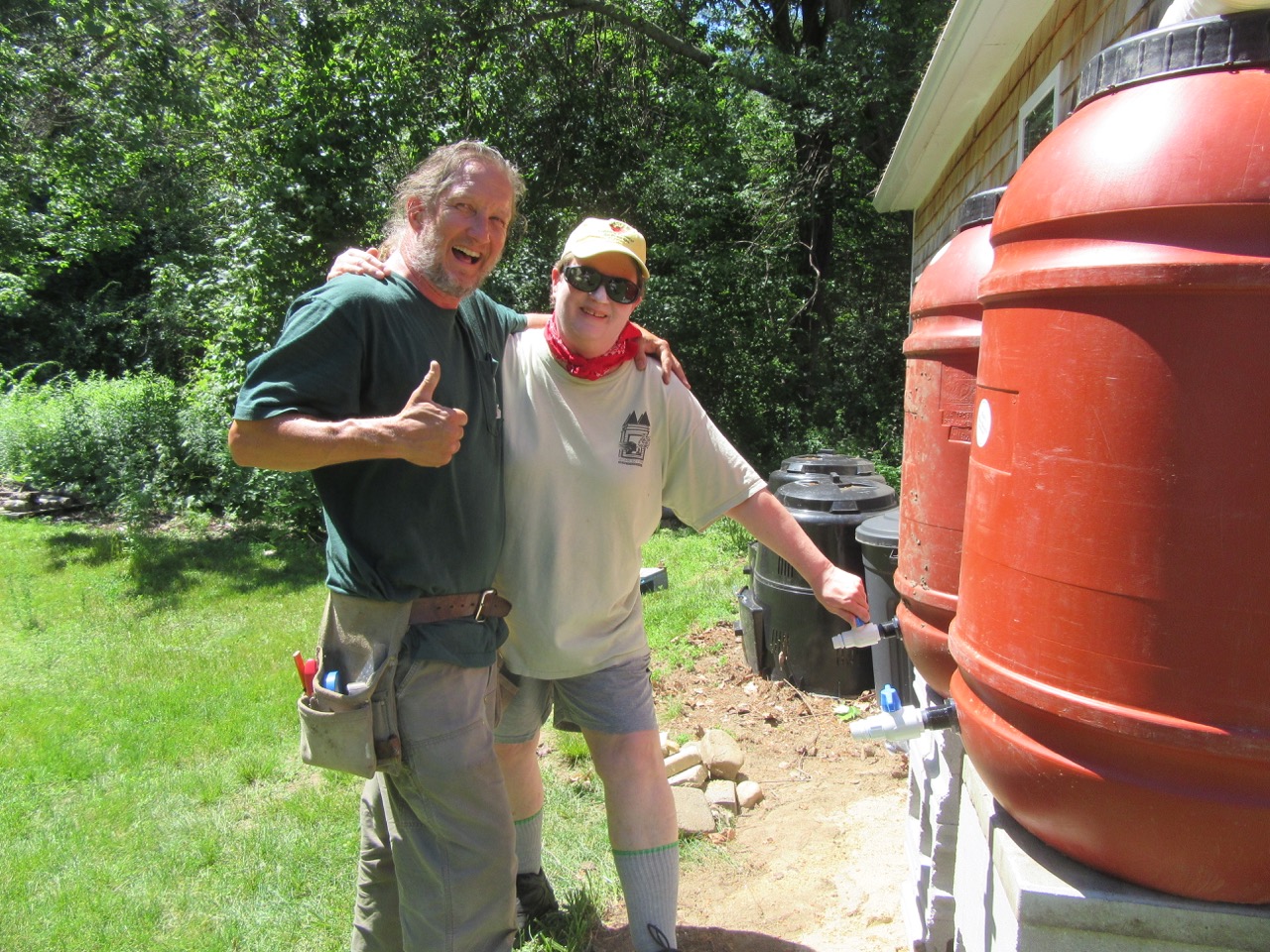
Barrel Spigot Trial Dave & Margy

[Margy and Dave testing the spigot height]

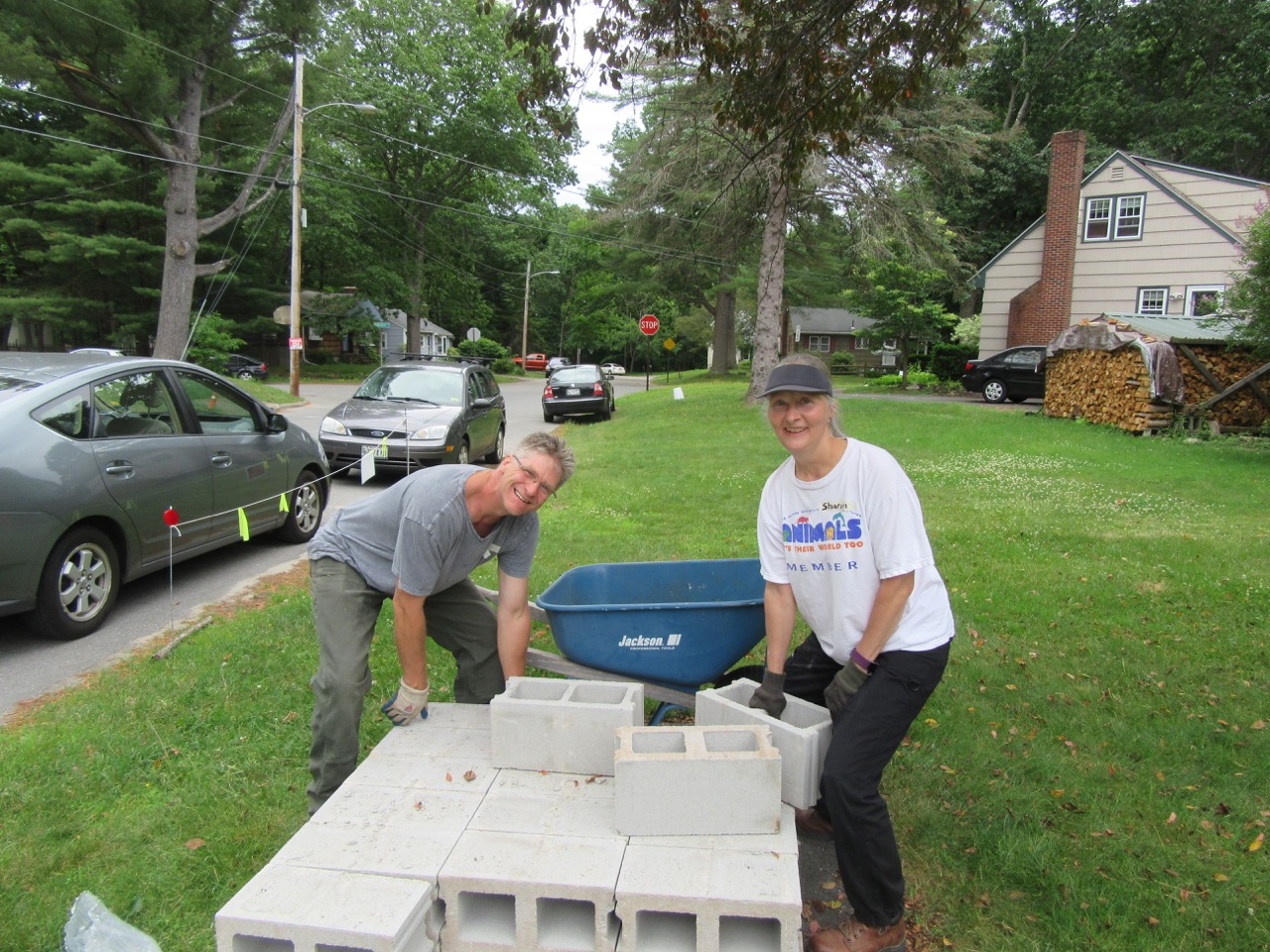
Part of the work of our Permablitz on Saturday was installing rain barrels.  How is this a layer of community?  Because water creates a link between all living beings.  When it rains, water washes over the land, and also pours from our roofs into gutters and downspouts.  By installing rain barrels, we have the capacity to slow down the flow of water–to bring more of it into use for the community of plants we are cultivating.  So when it rains, it waters our garden twice–once during the rain, and then once more when we use the water in the barrels to water plants on the dry days.Mike & Sharon hauling cinder blocks


AND: we had a community of people helping to install the rain barrels.  First they had to haul cement blocks to the five sites for the barrels.

Rain barrel team-Dave, Chris, Carla, Harold, Mike, Sharon (hidden)

Then David taught everyone on the team the process of the installation.  I wasn’t able to be a part of that team, but some things I observed.

Rain barrels Carla & Chris

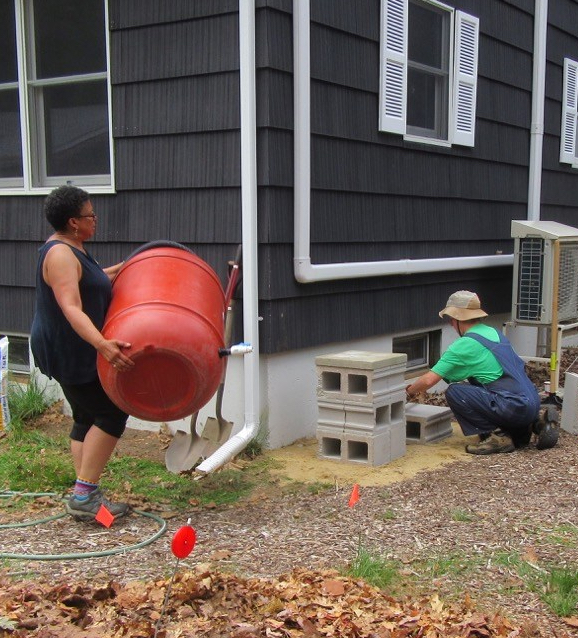
The land at the site was cleared of mulch and grass, and leveled off.  Then sand was added, and tamped down and leveled.  The cement blocks were positioned on the sand base.


Rain Barrel Spigots Dave & Carla


Meanwhile, another part of the team was drilling correct size holes in the barrels for spigots.  These spigots are able to be removed in the winter, so the rain barrels can stay in place. So the spigots were installed.  Holes were also drilled for connecting tubes for overflow and to connect more than one barrel per downspout.

Rain Barrels Dave & SharonWith all that done, the barrels could be positioned on the concrete blocks.  Then, the downspouts were cut short, and a curvy connector was attached to bring the water to the barrel.


Finally it was possible for it all to be hooked up.  The team was able to complete the hook up for four rain barrels, and do everything except the hook up for two more.  We have two more rain barrels that we hope to install later.

After- Rain Barrel close-up


Summer Solstice Magic

Margy and I collected ten buckets of seaweed, took our first swim of the season in the bay at Winslow Park, and floated on the water, and even saw horseshoe crabs mating in the shallows.  What a lovely way to celebrate Summer Solstice evening!  May your summer solstice be full of magic, too.Buckets of seaweed

Rain Barrels

Rain BarrelsThe Portland Water District offers inexpensive rain barrels each year, so Margy and I ordered four barrels to supplement the few we already have.  We picked them up amid dozens of barrels at the East End Water Treatment Facility.  These are repurposed olive oil barrels so we’re glad to recycle rather than buy something created with new plastic.

One of our projects for our permablitz will be to create wooden stands for the rain barrels, so they are high enough to fill a watering can from the spigot, or get a little pressure for further away in the garden.  We plan to install them under all of our gutter drains.  In fact, under the drains closest to our gardens, we are hoping to have two barrels side by side, with one feeding overflow into the other.

It is also possible to construct your own barrels, with olive oil barrels, and parts purchased separately–I helped to do that at another permablitz maybe last year.  But these were easy, and installing them on stands and adjusting the down spouts will be enough for us to try to accomplish.  Each time it rains, I wish they were already installed.

Rain barrels are one way we are honoring the water on our land, using what we can that falls from the sky, rather than needing to buy more city water for our gardens.

All the Water Is One Water, #4

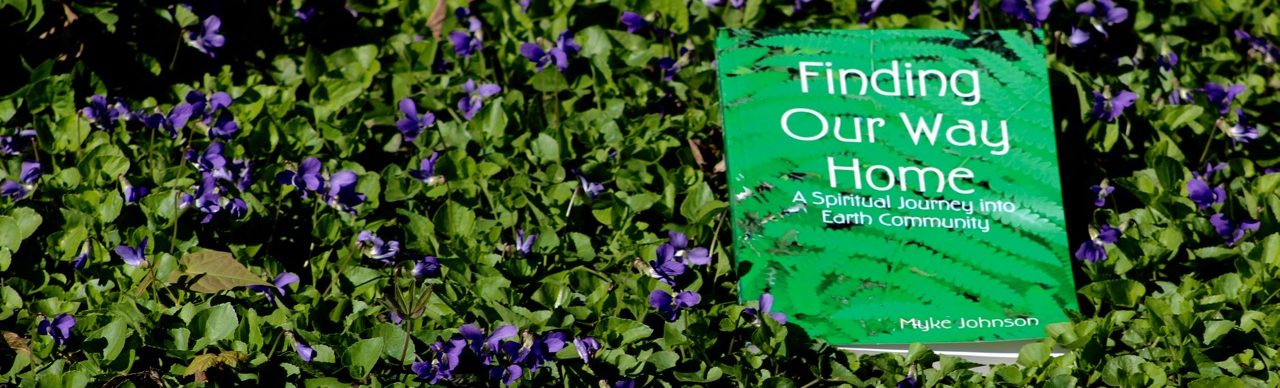
In honor of World Water Day, I am sharing the fourth part of my chapter, “All the Water Is One Water,” from Finding Our Way Home.

Some Indigenous stories of North America say we are like a younger sibling on this earth. The other beings and species are more acclimated to their purpose and their relationship to the whole. And so, when we are feeling overwhelmed by the ecological messes we have created, we might turn to our older relatives on the earth to find wisdom for our journey. Permaculture follows this practice by using the wisdom developed by millions of years of evolution, to find solutions for the problems we are facing today.

Water is such a teacher. According to my friend, gkisedtanamoogk, the Wampanoag people consider water a Manito, a mysterious life force that has its own life. His people know fresh water as Nipinapizek, and regard her as a grandmother. He wrote to me, “i think that we humans only exist because there is a significant number of people who remember to Give Thanks to all Those Ones who are the Keepers of Life, one of Those being, NIPINAPIZEK. May we continue to Give Thanks….”

When I was growing up Catholic, we used to bless ourselves by touching our fingers in holy water. I associated it with purifying ourselves because we were in some way unclean. But now, the blessing of water feels more like remembering our heritage. We come from water. All water is holy, and we are holy too. We are washed by water, we are restored by water, we are nourished by water.

Each of us faces a choice. Will we approach water as a commodity to be bought and sold, or as a blessing, a teacher to be honored and protected? Water is the mother of all life. There is no life without water. Whether we view it scientifically or spiritually, water is the womb from which all living beings have been born. We are made of water and we need the constant flowing through of water to remain alive in this world. Thankfulness can be the beginning of restoring our relationship with water. If I can remember to be thankful to water, then I have the capacity to take action on its behalf as well. I can join with the many other people who are working for water as a human right, or who work to restore the flow of rivers or clean up pollution in the sea.

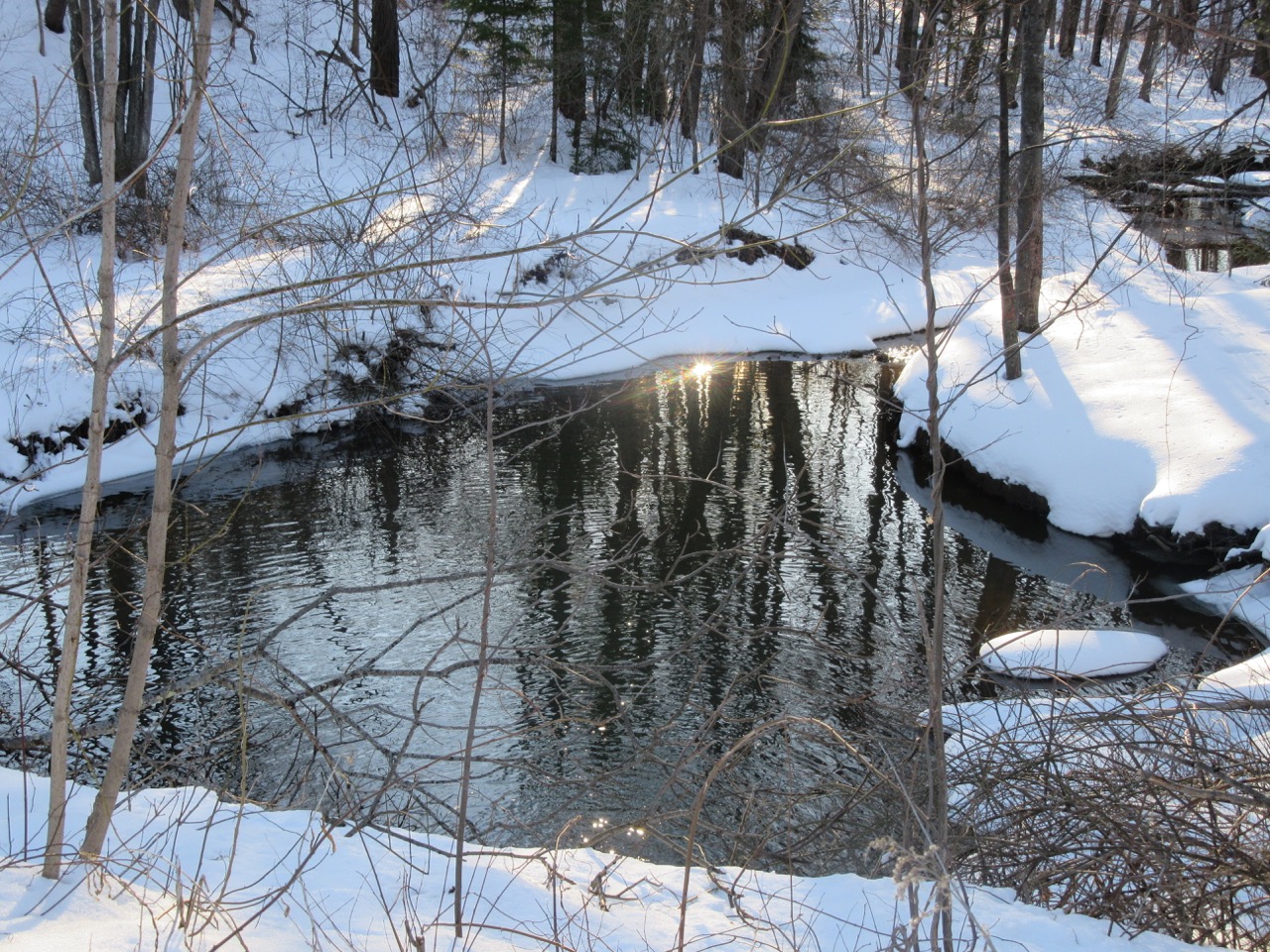
Meandering BrookThe path forward will not be a straight line. I find hope in that. A river or stream meanders on its way to the sea. [Thank you Starhawk for teaching me about this!]  Because of the friction of the river bed, the water on the bottom of the river moves more slowly than the water on the top. So it creates a spiraling current that wears down one bank and deposits sediment on the other, and then vice versa, as it moves around and around in sweeping curves. Just so, our journey into a new relationship with all life on earth will meander—I imagine in this case, there is more movement at the bottom of our culture, while the top is going much slower. But since we are all connected, movement in any segment has a ripple effect on the whole.
We must keep taking steps, even small steps, in the direction of living in balance with the rest of our interdependent web. We must work our magic and offer thanks and take action in practical and political ways. We must meander in the direction of wholeness, of earth community. Each creative step forward will ripple out into a spiral momentum toward greater balance.

PRACTICE

When I made the conscious choice to regard water as a blessing, I decided to stop using plastic bottled water as much as possible. I like to carry water with me, so now I carry tap water in a special reusable metal or glass bottle. Anytime I drink water, I am reminded to offer thanks for the blessing. I invite you to give up plastic bottled water, and to start carrying water in a reusable container. Each time you fill or drink from the container, give thanks to Water for giving us life.


All the Water Is One Water #3

In honor of World Water Day, part 3 of my chapter “All the Water Is One Water”from Finding Our Way Home.

At the Earth Activist Training we learned about Permaculture, a science of designing systems that can meet human needs while regenerating the land around us. Its ethical mandates are to care for the earth, to care for the people, and to share the surplus. I especially loved the cheerful atmosphere of hope and creativity that was engendered. Much of the environmental situation is foreboding and terrifying. But at the training I discovered a merry band of folks who sang while they gardened and went around the world demonstrating alternatives that make a real difference.

Permaculture observes natural patterns to create highly productive environments. For example, it uses the model of the forest to create food forests—gardens of fruit and nut trees, vines, bushes, and ground cover that can function together to feed a family while nurturing the land in a sustainable way. Agribusiness narrowly regards one crop as the only valuable entity, and sees all other life forms as weeds or pests. But if we look more closely at the natural world, we discover diversity is the norm and there are beneficial relationships throughout the plant and animal realms. In one example recounted by bio-chemist Linda Jean Shepherd,

Researchers at the University of California at Santa Cruz studied the traditional Mexican farming practice of pruning back, rather than pulling, a weed that commonly sprouts between rows of corn. They found that the roots of the weed Bidens pilosa secrete compounds lethal to fungi and nematodes that destroy corn. Instead of competing with the corn, the weed controls the pests without significantly stealing soil nutrients from the corn. The practice protects the soil and provides more wholesome food.[i]

The more we learn about nature, the more we see that everywhere diverse plants and animals are interconnected with each other, offering mutual benefit and function; modern agribusiness has ignored this to our detriment. To live sustainably, we must learn from nature, we must open our eyes to the lessons it can teach us about how all beings are related to one another.

Permaculture design also offers sustaining and restorative approaches to our use of water. In a natural landscape, water is absorbed and held in place by plants and trees, and advances very slowly through the ecosystem. When the surface of the earth is covered with concrete for buildings and roads, the water rushes quickly over the surface, picking up pollutants it brings to rivers and lakes. When forests are cut down, or grasslands uprooted for agriculture, the drylands can devolve into desert. Permaculture designers have created tools to slow the water down, and capture it for use. These designs can purify water moving through a system, or reverse the process of desertification.

Swale

[Swale creating at the Earth Activist Training]

We learned about and built one such tool, called a swale. This is a small ditch created in alignment with the contour of the sloping soil, so rain washing over the soil will be captured, and can be used in plantings near the edge of the swale. The plantings then serve to keep the moisture in the landscape. A swale can also be used to direct water from one area to another. The goal is to slow the flow of water for as long as possible, and thus restore the fertility of the soil, rather than letting the water wash away into creeks that flow rapidly out to rivers and to the sea.

Adopting another practice, Margy and I purchased two rain barrels to collect the rain-water that ran off our garage roof, for use in watering the blueberry bushes and vegetables and flowers we had planted in our front yard. We learned about how high off the ground the barrels needed to be, in order for gravity to pull the water all the way to the plants. We learned that water in a rain barrel heats up in the hot summer sun. We learned how quickly a rainstorm can fill two fifty-gallon barrels.

It is important to take these small steps toward changing our relationship to water use, even in our comparatively water abundant climate in Maine. Even here we need to learn about conserving water and treating it with respect. We face challenges from multinational corporations who bottle our Maine water for sale around the world. The bottled water industry isn’t concerned about the water needs of local communities or ecosystems. They negotiate contracts to extract the water for almost nothing, and put it into plastics that end up in the waste system causing further pollution.

Permaculture design follows the principle that in nature there is no waste. What one system doesn’t need, another system uses. Our human society wastes an incredible amount of water, even though we know it is scarce. We use it for washing and showering and then let it drain into the septic system or sewer. Why not build gray water systems that take the water from washing and showering and pipe it out for use in the garden?

[i] Quote from an article by Linda Jean Shepherd, “My Life with Weed,” The Sweet Breathing of Plants: Women Writing on the Green World, edited by Linda Hogan & Brenda Peterson (New York: North Point Press, 2001), 200.

All the Water Is One Water, #2

In honor of World Water Day, part two of my chapter All the Water Is One Water.

My little bottle of the waters of the world also reminds me that we need not only ritual, but also practical action to take care of water. When I was ten, my family went on vacation to the mountains of Wyoming. I remember coming upon a stream that had a little sign saying Potable Water. My sisters and I were very excited we could drink right out of the stream. The water tasted funny to us, with its enhanced mineral content, but it was cool and refreshing nonetheless. Now, looking back on that event, I am saddened by our amazement at drinking water directly from the earth. For millennia, all people drank from rivers and streams, and animals still do. But in the memories of most of us, this no longer is a part of our expectations about water. We take for granted that pollution has made most water undrinkable unless it is purified.

Capisic Brook EquinoxIt may seem as if there is an endless supply of water on the earth. But of all the water on the earth, only one percent is fresh water. More and more water is being polluted, or being diverted to industrial or agricultural use. We have now reached the stage where there is a global crisis looming as drinkable water becomes increasingly scarce.

Oren Lyons, Faithkeeper of the Turtle Clan of the Onandaga Nation, has said,

“Keeping the water pure is one of the first laws of life. If you destroy the water, you destroy life. That’s what I mean about common sense. Anybody can see that. All life on Mother Earth depends on the pure water, yet we spill every kind of dirt and filth and poison into it.”

Analysts are predicting water will be the number-one political issue in the coming years. Just as wars are being fought over oil, so increasingly there are conflicts over access to water. The business solution is to privatize the water: sell it to corporations and let them sell it to the people. The theory is that if water is a scarce resource, then the market should determine its price, and price will regulate its use. But citizens’ groups are fighting back to say water cannot be commodified, because it is an absolute necessity for life. We cannot take water out of its relationship to all living beings, and leave it in the hands of a system which is designed to think only in terms of profit.

In Cochabamba, Bolivia, citizens passed a resolution in 2000 to declare:

  1. Water belongs to the earth and all species and is sacred to life, therefore, the world’s water must be conserved, reclaimed and protected for all future generations and its natural patterns respected.

  2. Water is a fundamental human right and a public trust to be guarded by all levels of government, therefore, it should not be commodified, privatized or traded for commercial purposes. These rights must be enshrined at all levels of government. In particular, an international treaty must ensure these principles are noncontrovertable.

In 2010, due to grassroots organizing and lobbying efforts by an international coalition led by Bolivia, the United Nations General Assembly voted overwhelmingly to affirm “the right to safe and clean drinking water and sanitation as a human right that is essential for the full enjoyment of life and all human rights.” That doesn’t end the battle over commodification, but it becomes one more tool in the struggle to care for the water and ensure its protection.