Prayer for Pollinators

Peach and two cherry trees

If you’ve been following my work on digging the pond, I will mention that I took a little break, first to find out what to do about the water that has seeped into the bottom, and then because I twisted my ankle on Friday while I was digging. So annoying! My ankle is not so bad–after a couple days of rest, I can hobble around now, and I will be digging again soon.

In the meantime I wanted to share this photo of the flowering peach and cherry trees in our food forest. They flowered a bit earlier this year than last. In the photo, the peach blossoms are pink, and it is hard to see the white cherry blossoms amid their green leaves in the photo. But they are so beautiful! There are more cherry blossoms this year than last, when we got just a few.

However, I’ve been concerned about pollination. Our neighbor keeps honey bee hives, and usually we have lots of her bees visiting over here, drinking nectar and drinking water from our bird baths. But this year, it has been very sparse for bees. I found out that our neighbor’s hives died in a cold snap earlier in the spring and she hasn’t replenished them yet with new bees.

One day, I did see bees of all sizes in the Lapins cherry tree (on the right in the photo), but I didn’t see them in the peach tree. (Not that I sit and stare all day.) But I’ve been doing so much TLC with the trees this year, with Kaolin clay, and holistic foliar sprays. It would be a shame if we didn’t get fruit because of pollination problems. It is too late now to try to hand-pollinate. The other potential glitch is that while the Lapins cherry is self-fertile, the Black Tartarian cherry needs the Lapins to cross-pollinate. They are both sort of blooming now, but the Lapins had peak blooms earlier, and the Black Tartarian has new blooms that just came out yesterday. So we wait and see.

It reminds me of the sad danger to pollinators everywhere because of climate change, environmental pollutants, pesticides, and development. All of our human food is dependent on these little creatures who pollinate the plants. If the bees die, so do the humans.

Today I pray for the pollinators, with gratitude and humility. Part of this prayer is offering to the bees so many other plants in our food forest: daffodils, dandelions, and violets are blooming now; soon we will also have chives, oregano, clover, thyme, and many more. All of us can do more to provide food for bees and other pollinators throughout the season. Only then can they also provide food for us. May this circle of life be blessed.

Pond Dig, part three

I had a helper yesterday for digging the pond. My friend Sylvia came by in the afternoon and the very first thing we did was drag the pond-liner in its box from near the house to back closer to the pond. (You can see it in the picture, behind the wheelbarrow.) That would have been enough help all by itself–so heavy! But then we took turns digging, hauling, and resting nearby. We got a lot done, and also enjoyed a rare COVID-time visit, walking around the yard and in the woods, looking at birds and plants.

Sylvia standing on the planting shelf, while digging in the pond!

So here is what the pond looks like now, in layers. The first layer down, about 8-10 inches, is for the planting layer. The next layer down, maybe 18 inches, is for a step layer–part of that I might take away as we go along, but some will remain to be a step into the pond going forward. In the middle, we dug to about 2 feet down, as measured with this string set-up I created. My aim is to go three feet down in the middle.

Pond layers dug out.

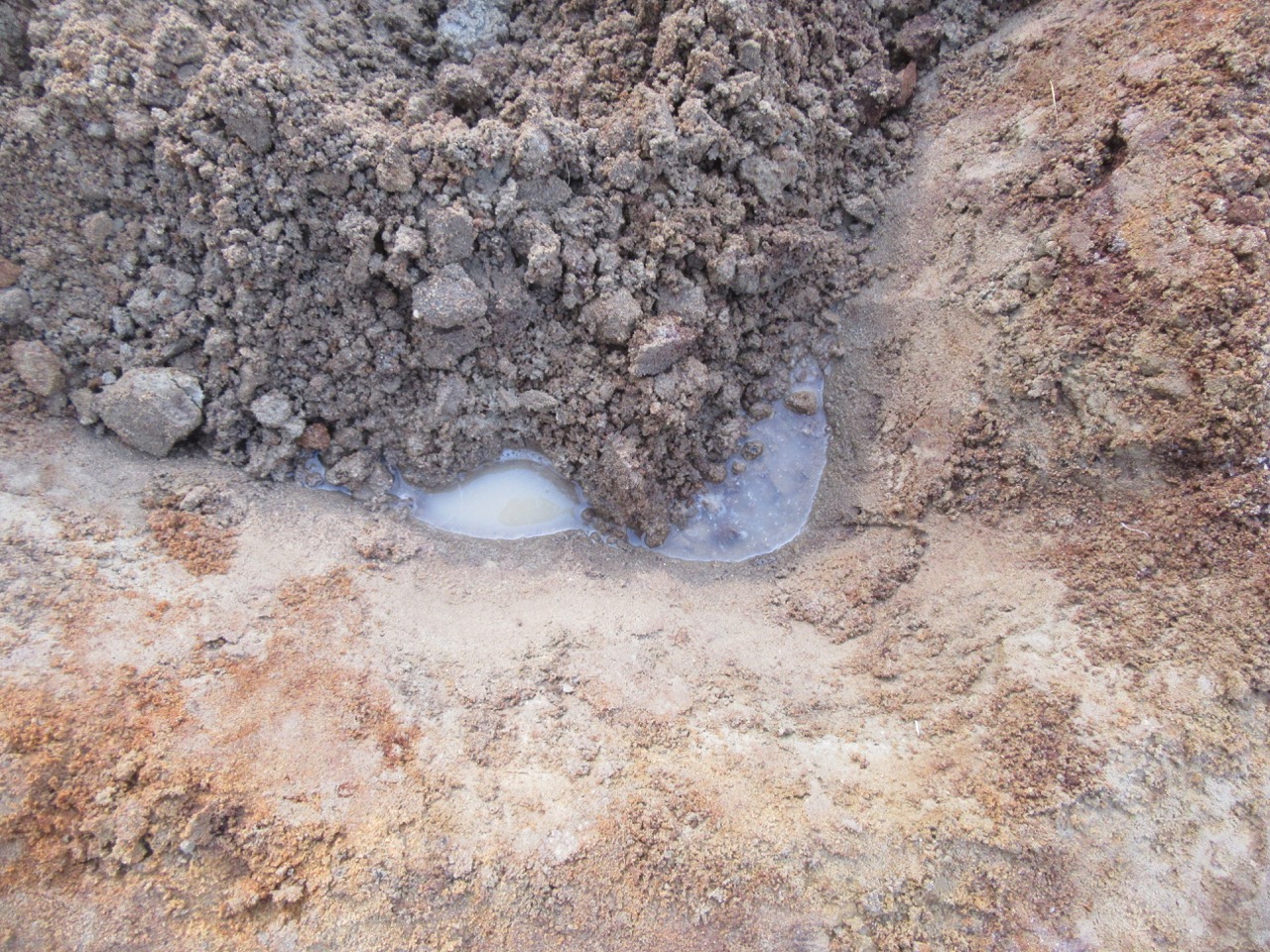
But then we came upon a problem that wasn’t mentioned in the Building Natural Ponds book by Robert Pavlis. Water started to seep up from the sandy soil. We are actually at the time of year when vernal pools abound here in Maine. We have a ditch way back behind the edge of our property and the properties next door that fills during spring rains. And we had an inch of rain last week, though generally it has been a dry winter. Does this mean we can’t go any deeper for a lined pond? Or do we need to wait until it is a bit dryer as the days go by? Will it mess up the pond to have water under the liner at the bottom? Or does it not matter at all? I am going to ask my questions in the Facebook group Building Natural Ponds, and see whether I might find some answers.

Water seeping from the soil in the bottom of the pond.

Maybe the pond just wants to be a pond so badly, that it doesn’t want to wait, lol. Meanwhile, I am going to rest today from digging, and more rain is coming tomorrow. So we will see. If you have any wisdom about this, I’d love to hear from you.

Pond Dig, part two

More on my adventures in digging a small pond! Yesterday I finished digging the first layer of the pond, down to the level of the planting shelf, about 1 foot. I checked whether it was fairly level after I was done. And then I did some math to figure out what 1/2 to 1/3 of the total surface area would be, which is the best size for the planting shelves.

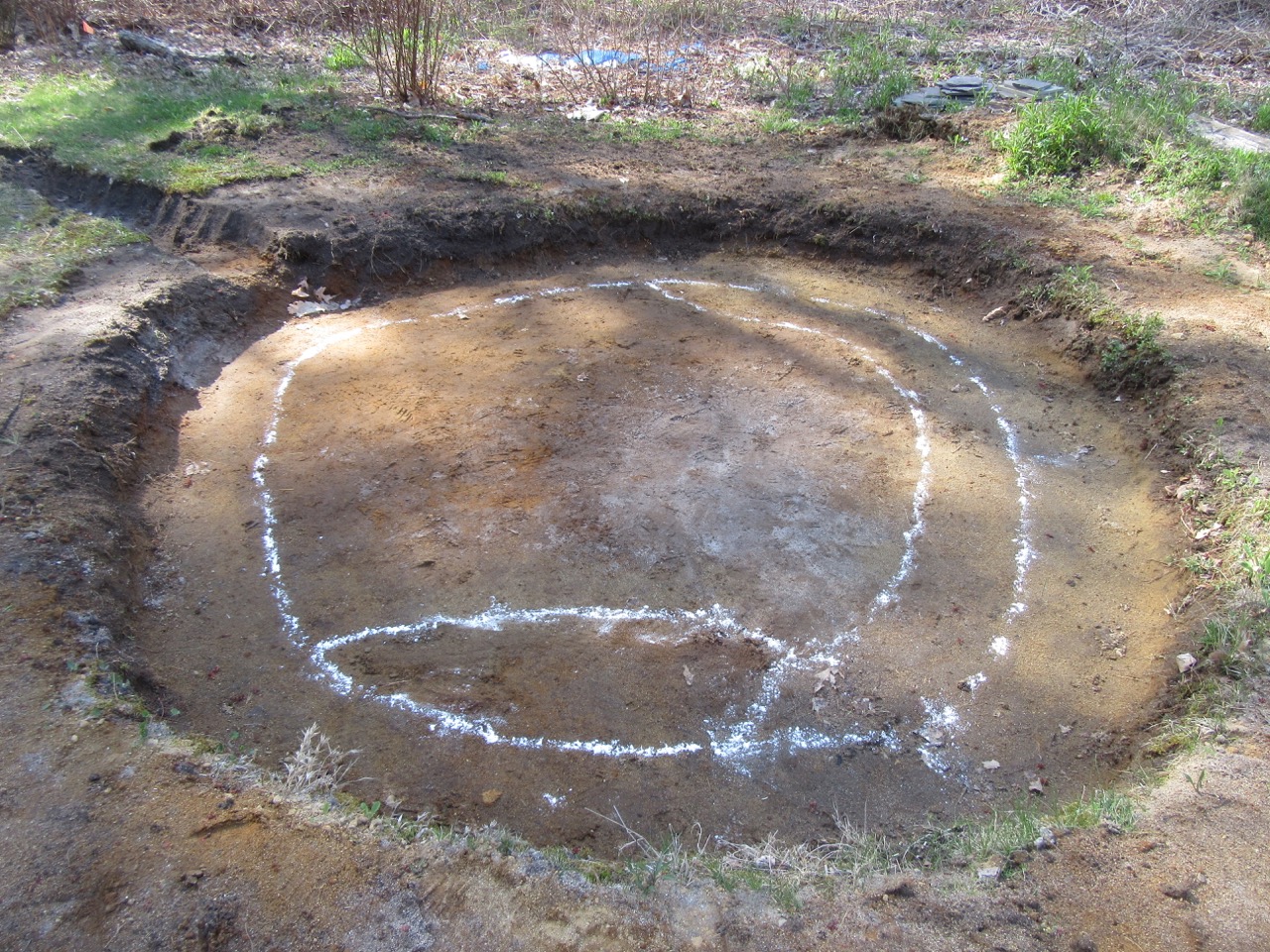
For those who might wonder, here is how I worked on that: Using a website that computes circle area, I found that for my 11′ by 11.5′ pond, the total surface area was about 100 square feet. If I made a planting shelf one foot deep, the resulting circle would be 9′ by 9.5′, with a surface area of 67 square feet, meaning the planting shelf included 33 square feet. I was surprised that just 1 foot at the edge already brought it to 1/3 of the area. Doing two feet would leave a circle of 7′ by 7.5′, or 41 square feet, with 59 square feet for planting. So I took half of that, and decided to do 1 foot wide on one half, with 2 feet wide on the other half, approximately. Even though the math is exact, the actual pond will be less so, but it gave me an idea of what I was aiming for. I marked it out with white flour, including a spot for a step, that would be dug to 1 more foot down, to make it easier to get in and out of the pond center.

Pond layer one, with my rough markings for planting shelves and a step

Meanwhile, I’ve heard back from folks who have bits and pieces of carpet–I had asked for at least 2 feet wide, and the responses have ranged from 2′ by 2′, to a medium size carpet. I picked up some yesterday, and will do more today. It has been fun to have these interactions with folks, limited as they are–so rare for me in a time of COVID. Since I don’t have a truck, the smaller pieces actually work because they fit in the back of my car.

Meanwhile, the pond liner was delivered yesterday too! A very heavy box was dropped in our driveway by UPS. (I think I remember that it was going to be 138 pounds) Unable to lift it myself, or even together with Margy, she had the idea to roll it onto a larger piece of cardboard (which we always have in our garage for various garden projects) and then we could pull that cardboard together along the driveway to a better spot–and it worked. So it is waiting by the side of our house. It made me realize, though, that when I actually install the liner in the pond, I will definitely need help from a few friends.

Four years ago, the pond was part of our original plan for our permablitz–when twenty-some people came by and helped us with all manner of garden projects. (If you are curious about that, you can find more here.) It was such a humbling and gratifying experience to be gifted with the energy of so many to begin to create this permaculture garden where we live. With everything else going on that day, it was decided that the pond would be too much to attempt. But it is wonderful to remember how community enables us to live better with our land, how the gift of each other’s time and energy enriches all who participate. With COVID we’ve been on our own so much, and yet even so, we rely on the help of others–delivery people, for example, and neighbors who have picked up needed items in stores. It has brought us closer together with our neighbors actually. We are so programmed by our society to try to be self-sufficient. It is hard to be reminded of our need for each other–and yet that need is a blessing.

Meanwhile, it was also a blessing to be digging on my own, outside in a beautiful sunny day. Squirrels were playing, birds singing, daffodils shining bright yellow, and the cherry and peach trees are beginning to blossom. I started on the next layer of the pond. Our soil is very sandy and compacted–we had an inch of rain fall on Friday, and none of it stayed in the depression that I had already dug. So the recommendation is to slope the sides as we go down so it doesn’t collapse. Step by step, and with a little help, I think it can be done.

Digging begun on second level.

The Little Pond

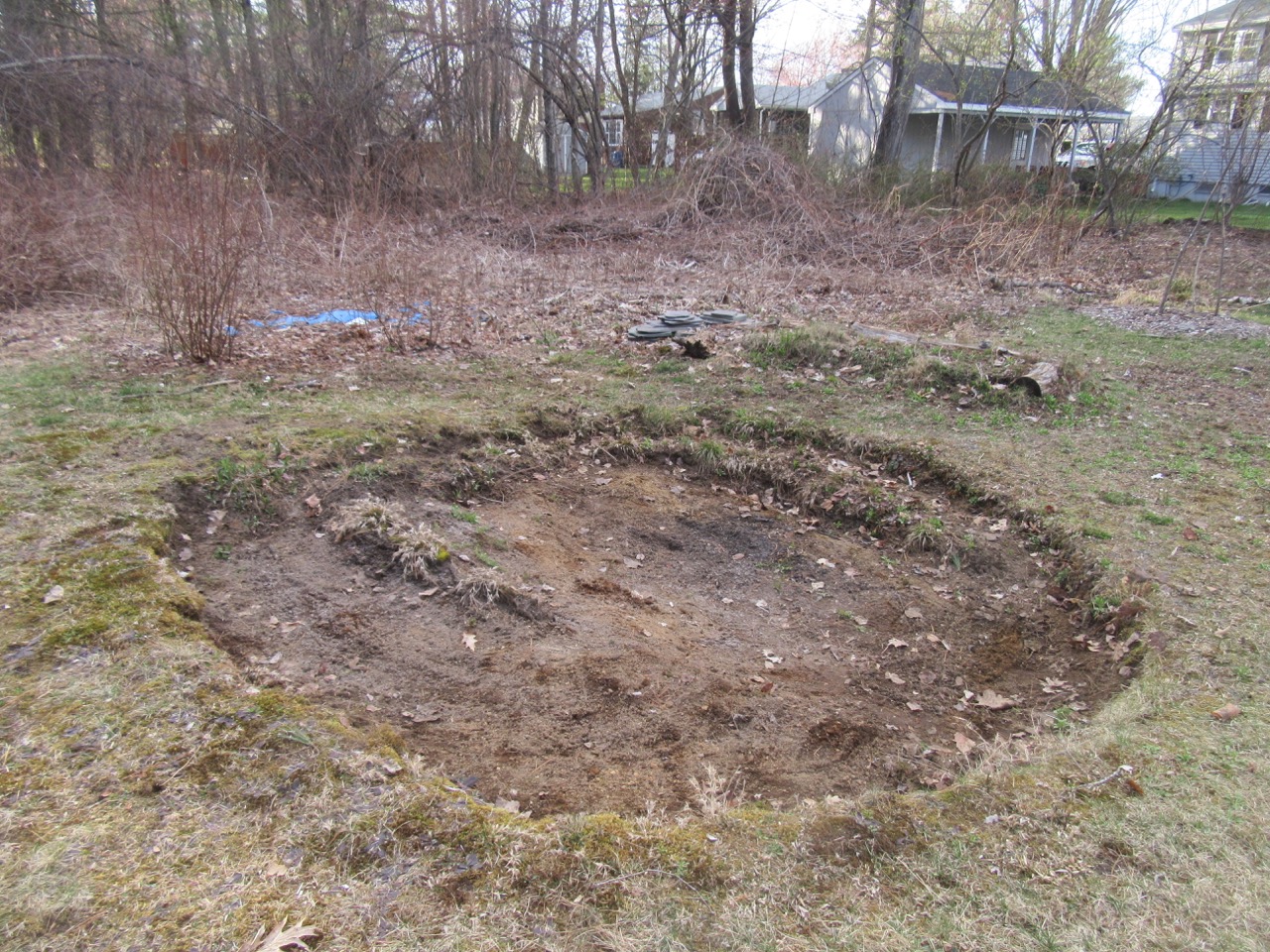
In our permaculture design for our land from 2017, we included a little pond, about 11 by 12 feet round. Every so often, I would dig in it a bit, and find a place to put that soil. Finding a spot for what is dug up is actually a major issue in digging a pond. Some of the topsoil made its way into what is now a bed for blueberries. But mostly, I didn’t have the energy to take on another big project.

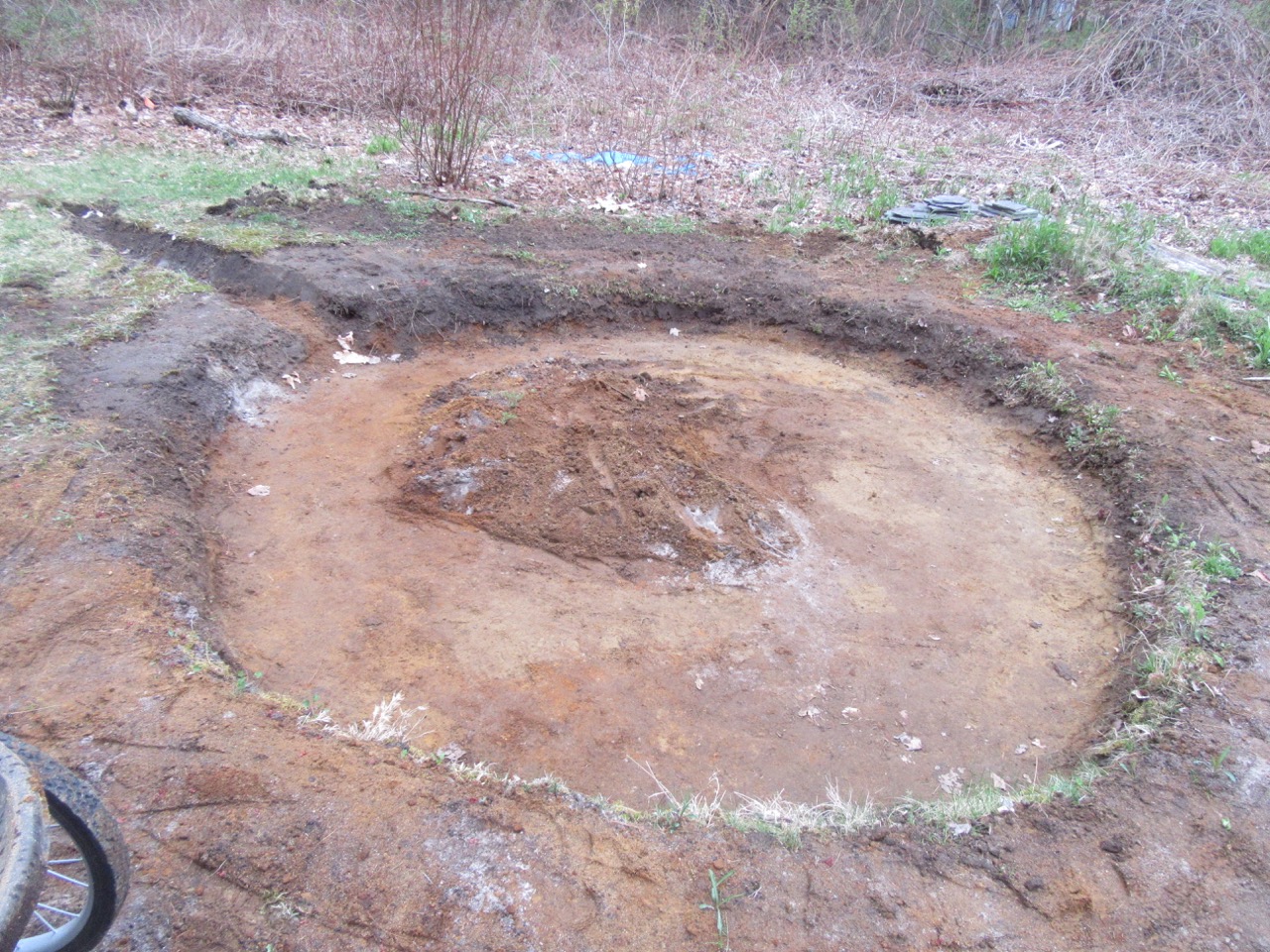
The future pond, as it looked with what I dug out before this year.

However, this spring I felt a burst of energy each time I went into the yard, and I felt the future pond calling to me! So I read once again Robert Pavlis’s book Building Natural Ponds, and made a list of everything I would need. I talked it over with Margy. The biggest expense is buying a pond liner, recommended 45 mil EPDM rubber. For our size pond, with the deepest part 3 feet deep, we’d need a 20 by 20 foot liner. (Formula: width plus 2x depth plus 2 feet for edge, times length plus 2x depth plus 2 feet.) Other needs include old carpet strips to lay over the ground under the liner, to protect against roots and rocks–and we’ve got bittersweet roots, so this might be essential. It will need lots of stones to line the planting shelves and the edges, and then a number of pond plants, to serve to clean the water, and of course to look beautiful. This kind of natural pond does not have any mechanical filters–just plants. So 1/2 to 1/3 of the pond is made up of planting “shelves” that are only about 8-12 inches deep.

Why include a pond? One reason is that it brings more water into the landscape. For some sites, ponds are a way to store water, but that won’t be as big a need for our site. We have rain barrels for that. We can use water from the rain barrels to fill the pond, and refill as needed. For us, a pond will mostly be for wildlife, like frogs and birds. We are told that if you build it, the frogs will come. And for us, another reason is to be able to look at the beauty of the water and water plants, when we are sitting in the yard. What a good reminder of the sacredness of water.

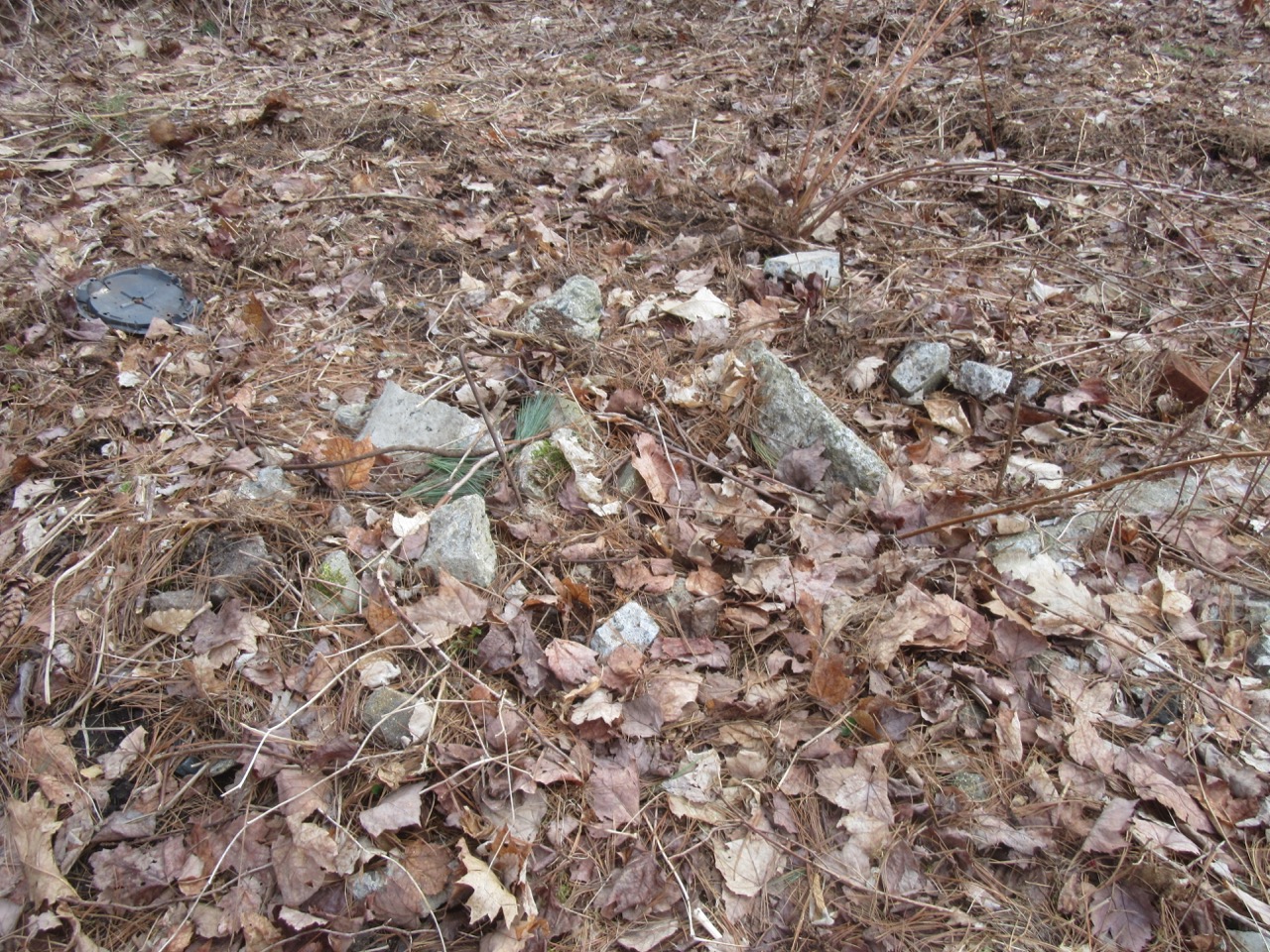
The biggest amount of work to make the pond is the digging. But we finally figured out a place to put the dirt. In the back corner of our yard, some former resident dumped a pile of concrete and metal demolition junk. We’d thought about trying to haul it away, but that would be a huge job, and cost money to take away. Most years, it has been covered with wild raspberries that don’t bear any fruit because it is too shady. This spring, I pulled out much of the raspberries and some invasives, and got a good look at the junk underneath. Concrete, metal, demolition debris.

Old demolition debris in the back of the yard.

So this is where we will put the sandy under-soil I dig from the pond. Then I’ll put cardboard over the resulting mound (to rein in the invasives), put down some compost and other soil on top of the cardboard, and then plant some shade loving plants on the mound. Another project.

A few days ago, I started an overflow spillway, an area on the edge of the pond that is 4 inches lower, so if the pond gets too full, the water has a place to go. I figured out, from the book, that it didn’t have to go very far, maybe 8 feet away or so, where the water could sink into our sandy soil. Then, the last few days, I have been slowly digging out the first layer, to the depth of the planting shelves. Here is how much I was able to finish by today.

It’s hard to tell that the depth of the pond is now about 1 foot, except for the part in the center that I didn’t finish to that level yet.

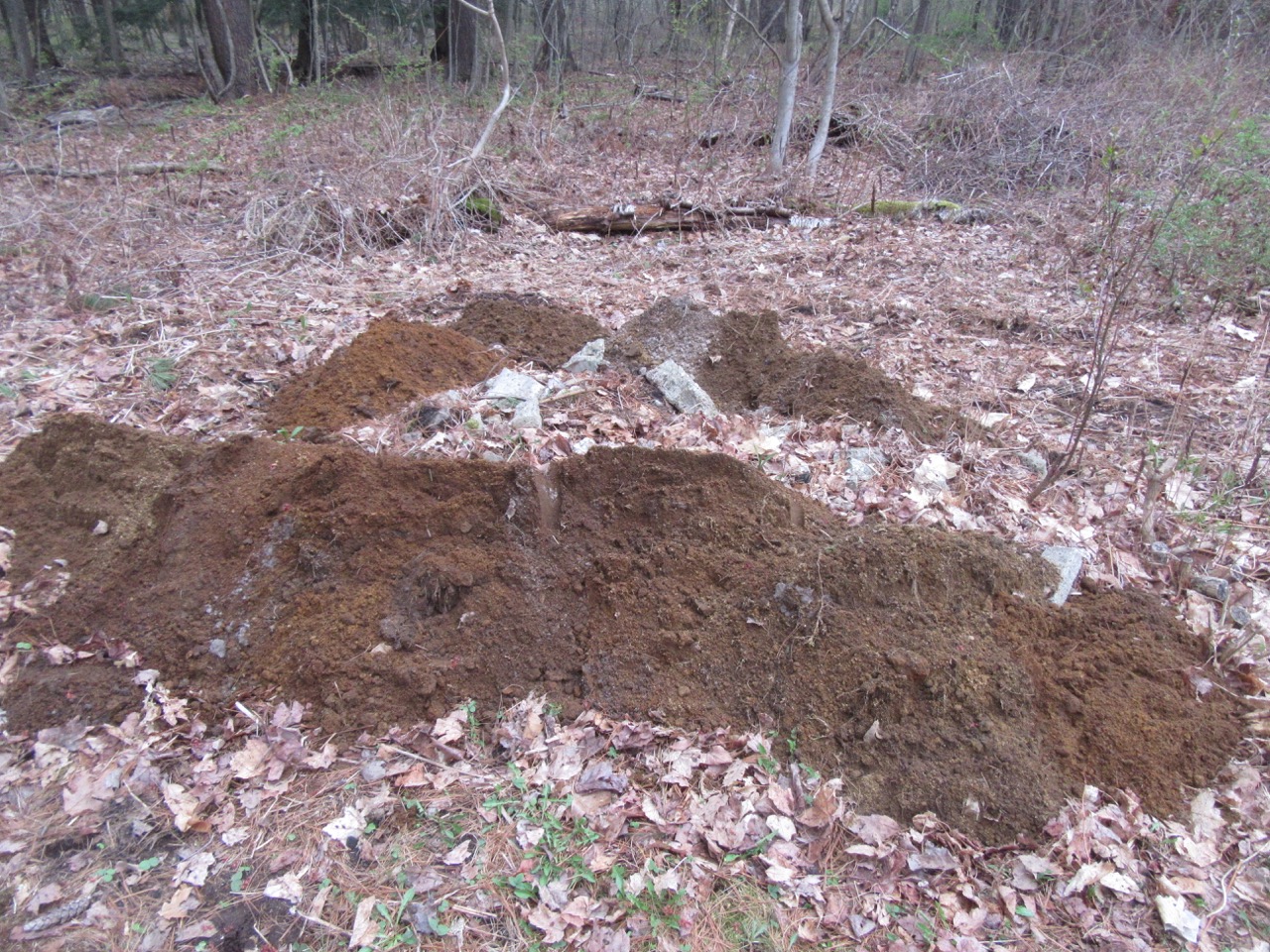
I shovel out the dirt into a wheelbarrow, using a level to try to keep the pond surface level–which will be important–then I bring that dirt over to the demolition pile, and dump it there. It doesn’t actually look like that much, but I hauled away several wheelbarrows full just in the last couple days. I don’t know what the former residents did with this part of the yard, but it seems like there are some ashes and charcoal buried in the future pond, along with a very rusty sandy soil. Oh, and here is what the junk corner looks like now.

Junk pile beginning to disappear under dirt piles.

So, yesterday, I ordered a pond liner. I was able to find a liner, with an underlayer, for $438. I also posted on “buy nothing” and “freecycle” pages requesting old carpet strips. I’ll keep you updated. This is going to happen!

“Ghost” Trees

Peach (in front) and cherry trees treated with Kaolin clay.

Yesterday, I prepared a mix of kaolin clay and water, and sprayed all the branches of the peach and cherry trees in our little orchard. This is an organic solution to curculio insect pests, among some others. Now they are totally white and look like ghost trees. The leaf buds are starting to open on the cherries, and flowers will be here soon. Last year, our peach tree produced many peaches, but they were almost all destroyed by pest bugs. We got to eat two peaches. (They were delicious by the way.) We had somehow assumed that it might take at least a year for bugs to find them, but bugs are smart. So it was a useful lesson in observation. But this year, we hope to actually eat some peaches.

I have been committed to figuring out how to protect them organically. This spring I started reading once again The Holistic Orchard by Michael Phillips, which has been my guide during my fruit-tree food forest adventure. Each spring I forget what I did the prior year, having only a few trees and a few times to do any part of this project. This time reading, a few more ideas stuck further into my brain, and I found a few new ideas too. First of all, which I didn’t forget, was to try to make sure they have all the nutrients they need in the soil. Phillips had a section about how to interpret soil tests, and last fall, Margy did a soil test for the peach tree bed. Since the fall, I have added more compost, seaweed, some rock dust and green sand which are all long-term nutrient boosters. I also ordered some potassium sulfate of potash because the soil test said the soil was low in potassium, and some alfalfa meal to add some extra nitrogen which was also low. I will add those once the trees are more in flower.

In prior years, I have done the holistic sprays that Phillips recommends, and now I am trying to create my own timeline for which ones come when, so that I don’t have to figure it out each time all over again. I love this book, but it is not well organized for beginning orchardists. Vital information is scattered across various parts of its 400 pages. It is the book of someone who knows way too much about all aspects of orchards for a beginner to have much of a chance. His primary focus has been apples, and other fruits each have their own sections. Still–re-reading it each year seems a good way to go.

I do have to laugh though, because I found the key piece of information I needed for my peach and cherry trees only in a footnote–a footnote! And that footnote said: “Massively coating stone fruits [cherry and peach are stone fruits] with multiple applications of refined kaolin clay for curculio is less than ideal once fruit begins sizing in earnest. Cherries bloom before apples, and with far less leaf showing initially. Surround [brand name of kaolin clay] applied at this critical juncture on the just-about-to-pop flower buds delivers a message to this pest to move onward to other prospects. Curculio makes its way by crawling, particularly early on when temperatures tend to be cooler. The main route to developing fruit is by way of the limb highway, and thus the reason for thorough coverage on the branch structure of the tree. Two applications going into bloom will do the trick in a warm spring, with an additional application as soon as petal fall begins probably necessary in a cooler season.

See what I mean? But yesterday, as the buds on the cherry were just starting to open, I sprayed it with kaolin clay, and then I repeated it once that had dried. Now they are white, and I hope they are protected for now.

It was lovely to be outside. In between applications I did some raking and some lying in the hammock, and eating my lunch under the patio umbrella. What a great way to celebrate Earth week.

Spring Energy

The first dandelion of the season! We love dandelions and so do the bees.

Wow! It feels like spring is finally here. Last week was a flurry of activity in our yard, and I had the energy to do it! And it was warm and sunny! We had a timeline. On Tuesday, all day I was sifting the remains of the old compost pile, and putting it everywhere–in the new raised bed, on the hugelkultur mound, the asparagus beds, under many of the fruit trees, the old potato patch, and an area near the baby apple trees in which I hope to plant zucchini this year. We have had to sift the compost because roots had worked their way into the pile from the edges, including invasive bittersweet which we do not want to spread around the garden.

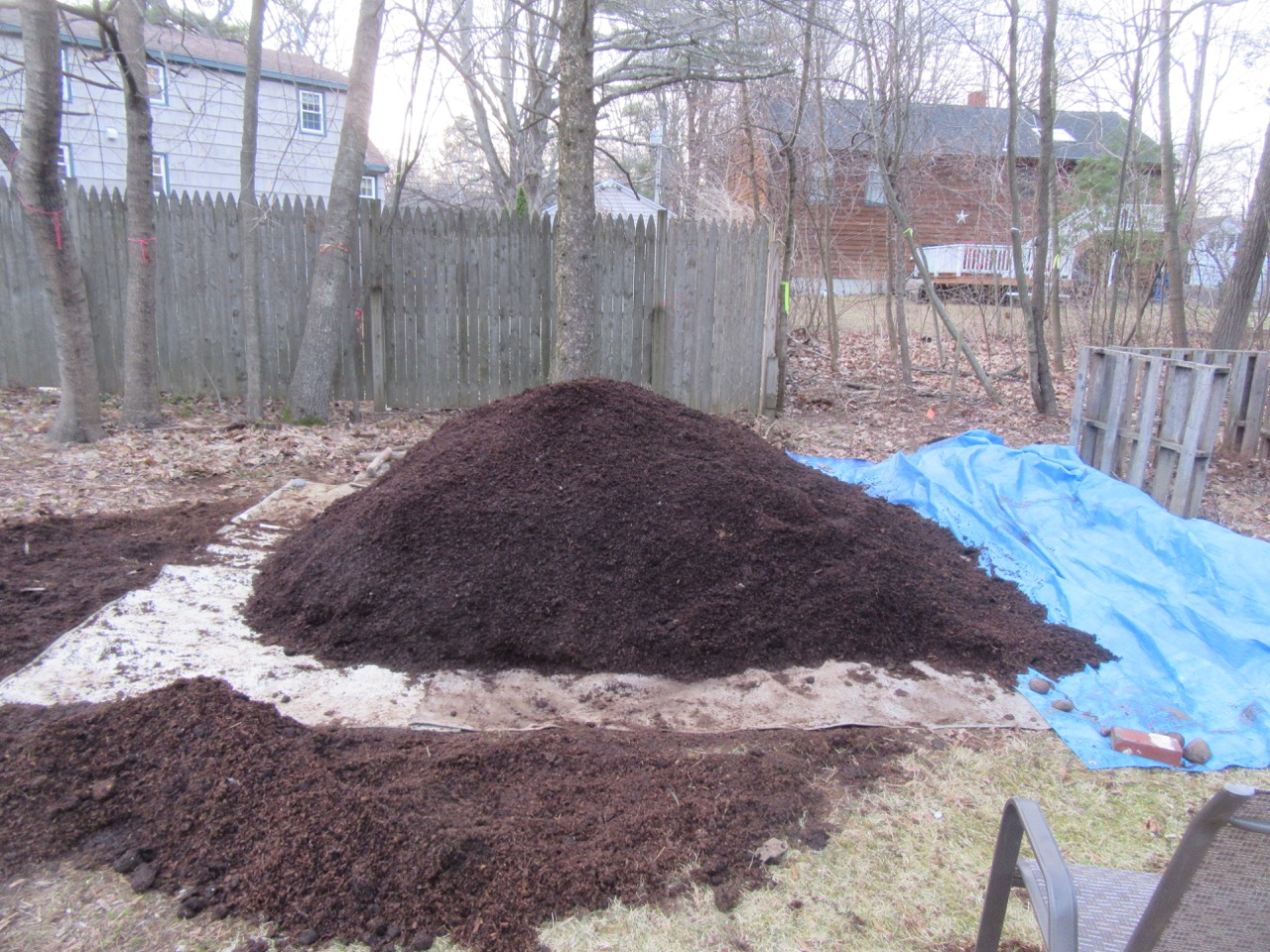
The goal was to completely empty the pile, because on Wednesday we were getting a new four cubic yards of composted manure from Wilshore farm. So I finished up Wednesday morning, and Wednesday afternoon we got our delivery. Then Margy and I were using shovels and rakes the rest of the day to slightly move that pile so it was all situated on top of old carpet, with at least a foot of clearance around the edges–so no more roots.

Composted manure on old carpet.

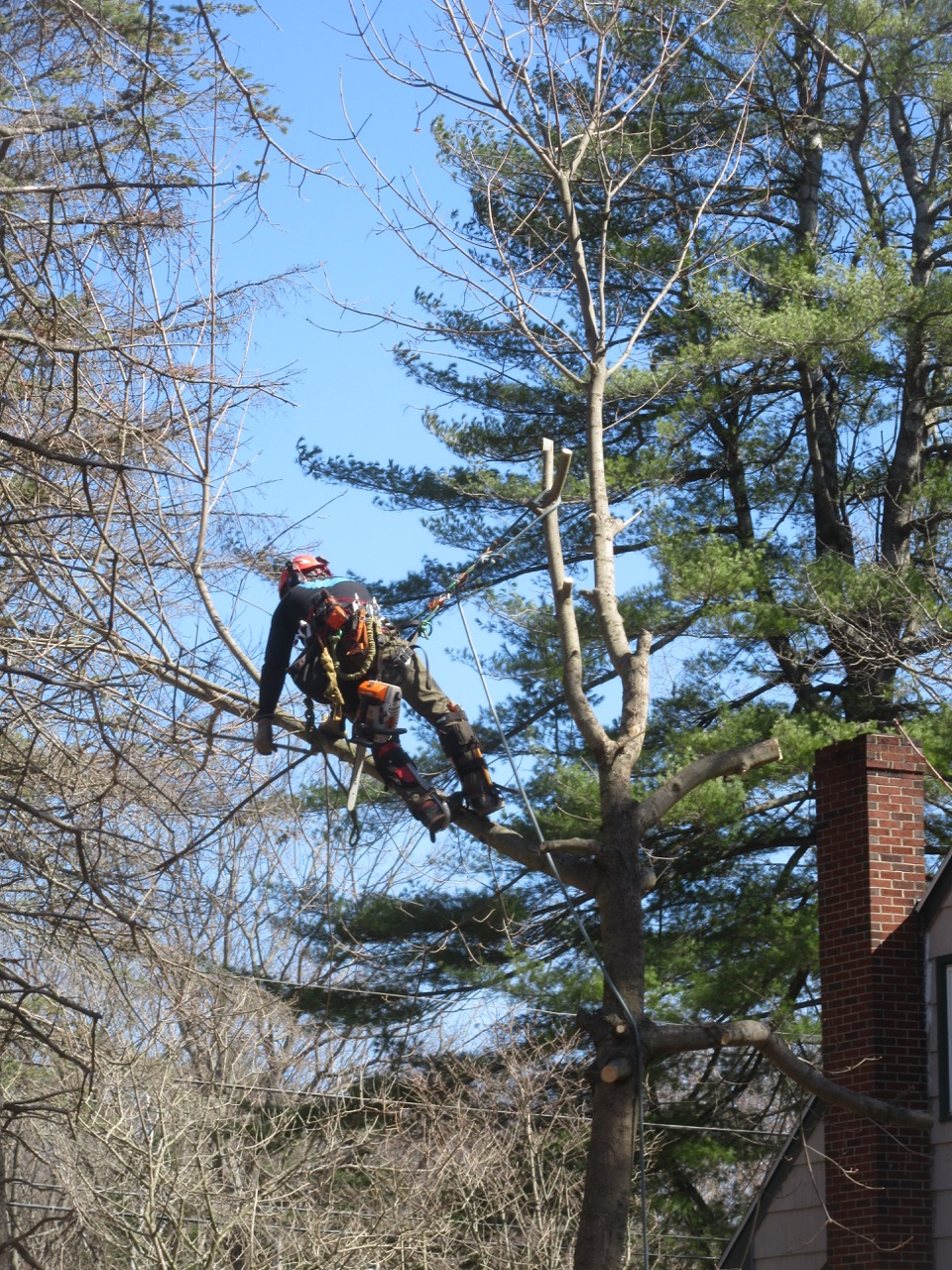
On Thursday morning, I finished up with what was on the edges, and spread the remains over the nearby grassy areas. On Thursday afternoon, Dan from Blue Ox Tree Service was coming to cut down three Norway maples along the fence between us and our neighbors. While we hate to cut down trees, we also have been trying to remove invasive plants, and Norway maples are invasive here. They grow like crazy and spread their seeds everywhere. Both Margy and I each had a moment with those trees earlier, to apologize for needing to cut them down, and thanking them for the shade they had given, and say goodbye. We let them know that their wood would stay in our yard to benefit the other trees in the garden.

Dan up in the Norway Maple

It was amazing to watch Dan climb the trees and with a system of ropes and pulleys balance himself on the tree, and cut it from within. We really like Dan, who has delivered free wood chips to our yard many times in past years. He is very tuned into permaculture, and told us he has an arrangement to deliver wood chips to Cultivating Community gardens this summer. In fact, our whole intense timeline of last week was based on the fact that he was going to leave us a pile of wood chips from the trees, and once that pile was there, a truck couldn’t get through to deliver compost where we needed it to be.

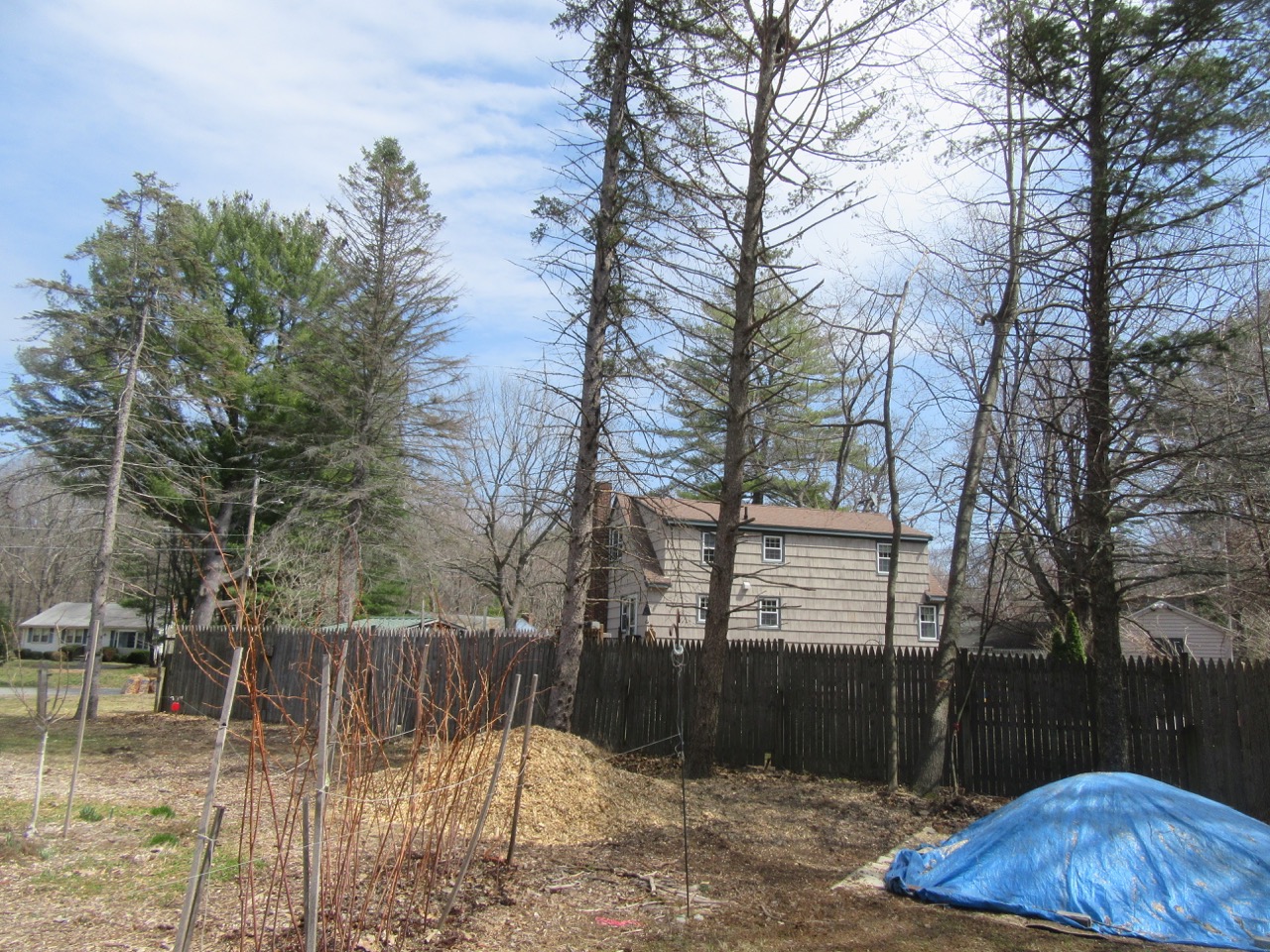
Wood chip pile on the left, compost pile on the right covered with blue tarp.

So here are our wood chip and compost piles, all set up for soil enhancement and mulching for the season. The area along the fence has opened up to offer more morning sun to the orchard–you can see four somewhat scraggy spruce trees remaining, plus a skinny red maple and oak near the right which will have more room to grow.

Now, the growing season is fully begun. I was amazed that I was able to put in so many hours of outside work each of those days–I am thinking it has something to do with the surging energy of the earth in spring, the warmth of the sun, and also with drinking iced licorice tea while I was working–a great herbal energy booster. I am remembering how exhausted I felt last fall, how much work the garden was during the long summer, and yet, spring brings new excitement and new energy, even to me with my chronic illnesses that can get in the way. May it be that way for you too!

Lessons from Other Beings

I feel a deep calling to learn from the other beings who share this earth with us. I was reminded of this calling by a new book I just started reading, Undrowned: Black Feminist Lessons from Marine Mammals, by Alexis Pauline Gumbs. She is observing dolphins, whales, and other mammals who live in the sea, and learning the wisdom they might have for human beings–especially for black women, but also for all of us. “They are queer, fierce, protective of each other, complex, shaped by conflict, and struggling to survive the extractive and militarized conditions humans impose on the ocean.” It is a beautiful and meditative book and I am so grateful. Reading a chapter each night has fed my soul, as well as helped me remember how key it has been in my own path to listen for the wisdom of other creatures–though the ones I learn from are usually closer to home than the sea.

Yesterday morning, inspired, I began to read again my own book, Finding Our Way Home: A Spiritual Journey into Earth Community, remembering. I was remembering the many quiet moments I spent in my former back yard, listening to cardinals, watching slugs crawl through the grass, paying attention to trees, to stars, to the red light of dawn. It was a yard with many mature trees, a long row of huge lilac bushes, incredible privacy, and many critters who were our neighbors–turkeys, deer, birds, squirrels, chipmunks, and occasionally skunks. I was remembering how much those creatures taught me, when I was quiet enough to listen to them.

In our current back yard–we’ve lived here five years now–we can get caught up with work: pruning, planting, soil improvement, garden permaculture projects. It is land more in need of attention from us, ragged, more depleted, invasive vines and bushes clamoring around the edges and in the soil, imbedded in city life, though still surprisingly private once the trees on the edges leaf out. There is more room for gardening–the old place was too shaded by all those mature trees. So we have planted a little food forest, herbs and perennial vegetables, made room for hugelkultur and raised beds and even shared with our friends room to grow herbs and veggies.

But it is easy to get caught up in the work of it–a lot of work. It is easy to forget that other part–the listening to the land itself and the other creatures here, the plants and animals. I remember when we first found this place, feeling from it an unmistakable message: that through making relationship with this small piece of earth, I might learn more about what it means to be in relationship to earth and all her creatures. It was time to think small–right here I could find home, I could find earth community. The work is part of it–we are here to learn to be beneficial members of this tiny ecosystem. It has weathered much neglect and abuse from human beings in its history. But the work is not the only part of it–the listening is the most important part. Sitting quietly, watching, waiting. As spring makes it easier to be outside again, I am ready. I am ready to take my lead from what the land asks, what the land teaches.

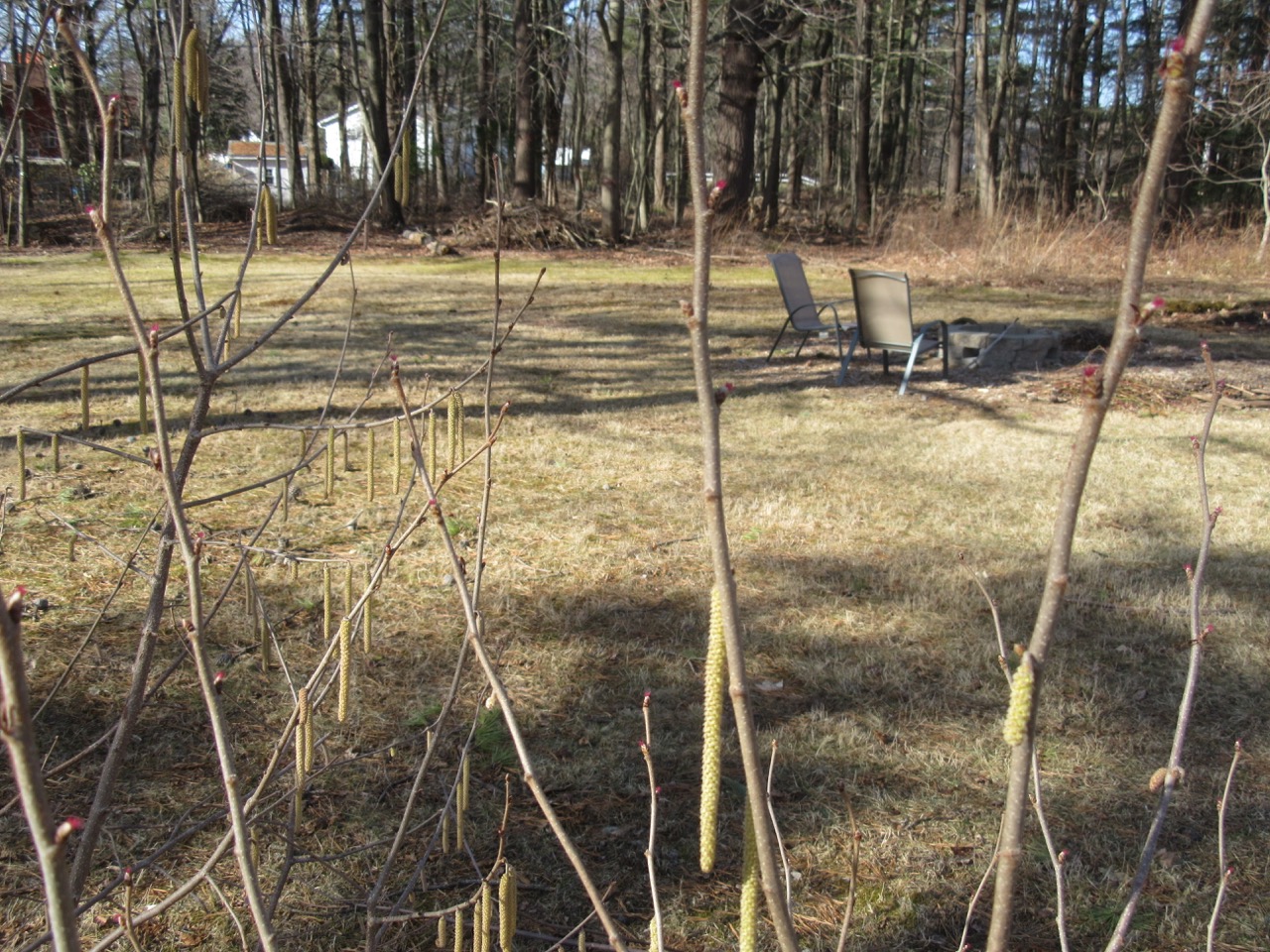
View of the back yard through hazelnut bushes with catkins.

Duck, Duck, Goose!

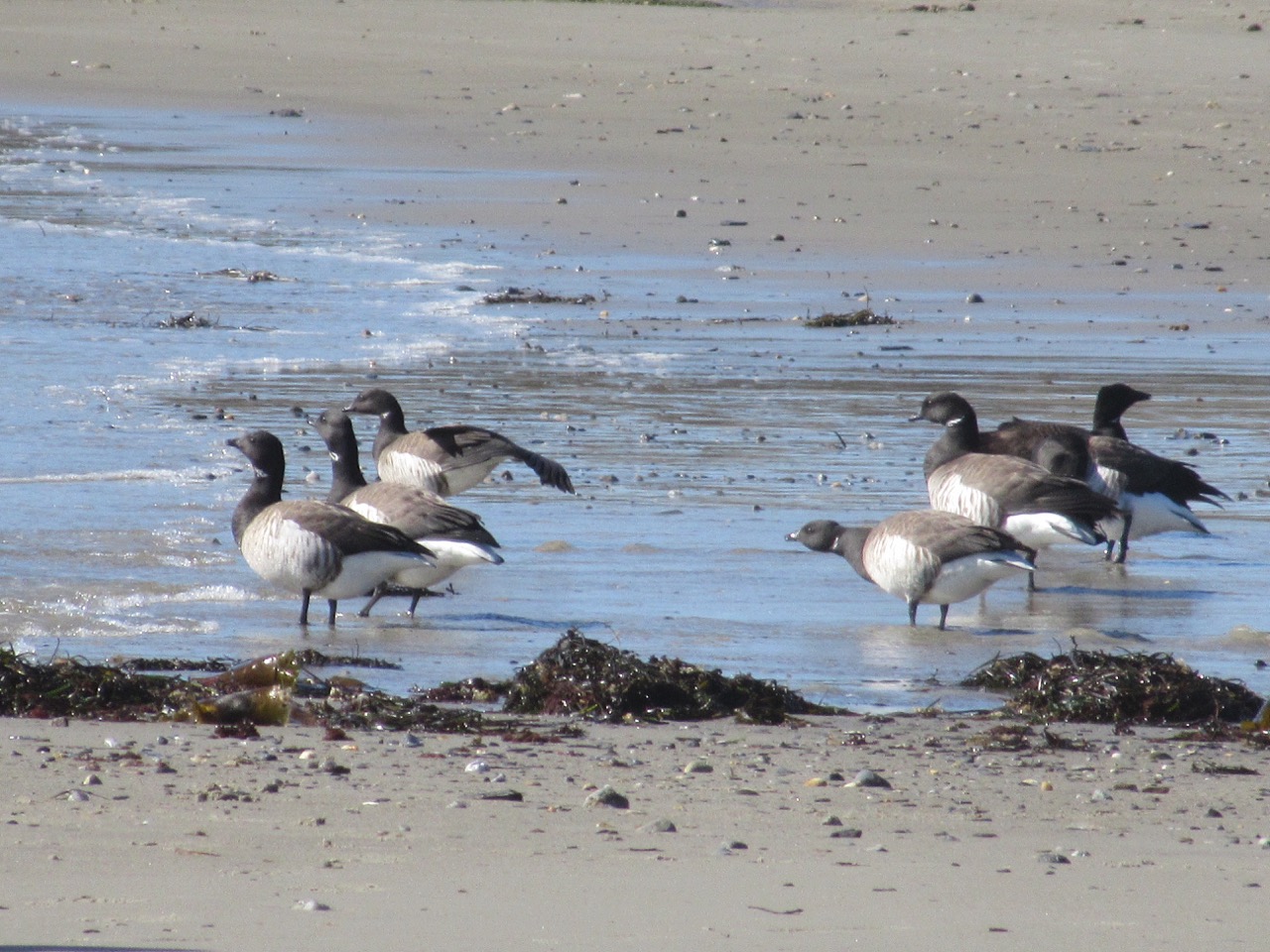
We had a spring teaser day today, with temps in the upper 50s so Margy and I went to Kettle Cove to take in the sun, the breeze, and the sea. We got a special treat when we saw these lovely birds in the water and on the shore. At first I thought they were ducks, because they were that size, but they were also somehow similar to Canada Geese but not quite. When I got home I searched the internet until I found them. They are Brant Geese. The Maine coast is part of their migration route. Here are some of the ones we saw. Margy Dowzer and I shared the camera, so I am not positive which photos are hers and which are mine.

Brant goose swimming in the low tide shallows.
Seven brant geese at Kettle Cove
If you look closely here, the goose in the foreground has plastic netting on its lifted foot–it was limping and we wondered why so we moved closer to see what it was. It was using its beak to try to get the netting off. We had no way to help it, and then they all flew off. So sad. I hope it was able to get free.
Sunshine sparkles on the water as the goose swims calmly.

Snowing

Snow falling near our pitch pine

It is snowing right now, so lovely. We have had very little snow this winter in Maine. Today’s snow will be turning to rain in a couple hours they say, so I take some moments to appreciate it. But mostly right now I am thinking about sorrow and grief. A dear friend’s loved one who just died from COVID. Another friend who is sick from some unknown thing. People within my circle of friends and relatives who are struggling with loneliness and depression and worry. I am holding all of them in my heart today, as the snow falls so gently and kindly.

In Maine, they are opening up vaccination appointments to people in our age group next week. For us personally, this is both good news and not quite so good. We would have already been in the next age group, 65-69, but instead they’ve opened it up to everyone 60-69, so there will be 200,000 people looking for appointments in the next weeks, instead of 90,000. Maine has switched to an entirely age-based plan, aside from health care workers and congregate living elders who also have priority. I feel for my younger friends dealing with precarious medical situations in themselves or their families. Lots of folks are feeling upset that they will have to wait longer, though the hope is to vaccinate all adults by midsummer, and sooner if more vaccine becomes available.

Apparently, from a public health perspective, more lives can be saved by using age-based criteria, age being a major indicator of possible death and serious illness from COVID. (At least here in Maine, which has a significantly older population than some other states.) And more vaccines can be given out sooner if providers don’t have to deal with all sorts of paperwork and screening issues, which would be needed if they were to account for medical conditions. I had my moments of frustration about our spots in the long line, but then was able to shift focus to a wider lens. We, like everyone else, look forward to the day when we can more safely navigate our lives, go back to physical therapy, or catch up on delayed medical care. Not to mention gathering with friends, seeing loved ones, or just going out for a meal. But we’re all waiting, and we are in this together, even as we are feeling so much alone.

So I come back to a sense of patience, gentle like the falling snowflakes, letting go of the merely individual view and taking the wider view of all of us as a people, navigating this terrible pandemic in the best way we are able, together. I feel this patience especially now that our national government is also concerned with the health of the people, and is responding with a coordinated and extensive response. I still feel so angry that the previous administration ignored all the wisdom of public health, left local and state governments to fend for themselves, and abandoned half a million people to die. If they had responded immediately and cooperatively, so many lives could have been saved. Unforgivable. Unforgivable.

I weep for those who have died, and for those who are left behind in grief. I weep for our country, in the throes of its struggle between individualistic power grabbing and collective compassion for all. Today, my sadness is my prayer, and the gentle falling of snowflakes.

Ice Beauty

No matter how many years I have lived, I am still brought to utter delight by the icy beauty of plants in the sunshine, after a freezing rain. There is nothing so bright, so crystalline, so shimmering!

I have lived most of my life in Northern areas of the United States (except for 6 months in Texas when I was seven.) So we here are accustomed to all sorts of wintery weather. But today I am also thinking of my relatives in Texas who are in their own icy cold, so rare in that place that they are dealing with burst water pipes, lack of heat, lack of electricity. I wish for them and all their neighbors warmth, help, and support to face the challenges.

These are the among the dangers we face more and more from climate change, or as some say so accurately, climate catastrophe. I wish we could come together as one earth community to begin to live differently, to live as if our lives are totally dependent on our mother Earth and all of her beings. Because we are. And even working together we will face difficult days ahead. So much has already been lost and altered. And still, we must also be so compassionate during these difficult times, because unless we love, we can never come together as one earth community. And we must keep hold of joy and beauty, or we will lose hope altogether.

So I am sharing these photos from around our yard for beauty. May the beauty of nature help us in all of our troubling times!

Icy tree branches sparkling in the sun.
Icy plants against the fence.
Icy St. John’s Wort through the window.
Icy yew branches just outside the door.