Moon rhythms

IMG_4590

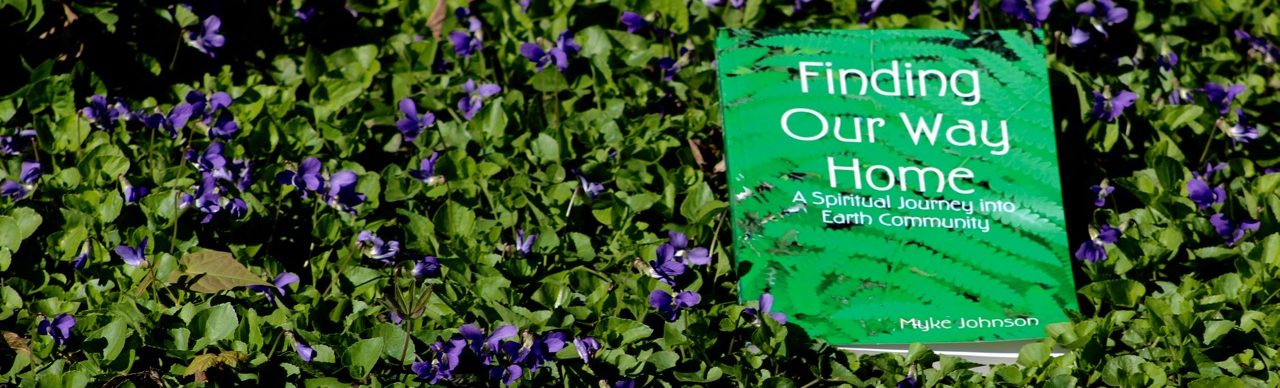
On my walk this morning I saw this lovely waning half moon, and remembered a conversation after our Candlemas ritual.  Most people have no idea how the cycles of the moon work.  We don’t learn about it in school.  Years ago, when I was in my twenties, I was curious about why I saw the moon sometimes in the evening and sometimes in the morning with different degrees of light and shade.  So I investigated. (This was before Google–how did I do that?)  I learned that the moon follows a consistent and lovely rhythm. I talk about it in my book Finding Our Way Home.

The moon is always half in light and half in darkness from the light of the sun. When the moon is full, we are seeing the whole of its light side, because the sun and moon are on opposite sides of our sky. The full moon rises at sunset and stays in the sky all night, setting at sunrise. Then, as the days go by, we see less of the light of the moon and more of its shadow, and it rises about fifty minutes later each day, until there is only a waning crescent in the morning just before and after dawn. About two weeks after the full moon, the moon rises unseen with the sun and sets invisibly with the sun. The night is dark. This is called the dark moon or the new moon. Then a day or two later, a thin waxing crescent appears in the western sky just after sunset and sets soon after. Each day it is seen in the evening for a little longer time until we come round to full moon again.

What is sad and funny to me is when fiction writers misplace the moon–for example most recently, I read a line something like this one: “I saw the waxing gibbous moon in the morning light.”  The thing is, no one will ever see a waxing moon in the morning light.  Waxing moons are only seen in the evening.  Am I a nature snob if I want the moon to be accurately represented in fiction?  The actual realities of the moon’s cycles are beautiful and magical–like a cosmic dance, which it accurately is.  Here is a rather fuzzy photo of a waxing moon, taken about 8 p.m. in April several years ago.

DSC04244

Winter Trees

IMG_0224

I got off to a slow start today, and waited until afternoon to take a walk, after the sun came out.  The bright light and shadows were playing over the cherry trees we planted last spring.  (Further back are the stakes around the raspberries.) I feel such protective tenderness toward these trees.  They are so little still.  There is no way to tell how they are surviving the ups and downs of winter.  We’ve had long bitter freezes, thaws, ice, snow storms… but so far, no deer nibbling.  Sleep well little ones! Another storm is on the way for tomorrow.

Groundhog Day

IMG_4560

We’ve made it half-way to the Spring Equinox–Groundhog Day, Candlemas, Imbolc according to the Celts… Whatever we call it, I have always liked this festival. Even the birds seem to know that something is up.  On my walks the last couple days, they have been singing so that I notice it.  The height of the sun? The change in the light?  Even though it’s been cold, and today snow was covering everything, they sing.

Today, in my neighborhood, the groundhog would not have seen his shadow–so that means that spring will come early.  But in fact, groundhogs are still in hibernation here, and since technically, it will still be six weeks until spring no matter what, I don’t actually count on the groundhog to confirm the weather.  But this day still awakens the hope that winter won’t last forever.

I was happy to learn that the Groundhog Day tradition comes from Americans with German ancestry–since that is part of my own heritage.  Back in German-speaking lands, it was instead a badger, and originally a bear, whose emergence would predict the weather on Candlemas Day.  Candlemas was a Catholic feast, but was retained even after Protestant Reforms, likely because it was an even earlier pagan feast that had been Christianized. There are sayings in English, French, and Latin as well that correspond to the myth: “If Candlemas is fair and clear, there’ll be two winters in the year.” This attests to its antiquity as a European tradition.

Imbolc is the feast of Brigid, the goddess of smithcraft, poetry, and healing.  When Margy and I visited Ireland, we visited more than one Brigid’s well where the waters are known for their healing properties.  But I also think of this festival as a celebration of fire–fire is the key component of welding and smithcraft, and it is also a symbol of creativity–the inner fire that inspires poetry and art and music.  It is the fire which inspires social change, transformation, and healing.

Years ago, this came together for me in the poem by Cherrie Moraga, “The Welder,” in the book, This Bridge Called My Back: Writings by Radical Women of Color.  It concludes with these lines:

I am now
coming up for air.
Yes, I am
picking up the torch.

I am the welder.
I understand the capacity of heat
to change the shape of things.
I am suited to work
within the realm of sparks
out of control.

I am the welder.
I am taking the power
into my own hands.

Thank you Cherrie Moraga!  And thank you to the singing birds!  Thank you dear neighborhood groundhog for not eating my kale last summer!  And to all of you reading this, may your day be filled with creativity and healing.

Deck Roof

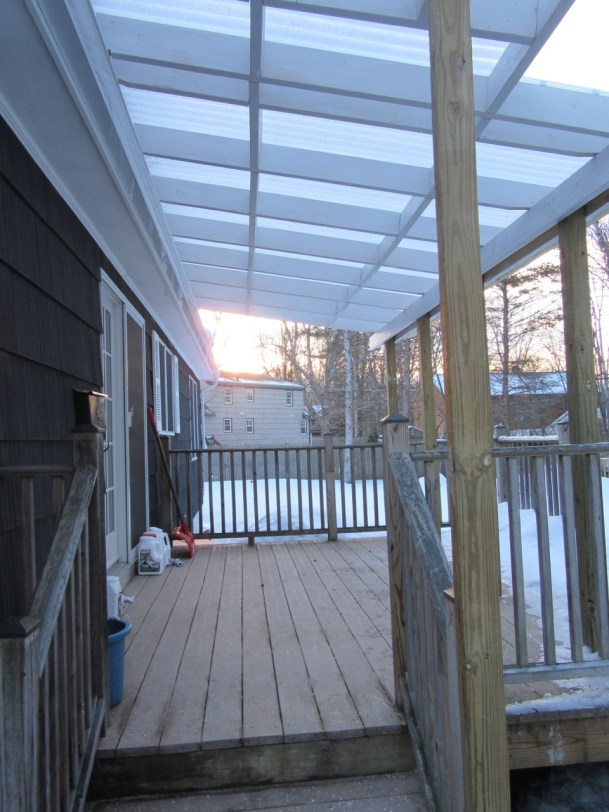
Deck RoofThe first winter after we installed solar panels on our new house, we discovered that when the snow melted on warm winter days, all the snow from the panels came down like an avalanche, right onto the deck, in the path from our back door that we used every day. I was out there shoveling first when the snow fell down, and then when the avalanche came down–sometimes in two or three segments.  And that second snow was always heavy wet and dense. #thingsyouforgottodesignfor
We needed some sort of new plan.  So we came up with an idea with our friend Ian, and he built this partial deck roof, using Tuftex polycarbonate roof panels and wood framing.  It was wider than we first imagined, to use the support beams under the deck for the framing.  Took longer than expected.  Doesn’t everything.  But such a relief now that it is up.  The panels are clear to let the light shine through–though in this photo they have some snow cover.  And they work–the snow avalanche slides down the solar panels, right cross the deck roof and lands in the space beyond.

Robins Flocking

Robins in Tree

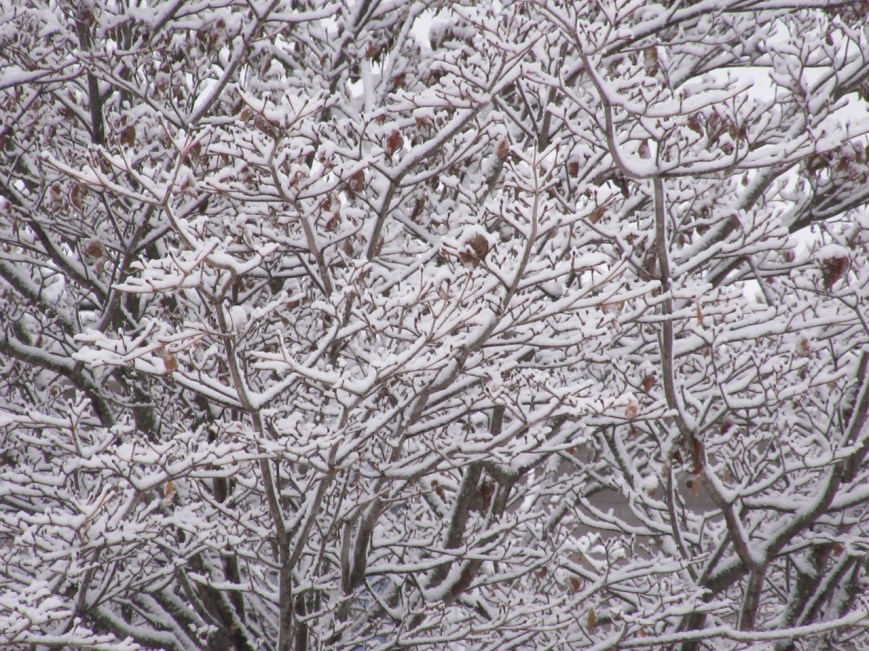
Almost every morning, I take a walk around my neighborhood.  Even on cold days, or icy days, I never regret going outside.  I never know what I might see.  One day, a whole flock of robins had gathered in these ice-coated branches. I heard them before I saw them.

Today it was very icy.  I walked a few blocks down the street, and then ventured over a slick snow mound to get to the path by the brook.  Someone had cut a few steps into the huge pile, but once I reached the top, I just sat and slid the rest of the way down the other side.  After I stood up again I realized that I was committed now–there would be no way to get back up from that side.

So I walked over to where the trail began, and looked at the shininess of the frozen rain-covered snow.  In order to keep from slipping, even with yak-trax on my boots, I ended up stomping through the crust at the edges of the path.  Still, this has been my favorite part of my morning walk, to be next to the flowing water, surrounded by trees, breathing in the freshened air.

Even in the city there are these pockets of wild nature.  Even with construction going on just beyond the view of my lens.  Even when I think I want to stay inside, there so many wordless reasons to put on heavy coat, hat, scarf, and boots and greet my earthly neighbors.

icy path


What We Are Here For

IMG_3796

“Life is the expression and fulfillment and celebration of beauty. This is what we are here for.  We’re not here to do anything else.” (Sarah Susanka in The Not So Big Life)

Perhaps this is an odd sentiment, when so much in our country is going wrong these days. Aren’t we also here for justice, for compassion, for interconnection?  But what is beauty anyway?  Is it the unexpected sighting of a wild raccoon near the brook during a morning walk?  Is it the fluid colors of the sky in the dawn?  Is it a coating of ice or snow on the branches of every tree and bush in the neighborhood?

Why do these things enliven our souls?  Perhaps beauty is the mark of an essential wholeness, a harmony we can recognize with our eyes, our ears, our hearts, our whole being.  If that is the case, then I believe beauty also includes justice, compassion, interconnection.  We recognize instinctively the wholeness within justice, within acts of kindness, the miracle of our interconnection.

Beauty has something to teach us about how to work for justice as well.  To express and celebrate beauty is to turn our attention away from the ugly hatefulness we deplore, toward acts of creating what we aspire to.  This is why I love permaculture and solar panels and work parties and gardens.  We are bringing into being the wholeness we hope for.  I am not saying that protests are not important as well.  On the contrary.

But as Rebecca Solnit promises, in her book Hope in the Dark,

…if you embody what you aspire to, you have already succeeded. That is to say, if your activism is already democratic, peaceful, creative, then in one small corner of the world these things have triumphed. Activism, in this model, is not only a toolbox to change things but a home in which to take up residence and live according to your beliefs, even if it’s a temporary and local place… Make yourself one small republic of unconquered spirit.

May you be a beacon of beauty today!

Into the Beauty

We never know when there might be magic and beauty right around the corner–if we only make a choice to look.  My day started a bit upside down and backwards–I woke before 4 a.m. with sinus pain, and never got back to sleep after I started up a vaporizer.  Finally I turned on the light, and slowly started my day in a rather bedraggled and sluggish way.  After a while, it occurred to me to just let go of the upside down feeling, and enter the day afresh.  I offered a prayer to the Mama to help me step into the flow of the River, let the magic guide me.

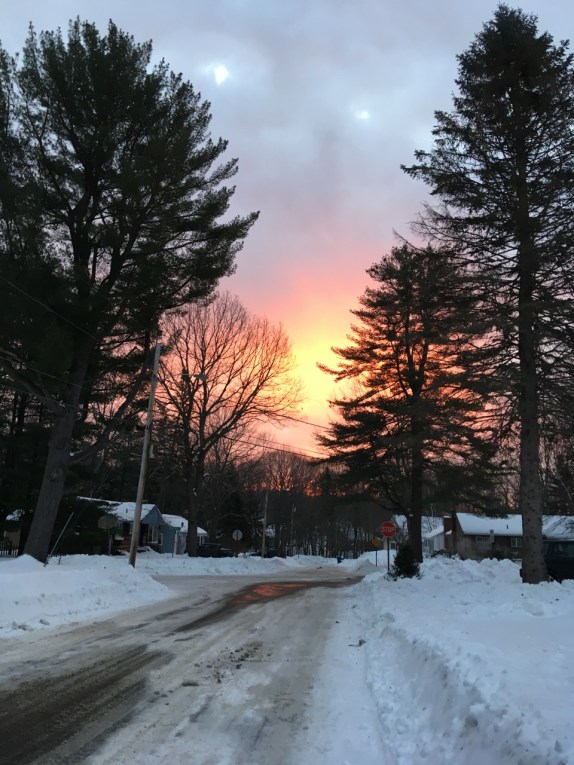
So in that spirit, I put on my coat and boots and went out for a walk about 7 a.m.  I went out the back door and walked around the west side of the house along the driveway to the front.  When I turned to go into the street, toward the east, there was suddenly this beauty of a pink and golden sky before me.  It felt like an affirmation of my prayer.   May you also find magic and beauty right around the corner today!
Sunrise surprise

Too much water, too little water

I have been thinking about the flooding in Houston, and all the other devastating ways the planet is adapting to our carbon in the air, with changing weather patterns, intense storms, different water patterns.  Thankfully, my sister and other family members in the Houston area are safe.  Meanwhile, we have drought here in Maine.  It hasn’t rained for over ten days. I don’t have answers for what to do about the new reality of flooding in our land, but I thought I could talk about what we are doing to address drought here in Maine.

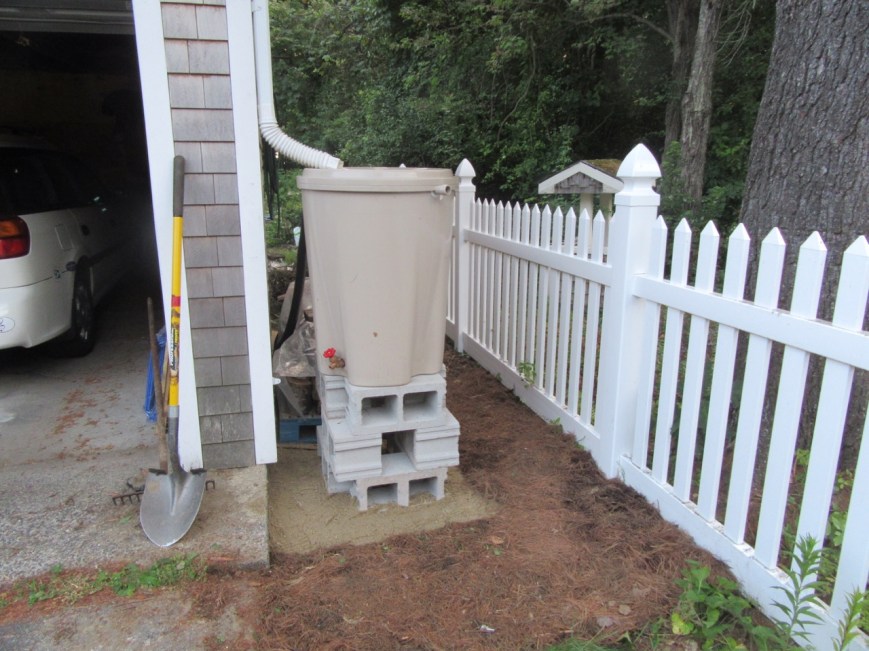
So, last week, we were able to finish the rest of our rain barrels!   One of the useful aspects of rain barrels is to preserve water in the landscape to be able to weather the ups and downs of water flow.  We now have rain barrels gathering the run-off from each roof on our land.

IMG_2823

The final rain barrel is finished!

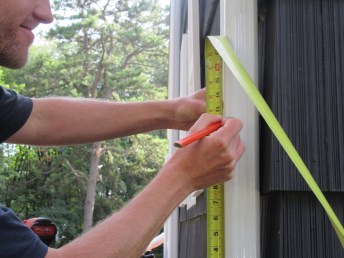
Measure the downspoutI want to post about the learning session that Dave led on the 23rd to finish our rain barrels and teach a few of us more about how to install rain barrels.  I will talk today about how to attach the barrels to the downspouts of our gutters.  Once the rain barrels themselves are positioned, you can measure and mark the downspout about 8 to 12″ above the top of the barrel.

Unscrew the downspout attachment


Then remove the downspout by unscrewing the fastening screws on the wall and to the gutter.  Once those are unfastened, you can pull the vertical downspout apart from the connectors to the gutter.

Unscrew the connector


The fun part is cutting the downspout itself to the right length with tin snips, using both right-handed and left-handed snips.  (Right handed are red-handled, and left are green.) The basic idea is to mark the downspout with a pencil line all around, and be aware of the part you are going to keep, and the other part which will not be part of the finished downspout (the scrap side–but you can save it for other uses.)  Then punch a hole with the point of the snips near your line, but in the scrap side, and start cutting around the marked line.  But, also, about an inch further into the scrap side, you start another cut, so that you can work both those cuts at the same time.  It makes it easier to go round the downspout.  If you are right-handed, you use the right hand snip for your “good” cut, and the other snip for the helping cut.  This picture shows a left-handed person making the good cut.  As you go around the pipe you can cut off that little strip so it doesn’t get in your way.Cutting the downspout

Once the downspout is cut, you reattached it to the gutter, and reattach the screws, or make new ones as needed to attach it to the wall.  Then, attach a plastic downspout extension piece that you can buy at a hardware store in large or small sizes, and position it to end over your rain barrel  (see first picture).  Hurray!


Celebrating Grains (as someone who doesn’t eat grains)

Today is the celebration of Lammas, the Grain Festival–or how I often have thought of it here in North America–the Corn Festival.  This is the time when local corn on the cob is finally ready!  In its European origins, “corn” meant wheat, and it was a celebration of the wheat harvest, complete with Lammas breads eaten during the rituals.  But lately, I have been following a mostly grain-free eating plan–no wheat, no gluten, and no corn.  So how might I celebrate Lammas?

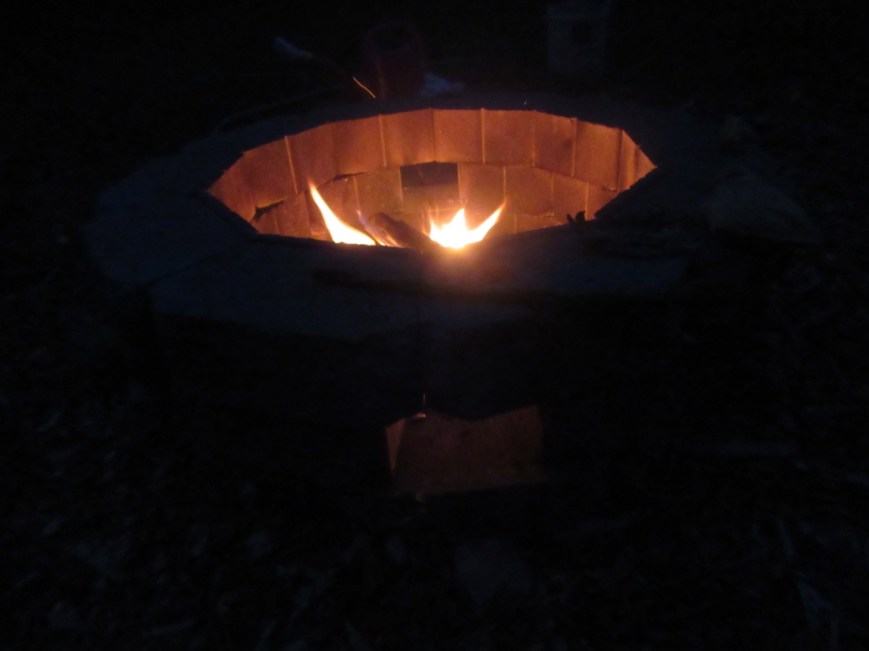
I am planning to go outside for a fire this evening.  We had our first fire in our fire circle on the new moon on July 23rd.  (the photo is from that fire)  A fire always feels like an invocation of the sacred.  Perhaps it would work also to celebrate with nuts and fruits, which are like grain in that they are the seeds of the plant.  They are freely gifted by the plants to human beings.  All cultivated plants co-evolved with human communities.  So perhaps tonight I will celebrate that partnership between human beings and plants!

First Fire

Oh!!!!

Digger ProblemI had a revelation!  I have been thinking I was having a tug of war with a groundhog, because despite the fact that I had been using a very potent deterrent liquid, each morning I would discover this mess around my cherry tree beds.  But no more plants were being eaten.  So what to do?  I did more research and discovered that the mess in my garden was likely not caused by a groundhog at all.  Because the digger is nocturnal, and groundhogs are not.

Rather, it is likely a skunk (who is a nocturnal digger) is rooting in the mulch for the grubs of Japanese beetles.  And then I realized that the rooting appeared about the same time as the Japanese beetles on the cherry tree leaves (which I have been picking off and dumping in soapy water).  So I don’t really have a digger problem, I have a grub problem.  In fact, the skunk is helping get rid of the Japanese beetles.  But I’ve ordered some Milky Spore disease to inoculate the soil to create a more permanent and organic solution to the Japanese beetle problem and that will eventually deal with the digger problem.

I learn so much every week about gardening, usually through problems.  But I haven’t seen the groundhog lately!  (Knock on wood chips.)  Thank you, skunk!