
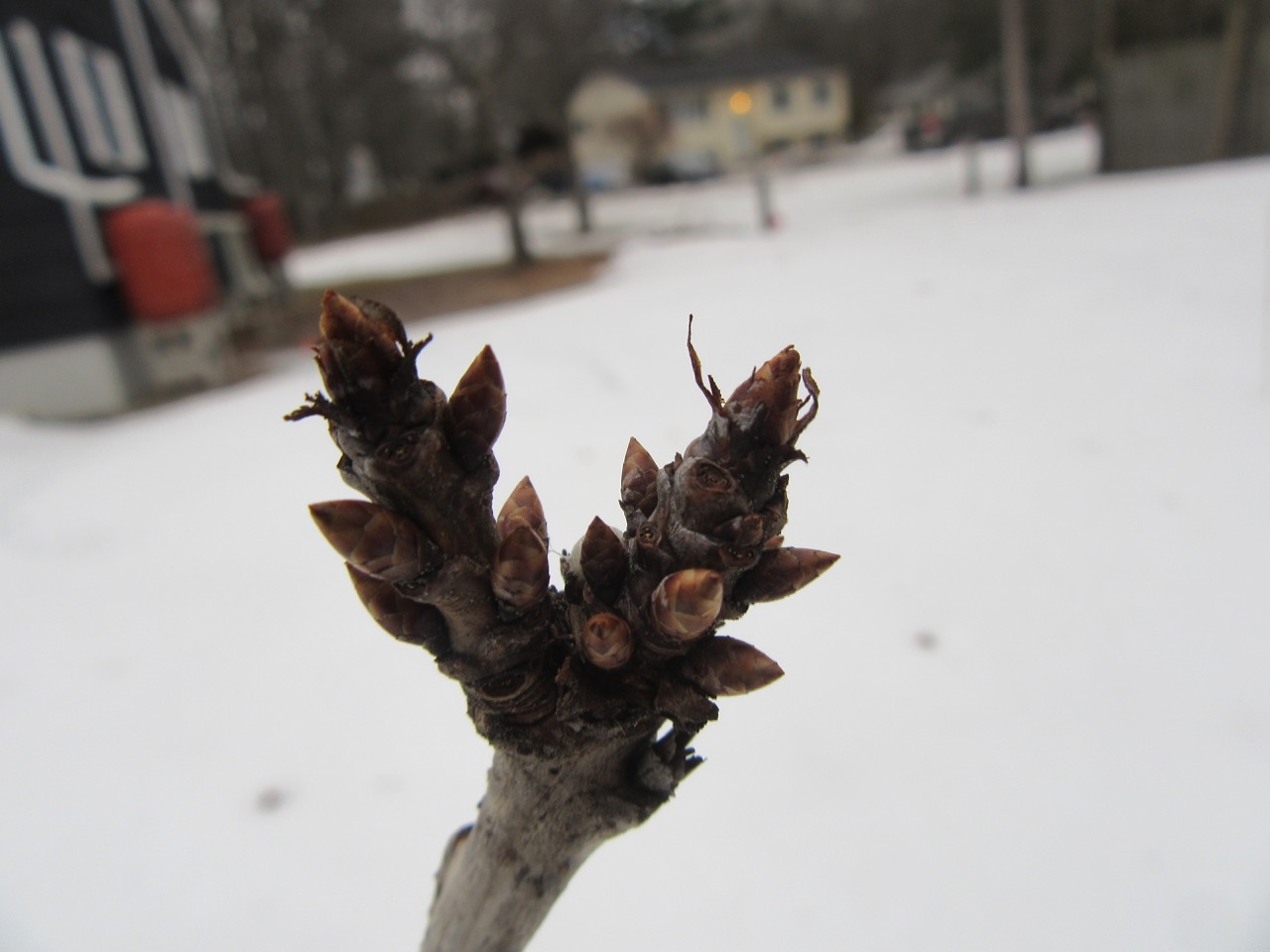
Yesterday, I prepared a mix of kaolin clay and water, and sprayed all the branches of the peach and cherry trees in our little orchard. This is an organic solution to curculio insect pests, among some others. Now they are totally white and look like ghost trees. The leaf buds are starting to open on the cherries, and flowers will be here soon. Last year, our peach tree produced many peaches, but they were almost all destroyed by pest bugs. We got to eat two peaches. (They were delicious by the way.) We had somehow assumed that it might take at least a year for bugs to find them, but bugs are smart. So it was a useful lesson in observation. But this year, we hope to actually eat some peaches.
I have been committed to figuring out how to protect them organically. This spring I started reading once again The Holistic Orchard by Michael Phillips, which has been my guide during my fruit-tree food forest adventure. Each spring I forget what I did the prior year, having only a few trees and a few times to do any part of this project. This time reading, a few more ideas stuck further into my brain, and I found a few new ideas too. First of all, which I didn’t forget, was to try to make sure they have all the nutrients they need in the soil. Phillips had a section about how to interpret soil tests, and last fall, Margy did a soil test for the peach tree bed. Since the fall, I have added more compost, seaweed, some rock dust and green sand which are all long-term nutrient boosters. I also ordered some potassium sulfate of potash because the soil test said the soil was low in potassium, and some alfalfa meal to add some extra nitrogen which was also low. I will add those once the trees are more in flower.
In prior years, I have done the holistic sprays that Phillips recommends, and now I am trying to create my own timeline for which ones come when, so that I don’t have to figure it out each time all over again. I love this book, but it is not well organized for beginning orchardists. Vital information is scattered across various parts of its 400 pages. It is the book of someone who knows way too much about all aspects of orchards for a beginner to have much of a chance. His primary focus has been apples, and other fruits each have their own sections. Still–re-reading it each year seems a good way to go.
I do have to laugh though, because I found the key piece of information I needed for my peach and cherry trees only in a footnote–a footnote! And that footnote said: “Massively coating stone fruits [cherry and peach are stone fruits] with multiple applications of refined kaolin clay for curculio is less than ideal once fruit begins sizing in earnest. Cherries bloom before apples, and with far less leaf showing initially. Surround [brand name of kaolin clay] applied at this critical juncture on the just-about-to-pop flower buds delivers a message to this pest to move onward to other prospects. Curculio makes its way by crawling, particularly early on when temperatures tend to be cooler. The main route to developing fruit is by way of the limb highway, and thus the reason for thorough coverage on the branch structure of the tree. Two applications going into bloom will do the trick in a warm spring, with an additional application as soon as petal fall begins probably necessary in a cooler season.“
See what I mean? But yesterday, as the buds on the cherry were just starting to open, I sprayed it with kaolin clay, and then I repeated it once that had dried. Now they are white, and I hope they are protected for now.
It was lovely to be outside. In between applications I did some raking and some lying in the hammock, and eating my lunch under the patio umbrella. What a great way to celebrate Earth week.


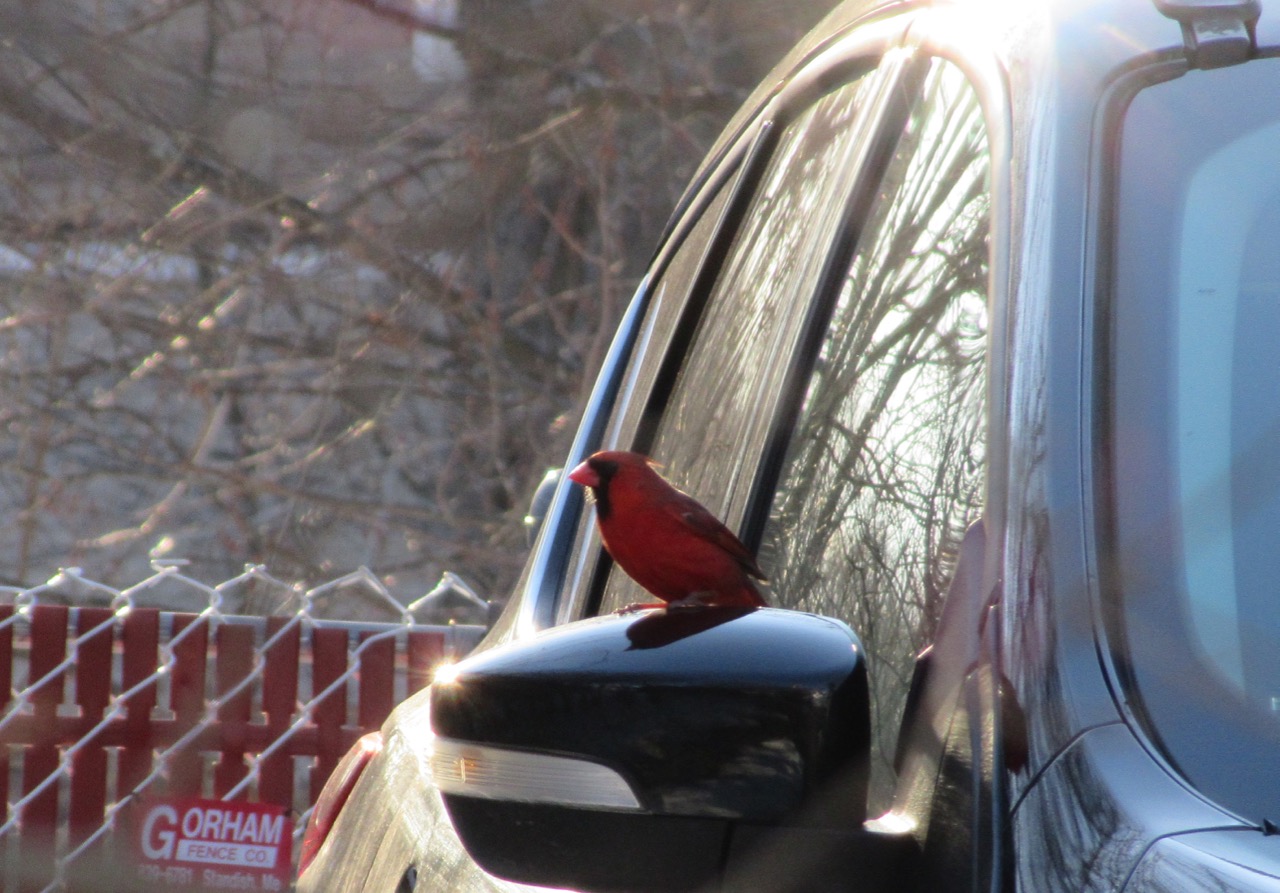
 The earth is waking up in our neighborhood, and all her creatures. I love the cacophony of bird song that I hear when I walk in the morning. The other day I saw this little red fellow pecking at the side mirror of an automobile parked in a driveway next to a long hedgerow of bushes. It is a common cardinal thing. When he sees his reflection in the glass, he thinks it is a competitor, and tries to defend his territory. If you look closely, you can see his reflection in the glass too, though most of the time, I see him pecking the side mirror, not the car window.


 Friday and Saturday I pruned and trained our young fruit trees. I did a lot of research beforehand, because it seemed so sad to actually cut them at all. But the

 I had a revelation! I have been thinking I was having a tug of war with a groundhog, because despite the fact that I had been using a very potent deterrent liquid, each morning I would discover this mess around my cherry tree beds. But no more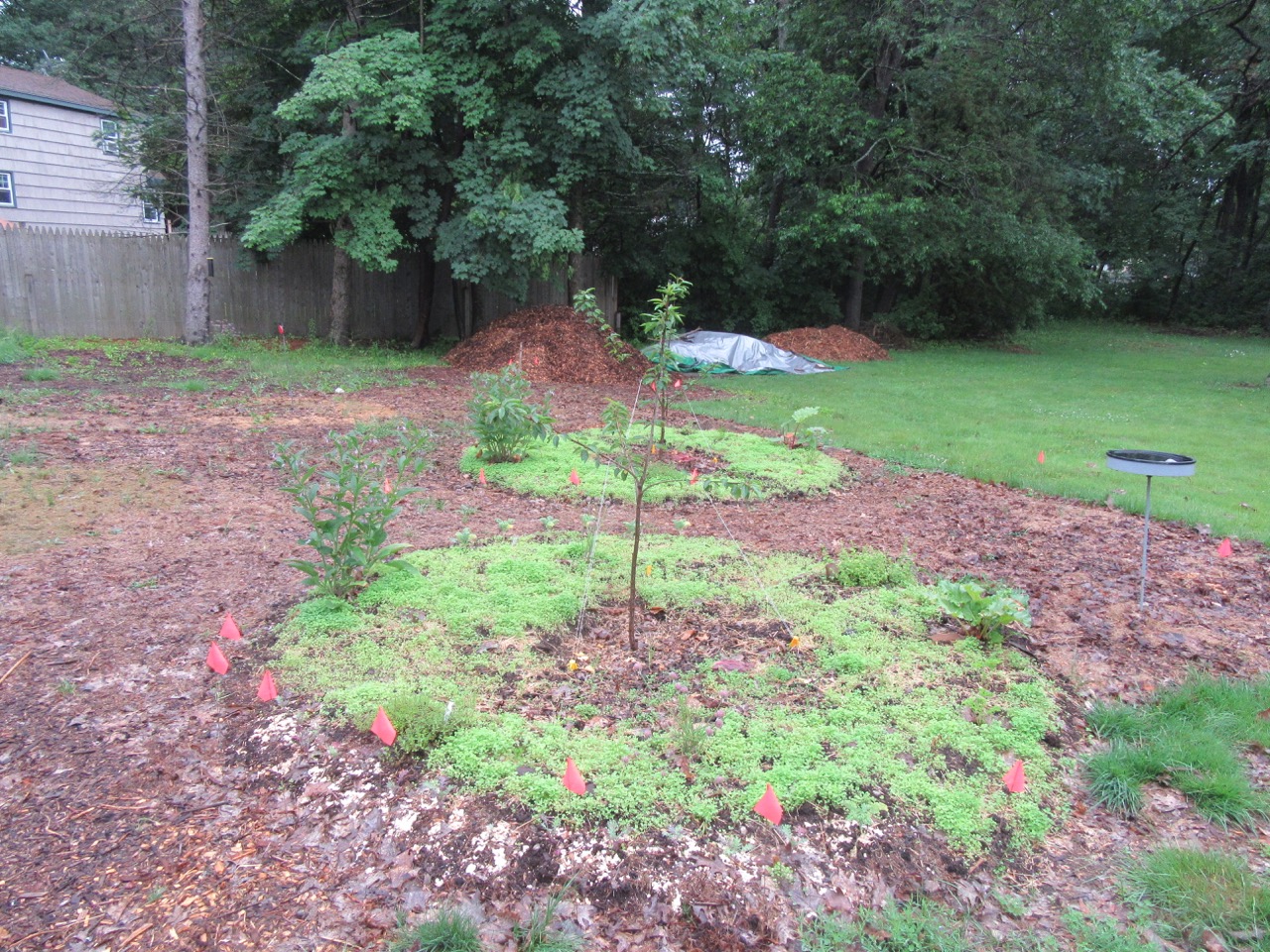

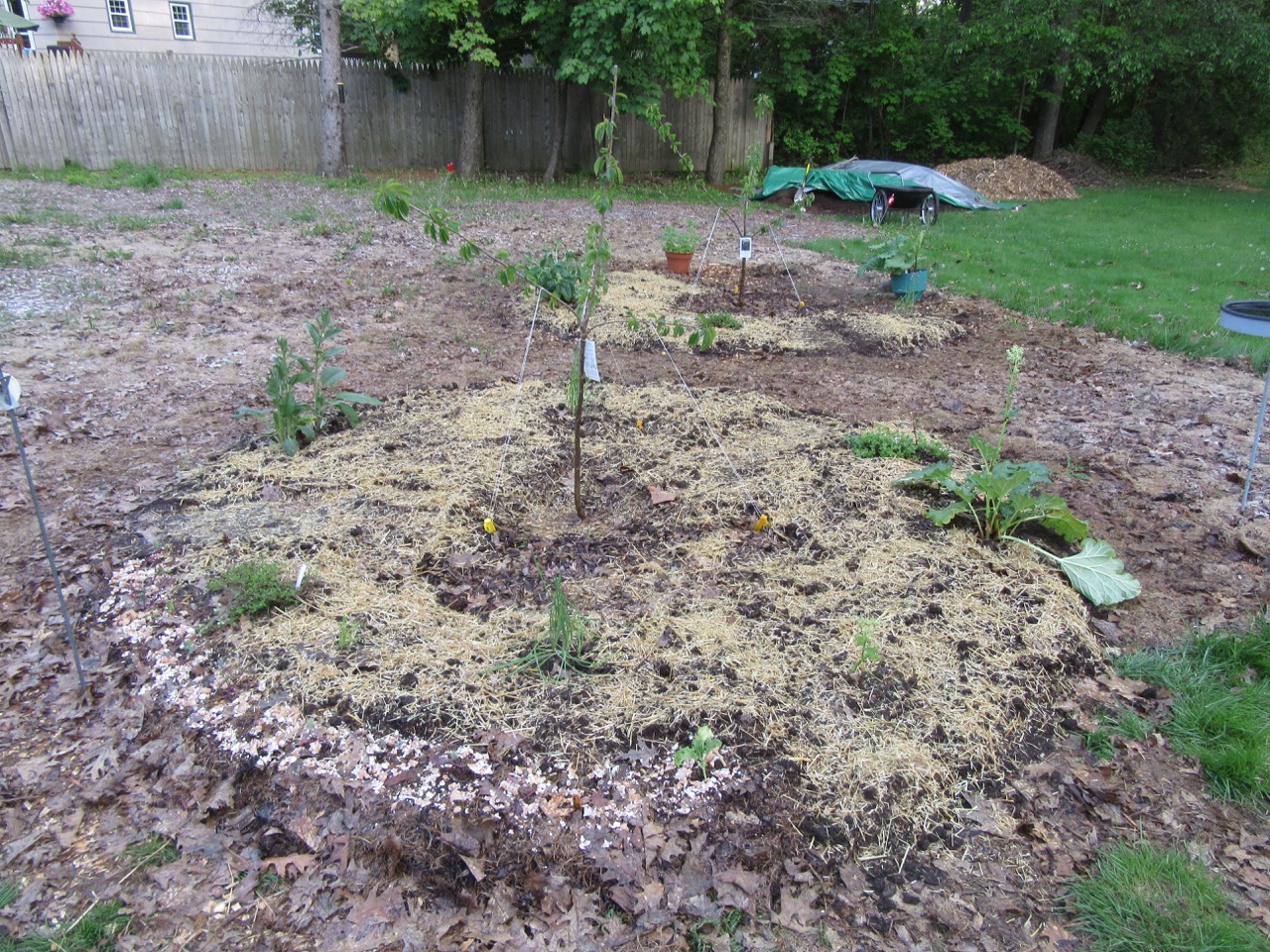 Today I almost finished soil work and guild plantings around each of the cherry trees–still 1/3 to do around the second tree. First I aerated the soil with our garden fork to a five foot radius around the tree. (The soil was already covered with mulch from last fall-wood chips, cut grass, sea weed, and dead leaves.) Then I put down newspaper or cardboard along the outer half of each circle, and covered it with compost. I planted the companion plants for each cherry tree guild. Guilds are plants that work together so that each does better than if they were planted alone. In this case, the primary focus is the health of the cherry tree.
