Garden work & rest

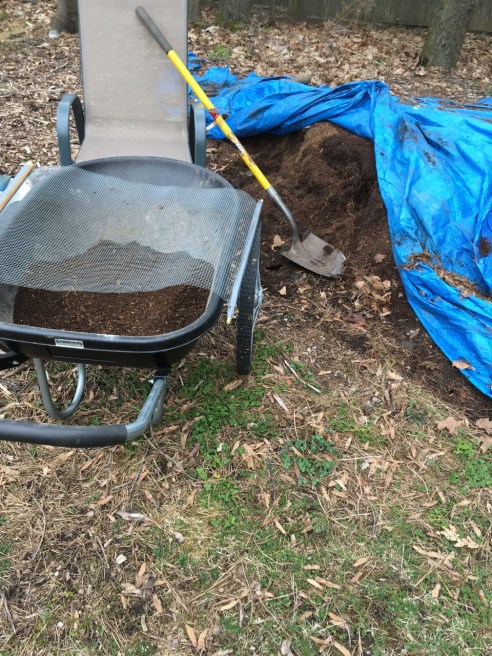
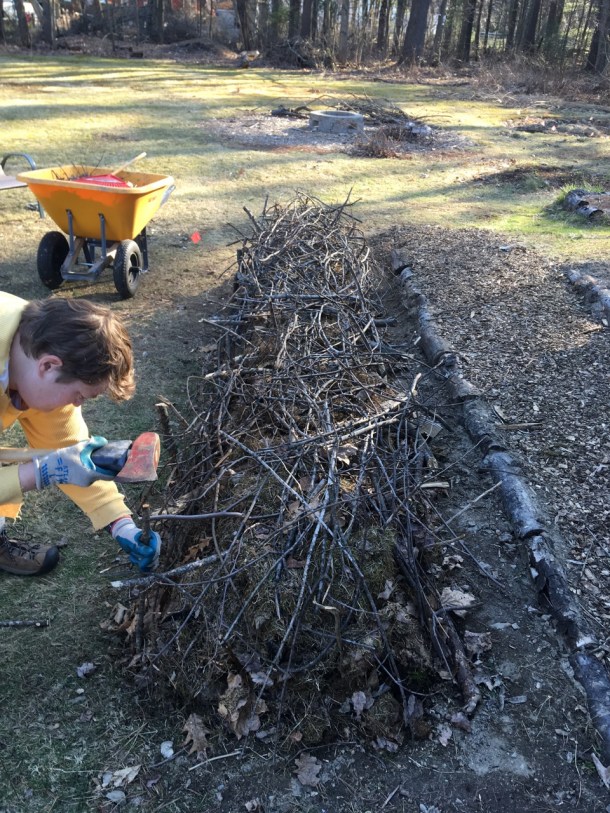
The last few weeks I have been outside a lot, but not writing a lot. I have been adding soil and compost to the hugelkultur mound little by little, and stuffing sod into the sides, but in photos it doesn’t change much. I created a new tool–a screen to sift compost that has become inundated with small roots. It is just two dowels, with a metal screen attached with staples and duct tape, but it fits over the top of the wheelbarrow, and makes it so much easier: I shovel compost from the pile onto the screen, then rub it back and forth with gloved hands to sift out the roots, and the usable compost falls through.Compost sifter

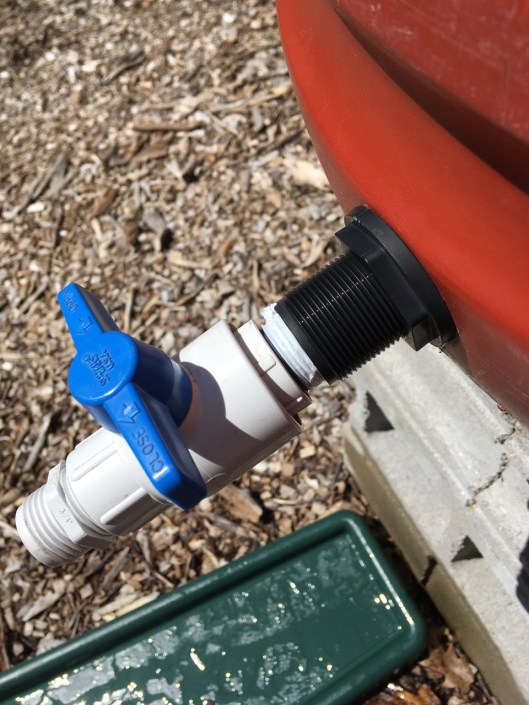
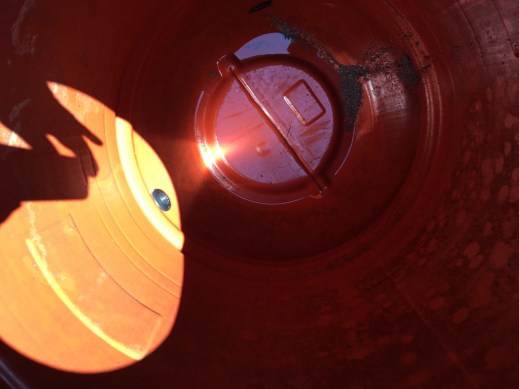
I also put spigots and drain hoses back into six of our rain barrels. They are designed to capture rain from the gutters, fill one barrel, and then overflow into the second barrel, and then overflow through a drain away from the house. The joy of these rain barrels is they can stay out through the winter as long as we remove the spigots and any long hoses. I had to go through the plastic drain hoses and cut off sections that had cracked, but luckily we had enough left to make it work. So I thought they were ready for rain again, but then yesterday as I checked them during our rainstorm, I discovered that one fitting had cracked–we’ll see if I can figure out how to fix that.

Rain barrels setup

Our new mulberry tree from Fedco arrived on Wednesday. Our old one didn’t do well where we had first planted it–too much shade, and then after I transplanted it last year, sadly it didn’t survive. But most of the work was done, because I had prepared such a great bed for it last year–so all I had to do was pull back the mulch, dig a small hole, and place the new baby tree inside. Baby trees aren’t that photogenic, a brown stick with a brown mulch background, so here is a photo of her roots all tangled up and gnarly before I placed her in the hole filled with water. May our tree be blessed in her new home, and provide food for birds and us too!

mulberry roots

Two springs ago, as I was preparing for retirement due to chronic illness, Margy bought me an early retirement gift–a hammock. Lately, after working for a while in the garden, I climb into that hammock and rest–so perfect! It feels a bit like laying on the beach in the sun, or floating on the ocean water. I can relax deeply, let go of trying to carry anything or do anything.  It has been so healing in this time of existential stress and grief for our world. I rock as if held in the arms of the air, the birds singing, blue sky and greening trees surrounding me, sun warming me.  It reminds me that we are held in the embrace of a larger Love, even when we feel so helpless in the face of the troubles that plague our country. May you also find ways to rest your spirit in this beautiful earth!

hammock

Hugelkultur 4–Moments

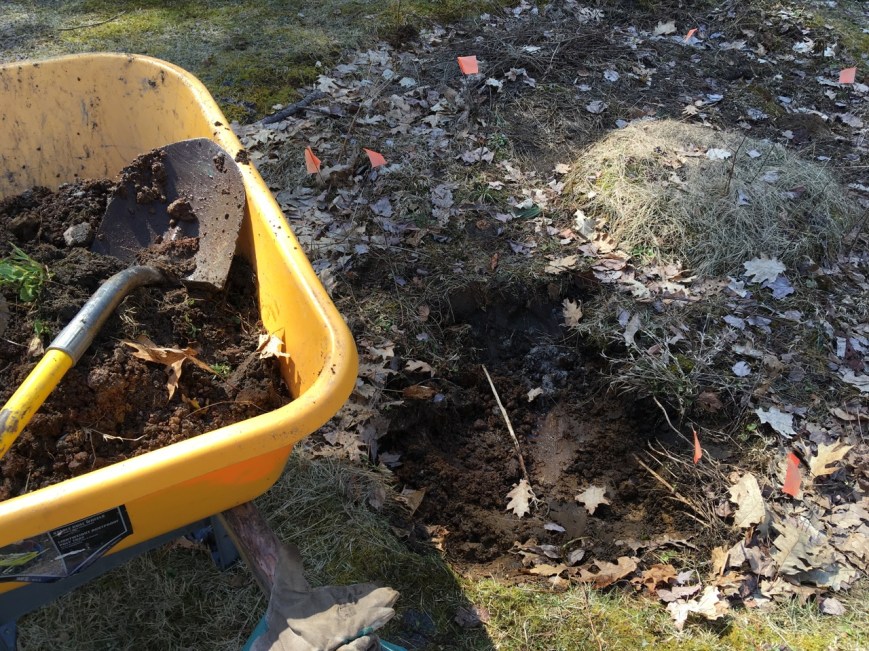
I haven’t forgotten about the hugelkultur bed we are creating (mostly me at this stage, since Margy’s back won’t let her dig or carry.) At times I wonder if it will ever be ready for planting, but then my spirit reminds me to stay in the process, enjoy the moments, rather than being attached to outcomes.  So the other day, I came out and dug some shovels full of sod and wet soil from the center of the future pond, put them in a wheelbarrow, then brought it over to a chair in our fire circle. There I sat and I painstakingly pulled out all the tiny bittersweet starts. It helps that they are like hard little red sticks with orange roots, and very easy to differentiate from the soft moss and grass and other growth. I couldn’t get very much “accomplished,” but I loved sitting in the sun with my hands in the soil. What could be better than that?

Today I couldn’t continue doing that process because the future pond was actually full of water from the big rain.  I don’t know if we will ever finish the pond, but days like this remind us what it might be like. I saw a bird drinking from it later.

future pond with rain

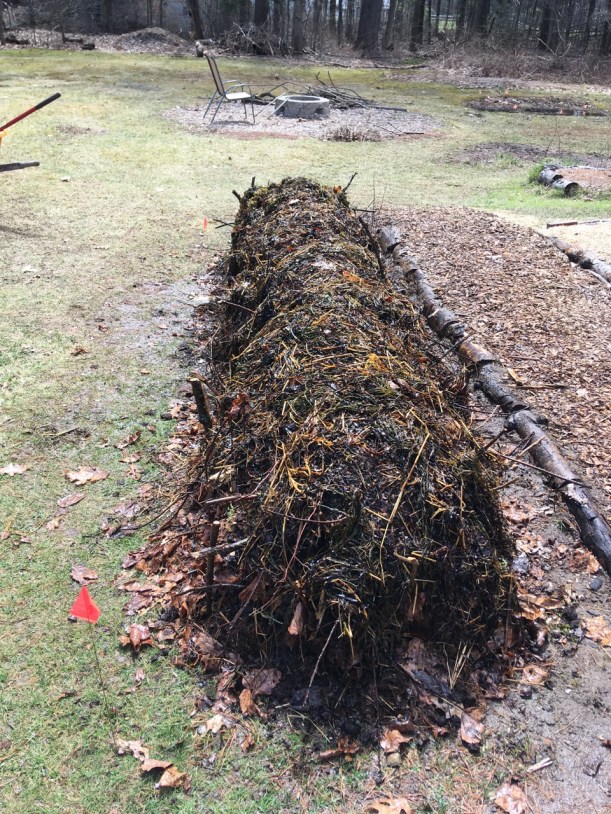
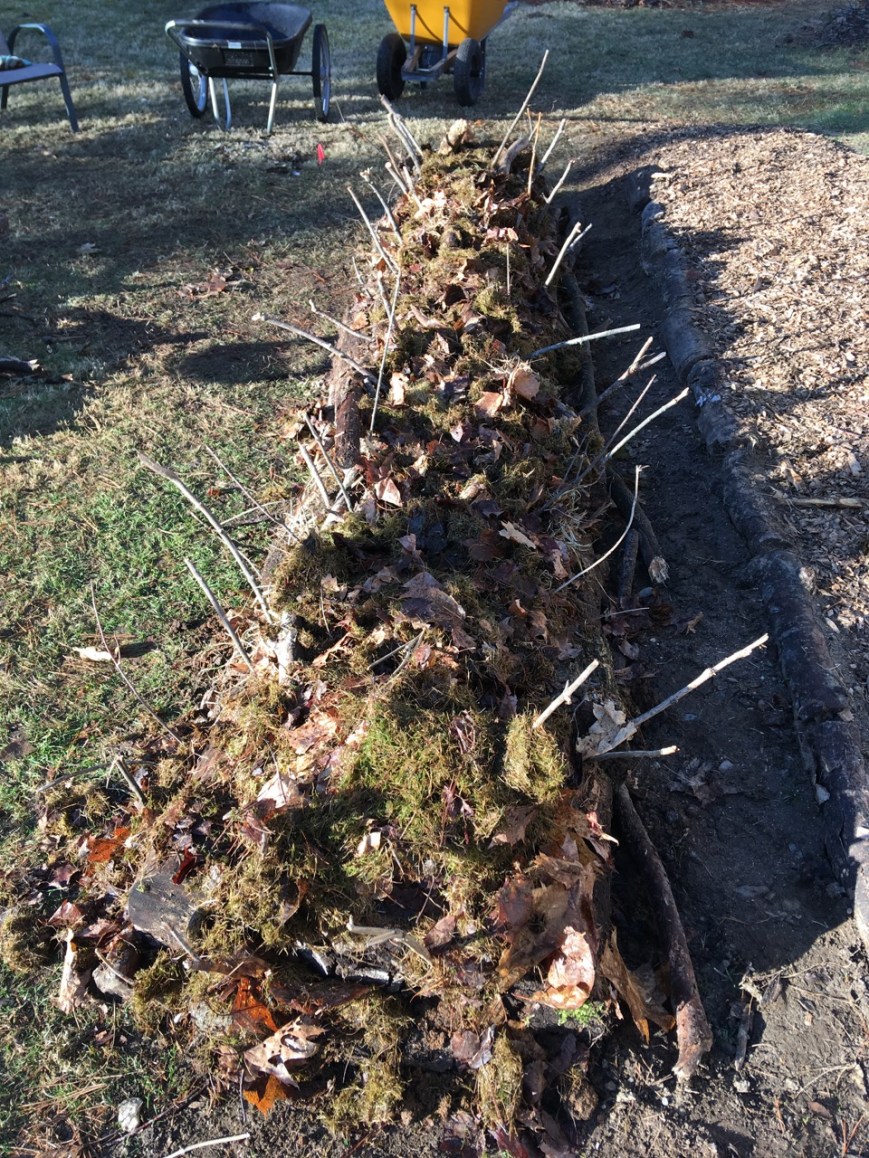
Instead, I shifted to opening up one of our compost bins that has been sitting for a year, and adding more compost to the mound.  I also had a little bit of sod from another spot that I turned inside out and added to crevices on the side.  When the compost was piled high, I layered seaweed over the top–which also helped to stabilize it.

Here are the stages. First with compost.

hugelkultur compost

Then, seaweed, which we had gathered from Winslow Park.

hugelkultur seaweed

If it seems hard to see the difference from earlier photos, that is because it expands only by millimeters. But it is so beautiful out here today–in the 50s, sunny, birds singing, and one can feel the surging of green life that is almost ready to burst forth. I have observed that there is one week in spring when everything wakes up–maybe we are about to enter that week. I walked along the strip near our street that I had planted in perennials two years ago, and look!–the lupine planted from seed last year is already poking through the dead leaves. This year we will get flowers. I am trying to remember–notice the beauty, be present to the moment, be filled with gratitude for this very day.

lupine coming up


Hugelkultur, part 3

Continuing to build a hugelkultur garden bed, yesterday, we added some brush to the top and sides of the mound, over the cut grass layer. Margy pounded some branches into the ground on the side as stakes for further stabilization.

hugelkultur Margy stakes

Next, today, I covered it all with dried leaves, one full wheelbarrow plus a big garbage bag full, saved from last fall.

hugelkultur leaves added

Finally, I added about 3 wheelbarrow loads of yard waste compost, and watered all of it. But this stage of adding compost is going to need many more loads before it is finished.  I should be adding several more inches of compost.  The mound is about 15 feet long, and will be 4 1/2 feet wide when complete. I had one of those moments when I thought, “Why did I make it so big?” I think this stage is going to take a while.

hugelkulture Tuesday

Meanwhile, I was pondering the fact that I often feel anxious when I am trying new things in the garden. I was realizing that my parents and grandparents were urban or suburban people. My dad wanted to get back to the land, and was a cowboy for a while, but mostly he worked as a draftsman for the auto industry. His parents tried to homestead in Wyoming, but that fell through and they came back to Detroit. My mom’s parents came from Linz, Austria and Quebec near Ottawa, Ontario, and lived most of their lives in Detroit.  She had flower gardens while I was growing up. So I didn’t learn how to grow food from my family. It has only been as an adult that I’ve tried to learn about food gardens, off and on as circumstances allowed it.

The more I learn, the more aware I am of how much I don’t know. Each plant is like a stranger to me, then perhaps an acquaintance, and I hope in a while it might be a friend. It is hard to believe that we could be relatives to each other.  (Well, except for kale–kale already feels like a relative, since I have grown it for a long time.)  But I try to remember to embrace this beginner’s mind, to be present and attuned to the process. It is good to be outside, to feel the spring, to forget for a while the grief and fear that this pandemic is unleashing.

Hugelkultur, part 2

hugelkultur grass

Continuing with our hugelkultur garden bed creation! This morning was bright and sunny, and I had new energy to go out and add more soil, and then grass clippings (from last fall) that Margy had gathered into a wheelbarrow.  Hugelkultur works in a similar way to composting–in fact, it is a kind of composting–you have to have a mix of carbon and nitrogen. The logs hold lots of carbon, and while beginning to rot they can draw nitrogen from the soil around them. Most of these logs have already been laying around for a while, so it might not be a big deal, but we want to make sure.

Since we hope to plant our mound this spring, we’ll need to add sources of nitrogen to be available for the plants. Thus, grass clippings. Another great source of nitrogen that I’ve seen other permaculture people talk about is urine. It is free, readily available, and it reminds us that we can all give back to the earth.

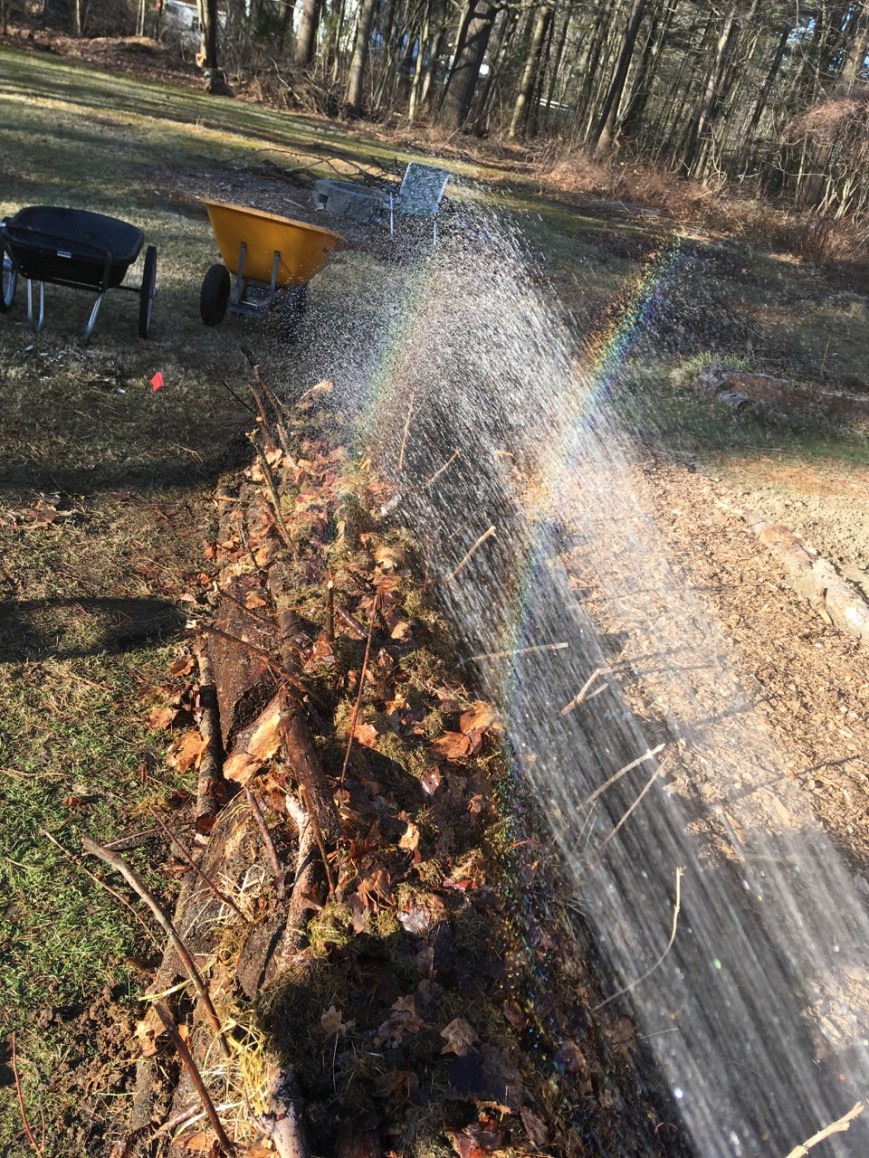
Before I came back inside for some other things I have to do, I watered the bed again–it needs a lot of water at first, and then the logs hold water to give back to the plants as they need it. I was delighted to see these little rainbows. May something bring you delight today!

hugelkultur rainbow

Hugelkultur, part one & a half

Time to do the next steps for our new hugelkulture bed, but I wasn’t sure what kinds of materials to put on first. After doing more research online, many suggested that soil plus nitrogen rich materials like cut grass were next. But then I realized I needed to back up a bit. In order to stabilize the mound, it was recommended to put soil in between the cracks and crevices formed by the logs on the bottom. So I took off the smaller branches I had already placed on top, to expose more of the logs underneath.

Also, people had mentioned having a problem with the soil falling off the outer part of the mound, and one suggested remedy was to put lots of sticks angled out from the mound to help to stabilize the organic material and soil that will eventually cover it all. So after I took off the smaller branches, I started replacing some of them at a different angle.

hugelkutur sticks

Finding soil to put on the bed is no problem for us–in fact, it is a great help for our dream of a future pond, which we had included in our original permaculture design. One of the challenges for a pond is having some place to put all that dirt. So it has been on a way back burner. Today, I dug up about a half-wheelbarrow full of dirt–the dirt was very wet from recent rains, so that was actually the limit of what I could lift in the wheelbarrow.

Future pond soil

I brought it to the mound and started putting it into all the crevices, (after making sure to pull out any tiny red bittersweet roots.) The mound needs several more loads of dirt, but my own physical limits intervened. For some reason, lifting heavy things is very challenging for my chronic autoimmune illness, and triggers my fatigue response. So I sat outside in the sun for a while, but reluctantly came in after watering the mound with our garden hose. Tomorrow will be another sunny day.

It is hard to have an idea, a vision of this hugelkultur mound, and not be able to just go out there and get it done. Usually if I push myself one day, I have to rest on the next day.  And Margy has her own limits. So after moving all those logs yesterday, it was a stretch to do anything at all today. But I have been slowly learning to honor the boundaries of what my body can do, and take things step by step, in whatever timeline is necessary. It still feels so good to be outside in the garden.

Hugelkultur

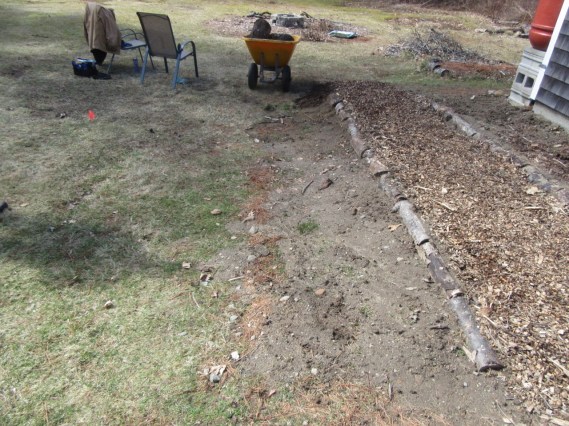
Today we started the process of building a hugelkultur garden bed.  Here is the “before” picture, though I had already created a path, next to the asparagus bed at the side of our garage. I lined the path with logs from the land, leveled it, and covered it with wood chips. Ever since I created the asparagus bed, that slope has been a bit of a mess, from all the dirt that I moved around to do asparagus plantings.

Before hugelkultur

Hugelkultur means hill culture, or hill garden, and is one of the tools in a permaculture tool kit that we had never used before. It is a kind of raised garden bed, with rotting logs at the base, brush, leaves, and other organic materials over that, and soil over the whole mound. The logs hold moisture, so that eventually you don’t need to water your plants as often, and they contain nutrients that are gradually released to the soil. They also extend your growing season because their slow decomposition warms the bed. It also serves as a use for old rotting wood and brush that otherwise might go to the dump, and it sequesters carbon in the soil. Some folks make them 6 feet high, but ours will be smaller than that.

With everything happening because of the COVID 19 pandemic, we felt it would be a good time to increase our capacity to grow more food. So far in our garden, we’ve focused on cultivating fruit trees and bushes, and herbs and other perennials. The only annuals I have grown are snap peas and kale, in amongst the trees. So this bed will be for annual vegetables, like carrots, lettuce, and zucchini.

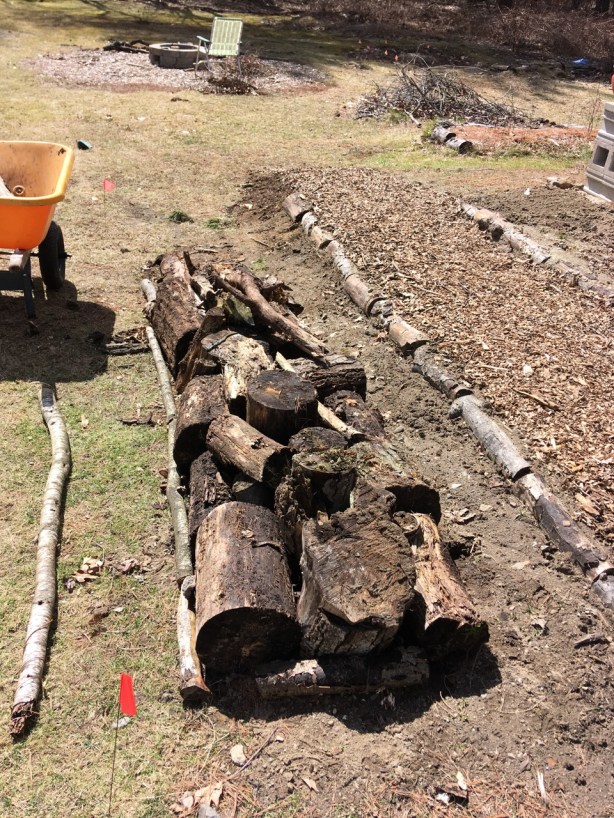
The first stage was to go around with a wheelbarrow and collect old logs that have accumulated on the edges of our land. Most of them were there when we arrived four years ago. I think this will be the hardest part. These logs were heavy! Margy and I both had to rest in between loads. But it has been a beautiful sunny day, so what could be better than to sit in our yard in the sun.Logs for hugelkultur

The next step is to arranged the logs every which way in the area that will be the bed. Some people might be more orderly than this, but it doesn’t really matter. It does matter what kinds of wood you use. Hardwoods are preferred, but not cedar, which doesn’t rot, or black walnut, black cherry, or black locust because of how they protect themselves in the soil. Pines have tannins, and might make the soil more acidic, plus they don’t last as long. We were also careful not to use any bittersweet cuttings, and to make sure no bittersweet roots had colonized the rotten logs. Margy spends half her time going around cutting back all of that.Logs layer hugelkultur

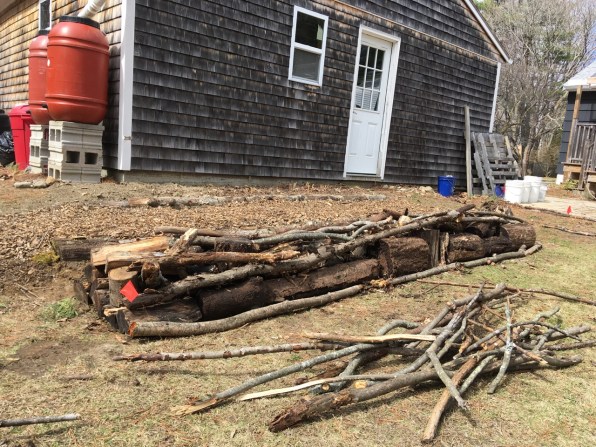
After the big logs were laid out, we filled in with smaller logs and long branches. And that was as far as we got today. I came in to have a cup of tea, and to write all about it. Tomorrow’s weather is supposed to stay nice so we’ll do the next steps then, and I’ll do an update.hugelkultur branches

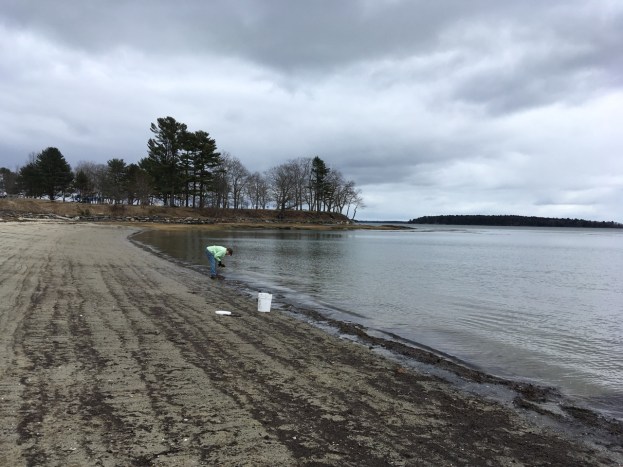
Oh, I should also mention that Wednesday Margy and I had a big outing–since we’ve been staying home for three weeks now.  We went out to Winslow Park beach, and gathered seaweed, and got to see the beautiful ocean. All that seaweed will go into the hugelkultur too. One of my favorite things about permaculture is that nothing is wasted–what we might think of as waste is passed along as food for another part of the cycle of life. So rotten logs, brush, dead seaweed, fallen leaves, cut grass, vegetable scraps–all of it goes back to help create fertile soil. That is something beautiful to perceive.

Gathering seaweed

Rituals of Spring

Cardinal on car – 2020The earth is waking up in our neighborhood, and all her creatures. I love the cacophony of bird song that I hear when I walk in the morning. The other day I saw this little red fellow pecking at the side mirror of an automobile parked in a driveway next to a long hedgerow of bushes. It is a common cardinal thing. When he sees his reflection in the glass, he thinks it is a competitor, and tries to defend his territory. If you look closely, you can see his reflection in the glass too, though most of the time, I see him pecking the side mirror, not the car window.

But what is so funny about this to me is that it has been the same cardinal, the same driveway, and the same car for the last three years.  Or it might be the same cardinal. They say they live about three years on average. If it is not the same cardinal, I am sure it would be the son of the previous cardinal, learning these important spring rituals from his father. I went back into my photos app to confirm my recollections and found these photos from the last two years.

Cardinal on car 2019

Cardinal on car, 2019–He had jumped from the side mirror just before I snapped the shot.

Cardinal on side mirror – 2018

Cardinal on car, 2018

As for me, I finally braved my spring ritual of pruning the cherry trees in our food forest. I am still such a novice about all things concerning fruit trees and each year I forget the whole process and have to relearn it, and then hope for the best. After reading all the entries on pruning in the Holistic Orchard book, I felt even more confused. So then I looked at several Youtube videos on pruning cherry trees. (By the way, there wasn’t one perfect one, or I would recommend it here.) Finally, I ventured out, and with a prayer to the trees themselves for help, I trimmed back wayward and unruly branches so the three-years-from-planting trees will have strong scaffolds, and lots of light. Next, I’ll have to venture to the peach tree, which has a totally different method for pruning.

I have also started a bit of terracing next to our asparagus bed near the side of the garage. There is a slope there that didn’t work to hold grass or clover, so our hope is to make a path a little lower than, and next to, the asparagus bed, with logs on either side to stabilize the soil. Then we might put in some sort of annual vegetable bed on the other side of that path. Most likely, we’ll do a small sized hugelkultur mound raised bed.  But more on that later. If we do it, I’ll write another blog post about it.

I hope you are finding time to get outside and observe your own spring rituals.

Ancient Beech Forests in Germany

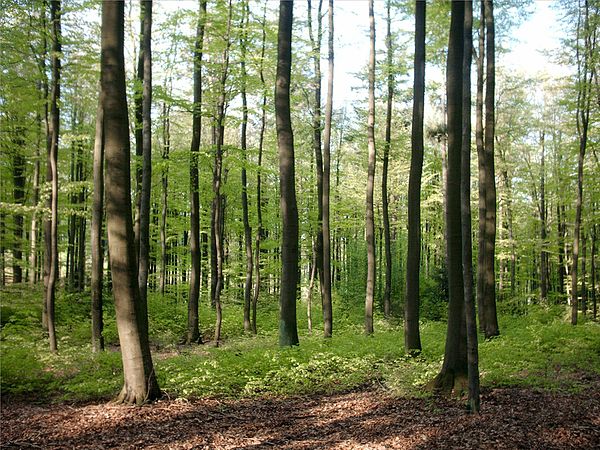
Buchenwald_Frühling

Beech Forest Buchenwald Frühling by Nasenbär (Diskussion) / CC BY-SA 3.0 DE (https://creativecommons.org/licenses/by-sa/3.0/de/deed.en)

I just learned this week that the ancient forests of Germany were beech forests. They were the first trees to grow in the land about 11700 years ago as the ice sheets retreated after the last ice age. If there had been no human beings or human agriculture, the beech forests would have covered the whole of Europe. But human development reduced the forests to a fraction of their former acreage. In 2011 five beech forests in Germany were made UNESCO World Heritage Sites to conserve them. 

I learned this after watching a movie called ‘Call Of The Forest – The Forgotten Wisdom Of Trees,’ a documentary featuring scientist and author Diana Beresford-Kroeger. Along with other people around the world, she interviews Dr. Silke Lanniger and Meinrad Joos, who are involved in German forest preservation. One of them said that Germany is committed to keeping 30% of its land forested. It is a beautiful movie, and I was heartened to learn about the German commitment to its forests.

Mostly, however, I was intrigued because of my own connection to a copper beech tree in Boston, which I have previously written about. The copper beech tree was a primary spiritual anchor for me during the time I lived near to its location in the Forest Hills Cemetery.  I was also intrigued because of my more recent reaching out to my ancient Germanic ancestors.  I realized that they were living in these primordial beech forests, likely during many generations of my relatives. Sometimes the beech trees were considered fairy trees, or a link to all that is magical.

And isn’t it ironic, or magical, that, knowing none of this, I found the beech tree in Boston, or perhaps the beech tree found me?  There are so many synchronicities here. When I wrote about the beech tree, I also wrote about the magic of the runes–that ancient alphabet of the Northern Europeans which has been another link to my Germanic ancestors. Now, when I imagine my ancient Germanic ancestors, I see them in this beautiful forest.

Going back to the film, its message was wider and more universal than merely a link to my own ancestors. In her visits to forests around the world, Beresford-Kroeger speaks so eloquently of the gifts that trees bring to human beings, and also how important they are to the balance of all life on our planet. How important they are to the climate.  Perhaps they might be the most important being for maintaining our life on this earth. My spirituality is a tree spirituality!

East Frisian Ancient Grandmother

Holle_Sand_-_07

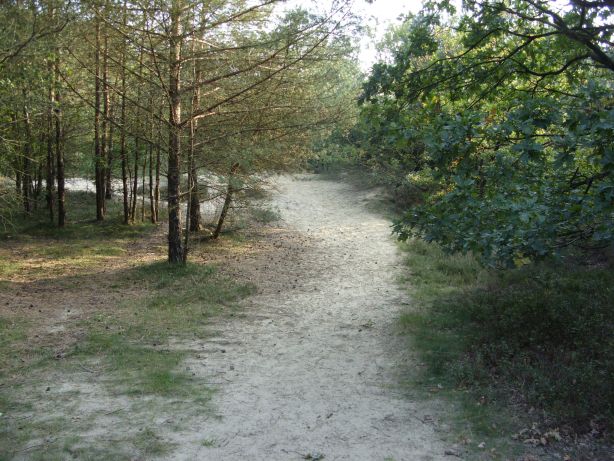
Holle Sand in East Frisia: a nature preserve on the duneland forest, near where my ancestors lived.

Are there any European ancestors who might help us to find a mutually beneficial relationship with the earth in our time? Today I was remembering that this was my original motivation for reaching back to these ancestors. Oh, it has also been helpful to gain a better understanding of how my ancestors fit into the larger story of the colonization of this continent in which I live.

But on a spiritual level, why would I reach for a true connection, if not to ask for help in the struggles we are facing in our time? Much of Australia is burning right now, fascism is running rampant over our country, hurting the plants and animals, and the people of our land, leaders plot for power and violence, and so much is being destroyed.

And I remembered what sparked my heart last spring about my patrilineal East Frisian ancestors. It was a line in a letter, a mocking recounting of a piece of old wives’ advice: “Remain in the land and nourish it.”   I wanted to reach out to those “old wives” to see if they might help me, help us.  During our Ancestor Wounds and Healing workshop in October, I introduced the group to the East Frisian tea ceremony, as part of our ritual of gratitude for the gifts of the ancestors.  We were short on time, and I considered leaving out the tea ceremony, but felt an unmistakable tug from spirit–“No! You must do the tea.”  And so I did.

Two days later I led our group on a trance journey with the intention for each of us to find an ancient ancestor–maybe from centuries ago–for each of us to meet someone who was at one with their land, in harmony with their land and people. So we traveled through time and out of time to make a connection. In that journey, I met my East Frisian ancient many-greats-grandmother, the same one who called for the tea.

When she arrives, I burst into tears and suddenly feel how wounded I am, we are. She is whole, she can traverse deep time and be called upon in any time. I burst into tears and she is loving me, with healing hands, and she knows how all of us have been broken. I felt the holding power of her love to contain the pain of centuries.  She is a healing presence, a witness to it all. She touches my heart, she says, “I can teach you how to laugh, even though the later Germans in your family lost how to feel.” She has a joy deeper than I know. She wants to continue our connection. She says, “Drink the tea ceremony to call me.”  

I was profoundly moved. I didn’t have a name for her that day, but later, a name came to me.  The German/Frisian affectionate name for grandma is Oma or Ooma. But a great-grandmother would be, in German, Ur-grossmutter and I am moved to call this ancient great-grandmother Ur-ma, or Oor-ma. The word also reminds me of the rune Uruz, which represents the aurochs, an ancient wild cattle species, now extinct, that was the symbol of wild strength, persistence, healing, and courage.

At the end of December, Margy and I shared in a rune reading. I used the runes to reach out to Ur-ma, and the first rune I pulled was Uruz.  Sweet.  Then came Nauthiz–which means Need, or difficulty, or struggle. How we are.  Finally I pulled Gebo, which means Gift, and the power of reciprocity which is love.

And so when I reach out to Ur-ma, I drink the tea and I pray: “You have wholeness, we are so broken. Bring your healing energies to our time. We have lost the connection to all beings and the land. We have forgotten our kinship. Help us heal. Help us to love the land, to love the spirit.” And I keep remembering those words, which somehow came down the centuries even so: “Remain in the land and nourish it.”