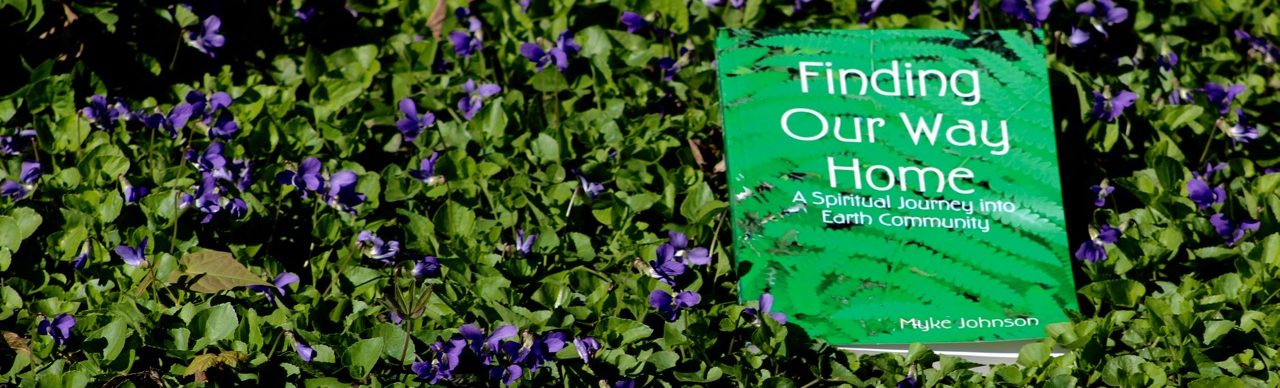
Helpers for Finding Our Way Home

Cardinal

Margy Dowzer Photo

There are beings all around us who want to be called upon, who want to help us in this work of returning to wholeness, this work of finding our way home. I have shared stories of a few of the beings who have helped me. The bright red cardinal singing its beautiful song. The four directions beech tree. The waters of lakes and streams. The ground, the very ground we walk upon, that holds me when all around me everything is falling apart.

Now that I know about the mycelial network, the ground feels more alive to me. But it was always true that something happened when I sat down upon the ground. If I sleep on the ground for a longer period of days, there is a glow that surrounds my body. I remember this from my time at the Women’s Peace Camp, where I was living in a tent for four months. I felt alive in some new way that I began to miss when I went back inside an apartment in Chicago. I forget it easily, but I feel more alive when I am outside.

Jesus has been such a helping presence too. First in my childhood and youth, when he was the one who loved me and who called me to the path of love. But even later, when I was leaving Christianity to follow the path of the Goddess, Jesus was a guide and a friend. If we can experience the divine within every being around us, the theological questions about Jesus seem less of a quandary. People have been asking, over the centuries, Was Jesus a man or a God? I would answer, Aren’t all of us both human and divine?

When Winifred Gallagher wrote about her quest for a spiritual home, she described the essential spiritual practice of the Christian tradition as the practice of love for everyone. She commented that it seemed a lot easier to meditate for an hour every day, than to have to practice love for everyone—it was not an easy alternative. It has been a deep tragedy that Christianity has been used to foster hate and oppression. Jesus stays in my life as the teacher of love, the human example of what divine love looks like.

I want you to know that we are not alone. In this time of great challenges and transitions, there are a host of beings who love life and want to help us find another way to live. As we reach out to them, they are reaching out to us. I understand that every person will have their own ways of connecting to earth, to each other, to Mystery. The mycelial network might not be the thing that helps you to experience the connection between all beings. You might not resonate with Jesus or with trees. But I encourage you to find out what it is that does help you. In these times we need critical thinking and activism and also mysticism.

Just as we can now sit in front of a plastic and metal panel and communicate with people across the world, so there are technologies to communicate across species and across dimensions. The threads of life weave us together in ways we have barely begun to imagine. But I know this: we belong here together and we need each other now more than ever. Poet Barbara Deming wrote:

Our own pulse beats in every stranger’s throat,
and also there within the flowered ground beneath our feet.
Teach us to listen:
We can hear it in water, in wood, and even in stone.
We are earth of this earth, and we are bone of its bone.
This is the prayer I sing.
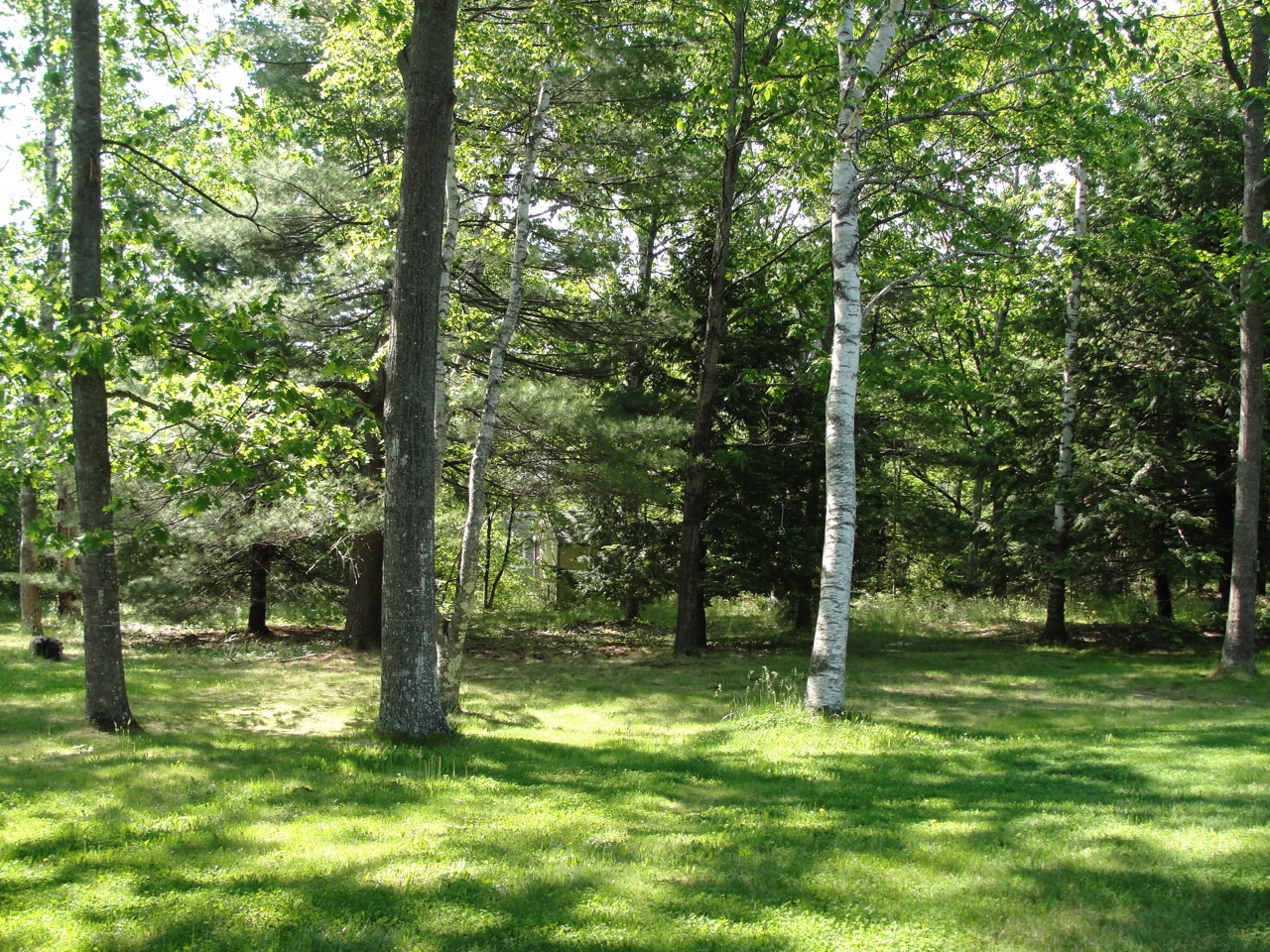
Green Back Yard DSC05265

A Bowl Full of the Universe

There are helpers and elders all around us; there is wisdom, if we open to it. There are animals and plants and fungal networks, and rivers and mountains and the wild winds. We can enter into relationship with all beings, and find help from them for the great struggles of our time. We have not been looking to our relatives and our ancestors for connection, and so we often are unaware of the powers that exist all around us. When Paula Gunn Allen speaks of consciousness as an attribute of being, it helps me to move beyond the narrow vision of my own culture, and claim my own experience of relationship with other beings.

Once, after the difficult ending to a relationship, I was rocking in a hammock on the back porch of the home I would soon have to leave. In that place of loneliness and unknown futures, I saw something like an image, felt a presence. Later I described it in a poem:

How can I trust my senses
in a moment full of loneliness
when the old dark woman appears
gray hair gathered in a bun in the back
squatting near a fire holding
a bowl full of the universe?

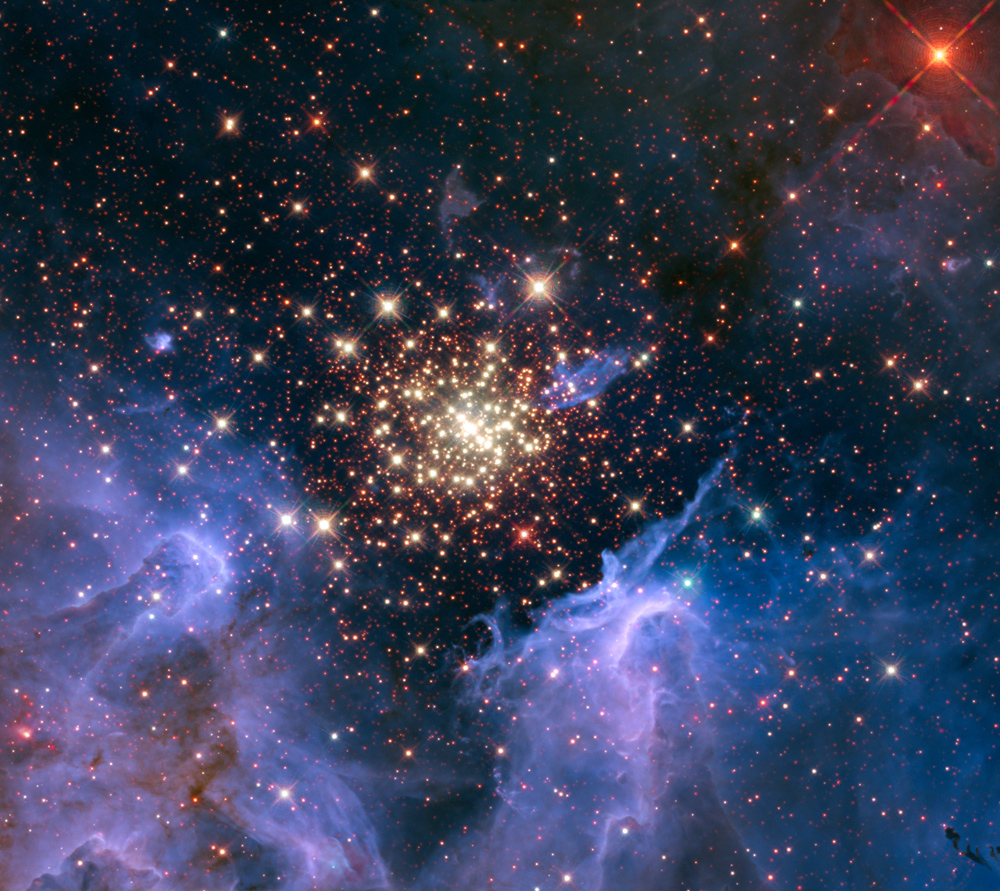
It was an ancient Innu grandmother, my ancient Innu grandmother from many generations ago, and in her hands she was holding a bowl. I could see the darkness and the stars swirling inside.

Image from the Hubble Telescope

Image from the Hubble Telescope

What is a bowl full of the universe? What did it mean? I am continuing to learn about that.

I know that a bowl is a container, a shape that can hold something. When we are facing the great mysteries of the universe, we need some sort of container. That might be the definition of a spiritual practice. We create a container to be able to connect with the earth, with each other, with Mystery. And even though the container is small, humble, it opens up to so much more―the whole universe is there, the oneness of everything, the larger whole of which we are a part, infinity.

The Innu grandmother says to me, “The universe is in your heart, and you are in the heart of the universe.”


How Mushrooms Can Help Us Save the World, Part Two

Photo by Margy Dowzer

Photo by Margy Dowzer

Paul Stamets, in Mycelium Running, How Mushrooms Can Help Us Save the World, talks about the Gaia hypothesis, which suggests “that the planet’s biosphere intelligently piloted its course to sustain and breed new life.” He goes on to say:

I see mycelium as the living network that manifests the natural intelligence imagined by Gaia theorists. The mycelium is an exposed sentient membrane, aware and responsive to changes in its environment. As hikers, deer or insects walk across these sensitive filamentous nets, they leave impressions, and mycelia sense and respond to these movements. A complex and resourceful structure for sharing information, mycelium can adapt and evolve through the ever-changing forces of nature.

In other words, he proposes that there is a vast intelligent aware network in the ground beneath our feet.

It makes me wonder, what is intelligence? Human beings consider ourselves to be the most intelligent species on earth. Our intelligence has given us the power to build nuclear weapons that can destroy life on earth. But we haven’t yet been able to figure out how to avoid war and oppression.

Stamets believes that the mycelium operates at a level of complexity that exceeds the computational powers of our most advanced supercomputers. He sees the mycelium as the earth’s natural Internet.

Traditional Mexican shamans and curanderas use certain mushrooms that create visions and healing. Stamets says that psychoactive mushrooms can cause such affects on the human mind because of the chemicals that we share in common.

On a very practical level, it has been discovered that mycelial mats have the capacity to break down petroleum products into harmless components; they can also clean up nerve gas agents, dioxin, plastics, and radioactive cesium. Paul Stamets believes that mycelia not only have “the ability to protect the environment but the intelligence to do it on purpose.” 

In my faith community we speak about respect for the interdependent web of all existence of which we are a part. Mycelial networks are a visceral manifestation of that web, and we can see and measure their beneficial support for plant life, and for our lives. Scientists like Stamets imagine that if we partner with mycelia, we would be able to greatly accelerate our work to repair the damage we have done to our environment. And that gives me hope for our future.

With these mysterious mycelial allies just beneath my feet, I had the courage to write that sermon about nuclear weapons, and their haunting mushroom clouds of death. And each time I remember this old and vast elemental wisdom, I feel less fear. I feel more clearly that I am part of a larger network of beings who are contributing to the health and wholeness of the planet. As we reach out to the beautiful web of all beings, those beings are also reaching out to us.

How Mushrooms Can Help Us Save the World, Part One

Let me tell you a story. In our congregation we have an auction every other year and one of the things auctioned off is a chance to request a sermon topic. One year the member who won that auction item requested that I talk about nuclear weapons. Well, sure, I said… and then I put the suggestion in my sermon topic folder. Each month as I chose sermon topics for the next month, I would see it there, but I wasn’t sure yet what I would do with it. What could I say about nuclear weapons?

I was reminded of the old story about President Calvin Coolidge. One Sunday, with his wife sick, he went to church alone. Upon his return she asked, “What did the pastor talk about?” Coolidge said, “Sin.” “And what did the minister say about sin?” “He was against it.” Well that’s about what I had for nuclear weapons: I was against them.

For me, a worship service is meant to be about hope. And nuclear weapons are one of the most terrifying dangers that we face in our world. The mushroom cloud image of the atomic bomb represents the potential destruction of most life on earth. So I have to admit, I didn’t feel like researching how bad things were, what new weapons were being created, or who might try to use them. And most of all, I wasn’t sure what I could say next. I never want to send people home from worship with more fear or despair than they came in with. So the topic sat in my folder, and I occasionally added an article or resource to the file; but each month, I’d say, I’ll do that one later.

How do we face the biggest dangers that threaten our world? What gives us courage and hope? Several months later, I came upon an article about mushrooms. It was an interview with Paul Stamets, about How Mushrooms Can Help Save the World.

I have to admit that I had never been a big fan of mushrooms. I tolerated their presence on pizza and in casserole dishes. I had never experimented with the psychedelic varieties back in college. A while ago, Margy started taking photos of mushrooms, as they popped up in our back yard, and that helped me to appreciate their strange and diverse beauty. But I had no idea.

I had no idea that mushrooms were the fruit of the mycelium, a vast underground network of fungal fibers that can stretch for miles. I had no idea that those fibers form one entity called a mycelial mat. I had no idea that a mycelial mat in eastern Oregon was considered by scientists to be the largest organism in the world. It covers twenty-two hundred acres and is more than two thousand years old.

I had no idea that mycelial networks regulate the nutrients of plant life in the forest, transferring sugars from tree species that have enough to other tree species that need more to survive. And most of all, I had no idea that mycelial networks communicate. To do this they use methods similar to those found in the nerve fibers in our own brains; they use some of the very same neurotransmitters that allow us to think.

Photo by Margy Dowzer

Photo by Margy Dowzer

Fractals In the Forest

A fractal is a pattern that repeats itself, from an infinitely small scale to an infinitely large scale. We see in the patterns and shapes of nature that there is self-similarity at all levels.

This has both practical and mystical applications. I learned about one practical application from a documentary called Hunting the Hidden Dimension. A group of scientists concerned about global warming was trying to determine how much carbon dioxide was absorbed by trees in the rain forest. They could measure the carbon capture of a single leaf, but how could they count the number of leaves in the forest?

They had an idea. They started by measuring the circumference of all of the branches on a single tree. Because of the fractal nature of the tree, the branches form a regular pattern, dividing at certain intervals into smaller and smaller branches. By measuring every branch, they could determine the ratio between branch sizes. Then they took it one step further. They measured the trunks of all of the trees within a given area.

Imagine it with me if you will. If we walk through a forest we see trees of all sizes—small saplings, huge old giants—there is an endless variety of sizes all around us, seemingly in a random pattern.

Trees MJ DSC03686But it turns out it is not so random. The ratio of tree sizes in an area of forest is approximately the same as the ratio of branch sizes on a single tree. There is a pattern to it. And by learning the patterns, the scientists could compute how many leaves were in the forest, and how much carbon dioxide they would absorb.

Now when I walk through the forest near my home, I remember this experiment, and look with wonder at the trees around me. What seemed chaotic and random before, is now bursting with new meaning, full of patterns that start to reveal themselves to me, as I gaze with deeper insight. My experience of the trees’ beauty expands, and I feel a growing sense of awe.

I find myself looking for fractal patterns everywhere. This new understanding has changed the way I see the world. And it is not only visual. I can feel the patterns in bark with my fingertips, and I start to listen for patterns in the sounds I hear as well. Next time you look at a spider’s web, or gaze into the clouds in the sky, watch for the fractal patterns.

Our ability to measure fractal patterns in the natural world has also given us the ability to create digital worlds that remind us of our own. Fractal formulas are used to generate computer graphics that look realistically like mountain ranges, and rivers, and forests, and clouds. That wasn’t possible just a few decades ago.

Fractals have been used to design antennas in greatly reduced sizes, which enabled the creation of the next generation of cell phones and other electronic communicators. Fractal geometry is enlarging our ability to create new devices that work better, because they follow patterns that resonate with the natural patterns around us.

Why Fractals Matter-Reading the Book of the Universe

Why should fractal geometry matter to those of us who are not mathematicians? First of all, fractals give human beings a new way to look at the universe. When we can describe something, we can see it better than if we cannot describe it. Because we are better able to see the natural world, fractals enable us to have a deeper relationship to the natural world.

It reminds me of learning to read a book. In order to read, we need to understand the patterns of squiggly lines that form the letters of the alphabet. And then we need to understand how those squiggly lines are combined in multiple ways to form words, and then sentences, and so on. A person who cannot read may look at a book, and it might seem beautiful, or there might be pictures in it to be curious about, but that person cannot understand what it means. When we learn to read the patterns of squiggly lines, the book becomes a doorway into a whole story, and suddenly we have access to a wealth of ideas and thoughts and understandings.

The natural world is like a sacred book; it is the place where we search for truth and beauty and goodness. We might say that the universe itself is our bible. We don’t have to understand the world to appreciate its beauty. Even a baby can laugh with delight at the bright colors of flowers, or try to catch a butterfly. But the more we understand the natural world, the deeper can be our appreciation, and the more its mystery opens up to us. Fractals help us to read the book of the universe.

Fractals give us a way to measure and describe the complex patterns in the natural world. Fractal geometry, in fact, reveals to us the inherent patterning that permeates the universe. A fractal is a pattern that repeats itself, from an infinitely small scale to an infinitely large scale. Complex entities are created from simple designs extended out to many dimensions. We see in the patterns and shapes of nature that there is self-similarity at all levels. Ferns DSC05288

Allies Share Both Sorrow and Joy

Birch light and dark DSC07802If we seek to rebuild our relationship to this land, I think it is also vital for non-Indians to rebuild their relationship with Indian peoples. To do that non-Indians must become committed allies to Indian people’s struggles. Real relationship involves interaction with the whole of a person and community, sharing both sorrow and joy, struggle and celebration.

Indian people want us to move beyond stereotypes and learn more deeply and accurately about Native issues today. They need allies in their struggle against racism and colonization. We can use our advantage and position as people living in mainstream society, to be a resource for Native peoples’ concerns.

When we can learn to share the pain, and share the struggles of Indian peoples, then we also will find ourselves sharing in the celebrations. In her novel, Solar Storms, Linda Hogan begins with a story of an unusual feast given by the woman named Bush. This feast was a grieving feast: Bush was grieving the loss of the young child, Angel, after she was taken away by the white county authorities from their tiny Native community. She held a feast in which she prepared food for her whole community, and then she gave away all of her possessions to them. Hogan writes, in the voice of one who had been to the feast:

…I watched the others walk away with their arms full. Going back that morning, in the blue northern light, their stomachs were filled, their arms laden with blankets, food… But the most important thing they carried was Bush’s sorrow. It was small now, and child-sized, and it slid its hand inside theirs and walked away with them. We all had it, after that. It became our own. Some of us have since wanted to give it back to her, but once we felt it we knew it was too large for a single person. After that your absence sat at every table, occupied every room, walked through the doors of every house.

By this sharing of sorrow, the sorrow became bearable. Native American people are too often bearing the sorrows of our history alone. If we want to share in feast with them, we too must carry the burden of sorrow. Once we let ourselves feel this grief, we realize it is much too large for one people to carry alone. But the more of us who carry this sorrow, the more of us who carry the struggle, the more bearable it will be.

When we open our hearts to the earth, we are opening our hearts to relationship with all who live here with us. We are recognizing the brokenness and the sacredness of each person and each being, each place and each story in that place.

Avoid Spiritual Theft by Doing Our Own Spiritual Work

Indigenous spiritual traditions are inextricably woven into the network of relationships within an Indigenous community and in the particular land in which that community lives. They are a fundamental element of the Native struggle against the destruction of their cultures and homes. They are not meant to be exported piecemeal for some other purpose, however earnest it may be. If we seek to avoid spiritual theft, the best tool we can use is for us to do our own spiritual work. 

If we are seeking to reconnect to the earth, we must remind ourselves that non-Indian people are no less a part of the earth than Indians, even though we are not indigenous to this place. In reality, we all live here on this land and our lives are equally enmeshed with the fate of countless other beings around us. This land, broken as she is, is our only source of food and water. And this land is full of nourishment for us, both material and spiritual. We can love the earth, and be loved by the earth, even if she keeps some secrets from us. Step by step, we must rebuild our own culture’s relationship to the earth. Even though we might learn from the wisdom and experience of Indigenous peoples, no one else can do the work for us.

Photo by Margy Dowzer

Photo by Margy Dowzer

One summer, I learned that by eating local honey, I could help the hay-fever I suffered from in summertime. By eating that local honey I could begin to make a relationship between my body and the plants which grow in that place. There has been a resurgence of interest in eating foods that are locally grown. Along with the environmental benefits, there are also these spiritual ones, this reweaving of a connection with our bodies to a place. It is our connection to a specific place, the place we live, which forms the doorway for us to hear the earth, to find her sacredness.

A sacred understanding of land is not entirely foreign to European culture. Until the advent of capitalism, land was seen in a more communal fashion. Europeans had their own indigenous traditions to connect them to their land, many of which survived even into Christian times. We see traces of this in our holidays even here in this country—the evergreen trees of the winter festival, the foods we prepare for special times of the year. Many people are seeking to relearn these old European earth traditions.

Othila DSC02547

Othila

There is a rune, part of the early Germanic ritual alphabet, called Othila, whose sacred meaning is “inherited land.” It describes the relationship between people and the land on which they live. In Germanic countries, there is still a legal right called the right of odal. It means that a person living on a particular estate has the right to stay and live on that estate after the owner has died.

In 17th century England, there was a movement of people called the Diggers, who were protesting the fencing off of common lands and believed that the land could not be owned by private individuals. A love for the earth has many roots in our European ancestors’ ways.

Rebuilding Relationship with Indigenous Peoples

Penobscot Flag, Photo by Margy Dowzer

Penobscot Flag, Photo by Margy Dowzer

Speaking to non-Indigenous people, if we want to rebuild a positive relationship between ourselves and Indigenous people, we need first of all to learn how to listen to stories of loss and pain. Listening is not about fixing something, or feeling guilty, or giving advice. Listening is about being present and opening our hearts to the experience of someone who has a story to tell.

When I visited Indian Island with the Giving Winds campaign, we listened to Penobscot elder Donna Loring talk about some of the history between white people and Indians in Maine. There are moments when the pain of such listening feels almost too much to bear, but I remind myself how much more painful it must be for the one telling the story. Then I feel such gratitude that someone is willing to share these stories with us.

If we want to rebuild these relationships, it is also helpful to be aware of some of the traps into which we might fall. One trap is denial. Denial is a tendency to minimize the damage, or scapegoat the victim to avoid the pain of what has happened. One example is the belief that Native Americans have benefited by being absorbed into white culture. Another form of denial is the myth that it all happened in the past and it’s over now. Denial interferes with our ability to be present and to listen. For healing to occur, we must acknowledge the brokenness of the bonds between us.

Another trap in our culture today is the temptation to romanticize Indians and Indian culture. I call this trap “wanting to be Indian.” The romantic stereotype is that all Indians are mystical teachers, close to the earth and bearers of a better way to live. One of the most problematic manifestations of this trap is the widespread marketing of so-called “Native American Spirituality.” What is advertised as Native American spirituality is a distortion, fragments of Indian spiritual practices taken out of context. Most Indigenous people are outraged and frustrated by this abuse of their culture and religions.

Janet McCloud, a Tulalip elder and fishing rights activist, says:

First they came to take our land and water, then our fish and game. …Now they want our religions as well. All of a sudden, we have a lot of unscrupulous idiots running around saying they’re medicine people. And they’ll sell you a sweat lodge ceremony for fifty bucks. It’s not only wrong, it’s obscene. Indians don’t sell their spirituality to anybody, for any price. This is just another in a very long series of thefts from Indian people and, in some ways, this is the worst one yet.

I believe this issue of spiritual theft is especially important for those of us who are seeking to reconnect with the earth. We might naturally seek to learn from the people who have honored their connection to the land. And it is important to acknowledge that there is much to be learned from Native peoples. But in our search for help, we can do damage too, because of the context of the broken bonds between us. If we are not sharing the pain and the struggles of Indian peoples, then what right do we have to share in the celebrations?Solstice MJ IMG_0057

These ideas were previously explored in my essay “Wanting to Be Indian: When Spiritual Searching Turns into Cultural Theft” now available online in pdf format.  The quote from Janet McCloud was originally published in Z Magazine, Dec. 1990.

A Moment of Healing on a Broken Land

In November of 2006, eight people from my congregation gathered in Orono, Maine with about seventy other people for a celebration of the Giving Winds Capital Campaign. The invitation had mentioned hors d’oeuvres, but it was more truly a feast. We had corn chowder and salmon patties, bacon-wrapped scallops and stuffed mushrooms, veggies and corn fritters, and blueberry cake and fry bread. We listened to drumming by two young girls’ drumming groups, and heard the thanks of several of the leaders of the Penobscot, Passamaquoddy, and Maliseet tribes. We left with gifts of sweetgrass and traditionally made herbal insect repellent, and beadwork pins.drumming

We heard the story of how the Giving Winds campaign came about. It began in brokenness. The Maine Council of Churches had decided a few years before to oppose a referendum that would have allowed the tribes to pursue casino gambling as a means to economic development. Representatives of the tribes had come to a council meeting to urge them to reconsider, and to speak about the difficult financial issues faced by their communities. But many members of the council had ethical principles against gambling, and they voted to go ahead with their opposition.

It was another painful moment in Indian relations with the non-Indian community here in Maine. But Tom Ewell, then director of the Council of Churches, did not want it to end there. He did some research and discovered the Four Directions Development Corporation that was just getting started. It was seeking to provide home loans and small business loans to Wabanaki people from the four tribes in Maine. Indian people had difficulty gaining credit, because if their homes were on Indian land, they could not be used as collateral for traditional mortgages or home improvement loans from a bank. Four Directions hoped to fill this gap, and to provide financial education and support for start-up businesses.

And so the Maine Council of Churches partnered with Four Directions to create the Giving Winds Capital Campaign. Congregations and individuals across Maine donated money and made low- or no-interest loans that were matched by the Federal Government. The campaign worked to build trust and connection between Indian and non-Indian people in Maine. When we ate with each other at the celebration in Orono, it was a moment of healing on a broken land.

I wanted to share this story because all too often, people feel it must be impossible to heal from five hundred years on a broken land. But I don’t believe it is impossible. Difficult yes, but there are simple steps we can take that move us in the direction toward wholeness. If we can learn to share the pain and share the struggles of Indian peoples, then we also will find ourselves sharing in the celebrations. Sweetgrass