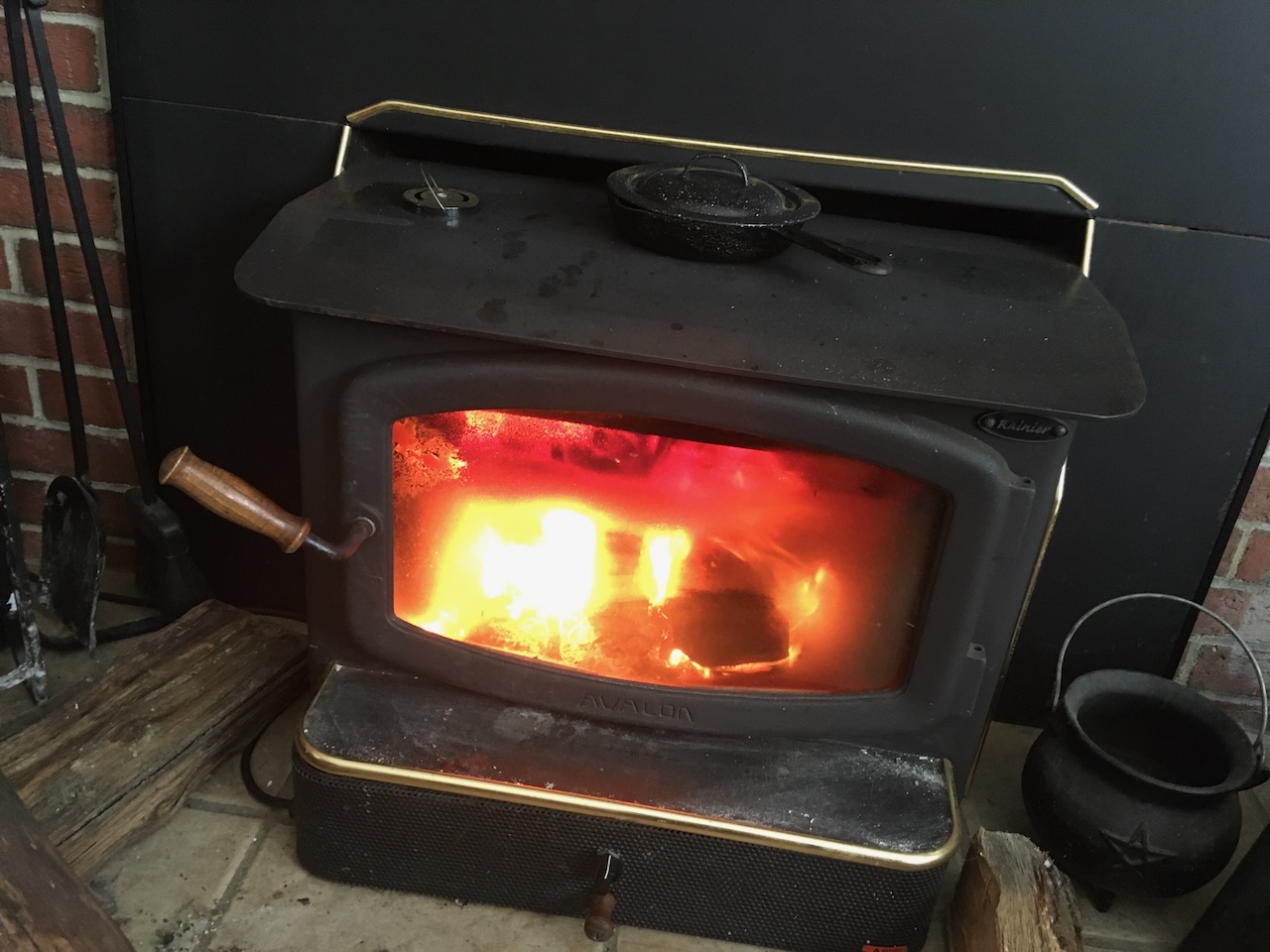
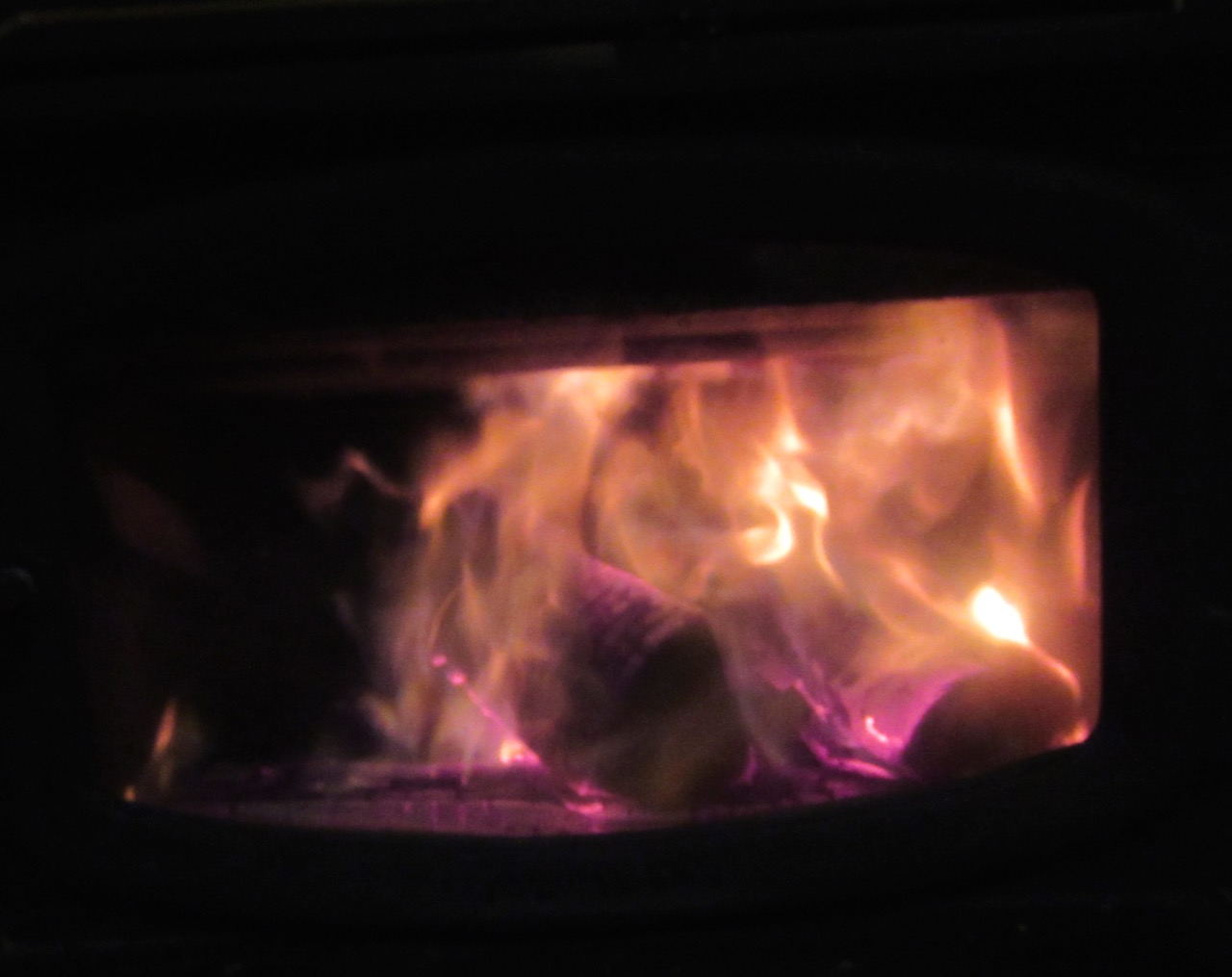
In the midst of a 55-hour power outage, before I knew how long it would actually be, I was sitting in front of the wood stove which had kept us warm for the last couple days. I was thinking about how fire is one of the sacred elements, and yet, I hadn’t been close to a fire recently except during our prior power outage and this one. (Yes, we have now had two power outages in the last two weeks! The first lasted 40 hours.) These power outages are exhausting for us, with our chronic fatigue anyway. But we are so lucky to have the wood stove which heats our house well, and on which we can even cook food, with our tiny cast iron pan or hot water kettle.
Tending the stove is a constant process, kindling a fire in the morning, adding wood, adjusting the flue, adding another log each hour or so. We were running out of wood, except for some poorly seasoned crabapple wood from when our tree fell during a storm last year. But our neighbor kindly said we could have some of his. I am grateful for our neighbors. That was a gift from this storm. The April nor’easter covered all the trees and branches with heavy wet snow that apparently caused over 300,000 outages across Maine, which is why it took so long for power to be restored. Still, it was beautiful outside.

We were without electricity, television, internet, all the usual ways we connect with the world. My phone has limited data (all used up) so I couldn’t use it to connect except for texts and phone calls. We have an old landline phone that we pull out to use because it doesn’t need electricity like our regular landline phone. I even had a great conversation with an old friend on that landline phone. But I realized how much I rely on the internet for connecting with people, for seeing news, for entertainment. Being without power was tiring, just to keep ourselves warm and fed, but being without the internet was so boring.
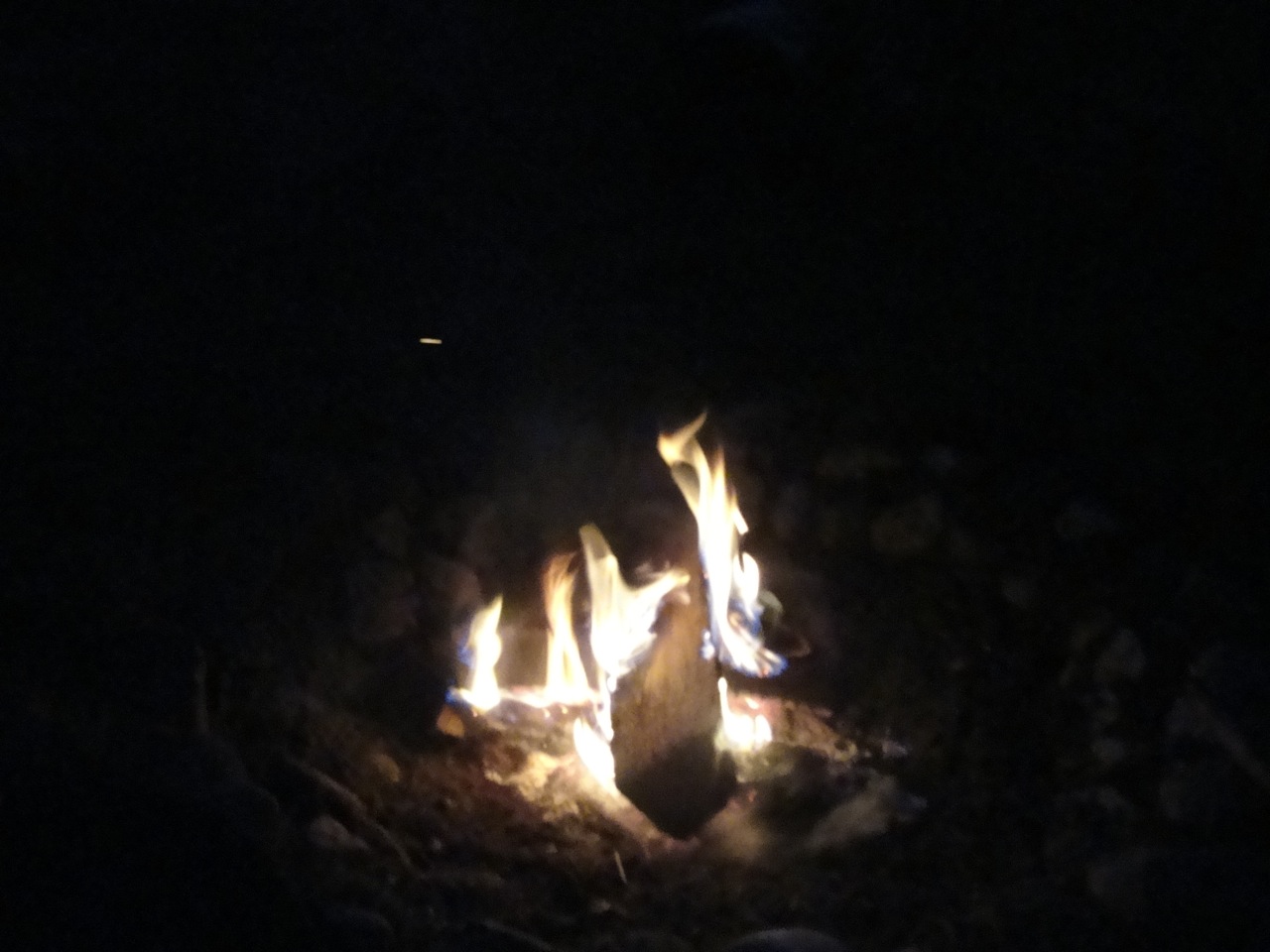
As I was sitting in front of the fire, on the third morning, I tried to be present to the day, to stop wishing for the power to come back, to accept the day on its own terms. It was then that I thought about fire, about the fires I had sat around, and even danced around in prior times. I thought about the rituals we had done in our own back yard around our own fire circle. Neglected fire circle now. We didn’t light it all last summer. The weeds have grown up around it. It takes some energy to light and tend a fire. I know I haven’t had much energy during the past years. But now I was, by necessity, tending a fire, and by gratitude and intention, remembering that fire is sacred, is beautiful.
When I consider it, it seems like electricity has taken the place of fire in my everyday life. I imagine that electricity might also be considered sacred, although it is more invisible. It heats our home, cooks our food, keeps our food preserved, washes our clothing, heats our water. It also enables these far away connections for which I have much gratitude. It brings stories and news and laughter. I was relieved and happy when the electricity came back on.
But I am also grateful for the quiet days of the storm that brought me back to appreciating sacred fire.



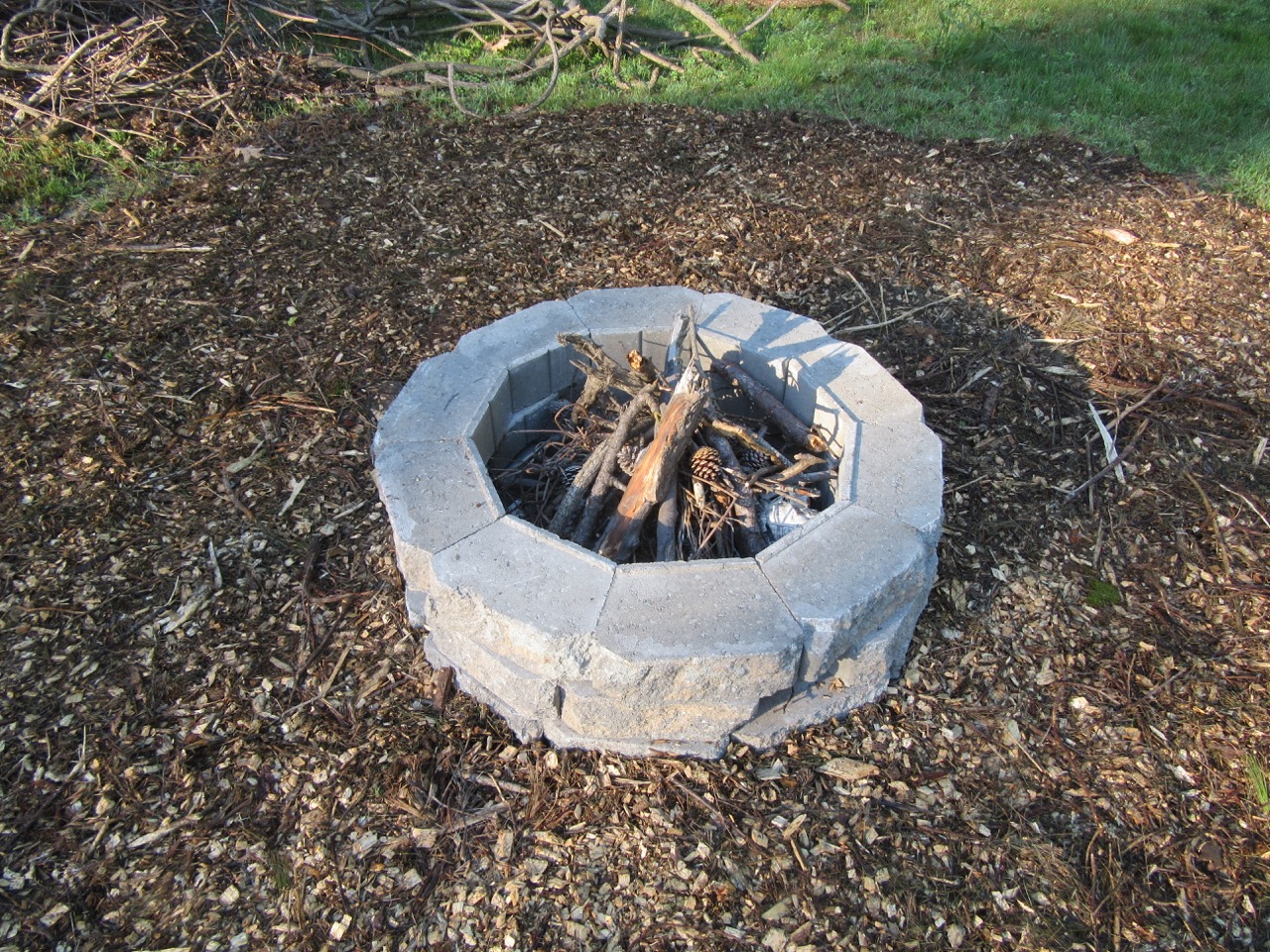 Coming back to the Permablitz of June 24, another project that was completed that day was a fire circle. As Lisa Fernandes said, every home needs a place to burn things. So she was our team leader for the fire circle, and gathered in the layers of community for the element of fire. With a community of workers!
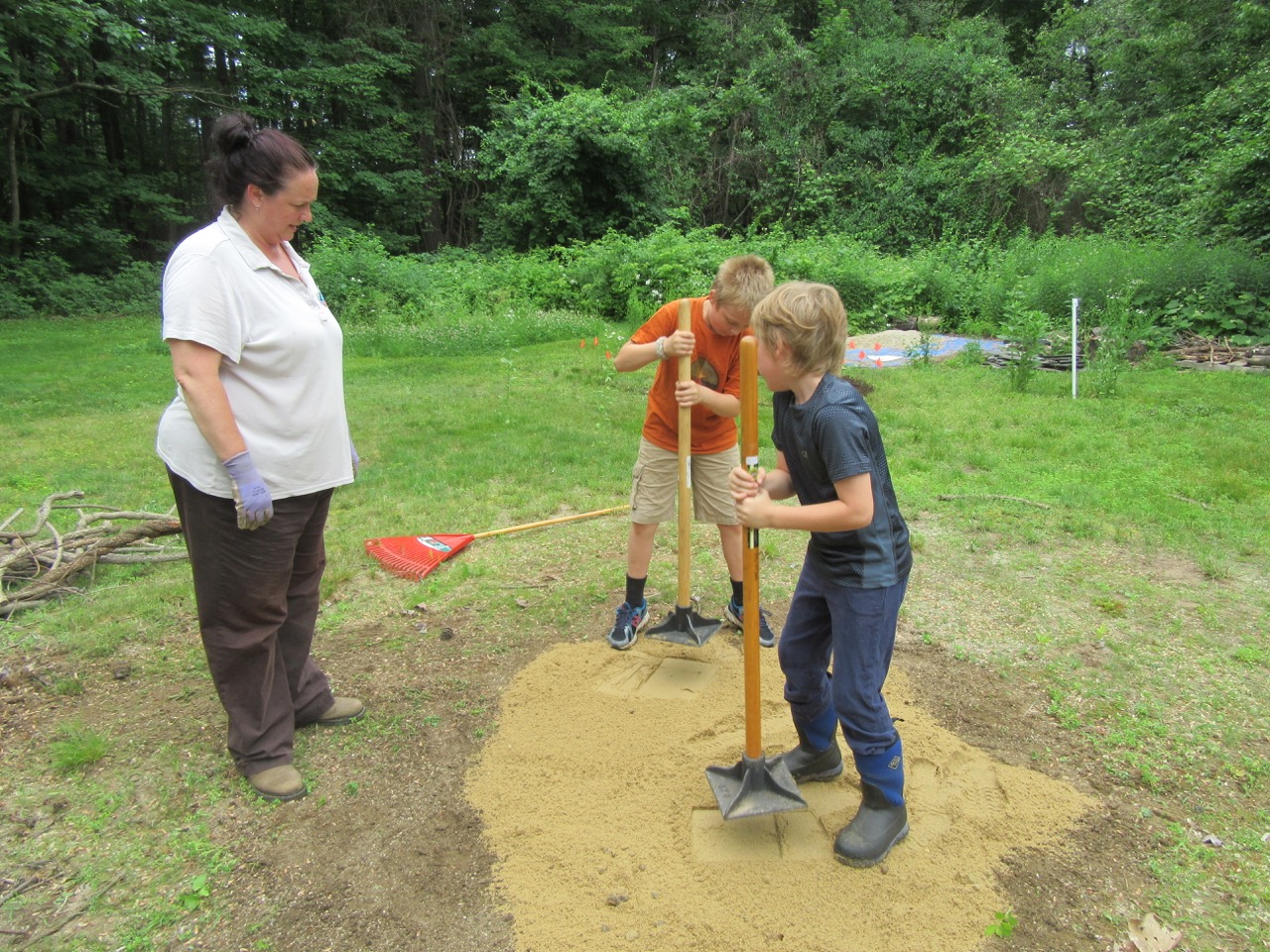 First they had to remove big pile of bittersweet brush (that we will eventually burn) from the spot we had chosen. Lisa and Kristen gathered together the stone blocks that would be used. (But there could have been other helpers–at that moment I was over in the garden beds.) Then they prepared the ground with a layer of sand. Our youngest permablitz members got into the sand-tamping process, as well as Lisa and Kristen.
 Finally, they brought a whole pile of pine mulch for the seating area around it, and then laid some bittersweet brush and pine cones for our first fire. Permaculture is not just about a way of gardening but also about how communities care for each other. Its three principles have been summed up as earth care, people care, and future care. So having a place to gather with others is an integral part of our permaculture design.


 Finding Our Way Home