Am I in the River?

If my search for greener housing is a worthy intention, then there is no particular outcome that must happen right now.  The energy carries its magic and I will learn from whatever I experience on this path, and it will lead me in the direction of that intention.

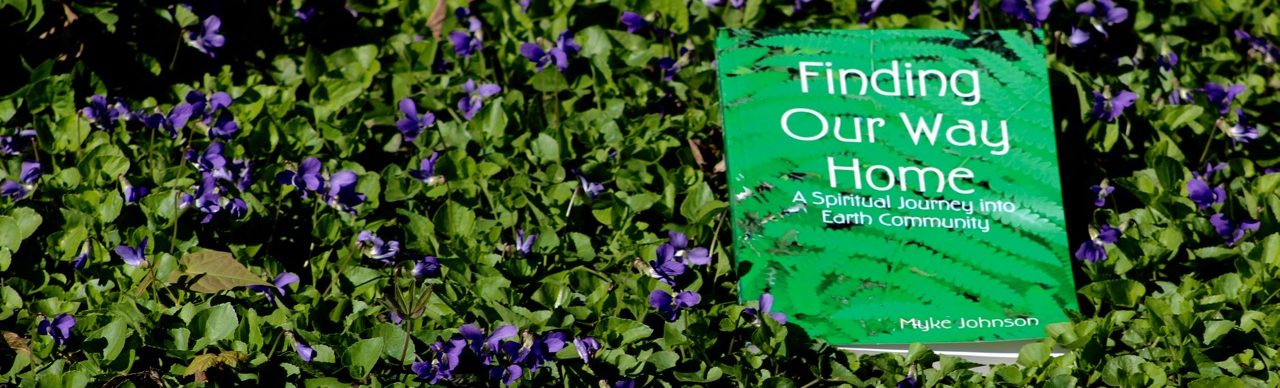
Similarly, if my work on the book, Finding Our Way Home, is, at root, a journey into Earth Community, then there is no necessary outcome.  Whether it is published or not, whether it is read or not, on some level it doesn’t matter at all. The intention creates its own magic and the journey will unfold in its own way and time in the direction of Earth Community.

Last week I was reading architect Sarah Susanka’s book, The Not So Big Life, and found these words:

“Every moment brings forth an untold number of alternative possibilities each of which has the potential to give birth to a multitude of life experiences. There is no one way in which things need to unfold… How perfectly the universe provides when we don’t intervene by trying to manage and control the process.”

At that time, we were waiting for news about cost estimates for renovations and building work that would need to happen on a house we’ve been exploring for the last four weeks. Her words helped to calm my heart, and then give me some equanimity when we learned that the work would be more than we could afford.  We had to let go of that particular set of outcomes.  Not without some sadness. It was one of the homes that made our hearts sing. But I remembered that there is no one way that things need to unfold.

There are many moments on both of these journeys when I feel stuck or impatient, worried or disappointed, aching for things to turn out in a particular fashion.  But today, I asked myself the question–Do I trust these intentions?  Do I trust the flow of the River of Life?  I remember the old adage–Don’t try to push the river. Let it carry you. I asked myself, Am I in the River?

And yes, I trust these intentions.  Yes, I trust in the flow of the River of Life. And yes, I know, deep in my being, that I am in the River.

Swan in the River

Finding Our Way Home

I am acutely aware right now of the parallel journeys I am walking these days. The central purpose of this blog, and of the book I am hoping to publish, is to articulate the spiritual journey into earth community, finding our way home to connection with earth, with each other, and with the Mystery within and between all. And now, Margy and I are trying to “find our way home” in a literal way, to a house that can function more in tune with our ecological desires. Experiencing the ups and downs of that process–the search for greener housing–teaches me so much about the spiritual journey of finding our way home to earth and spirit and each other.

I realize that it is a journey of grief as much as of beauty.  It is a journey of letting go of the things we thought we needed, some of our accumulations of material property, to make room for a simplicity of heart. It is a journey of following the deep desires of our hearts, and sometimes only learning what those desires are when we feel the pain of losing something we didn’t know we desired. It is a journey of many searches, many turn arounds, many disappointments, and yet some surprises that delight.

It is a journey in which we get to know kindred spirits along the path. It is a journey of learning what kinds of systems actually help a house to function more gently on the earth, and what kind of systems help us as human beings to live more beneficially with our planet. It requires great initiative and stamina, but also demands that we cultivate patience, and that we wait in darkness as we experience the contradictions between what is, and what is not yet–what we dream about.

Today I voiced to myself the realization that the spiritual journey into earth community will likely not be completed in my own lifetime. It is a collective journey.  I can give it my voice and my love and my energy, but it will require so many more voices and so much energy from so many people. But most likely I will live in this liminal zone–this space between the world as it is, and the world that is not yet–most likely I will live here all of my days.

So I appreciate more deeply all that I am learning in our search for greener housing. Because experiencing this smaller liminal zone is bringing to me what I need for the larger liminal zone.  Most particularly today, I appreciate that it cultivates in me an open heart to all of the emotions it brings–the anxiety, the excitement, the hope, the disappointment, the grief, the emptiness, the beauty. So when I write of such emotions in this blog, there is a kind of equanimity in me, like a river flowing through my heart. I am glad to be on both of these journeys of finding our way home.
Path in Woods

Letting Go and Giving Away

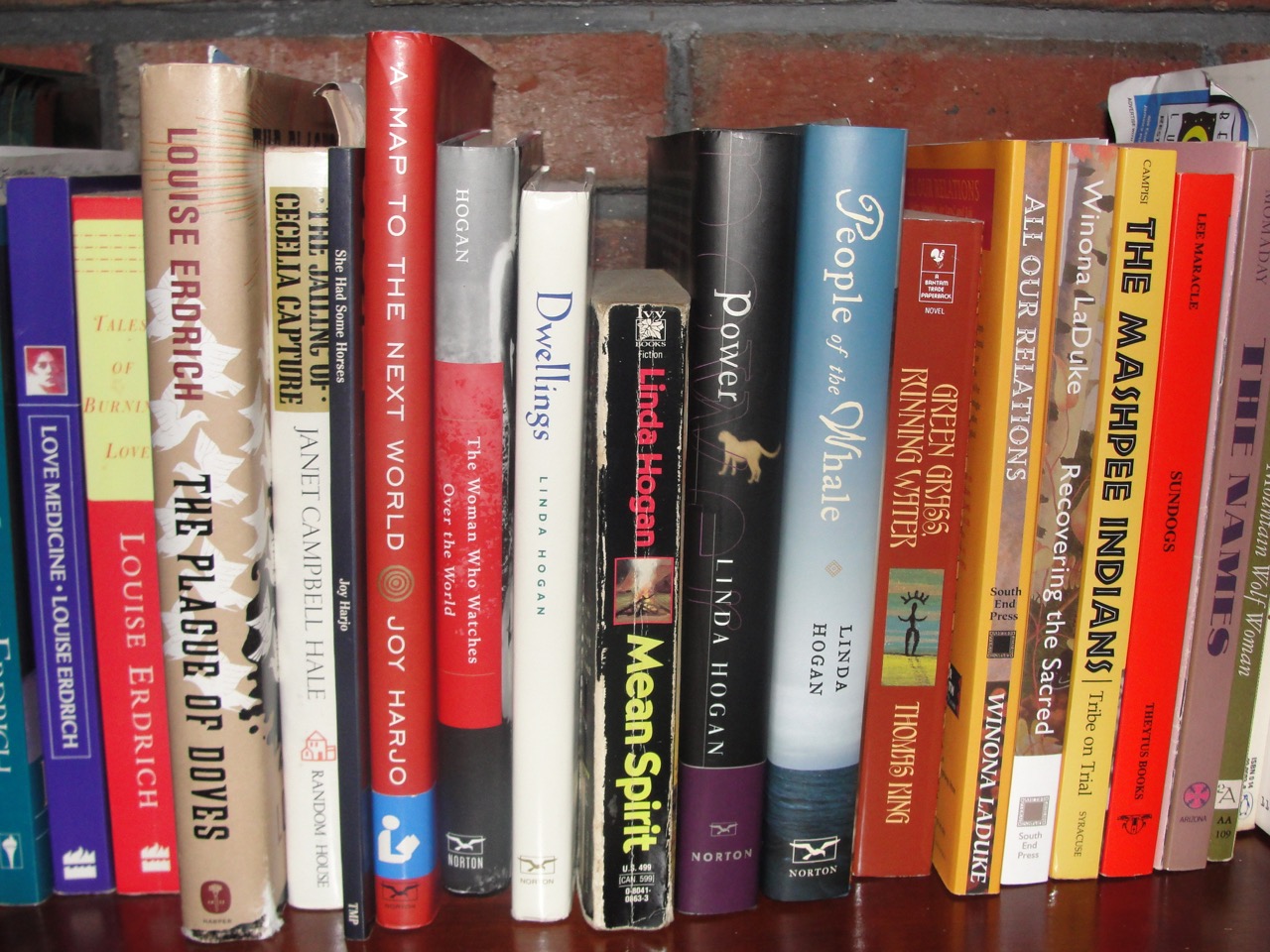
Books on Shelf DSC00283Even when there are no new houses to look at, there is plenty to keep me busy. Another side of searching for greener housing is getting ready for the move into a smaller place. This means paring down what we have collected over the years in a space that has abundant room for keeping things.

First stop: Books. I have shelves full of books that I have read and loved for many years. But I also have developed an allergy to any book that is more than a few years old. If I want to read one of my older books, I have to put on a mask and gloves, and even then I might get a headache from it. So perhaps now is a good time to let go of most of these old friends, and to pass them along to others who can enjoy them.

I had to take a deep breath when I thought about actually giving away my books. I decided to take pictures of the books on the shelf, because it makes me happy to see the titles there. And I still have to keep a few of my long-time, life-changing favorites. Even with a mask, I might need to read them again. I will also keep the books I am currently using in my work. In other words–I will still have a lot of books, just not as many as before.

I learned that our local independent bookstore, Longfellow Books, will take used books in trade for store credit. You can only bring in one bag or box at a time. My first grocery-size brown bag netted about $14 in store credit. It’s not a way to get rich, or even get very many new books. But it is a way to re-use and re-cycle and get a few new books, and support a great local institution.

I also did some research to see if prisons would accept book donations for their libraries–but I learned that certain ingenious addicts had figured out a way to import drugs into the prisons through book donations from their friends–so no more donations are accepted from individuals. But then, I heard about a Native group collecting books by Native authors to donate to the prison for the benefit of American Indian prisoners in Maine. I can’t imagine a better home for these particular treasures. I gathered two boxes that I will drop off.

I now know that the Portland Public Library will take book donations, and that Preble Street accepts donations of books and magazines for its center for homeless youth and adults.

There is a kind of joy in simplifying one’s life, in having fewer possessions to haul around. But it is an even deeper joy to think that someone else might be inspired through these books, by insights and stories that were so important to me on my journey.

The Search for Greener Housing, Part Three

House Search #1 DSC09847Following our dream of finding greener and accessible housing, we have now looked at six houses. The first was in a great location (halfway between the houses of two friends!) and had an amazingly private back yard, despite being right in town, though it was hard to get to the yard from the house. It had an almost south facing roof, but narrow hallways, and we couldn’t imagine how we could make it accessible without major reconstruction. Plus, there was a tenant in the basement who had lived there over 25 years, and the house wouldn’t have worked for us without the basement space. Bad karma?

The second house had such great character–it was a house we would love to live in. There were blueberries and raspberries in the yard, which we were told we could pick, and so we did. House Search 2 DSC09736There were gardens and a hoop house for extending the growing season. Lots of windows, sunny, and though it was a bit out of town, it was close to a lake, which was a nice bonus. There was not quite as much work to make it accessible, (though still some) but it was a very old house, and there was water along the edges of the basement–along with a mildew smell. And because of the unique shape of the house, it might be hard to insulate and put up solar. Regretfully, we decided it was too much to take on.

The third house had a great open living/dining/kitchen area, a lovely back deck, and also a great yard–though the very back of it fronted onto an in-use railroad track. It looked like we could put solar on the garage. But the bedrooms were dark and felt small, and there were two very tiny bathrooms that would have to be remodeled into one. We talked about whether we could put in more windows. Also there were a lot of steps to the front door.

The fourth house was on a busy street, too small, and not really worth looking at.

The fifth house was fully accessible! It had a lovely open kitchen/living area, a great deck, and nice bedrooms and bathroom. BUT–it was larger than our current house, and so that didn’t fit our goal of downsizing and having fewer expenses. They said it had been insulated, but it had used quite a bit more gallons of oil over the season than where we are now. However, it was great to see what someone else had done for accessibility and beauty.

The sixth house inspired a long conversation with our green-building savvy real estate agent. (That was one of our practical steps–to find an environmentally experienced agent!) The house was in great shape, with a lovely living room with a fireplace, a big mud room, two nice sized bedrooms on the first floor and extra finished space in the basement. It had a one car garage that probably could have been expanded to two ($), we’d need to remodel the bathroom for access, widen a doorway–and once again, it was an odd-shaped roof, so solar might be more expensive. Plus it had these great old cast iron radiators along the baseboards, but if we went electric they would all have to come out with much ado. And even with a lot of work, we probably couldn’t get to zero-carbon in this house, would have to keep using oil.

Our agent suggested that with all of these houses we’d seen so far, we were trying to squeeze ourselves into a house that wasn’t really quite right for what we wanted. Each one would require a lot of renovations in addition to solar and air-source heat pumps and insulation. It is an emotional up and down–excitement over houses that seem worth seeing, and in some ways are so close to what we want, or have such nice qualities, but then the disappoint that they don’t quite work. AND tomorrow could mean another house comes on the market that could be just right.

How Everything Changes

Since my last posting, so much has happened with the book that it is a new being.  Last summer I cut up my draft, and rearranged everything, cut many things, and shaped it into a new kind of flowing.  I also update the sub-title, and decided to use that for the blog as well.  I am on sabbatical now, and revising and editing, and trying to begin a book proposal to find a publisher.  The revising and editing is a joyful process, but the proposal is very hard.  It is a great challenge to the ego–who am I to share my words with the world?  Hard to describe the book in a few words, hard to describe myself in a few words, hard to imagine how to “market,” when what comes up in my heart is the desire to transform the world so that we rediscover our connection to all beings.  The process of writing has also brought me more deeply into the brokenness we live within.

I have been thinking I might come back to some occasional posting here, just to remind myself of the marvelous wisdom all around us.  Today I am excited about a book by Robin Wall Kimmerer which I just recently started reading, called Braiding Sweetgrass: Indigenous Wisdom, Scientific Knowledge, and the Teachings of Plants.  I felt such a great sense of kinship with the writing in this book, and inspired by the stories she tells, and the possibilities of learning from so many of our fellow beings on this earth.  I have read several chapters so far, and am savoring each one.  Get this book!

New Ferns

New Ferns

We Are Already Connected

We have much farther to travel on this journey to renew our connection with the earth, with each other, and with the Mystery at the heart of life. There will be troubles to endure and beauty to behold. What we are becoming together is still to be revealed. This is a journey of our time, of our planet, of all the people and beings who live here together. Most importantly, we must remember that we are not facing these challenges alone. That is what I learn from the mushrooms. We are not alone. We are already connected to the earth, to Mystery, to each other. 

Because we are all connected, any small action that we take has the capacity to affect the wider network. When we begin to honor and celebrate our connection with even one other being on this planet, something reverberates through the whole web. When we express our gratitude for the water we drink, and do our part to preserve its cleanliness, we are nurturing the web of life. When we share our resources with those who have less, we are nurturing the web of life. When we listen, really listen to each other’s differences, we are nurturing the web of life. When we listen, really listen to the water, the wood, and the stone, we are nurturing the web of life.

We are trying to wake up to what already exists. We are learning to know the deep truth that we are already at home.

So I returned to the river, I returned to
the mountains. I asked for their hand in marriage again,
I begged—I begged to wed every object
and creature,
and when they accepted,
God was ever present in my arms.
                                           Meister Eckhart

Branches MJ DSC03740

Meister Eckhart quote is from “When I Was the Forest,” Love Poems From God: Twelve Sacred Voices from the East and West.

A Meditative Journey Into Your Own Emptiness

Walking MD DSC05318

Margy Dowzer Photo

I invite you now to take a small journey into your own emptiness.  I invite you to sit comfortably and notice your breathing.

Imagine that you are walking at a leisurely pace down a path in a meadow.

Ahead of you, you see an old oak tree by the path.  As you slowly come near to it, you find a pile of stones in the path blocking your way.Stones in Path MJ DSC04228_2

I invite you to take a minute to pause and remember the unfinished projects in your life, the clutter you want to clear away. Imagine them like these stones in the pathway.

As you remember each project, imagine that you lift a stone from the road, and place it in a huge pile under the oak tree.

After a few minutes, if you haven’t finished clearing all your projects and stones, I invite you now to move just one more stone under the oak, to represent all the rest.  

Then slip around the outside of the path to continue on. And imagine the wind of your breathing gently blowing over the top of the stone pile.

Now you are walking further on the trail, past the oak tree, through a field. Ahead of you, you notice a majestic willow tree next to a peaceful brook. As you reach the brook, you find a large empty basket floating in the water.

I invite you to take a minute to notice the unresolved emotions you carry in your heart, the old conflicts and entanglements. Imagine these old emotions like objects in a back pack, weighing you down.

As you notice each old emotion, take it out of your back pack, and place it gently in the huge basket in the brook.

After a few minutes, if there are still more unresolved emotions in your heart, I invite you to place one more object in the basket, to represent everything else you cannot resolve at this time.

And now imagine the water of the brook gently taking away the basket in the wind of your breath, until you can no longer see it.

River MJ DSC00578

Continue on the trail, past the willow tree. Ahead of you, you now see a garden of rose bushes, with brilliant red flowers, and thorns. As you come close to the roses, you see that they are in a circle, around a large compost heap.

I invite you to take a minute to notice all the ways that you try to get other people to behave according to your expectations. Notice the ways you try to control, to be effective, or to be right.

Red Rose MJ DSC00893Imagine each of these maneuverings like old rotten fruit in your backpack. As they come to mind, toss the rotten fruit lightly over the roses and thorns, into the compost.

After a few minutes, I invite you to take your backpack itself in your hands, to represent all that is unconsciously driven in your heart, and toss it too over the roses into the compost.

Imagine that the roses are growing taller and more beautiful, and they are swaying slightly in the wind of your breathing.

Then you continue on the trail.

Ahead of you there is an apple tree. Under the apple tree there is a shady spot.

I invite you now to think about all the roles you fill in people’s lives. Imagine each of these roles as a heavy coat you are wearing.

As you think of a role, take off that coat, and place it on the ground beneath the apple tree.

Finally, see yourself in a comfortable summer outfit. You have nothing to carry.Apple DSC01750

You reach up and take a bright ripe red apple from the tree. You take a bite, and it is sweet and crisp. You sit down on the ground cover formed by the coats.

You hear the wind of your breathing blow like music across the grass. It is enough.

Emptying Into Wholeness

My journey into emptiness brought me four kinds of emptying: first, to clear away some outside clutter of unfinished projects; second, to let go of the inner residue of unresolved emotions; third, to let go of habits of character, tools of maneuvering that kept me from merely being with myself and others; and fourth, to let go of the roles I occupy.

Perhaps by numbering these steps, I give a wrong impression that the journey was linear or planned out. As I looked back over my journal writings, I found a winding and twisting path, with bits and pieces of each of these interspersed with the others.

Thomas Merton writes in one of his journals:
“In order to arrive at what I cannot understand, I must go by way of that which I cannot understand.”
 

I started out on the journey with a hunger. I did not plan the four kinds of letting go. Rather, I encountered them in the pathway, as I meandered down the road, led by my hunger to find the heart of my own soul. If you took a journey into your emptiness, it might be completely different. But perhaps, by my sharing, you might recognize a few turns along the path.

The journey into emptiness led me into a sense of wholeness, a sense of being with and in my complete self. A sense of openness and relationship to larger being. I didn’t stay there. I got busy with work again. But I learned that I need that periodic emptying in order to be happy in my life, and to be happy in my work. That emptiness is the source of creativity and insight and serenity. That emptiness is the place from which to experience Mystery.

Open Water Crosby MJ DSC05331

Letting Go of the Roles We Play

The fourth step on my journey into emptiness was to let go of the roles I occupy in other people’s lives. One of my roles is to be a minister. Part of being a minister is to carry the needs of other people about whom I will be for them. One day, I may help someone with a painful situation, and to them, I become the epitome of kindness and wisdom. That very same day, however, I might not have time to answer another person’s call. So they call me again to tell me how upset they are—at that moment, for them, I may feel like the epitome of an uncaring world.

All of these emotions are perfectly legitimate for people to feel. After the first call, it would be easy for me to believe that I am wonderful; after the second call, it would be easy to believe that I am horrible. But if I pay too much attention to these outer perceptions, I lose sight of who I really am, in the haze of trying to be what everyone wants and needs.

This is not only a hazard for ministers: all of us have roles we play for other people, expectations placed on us as workers, as leaders and followers, as parents and children, as lovers and spouses. We wouldn’t be ourselves without our roles, but there is a self beneath the roles.

One day, while writing in my journal, I imagined that I slipped out of my roles, as if I were air or water being sucked right out of a suit of armor. I felt astonished that I could so simply leave behind judgment or praise, and find myself like one hovering behind all the roles I usually occupied. It felt peaceful in that space. I was a spirit that was free to stretch and breathe. In that airy space, I caught a glimpse of my deeper self: I felt myself a spark of light, a caller of spirit, beloved of the larger Mystery. I wanted to be silent, to breathe, to give thanks.

Later, when I was walking on the beach, I saw an empty crab shell. I realized that crabs teach us a wonderful lesson about letting go of our roles: they withdraw from their shells at regular intervals—whenever they have grown too tight—to start fresh and soft again. The roles, like the shells, are good things. But in the journey of the soul, we need to slip out of them periodically, or we will be unable to grow.

Air Balloon DSC04664

Clearing Out the Clutter in Our Character

Fence DSC03309As I continued on my Journey into Emptiness, I discovered a third kind of clutter, which might be identified as the clutter in our character. This is made up of all the tools and maneuverings that we use in our relationships with others.

Does every vacation—for those of us who are partnered—have to include at least one big argument? Mine seem to, and they unfailing arise out of habits that might have some usefulness in completing work projects, but not in being with the one I love.  My colleague, the Rev. Barbara Merritt, drew my attention to the advice of modern theologian, Richard Rohr, who claims there are three things we need to let go of here: 1) being in control, 2) being effective, and 3) being right. Then she told a story that I could have written myself. She said:

Having just read that list, I was a passenger in the car as my husband drove us to the movies Thursday night. I couldn’t help but notice that he’d taken a very slow and, I believed, inferior route. I shared this observation with him. He reminded me that I was not driving (number 1, I was not in control.) I replied that he was not being as effective as was possible (I wanted maximum efficiency) and finally I comforted myself with a smug sense of being right. In less than a minute, I had violated all three precepts of ‘letting go.’ I had struck out.

One day Margy and I were driving to the movies, and I managed to strike out in just exactly the same way. From my point of view, we were rushing to get to the movie, and she was foolishly taking a longer route. There was nothing intrinsically unpleasant about the journey, yet I was worried about wasting time on the way to the movie. I was attached to control, effectiveness, and a sense of myself as being right.

Antoine de Ste. Exupery, in The Little Prince, tells us that it is the time we waste on our friends that makes them so important to us. Of course, there is a paradox here. Being with friends is not really a waste of time. But we cannot enter that time with productivity or effectiveness in mind. Wasting time is the essence of a playful spirit. We are not trying to gain anything, grow anything, accomplish anything. We move from doing some thing, to being some one.

On the journey into emptiness, the third step was to let go of these compulsions of my character, and to waste time. Perhaps because I am partly introverted and partly extroverted, I needed to waste time both alone and with others. I needed unstructured solitude, and I needed unstructured time with friends.

How often do we just take time for being with friends? After one such dinner conversation, I wrote in my journal: I feel saner, restored to myself. This is what I am looking for, finally, this sense of being restored to myself. In order to be in the present moment with others, I needed to stop doing and doing. I needed to let go of control, to let go of being effective, to let go of being right.


The quote from the Rev. Dr. Barbara Merritt was from a sermon “The Spiritual Practice of Letting Go” preached February 25, 2001, at First Unitarian Church in Worcester, MA.