Linda Hogan’s Solar Storms

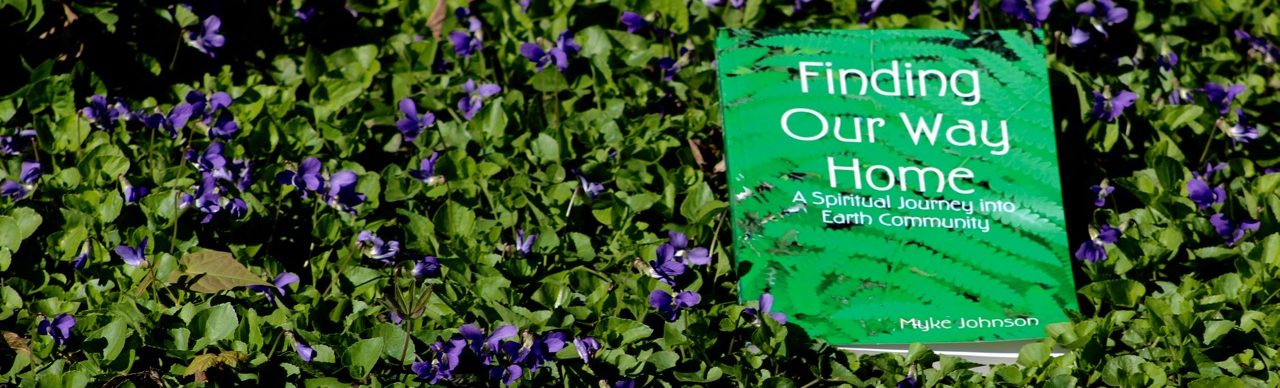
My favorite novel of all time is Chickasaw writer Linda Hogan’s Solar Storms.  Published in 1997, it is the story of Angel, a girl who was taken from her Native relatives as a tiny child and raised in foster care, after being abused by her mentally ill mother.  At 17, she comes back to find her grandmothers and learn about who she is.  During this time, people in her small village discover that hydroelectric dams are planned for their ancestral homeland in the north, so four women travel by canoe to help in the struggle against it.  I first read this book when I was working (with Massachusetts “Save James Bay”) against the hydroelectric dams that were being built in Quebec, and I learned later that Hogan had drawn from that situation in creating her fictional account.

But this brief description of the plot can’t do justice to the many layers of poetry and meaning that are woven into her narrative.  I learned about what it might mean to be deeply connected to a place–to be indigenous to a place.  I learned that loving the earth isn’t just about loving the planet, but rather about loving a particular island or river or peninsula or forest.  I learned that we can love the earth even if we are not indigenous, even if the earth keeps some secrets from us.  It helped me along my journey to find my own connection to the earth.  The elder Tulik tells Angel, “Here a person is only strong when they feel the land.  Until then a person is not a human being.”⁠ [p.235]

Linda Hogan tackles issues that face Native people–including the taking of children and the taking of land–and brings alive for all of us the heartbreak and courage that are born in this brokenness, and the beauty that may be created as people move toward healing.  As we face more and more destruction on our planet, we all so much need to learn to “feel the land.”
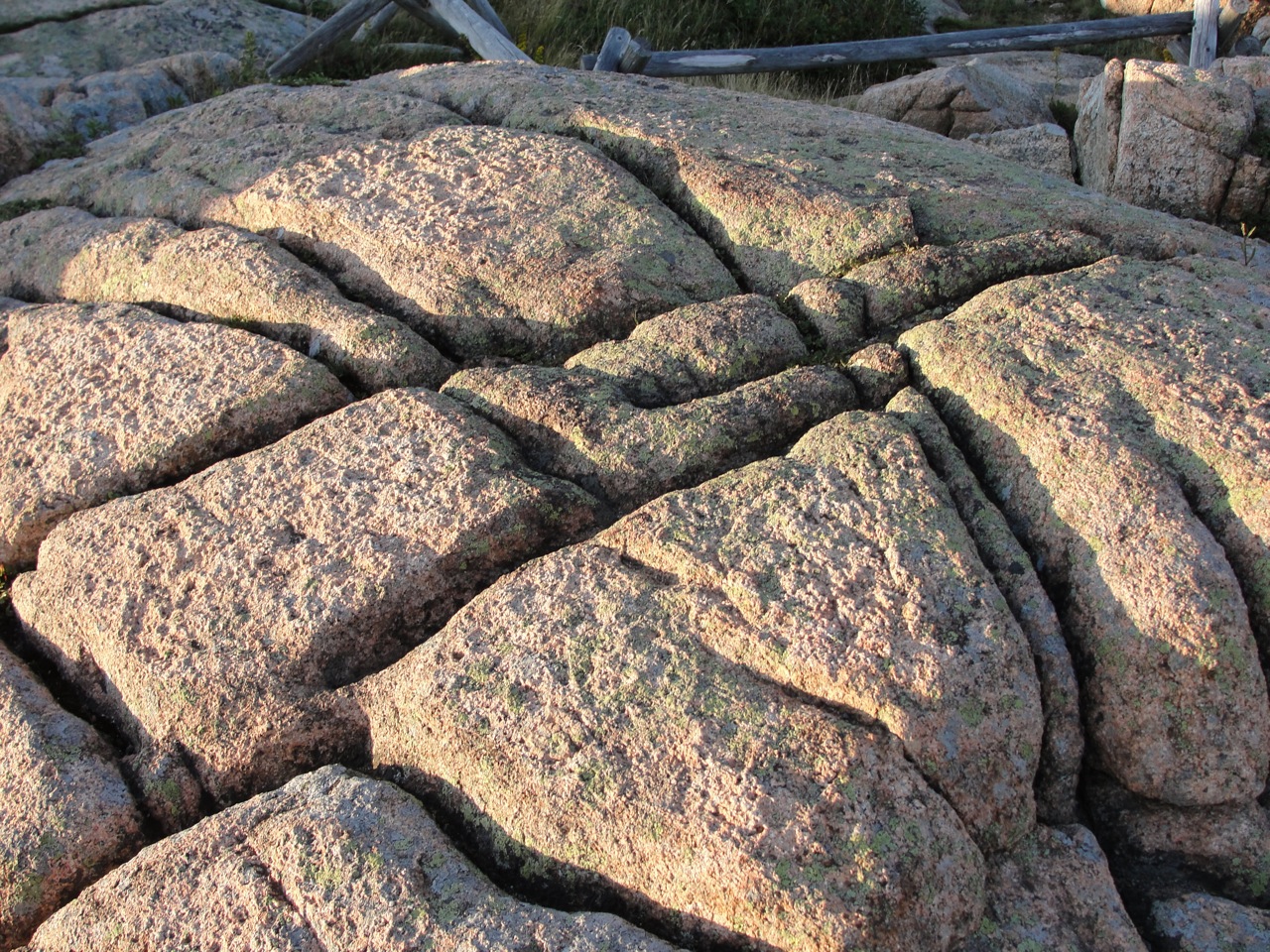
Broken Rock DSC00135

Fractals In the Forest

A fractal is a pattern that repeats itself, from an infinitely small scale to an infinitely large scale. We see in the patterns and shapes of nature that there is self-similarity at all levels.

This has both practical and mystical applications. I learned about one practical application from a documentary called Hunting the Hidden Dimension. A group of scientists concerned about global warming was trying to determine how much carbon dioxide was absorbed by trees in the rain forest. They could measure the carbon capture of a single leaf, but how could they count the number of leaves in the forest?

They had an idea. They started by measuring the circumference of all of the branches on a single tree. Because of the fractal nature of the tree, the branches form a regular pattern, dividing at certain intervals into smaller and smaller branches. By measuring every branch, they could determine the ratio between branch sizes. Then they took it one step further. They measured the trunks of all of the trees within a given area.

Imagine it with me if you will. If we walk through a forest we see trees of all sizes—small saplings, huge old giants—there is an endless variety of sizes all around us, seemingly in a random pattern.

Trees MJ DSC03686But it turns out it is not so random. The ratio of tree sizes in an area of forest is approximately the same as the ratio of branch sizes on a single tree. There is a pattern to it. And by learning the patterns, the scientists could compute how many leaves were in the forest, and how much carbon dioxide they would absorb.

Now when I walk through the forest near my home, I remember this experiment, and look with wonder at the trees around me. What seemed chaotic and random before, is now bursting with new meaning, full of patterns that start to reveal themselves to me, as I gaze with deeper insight. My experience of the trees’ beauty expands, and I feel a growing sense of awe.

I find myself looking for fractal patterns everywhere. This new understanding has changed the way I see the world. And it is not only visual. I can feel the patterns in bark with my fingertips, and I start to listen for patterns in the sounds I hear as well. Next time you look at a spider’s web, or gaze into the clouds in the sky, watch for the fractal patterns.

Our ability to measure fractal patterns in the natural world has also given us the ability to create digital worlds that remind us of our own. Fractal formulas are used to generate computer graphics that look realistically like mountain ranges, and rivers, and forests, and clouds. That wasn’t possible just a few decades ago.

Fractals have been used to design antennas in greatly reduced sizes, which enabled the creation of the next generation of cell phones and other electronic communicators. Fractal geometry is enlarging our ability to create new devices that work better, because they follow patterns that resonate with the natural patterns around us.

Why Fractals Matter-Reading the Book of the Universe

Why should fractal geometry matter to those of us who are not mathematicians? First of all, fractals give human beings a new way to look at the universe. When we can describe something, we can see it better than if we cannot describe it. Because we are better able to see the natural world, fractals enable us to have a deeper relationship to the natural world.

It reminds me of learning to read a book. In order to read, we need to understand the patterns of squiggly lines that form the letters of the alphabet. And then we need to understand how those squiggly lines are combined in multiple ways to form words, and then sentences, and so on. A person who cannot read may look at a book, and it might seem beautiful, or there might be pictures in it to be curious about, but that person cannot understand what it means. When we learn to read the patterns of squiggly lines, the book becomes a doorway into a whole story, and suddenly we have access to a wealth of ideas and thoughts and understandings.

The natural world is like a sacred book; it is the place where we search for truth and beauty and goodness. We might say that the universe itself is our bible. We don’t have to understand the world to appreciate its beauty. Even a baby can laugh with delight at the bright colors of flowers, or try to catch a butterfly. But the more we understand the natural world, the deeper can be our appreciation, and the more its mystery opens up to us. Fractals help us to read the book of the universe.

Fractals give us a way to measure and describe the complex patterns in the natural world. Fractal geometry, in fact, reveals to us the inherent patterning that permeates the universe. A fractal is a pattern that repeats itself, from an infinitely small scale to an infinitely large scale. Complex entities are created from simple designs extended out to many dimensions. We see in the patterns and shapes of nature that there is self-similarity at all levels. Ferns DSC05288

Allies Share Both Sorrow and Joy

Birch light and dark DSC07802If we seek to rebuild our relationship to this land, I think it is also vital for non-Indians to rebuild their relationship with Indian peoples. To do that non-Indians must become committed allies to Indian people’s struggles. Real relationship involves interaction with the whole of a person and community, sharing both sorrow and joy, struggle and celebration.

Indian people want us to move beyond stereotypes and learn more deeply and accurately about Native issues today. They need allies in their struggle against racism and colonization. We can use our advantage and position as people living in mainstream society, to be a resource for Native peoples’ concerns.

When we can learn to share the pain, and share the struggles of Indian peoples, then we also will find ourselves sharing in the celebrations. In her novel, Solar Storms, Linda Hogan begins with a story of an unusual feast given by the woman named Bush. This feast was a grieving feast: Bush was grieving the loss of the young child, Angel, after she was taken away by the white county authorities from their tiny Native community. She held a feast in which she prepared food for her whole community, and then she gave away all of her possessions to them. Hogan writes, in the voice of one who had been to the feast:

…I watched the others walk away with their arms full. Going back that morning, in the blue northern light, their stomachs were filled, their arms laden with blankets, food… But the most important thing they carried was Bush’s sorrow. It was small now, and child-sized, and it slid its hand inside theirs and walked away with them. We all had it, after that. It became our own. Some of us have since wanted to give it back to her, but once we felt it we knew it was too large for a single person. After that your absence sat at every table, occupied every room, walked through the doors of every house.

By this sharing of sorrow, the sorrow became bearable. Native American people are too often bearing the sorrows of our history alone. If we want to share in feast with them, we too must carry the burden of sorrow. Once we let ourselves feel this grief, we realize it is much too large for one people to carry alone. But the more of us who carry this sorrow, the more of us who carry the struggle, the more bearable it will be.

When we open our hearts to the earth, we are opening our hearts to relationship with all who live here with us. We are recognizing the brokenness and the sacredness of each person and each being, each place and each story in that place.

Avoid Spiritual Theft by Doing Our Own Spiritual Work

Indigenous spiritual traditions are inextricably woven into the network of relationships within an Indigenous community and in the particular land in which that community lives. They are a fundamental element of the Native struggle against the destruction of their cultures and homes. They are not meant to be exported piecemeal for some other purpose, however earnest it may be. If we seek to avoid spiritual theft, the best tool we can use is for us to do our own spiritual work. 

If we are seeking to reconnect to the earth, we must remind ourselves that non-Indian people are no less a part of the earth than Indians, even though we are not indigenous to this place. In reality, we all live here on this land and our lives are equally enmeshed with the fate of countless other beings around us. This land, broken as she is, is our only source of food and water. And this land is full of nourishment for us, both material and spiritual. We can love the earth, and be loved by the earth, even if she keeps some secrets from us. Step by step, we must rebuild our own culture’s relationship to the earth. Even though we might learn from the wisdom and experience of Indigenous peoples, no one else can do the work for us.

Photo by Margy Dowzer

Photo by Margy Dowzer

One summer, I learned that by eating local honey, I could help the hay-fever I suffered from in summertime. By eating that local honey I could begin to make a relationship between my body and the plants which grow in that place. There has been a resurgence of interest in eating foods that are locally grown. Along with the environmental benefits, there are also these spiritual ones, this reweaving of a connection with our bodies to a place. It is our connection to a specific place, the place we live, which forms the doorway for us to hear the earth, to find her sacredness.

A sacred understanding of land is not entirely foreign to European culture. Until the advent of capitalism, land was seen in a more communal fashion. Europeans had their own indigenous traditions to connect them to their land, many of which survived even into Christian times. We see traces of this in our holidays even here in this country—the evergreen trees of the winter festival, the foods we prepare for special times of the year. Many people are seeking to relearn these old European earth traditions.

Othila DSC02547

Othila

There is a rune, part of the early Germanic ritual alphabet, called Othila, whose sacred meaning is “inherited land.” It describes the relationship between people and the land on which they live. In Germanic countries, there is still a legal right called the right of odal. It means that a person living on a particular estate has the right to stay and live on that estate after the owner has died.

In 17th century England, there was a movement of people called the Diggers, who were protesting the fencing off of common lands and believed that the land could not be owned by private individuals. A love for the earth has many roots in our European ancestors’ ways.

Rebuilding Relationship with Indigenous Peoples

Penobscot Flag, Photo by Margy Dowzer

Penobscot Flag, Photo by Margy Dowzer

Speaking to non-Indigenous people, if we want to rebuild a positive relationship between ourselves and Indigenous people, we need first of all to learn how to listen to stories of loss and pain. Listening is not about fixing something, or feeling guilty, or giving advice. Listening is about being present and opening our hearts to the experience of someone who has a story to tell.

When I visited Indian Island with the Giving Winds campaign, we listened to Penobscot elder Donna Loring talk about some of the history between white people and Indians in Maine. There are moments when the pain of such listening feels almost too much to bear, but I remind myself how much more painful it must be for the one telling the story. Then I feel such gratitude that someone is willing to share these stories with us.

If we want to rebuild these relationships, it is also helpful to be aware of some of the traps into which we might fall. One trap is denial. Denial is a tendency to minimize the damage, or scapegoat the victim to avoid the pain of what has happened. One example is the belief that Native Americans have benefited by being absorbed into white culture. Another form of denial is the myth that it all happened in the past and it’s over now. Denial interferes with our ability to be present and to listen. For healing to occur, we must acknowledge the brokenness of the bonds between us.

Another trap in our culture today is the temptation to romanticize Indians and Indian culture. I call this trap “wanting to be Indian.” The romantic stereotype is that all Indians are mystical teachers, close to the earth and bearers of a better way to live. One of the most problematic manifestations of this trap is the widespread marketing of so-called “Native American Spirituality.” What is advertised as Native American spirituality is a distortion, fragments of Indian spiritual practices taken out of context. Most Indigenous people are outraged and frustrated by this abuse of their culture and religions.

Janet McCloud, a Tulalip elder and fishing rights activist, says:

First they came to take our land and water, then our fish and game. …Now they want our religions as well. All of a sudden, we have a lot of unscrupulous idiots running around saying they’re medicine people. And they’ll sell you a sweat lodge ceremony for fifty bucks. It’s not only wrong, it’s obscene. Indians don’t sell their spirituality to anybody, for any price. This is just another in a very long series of thefts from Indian people and, in some ways, this is the worst one yet.

I believe this issue of spiritual theft is especially important for those of us who are seeking to reconnect with the earth. We might naturally seek to learn from the people who have honored their connection to the land. And it is important to acknowledge that there is much to be learned from Native peoples. But in our search for help, we can do damage too, because of the context of the broken bonds between us. If we are not sharing the pain and the struggles of Indian peoples, then what right do we have to share in the celebrations?Solstice MJ IMG_0057

These ideas were previously explored in my essay “Wanting to Be Indian: When Spiritual Searching Turns into Cultural Theft” now available online in pdf format.  The quote from Janet McCloud was originally published in Z Magazine, Dec. 1990.

A Moment of Healing on a Broken Land

In November of 2006, eight people from my congregation gathered in Orono, Maine with about seventy other people for a celebration of the Giving Winds Capital Campaign. The invitation had mentioned hors d’oeuvres, but it was more truly a feast. We had corn chowder and salmon patties, bacon-wrapped scallops and stuffed mushrooms, veggies and corn fritters, and blueberry cake and fry bread. We listened to drumming by two young girls’ drumming groups, and heard the thanks of several of the leaders of the Penobscot, Passamaquoddy, and Maliseet tribes. We left with gifts of sweetgrass and traditionally made herbal insect repellent, and beadwork pins.drumming

We heard the story of how the Giving Winds campaign came about. It began in brokenness. The Maine Council of Churches had decided a few years before to oppose a referendum that would have allowed the tribes to pursue casino gambling as a means to economic development. Representatives of the tribes had come to a council meeting to urge them to reconsider, and to speak about the difficult financial issues faced by their communities. But many members of the council had ethical principles against gambling, and they voted to go ahead with their opposition.

It was another painful moment in Indian relations with the non-Indian community here in Maine. But Tom Ewell, then director of the Council of Churches, did not want it to end there. He did some research and discovered the Four Directions Development Corporation that was just getting started. It was seeking to provide home loans and small business loans to Wabanaki people from the four tribes in Maine. Indian people had difficulty gaining credit, because if their homes were on Indian land, they could not be used as collateral for traditional mortgages or home improvement loans from a bank. Four Directions hoped to fill this gap, and to provide financial education and support for start-up businesses.

And so the Maine Council of Churches partnered with Four Directions to create the Giving Winds Capital Campaign. Congregations and individuals across Maine donated money and made low- or no-interest loans that were matched by the Federal Government. The campaign worked to build trust and connection between Indian and non-Indian people in Maine. When we ate with each other at the celebration in Orono, it was a moment of healing on a broken land.

I wanted to share this story because all too often, people feel it must be impossible to heal from five hundred years on a broken land. But I don’t believe it is impossible. Difficult yes, but there are simple steps we can take that move us in the direction toward wholeness. If we can learn to share the pain and share the struggles of Indian peoples, then we also will find ourselves sharing in the celebrations. Sweetgrass

The Theft of the Land and the Stories that Obscure It

As I wrote in my last post, European peoples are new to the land we call North America. Our history includes the theft of this land from its original people. We have tried to obscure that history through many stories, perhaps most notably our Thanksgiving myths, the stories of the Pilgrims and the Indians.Turkey DSC09718_2

The story tells us when the Pilgrims landed at Plymouth, they were welcomed by the Indian Samoset. He introduced them to Massasoit, chief of the local Indians, the Wampanoag, and to Squanto, who helped the Pilgrims to plant corn, to hunt and fish in their new home, and to survive the first hard year. In the fall, Indians and Pilgrims together celebrated a Thanksgiving for the harvest.

The story of this celebration hides other stories. It hides the plague that wiped out the village of Patuxet, and 90% of the people living on the Northeast Coast. Squanto, whose name was actually Tisquantum, was a survivor because he had been earlier carried off as a slave to England. Did you ever wonder why he could speak English to the Pilgrims? The story hides his capture as a slave, his years in Europe and his attempts to come home, only to find his people gone. But most of all, this story hides the next four hundred years, which were filled with betrayal and enmity and war.

The Pilgrims did not share the Indigenous belief in the sacredness of all beings and places. They saw their own society and ways as superior, as a progress which must be forced on other so-called “inferior” beings. This is the spirit of colonization, from which we haven’t yet recovered. From the Indian side, the colonization of North America has been a long saga of unbearable loss and grief. What irony, then, to watch as non-Indians each year have a holiday celebrating the bond between the Pilgrims and the Indians. Many Native peoples think of Thanksgiving as a Day of Mourning.

Now, the first reaction European Americans sometimes feel when we hear about this loss and grief is defensiveness. After all, we think, it wasn’t me who stole Indian land, or caused disease among the people, or killed anyone. Perhaps the second reaction that comes is a feeling of guilt, because of what our ancestors have done. But neither defensiveness nor guilt is really very helpful. We must go deeper than that. How do we acknowledge and heal the brokenness? How do we restore wholeness to this broken land and all of its people? 

An Orientation to Place

Vine Deloria, a Lakota scholar, and author of God Is Red, wrote about some of the distinctions between European ways of thinking and American Indian ways of thinking. One of the differences he believed was important is the difference between a primary orientation towards place and a primary orientation toward time. 

I remember, when I was in Catholic grade school, learning about “salvation history.” We were taught that God was working throughout time to bring humans into a higher level of existence. Deloria points out that Europeans understand the world as an evolutionary process where humankind has evolved from lower forms into higher forms, including the evolution from so-called primitive religions into monotheistic conceptions of divinity.

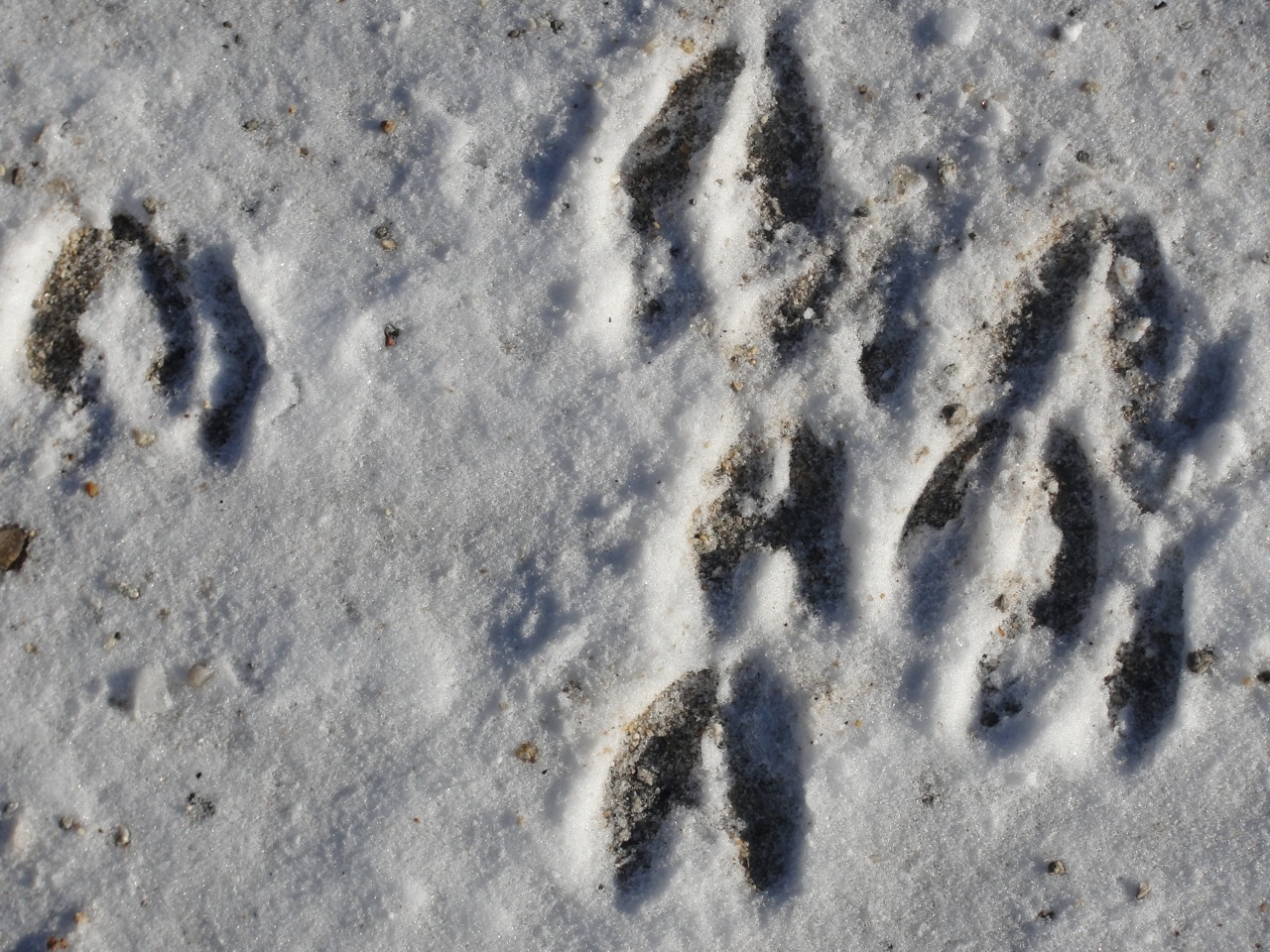
Deer Tracks MJ DSC01675American Indians are oriented to space and place, and their theological concerns are spacial concerns. Within this framework, each place has its own experiences of divinity, which may be very different from those of another place, without any contradiction. Rituals are important for connecting a people with the places in which they live, with the deeper powers of those places. This is why the land rights struggles of Native people cannot be separated from their struggles for religious freedom. Their religions are focused on nurturing their relationship to the specific land which is their land.

Another difference between American Indian views and those of mainstream society is in the conception of land as object or subject. To view the land as an object, is to see it as something to be acted upon: to be bought and sold, to be used for its minerals and plants, to be owned, to be abused, or even to be watched over carefully. To view the land as subject is to see it as we might see a person, as a being with its own actions, its own view.

The word own is an interesting one here. We use it to describe possession acquired by buying something. As in “I own a piece of property.” Yet it also can be used to describe relationship. My own mother, my own lover, my own family. To say “our land” can mean this is the land we have purchased, or it can mean this is the land we have a relationship to, we belong to it as much as it belongs to us.

European peoples are new to the land we call North America. Our history includes the theft of this land from its original people. Any work we do to reconnect to the land must pass through the entanglements of that history, must include work to heal the brokenness of that history.