I have been thinking about the flooding in Houston, and all the other devastating ways the planet is adapting to our carbon in the air, with changing weather patterns, intense storms, different water patterns. Thankfully, my sister and other family members in the Houston area are safe. Meanwhile, we have drought here in Maine. It hasn’t rained for over ten days. I don’t have answers for what to do about the new reality of flooding in our land, but I thought I could talk about what we are doing to address drought here in Maine.
So, last week, we were able to finish the rest of our rain barrels! One of the useful aspects of rain barrels is to preserve water in the landscape to be able to weather the ups and downs of water flow. We now have rain barrels gathering the run-off from each roof on our land.
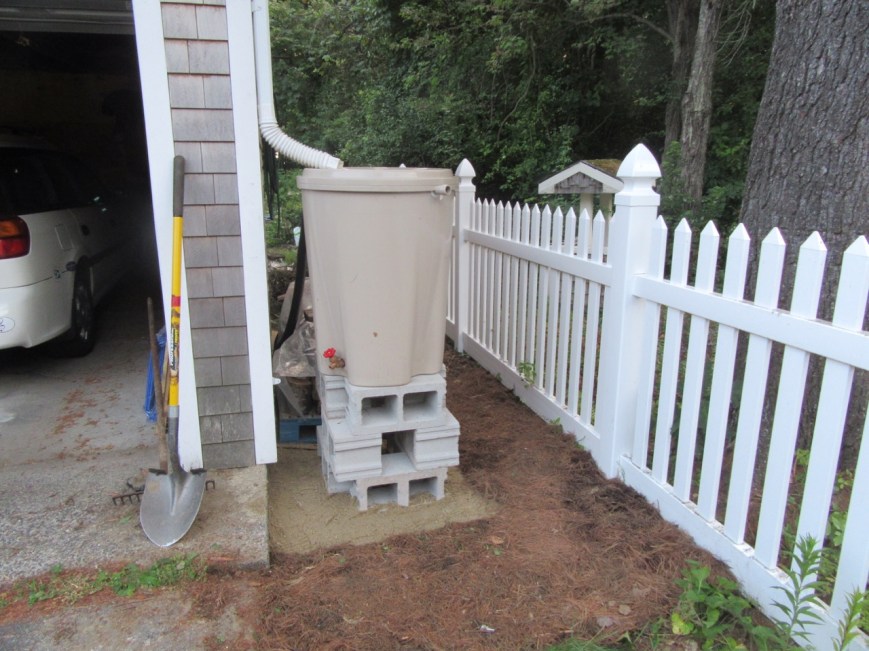
The final rain barrel is finished!
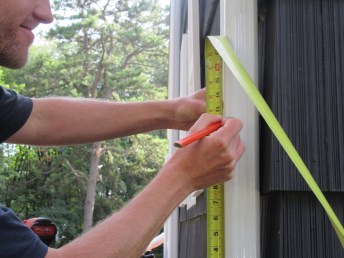 I want to post about the learning session that Dave led on the 23rd to finish our rain barrels and teach a few of us more about how to install rain barrels. I will talk today about how to attach the barrels to the downspouts of our gutters. Once the rain barrels themselves are positioned, you can measure and mark the downspout about 8 to 12″ above the top of the barrel.

Then remove the downspout by unscrewing the fastening screws on the wall and to the gutter. Once those are unfastened, you can pull the vertical downspout apart from the connectors to the gutter.

The fun part is cutting the downspout itself to the right length with tin snips, using both right-handed and left-handed snips. (Right handed are red-handled, and left are green.) The basic idea is to mark the downspout with a pencil line all around, and be aware of the part you are going to keep, and the other part which will not be part of the finished downspout (the scrap side–but you can save it for other uses.) Then punch a hole with the point of the snips near your line, but in the scrap side, and start cutting around the marked line. But, also, about an inch further into the scrap side, you start another cut, so that you can work both those cuts at the same time. It makes it easier to go round the downspout. If you are right-handed, you use the right hand snip for your “good” cut, and the other snip for the helping cut. This picture shows a left-handed person making the good cut. As you go around the pipe you can cut off that little strip so it doesn’t get in your way.
Once the downspout is cut, you reattached it to the gutter, and reattach the screws, or make new ones as needed to attach it to the wall. Then, attach a plastic downspout extension piece that you can buy at a hardware store in large or small sizes, and position it to end over your rain barrel (see first picture). Hurray!
 I had a revelation! I have been thinking I was having a tug of war with a groundhog, because despite the fact that I had been using a very potent deterrent liquid, each morning I would discover this mess around my cherry tree beds. But no more
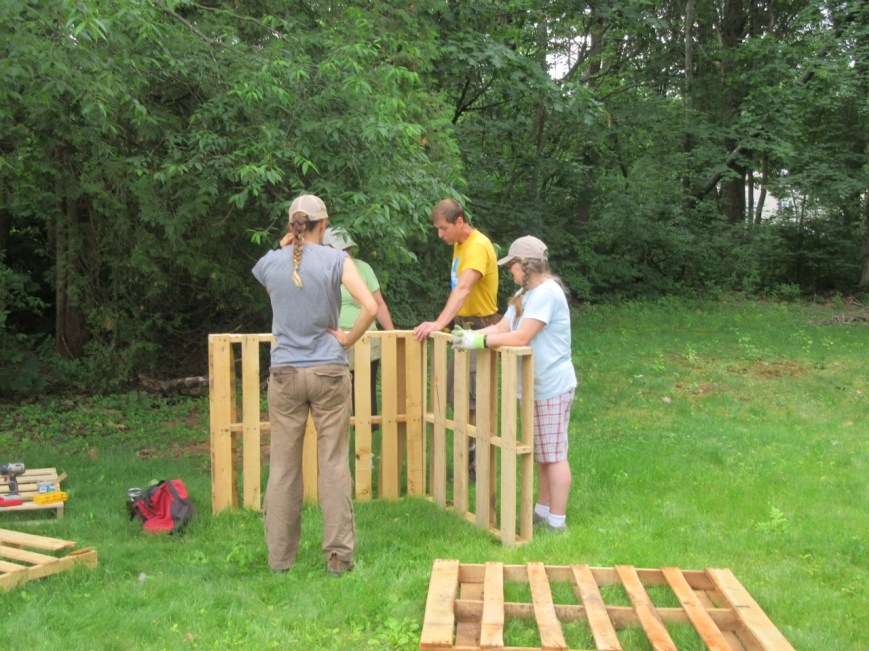 One more post about the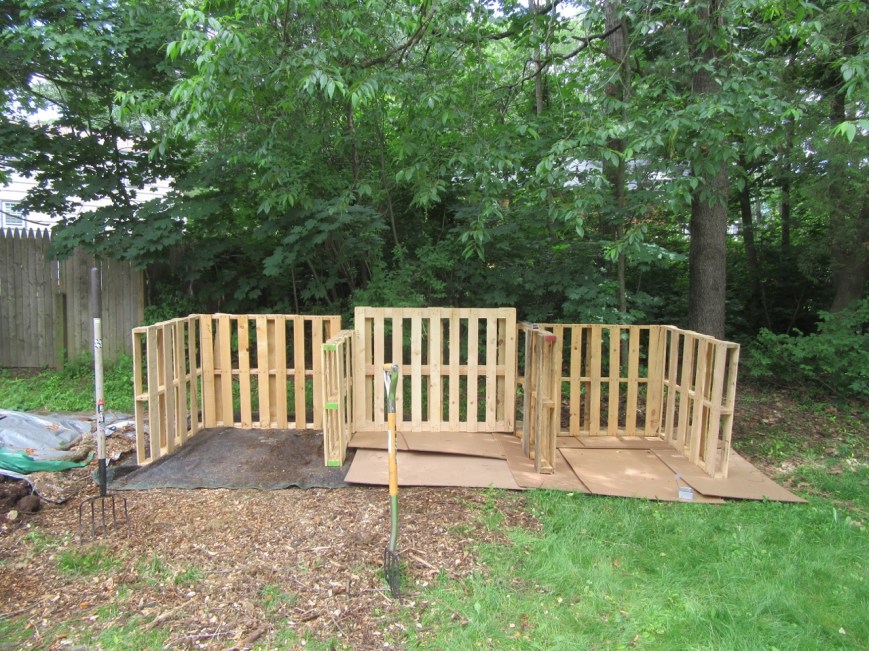

 The last few days I have been working on a garden bed for two future high bush blueberry plants. This was the toughest project so far, in terms of physical stamina. I was following the guideline of Michael Phillips in the Holistic Orchard. His first step is to dig a bed one foot deep and 3-4 feet in diameter per plant, (so for me that meant about 7-8 feet long and 3-4 feet wide).
 Once I had dug the hole, I came upon bittersweet roots, so then spent some time strategizing about what to do for that. I eventually decided to clip them off where they emerged, and then line the sides of the hole with cardboard. Since I was also making paths around the bed, I bent the cardboard so that it covered the path as well.
 And it is a lot of work to dig out a hole, then fill it with other stuff, and then “stir” it around, which really means turn the soil over and over. I am glad I only have to do it once. So I would do what digging I could, and then stop and rest for most of the day, and return to it in the evening if I could. After the peat moss, soil, & compost mix was in, I added 2 cups elemental sulfur, 4 cups green sand, and 2 cups rock phosphate, all organic nutrients. This whole mix is meant to create the type of soil that blueberries love, with an acid leaning ph, and the nutrients they need. (You may notice that I purchased more composted manure, because we used up our big pile.)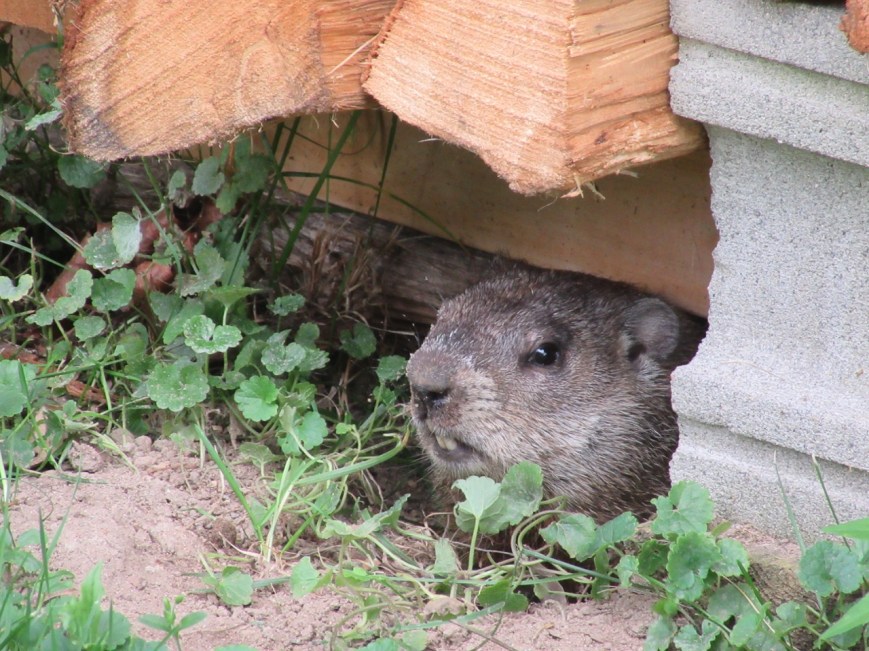

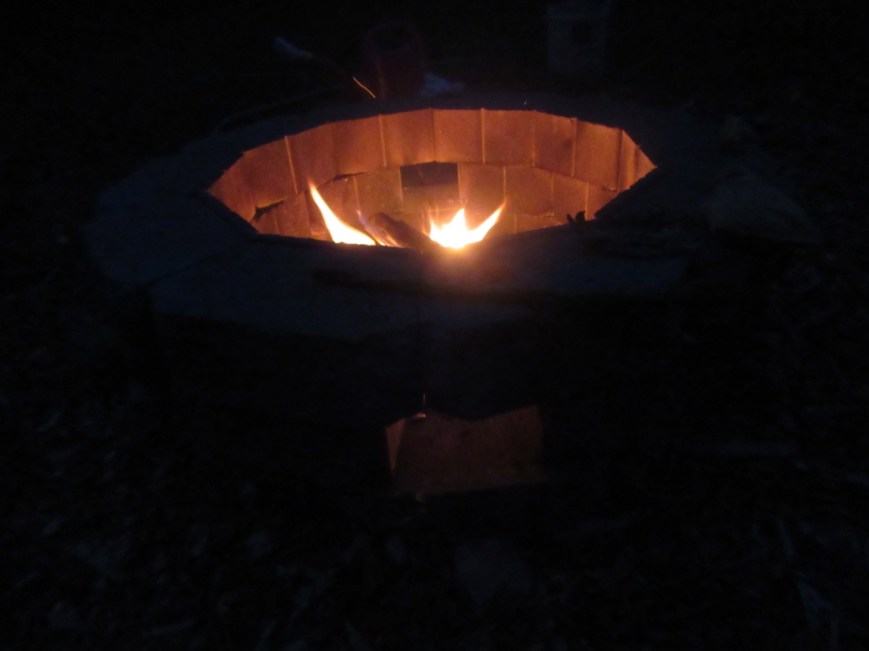
 Coming back to the Permablitz of June 24, another project that was completed that day was a fire circle. As Lisa Fernandes said, every home needs a place to burn things. So she was our team leader for the fire circle, and gathered in the layers of community for the element of fire. With a community of workers!
 First they had to remove big pile of bittersweet brush (that we will eventually burn) from the spot we had chosen. Lisa and Kristen gathered together the stone blocks that would be used. (But there could have been other helpers–at that moment I was over in the garden beds.) Then they prepared the ground with a layer of sand. Our youngest permablitz members got into the sand-tamping process, as well as Lisa and Kristen.
 Finally, they brought a whole pile of pine mulch for the seating area around it, and then laid some bittersweet brush and pine cones for our first fire. Permaculture is not just about a way of gardening but also about how communities care for each other. Its three principles have been summed up as earth care, people care, and future care. So having a place to gather with others is an integral part of our permaculture design.
 Finding Our Way Home