Robins at Lammas

Fledgling robin looking at mother robin who is looking back, perched on gray wooden railing, greenery behind.
Fledgling robin with mom on the deck railing.

Our Lammas harvest festival blessing was being able to watch the fledging of the robins’ third brood of three chicks. (That makes nine chicks all together!) They had been getting active the last couple days so we were expecting it. But what a nice surprise to look out the window and see the first fledgling perched all alone on the deck railing, looking around at the big wide world for the first time.

Fledgling robin alone on gray deck railing looking out to greener beyond.

They probably saw their mother hopping on the ground further in the back yard. (We did too.) Then the mother flew up next to it on the railing for encouragement. (That was photo number one). After looking at each other, they each looked out beyond, and then the mother flew off, and the baby soon followed, alighting high in the hazelnut bushes.
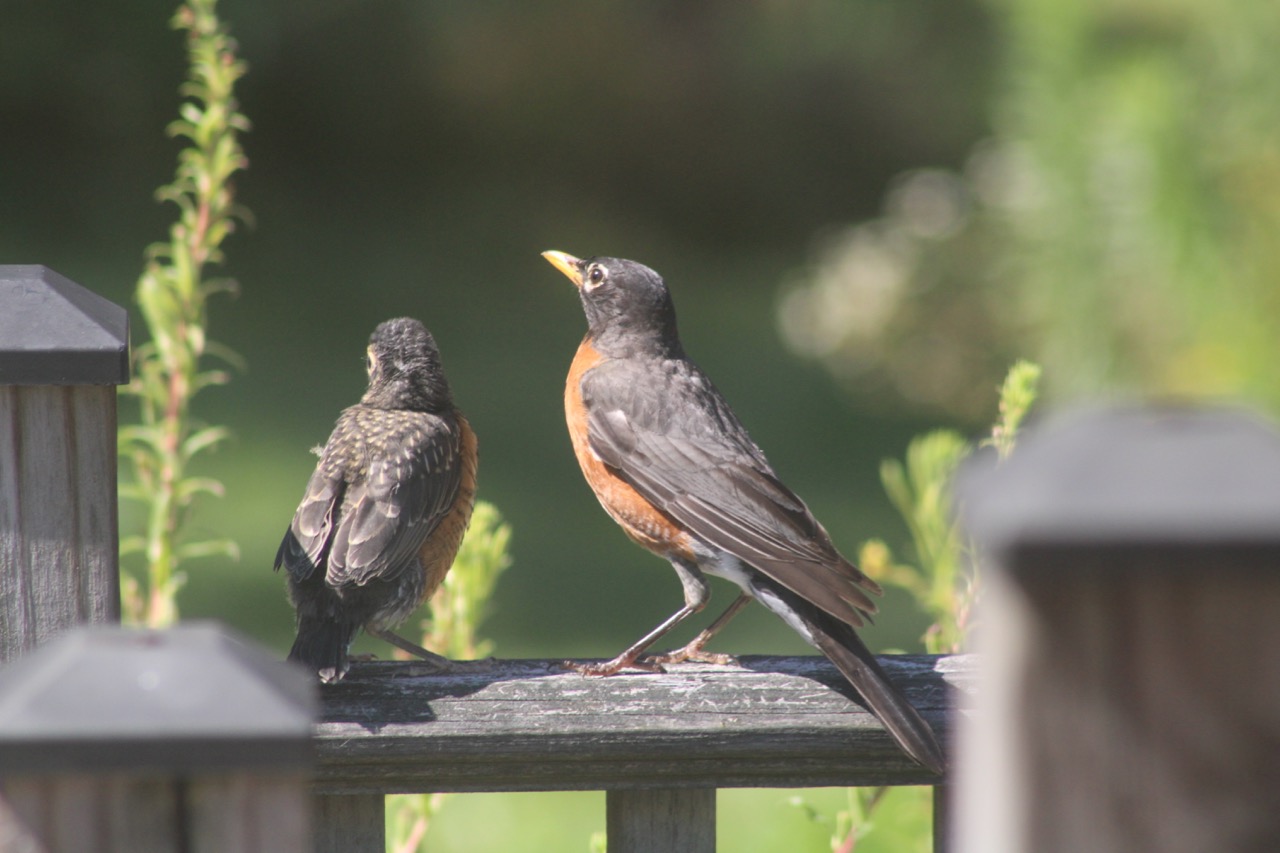
Fledgling and mother robin on gray wooden deck railing looking away from camera toward greenery beyond.

The other two remained in the nest for a little while, but soon the second one flew out toward the orchard. Finally there was just one left. I wandered around outside, but the parents were chirping at me, their warning calls. I saw the parent robins also diving and shrieking at squirrels in the pitch pine tree branches, and angrily calling at a cardinal who came into the cherry tree–too close as far as the robins were concerned. Back inside for a while, I saw the dad robin come to the nest–with a piece of grass in his beak, but I didn’t see food. He sat with the third baby for a while, so tender. After he left, the baby shrunk down into the nest, only its beak visible. Hiding mode.
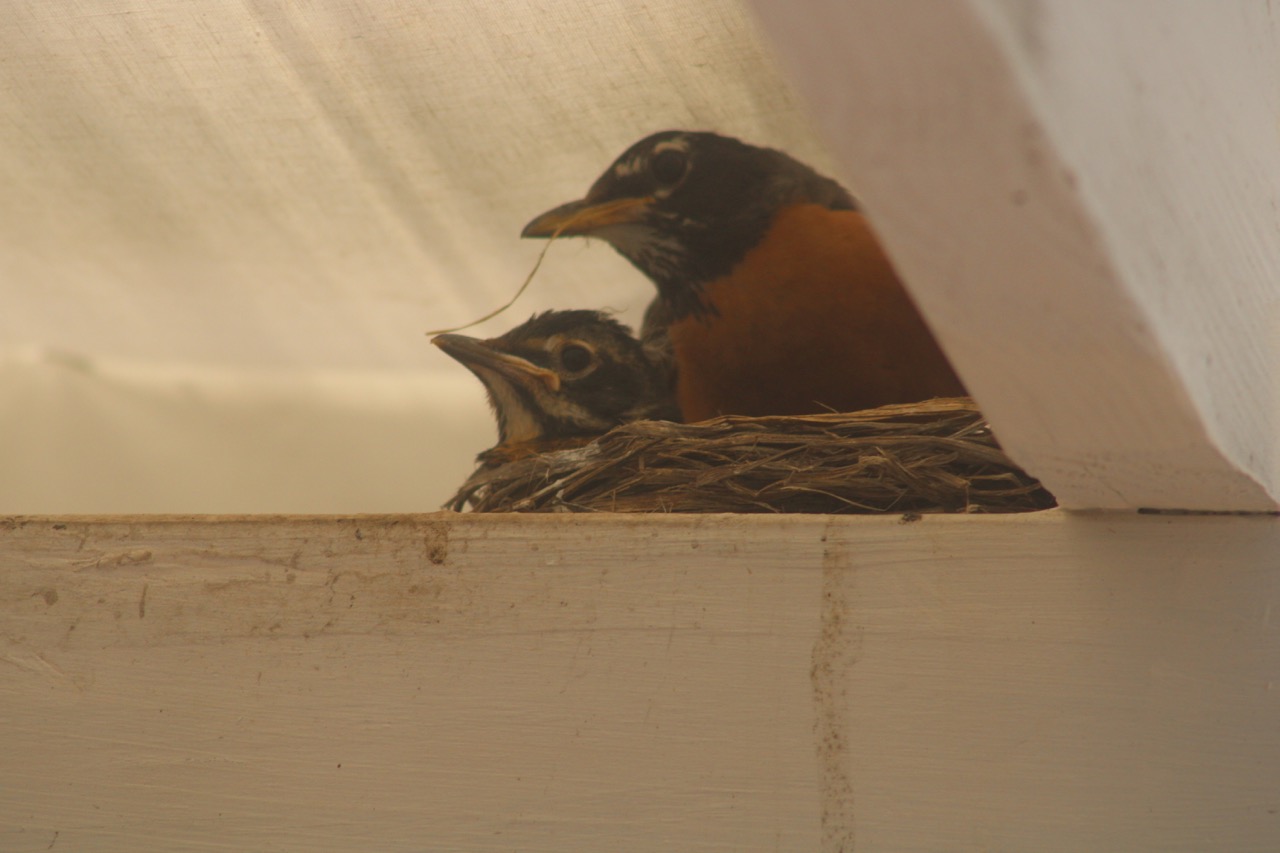
Baby robin, just head showing above brown grassy nest, with dad robin above and behind in nest, between white painted beams underneath and on side.

I had to go out in the orchard to do some mulching, and then I sat at the patio table. I could hear number three chirping every so often from the nest, their head visible again, and then I’d hear another chirp from the direction of the hazelnut bushes. When I came back inside, I kept an eye on them through the windows. They got out of the nest finally, and hopped along the beam to the other side. While the first fledgling had seem so confident and proud of itself, this one seemed quite scared about jumping from its safe little home. But everybody had left. It huddled up next to the opposite side beam.
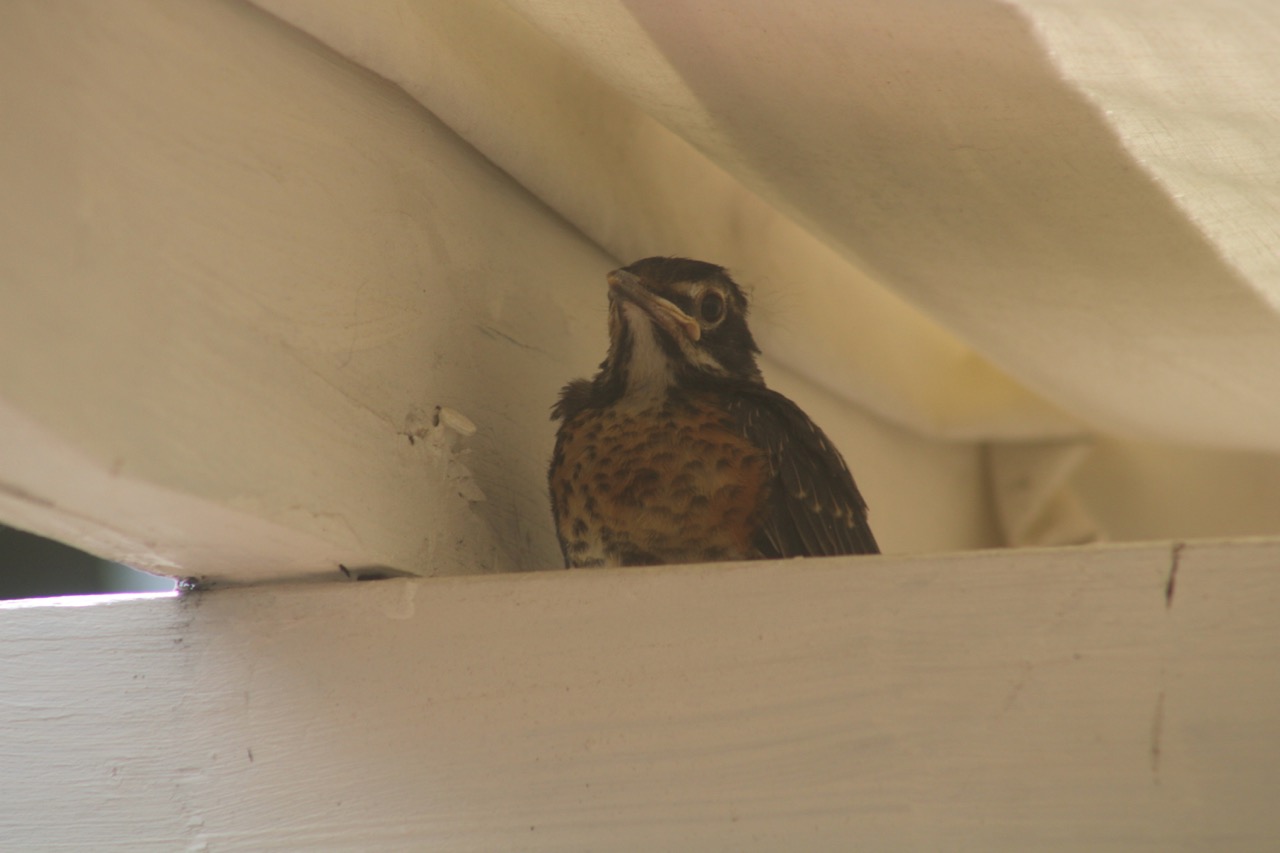
Baby robin visible from belly up, on white beam, next to side beam, looking toward the camera.

Finally, the little one started to stretch their legs, and move their wings a tiny bit. They moved up to the very edge of the beam. They hovered there for quite a while. One of the parents came back to the deck railing down below and behind the nest. I also saw a female gold finch perched on the railing in front of the nest. Not sure what that was about. A chipmunk was scurrying below on the patio. I stood still next to the back windows and just watched–I didn’t take any more photos. The gold finch left, the parent left, the chipmunk left. The little one perched on the edge. Then they bravely jumped off.

I heard a flutter of wings against the screen window of our music room, just to the left of the deck out of my sight. I went out the door to observe, and saw that the baby was hanging by one claw stuck in the screen, and flapping their wings against it. I walked to the edge of the deck, reached over and cupped my hands gently around the baby, careful to contain their wings, lifted them to release the claw. I let go and they flew down to the lemon balm patch. Be still my heart. They slowly hopped out onto the patio, hopped over some garden hoses, making their way over to the mulched area under the cherry tree. They hopped into the grass behind, and finally they flew up over the grass into the trees.

And then the nest was empty. They say that robins raise two or three broods a season, and if that is true, they may be done with the nest for now. They’ll feed the babies for a few more weeks out in the bushes and trees. I wonder how all nine of their children are doing? Did they all survive? I hope they are thriving. We don’t see them once they leave the nest, so we never know.

I feel a sense of joy, and a sense of loss, all at the same time. I feel grateful for the privilege to observe the robin family, and for the moments I was able to capture in photos. I feel sad to look out the window and see them gone. I am also grateful that I was able to give them a little shade from the sun, and maybe that helped.

What’s Next?

Fruit trees with painted trunks.

Today I felt filled with an enormous dread, watching the attempted coup by a president who won’t acknowledge the results of a valid election, watching the followers who enable him to keep undermining the vote. I had felt relieved after the votes were counted. Perhaps we were back to more ordinary times and struggles–certainly the struggles were not over, but some semblance of a social order were on track to be restored.

But then I read an account by someone who had lived through a coup in their own country, Sri Lanka, who said that America is already having one right now, and I sank into a kind of terror. I won’t repeat their story here–you can read it via the link. Just to say that undermining faith in the results of an election can disrupt the very fabric of a fragile democracy, and is an invitation to ongoing chaos.

In my dread, I went outside–into a cloudy warm day–perhaps the last of these summer-like days–where Margy was working in the yard. She got in the hammock with me and I could just feel all the feelings of terror, but with the comfort of love, the comfort of the earth and sky. I certainly don’t have the answers for what we can do, what anyone can do, about this coup. I hope someone who might have the power and the answers is talking about it somewhere.

The other thing that, ironically, has relieved my anxieties about the election and the coup is a novel I have been reading about climate change. It is the latest work by Kim Stanley Robinson, The Ministry for the Future. Set in the very near future, the title refers to an international agency that is formed to be a voice for future generations in the international arena. It’s a fragmented sort of novel, with each chapter a small piece in a larger fabric, and only a few on-going characters to help keep the thread going. Like in some of his other works, Robinson’s characters are trying out all sorts of ideas to turn around or mitigate the catastrophes of climate warming. Perhaps it will get more hopeful as I keep reading, but for now, it is sobering. So the terrors of a coup are replaced by the terrors of climate catastrophe–but those terrors are more familiar to me.

In the meantime, Margy and I seize the opportunity of our own strange weather to replenish the soil in our little part of the earth–another visit to the beach to get more seaweed, more sifting of compost (to get the roots and stones out) to put near the fruit trees, raspberries, bushes in the back of the yard. As much compost as I can sift, I put it somewhere. As much seaweed as we can collect, we put it somewhere.

For the fruit trees, also, a few weeks ago I painted their trunks white. There is a whole story to this. I had read about painting the trunks of trees white to protect them from sun damage in the winter, to protect from insects burrowing. But when I first read about it, people were talking about using latex paint, and that didn’t feel true to the spirit of organic permaculture.

Then, this fall, searching the web for another project–looking for food safe paints–I came across milk paint. This is the old-fashioned white wash that Tom Sawyer used, that most people used before the modern age. It’s made of natural ingredients: milk proteins, lime, and pigments. It has no VOCs to emit, no scents to be allergic to. It came in a powder that I mixed with water, in the amount I needed for the trees. The powder will last a long time, but the mixed paint only a couple weeks. So I painted the tree trunks. You can use it for lots of things, not just trees. Finding resources that cause no harm to the earth–that help the earth–these are like little miracles that never cease to delight me.

Fear: A Pile of Stones

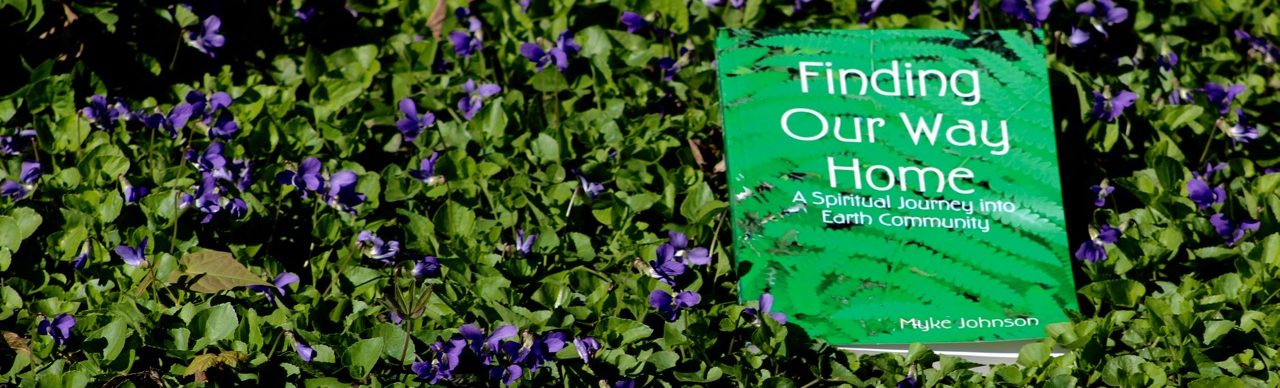
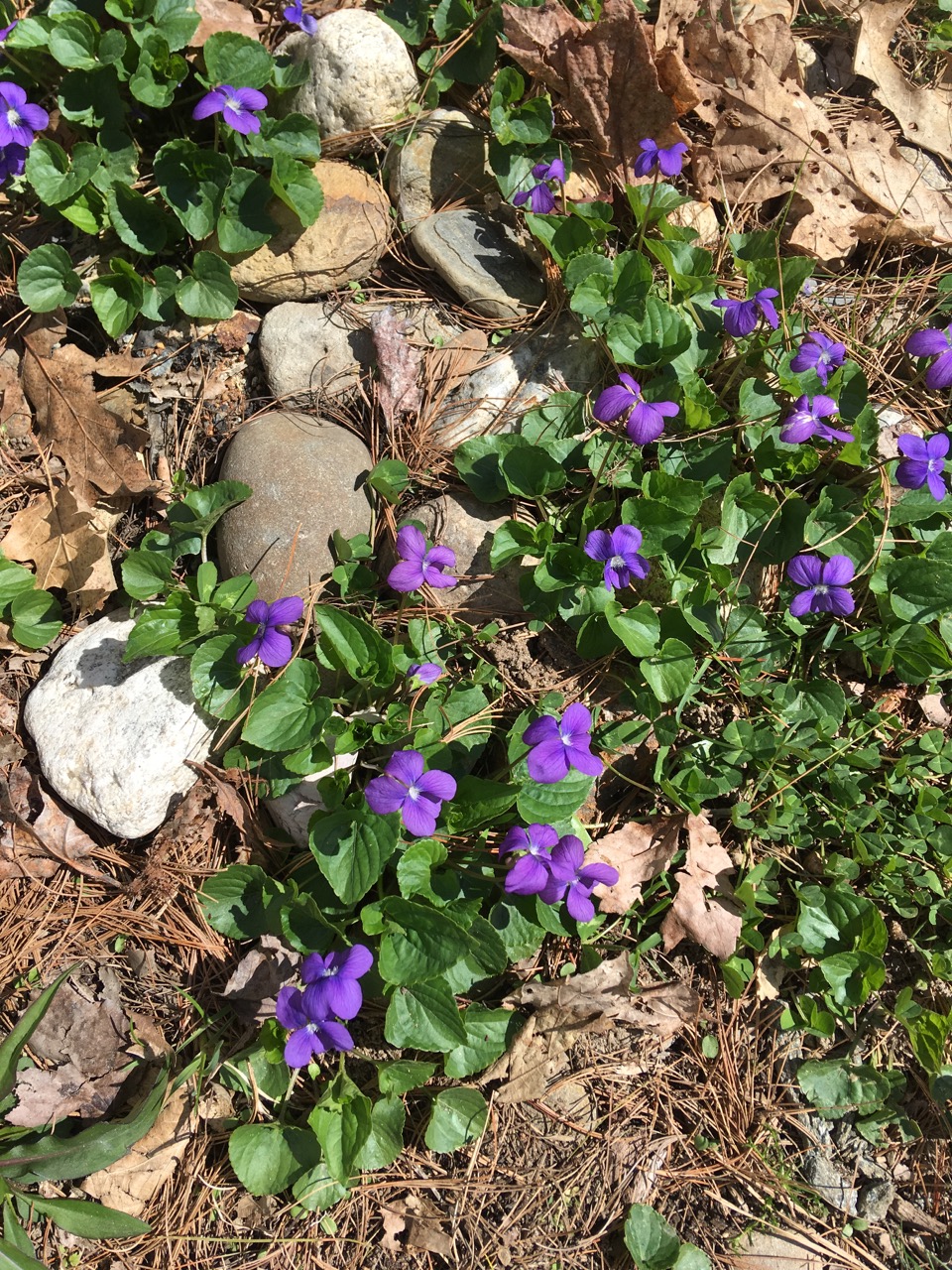
Stones & violetsTwo years ago, when I found any stones in the asparagus bed I was creating, I threw them over to a place next to the garage, until there was a pile of stones there. Then, later, as I found more stones, I added them to the pile. This spring, the violets decided they loved the microclimate it created. So now this pile of stones has become a beautiful violet rock garden.
I woke today feeling so much fear that I was immobilized. If fear is heavy like a stone, if we accumulate all the fears and toss them into a pile, might something beautiful yet emerge? It was a particular kind of fear that arose in me, or it seemed particular to this society. It was triggered by my no longer being able to work. For me, this is not about social distancing and a closed economy, though it helps me to understand the people who are worried about that. For me, it is about chronic illness taking away my energy capacity to work.

Working signifies our ability to take care of ourselves. All our lives we have learned the American “gospel” of individualism–everything is on the individual. In some ways, this individualism freed people to become that which our families could not comprehend. Feminist. Lesbian. Activist. When women were free to work, we were free to make our own decisions about our lives.

But in other ways, it has meant we are flying without a net. If we can no longer work, what happens then? Despite its limitations, I am immensely grateful for the safety net that was created in the cauldron of the great depression–Social Security. In the midst of the heavy burden of individualism, it became a bright light of collective care for all of us. We each contribute and we all can benefit. It enables Margy and I to have our basic necessities in retirement. But this net is now in the hands of robbers and thieves, who would like nothing more to do away with it. And so I feel afraid, my heart heavy with stones.

When I read about how some countries are giving their citizens a monthly income during the pandemic–countries which also, by the way, have free universal health care–when I see what might be done, it makes me feel so sad and so afraid for all of the working people in our country. If people had a guaranteed monthly income, they might not need to clamor for businesses to reopen before this can be done safely. But instead, they are caught between a rock and a hard place–stay home and risk starvation, or go to work and risk death. It is that stark. And the fear becomes a trigger for violence, and the threats of violence. More stones.

I’m not at the stage of seeing any violets yet. I don’t know what beauty might come out of this. I am just throwing stones into a pile.

Hugelkultur, part 3

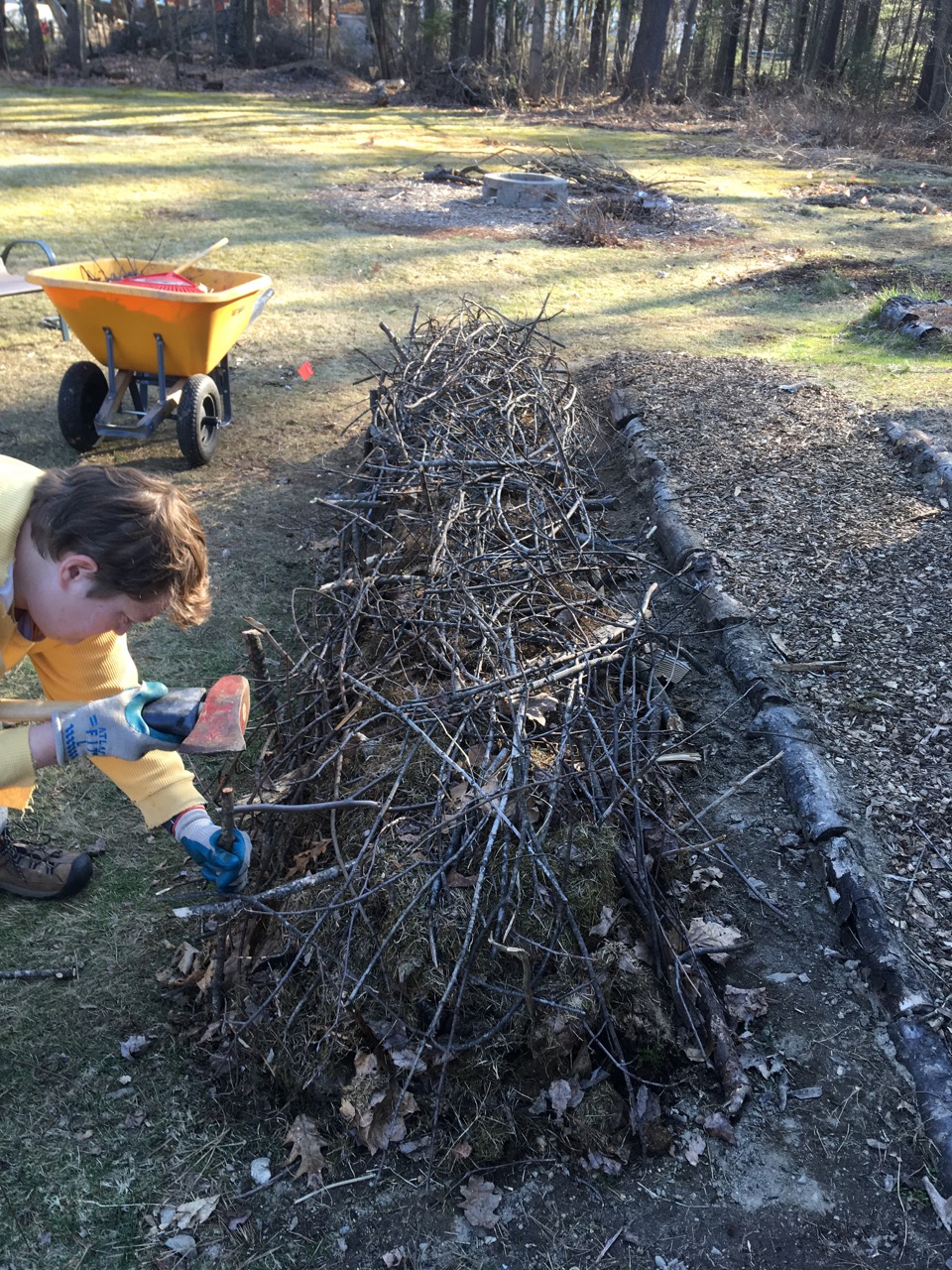
Continuing to build a hugelkultur garden bed, yesterday, we added some brush to the top and sides of the mound, over the cut grass layer. Margy pounded some branches into the ground on the side as stakes for further stabilization.

hugelkultur Margy stakes

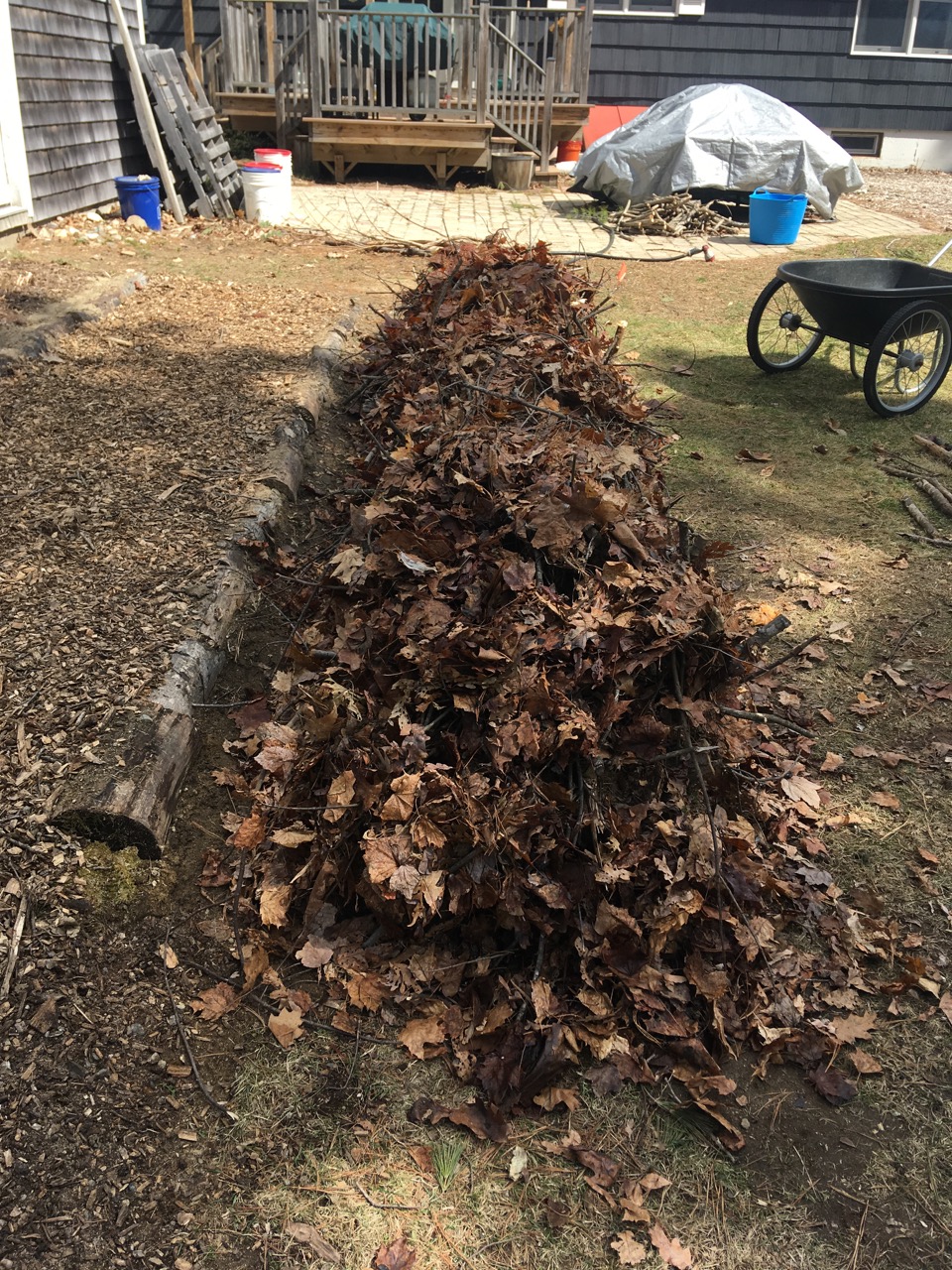
Next, today, I covered it all with dried leaves, one full wheelbarrow plus a big garbage bag full, saved from last fall.

hugelkultur leaves added

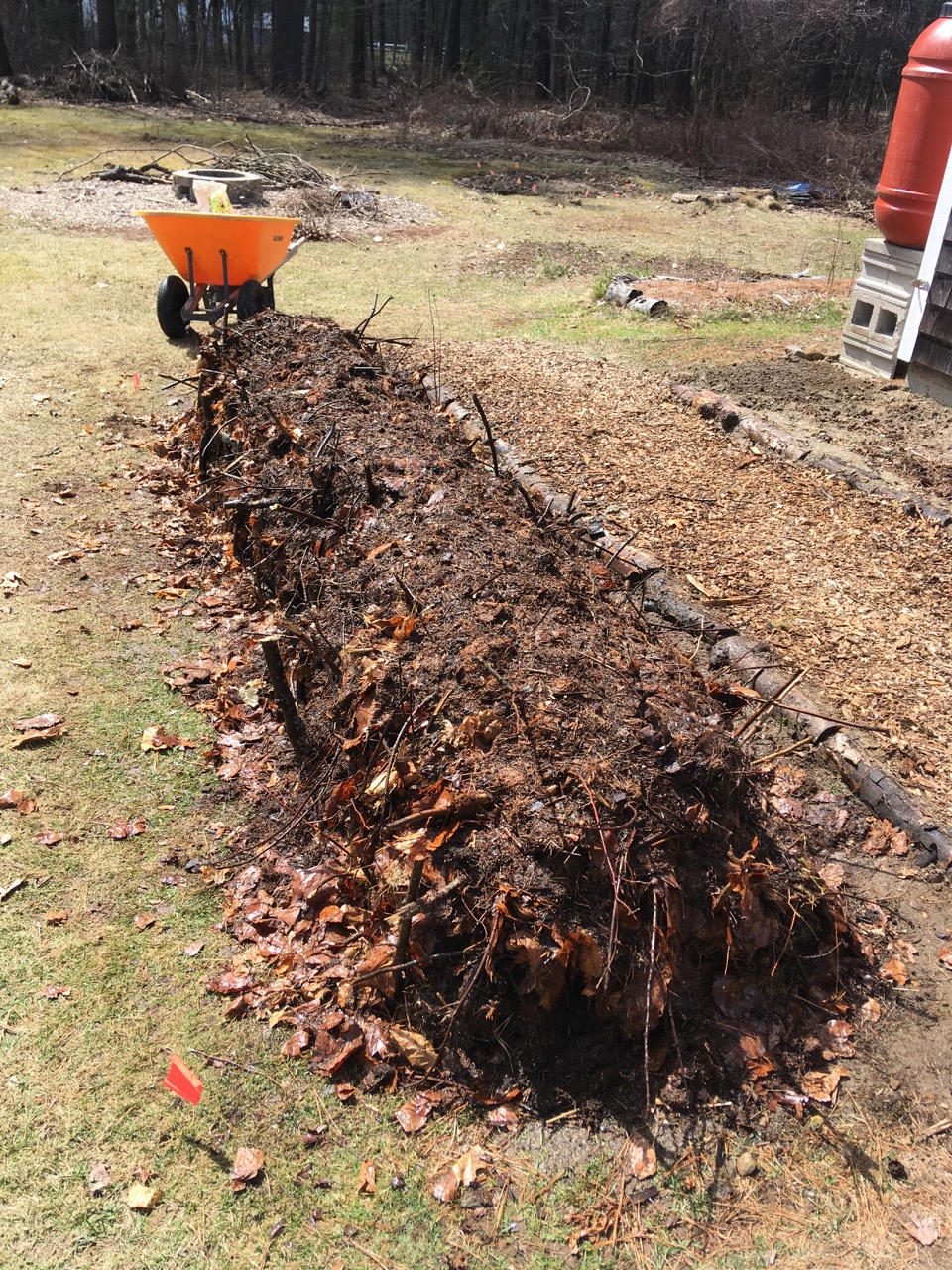
Finally, I added about 3 wheelbarrow loads of yard waste compost, and watered all of it. But this stage of adding compost is going to need many more loads before it is finished.  I should be adding several more inches of compost.  The mound is about 15 feet long, and will be 4 1/2 feet wide when complete. I had one of those moments when I thought, “Why did I make it so big?” I think this stage is going to take a while.

hugelkulture Tuesday

Meanwhile, I was pondering the fact that I often feel anxious when I am trying new things in the garden. I was realizing that my parents and grandparents were urban or suburban people. My dad wanted to get back to the land, and was a cowboy for a while, but mostly he worked as a draftsman for the auto industry. His parents tried to homestead in Wyoming, but that fell through and they came back to Detroit. My mom’s parents came from Linz, Austria and Quebec near Ottawa, Ontario, and lived most of their lives in Detroit.  She had flower gardens while I was growing up. So I didn’t learn how to grow food from my family. It has only been as an adult that I’ve tried to learn about food gardens, off and on as circumstances allowed it.

The more I learn, the more aware I am of how much I don’t know. Each plant is like a stranger to me, then perhaps an acquaintance, and I hope in a while it might be a friend. It is hard to believe that we could be relatives to each other.  (Well, except for kale–kale already feels like a relative, since I have grown it for a long time.)  But I try to remember to embrace this beginner’s mind, to be present and attuned to the process. It is good to be outside, to feel the spring, to forget for a while the grief and fear that this pandemic is unleashing.

Moon, Sun

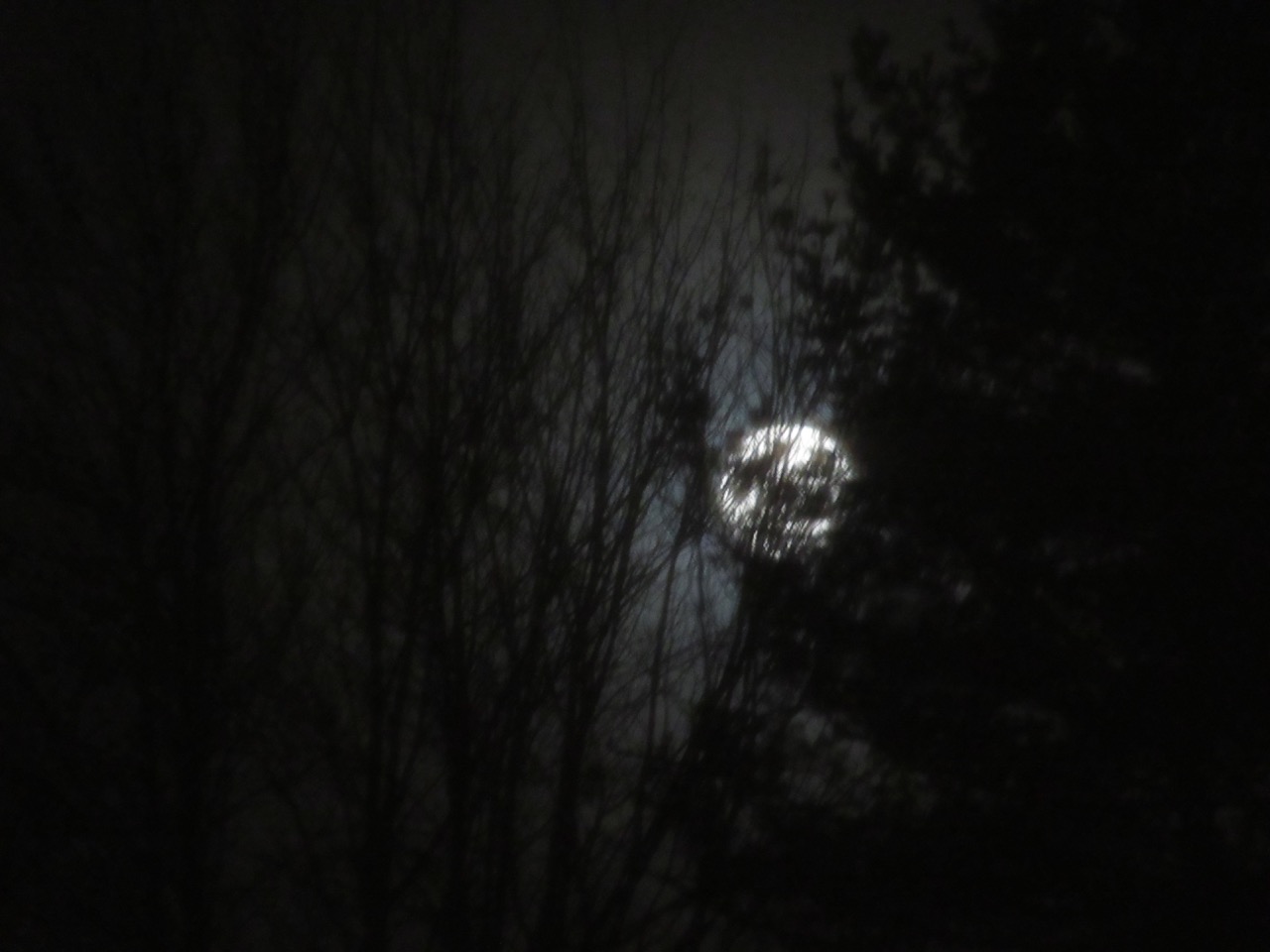
Full Moon in the west

I wake early this morning and see the shadows of the two cats, sitting upright together on a small table, gazing out through the semi-sheer curtain to the bright full moon.  The moon is called nipawset kisuhs in Passamaquoddy, the one who walks in the night. The sun is espotewset kisuhs, the one who walks in the day.  The moon and the sun are both considered animate, living beings.  That is how it has always seemed to me as well.

And so I am lying quietly awake, lifted by this beautiful light, this moment of magic, as the moon begins her descent into the west, into the branches of trees. We earth beings, cat and human, love the moon.

These days have felt fraught with fears for me, new coronavirus fears adding to the larger fears of ecological destruction, the resurgence of white nationalism and fascism, the horrors being wrought by our government on innocent children and parents who seek refuge from even larger fears of their own. So many fears. Now that I am retired, now that I am not so occupied with constant pressure from work, the fears have more room to rise up from their subconscious depths to trouble me directly.

Yet, the moon.  The moon eases the fears with her beauty.

Something about the moon calls into my memory a poem I wrote many years ago, back when I lived in Boston. That poem was about the sun, and also about fear. I think I want to share it here this morning, though it feels vulnerable to do so. These sacred moments. But perhaps it will be a blessing for someone else who is living into fear. The moon and the sun shine for us all.

The Sun spoke to her sometimes,
early, mostly at dawn,
though dawn usually meant
first glimpse she got each
morning, maybe standing
on the front porch to get the paper,
maybe looking through the window
between branches and buildings.
The Sun spoke to her then.

Is that a prayer?
Seems like she didn’t call out
or ask for anything–maybe
just a heart full of certain
needs–but the Sun seemed so eager.
The Sun seemed eager to name the day.

It was through the window
between the tree branches one time,
and three story buildings,
the Sun gave her a name too.
She never talked about the name,
seemed like it would sound silly
repeated like ordinary words
into conversation.

When the Sun spoke her name,
that was different,
so clear and simple
like words of power are:
First Afraid.
As soon as she heard those words
she didn’t feel afraid any more,
even though she could see so clear
how true it was,
how fear was always first in line
when things came up,
her heart clutching at the moments,
not wanting to let go or let come.
First Afraid.

And there was the sky turning
from pink to yellow
and night was turning right into day.
She sees the moments passing,
and all quiet-like inside,
knows that even her fear
can’t stop that turning,
and her hands relax a little,
her eyes watch, curious.

She remembers a child learning words
and colors and numbers,
the names of things.
All the world fitting
into the hands and mouth,
touched and eaten and spoken
–her mouth so full of power
she can’t help laughing–
words multiplying like popcorn,
words sweet like candy,
she wants to say everything.

But then her mother’s voice
tightens like a lid on a jar
–be careful, be careful–
as if naming were sharp like a knife
or heavy to drop and crush,
words so hot they might burn.
As if she just might eat up
the whole world and leave nothing left
at all, And so she stops to measure,
stops and measures.
First Afraid.

The Sun doesn’t slow down or speed up,
moves surely, gently, warmly.
Caresses with indifferent generosity
across the words
of morning or noontime.
The Sun speaks her.
Puts words back in her mouth
and on her fingers.
Sky turning from pink to yellow
and night turning into day
through the window
between the tree branches
and three story buildings.
The Sun puts words back in her mouth
and on her fingers.

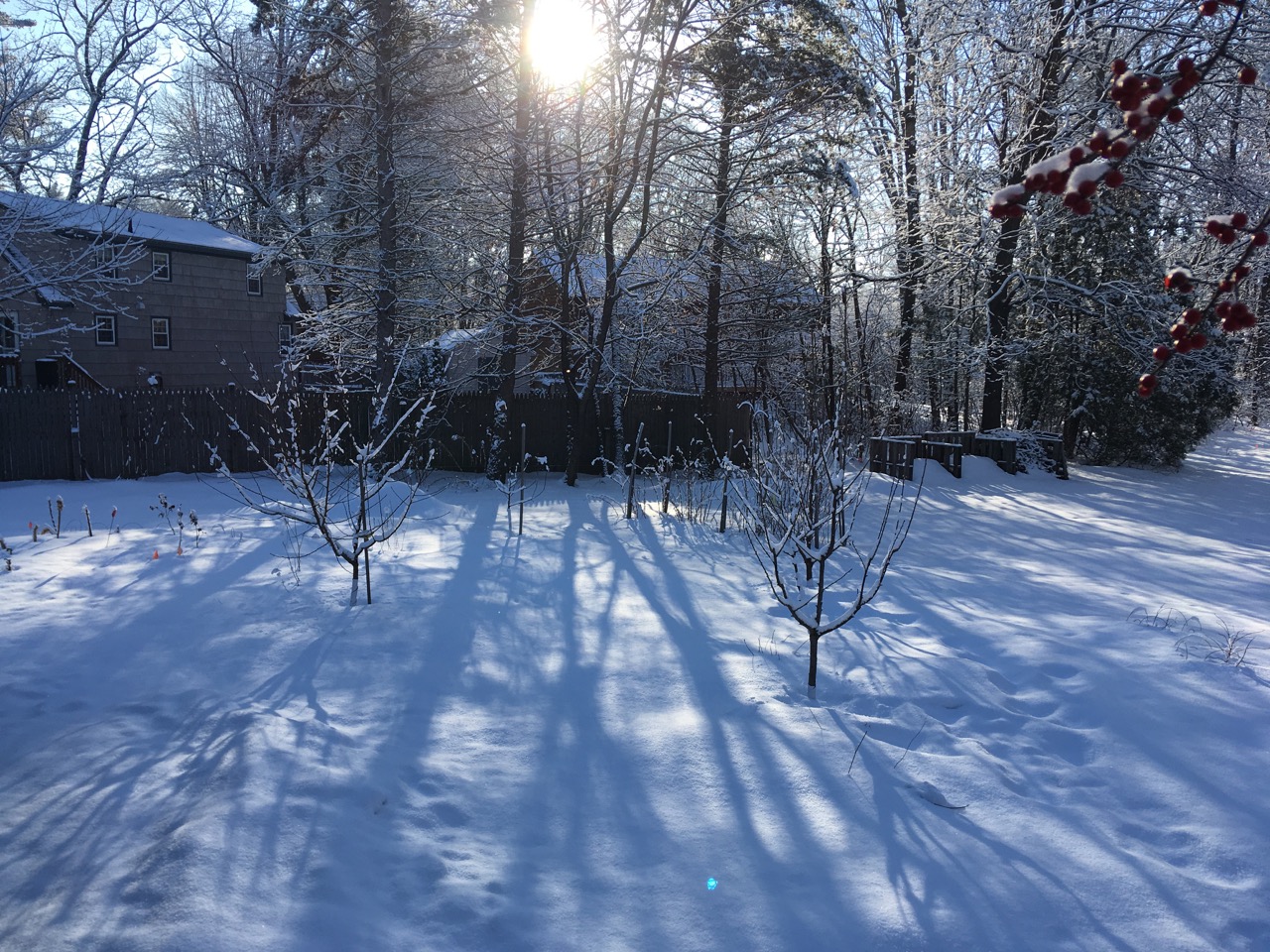
Sun in winter

Miracle of Ocean

Crescent Beach September

Yesterday late afternoon, with the weather up to 80 degrees, I went to Crescent Beach. Would it be the last day warm enough for me to go in the water? Maybe, maybe not. But without expectations, I set up my chair on the sand, and walked down to the edge of the water to feel the cold splashing on my feet. Its temperature was mildly cold not frigid, much warmer than early summer. There were a few more waves than usual. Only a small group of children were in the water, jumping into the waves as they broke on the shore.

I have become a bit timid about waves, as I have gotten older. The tide was low, and there were lots of round stones to walk over, so I came back to my chair and put on some swim shoes, so I’d have better balance. Then I walked back out and stepped right in. I moved quickly through the breaking waves and past them to about my waist level. The rhythms of the water rose up to my shoulders, and then back down, lifted me up and down, too, but gently. I dove into one wave to cover my head, but then I just stood facing the sea, watching the waves come in, letting them carry me up and down.

Here’s the amazing thing: after being in the water, the waves, for a long time, and then staying longer still, I began to be washed in a sense of joy and happiness. It felt miraculous because this whole past week, I had been feeling exhausted and achy–a classic flare up of the auto-immune conditions I struggle with. But somehow the water washed all of that away, and I was filled with a physical sense of well-being and playfulness.

When I go into the water, I usually pray to the Mother Ocean, I give her my worries and struggles. She is one kind of divine presence, larger than I can ever be, and the source of all life. But it wasn’t my small prayer that shifted me–it was the very energy and power of her presence all around me, it was the waves dancing with me, it was my body responding to the waves. It was unexpected.

Filled with this lovely happiness, when I came out of the water, I walked along the shore looking at stones and shells, and I found several pieces of sea glass. I love that the ocean can transform these broken bits of human invention into tokens of beauty. Since I have been thinking lately about the ancestors, it came to me that sea glass is a kind of gift from people who came before. I’ve read that it can take 20-40 years in the waves, sometimes longer, for glass to be tumbled to create this patina. So someone a long or short time ago made the glass, touched it, discarded it.  I am holding this connection, broken yet made whole again, and so I prayed for friends and family who needed healing.Seaglass

After my walk, I sat in my chair and ate some yogurt mixed with cocoa, honey, cacao nibs, and blueberries. I started reading the novel Barkskins by Annie Proulx, which begins with French settlers in Quebec taking down the forest. (Another way to try to understand colonization.)  Isn’t it a picture of happiness, to read in a chair on the beach, sun on my shoulders?

monarch catepillarOn my walk back to the car, one more fun surprise. This colorful monarch caterpillar on a milkweed plant just past the beach roses.

I wish I could share with you the happiness of being in the ocean, of walking on the shore finding sea glass, of reading on the beach on a September evening, of finding a monarch on a milkweed.

But the happiness was triggered by actually being in the ocean with its waves dancing me up and down. So if you are feeling timid about walking into the waves, whether literal or metaphorical, please know that on the other side little miracles might happen. Joy might find you.