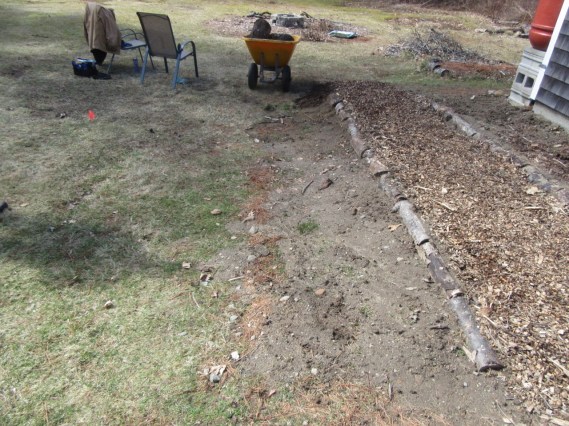
Today we started the process of building a hugelkultur garden bed. Here is the “before” picture, though I had already created a path, next to the asparagus bed at the side of our garage. I lined the path with logs from the land, leveled it, and covered it with wood chips. Ever since I created the asparagus bed, that slope has been a bit of a mess, from all the dirt that I moved around to do asparagus plantings.
Hugelkultur means hill culture, or hill garden, and is one of the tools in a permaculture tool kit that we had never used before. It is a kind of raised garden bed, with rotting logs at the base, brush, leaves, and other organic materials over that, and soil over the whole mound. The logs hold moisture, so that eventually you don’t need to water your plants as often, and they contain nutrients that are gradually released to the soil. They also extend your growing season because their slow decomposition warms the bed. It also serves as a use for old rotting wood and brush that otherwise might go to the dump, and it sequesters carbon in the soil. Some folks make them 6 feet high, but ours will be smaller than that.
With everything happening because of the COVID 19 pandemic, we felt it would be a good time to increase our capacity to grow more food. So far in our garden, we’ve focused on cultivating fruit trees and bushes, and herbs and other perennials. The only annuals I have grown are snap peas and kale, in amongst the trees. So this bed will be for annual vegetables, like carrots, lettuce, and zucchini.
The first stage was to go around with a wheelbarrow and collect old logs that have accumulated on the edges of our land. Most of them were there when we arrived four years ago. I think this will be the hardest part. These logs were heavy! Margy and I both had to rest in between loads. But it has been a beautiful sunny day, so what could be better than to sit in our yard in the sun.
The next step is to arranged the logs every which way in the area that will be the bed. Some people might be more orderly than this, but it doesn’t really matter. It does matter what kinds of wood you use. Hardwoods are preferred, but not cedar, which doesn’t rot, or black walnut, black cherry, or black locust because of how they protect themselves in the soil. Pines have tannins, and might make the soil more acidic, plus they don’t last as long. We were also careful not to use any bittersweet cuttings, and to make sure no bittersweet roots had colonized the rotten logs. Margy spends half her time going around cutting back all of that.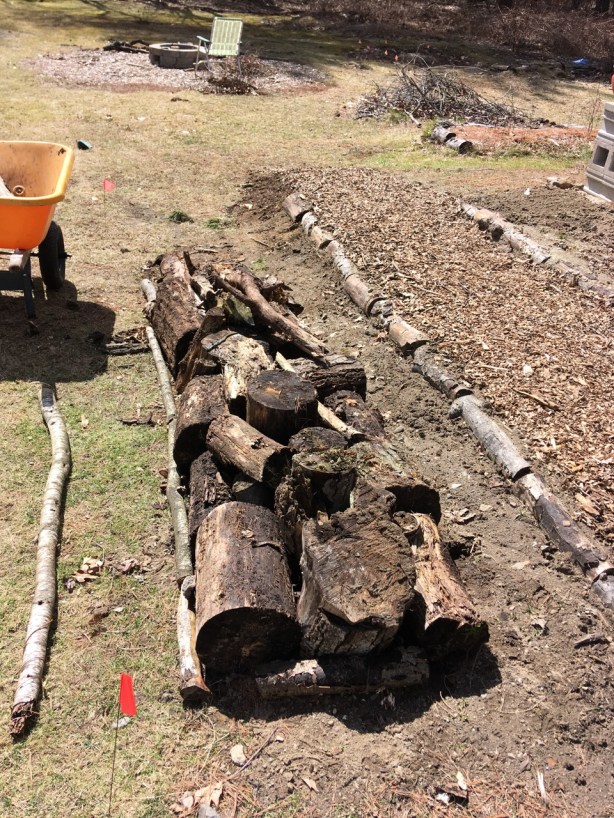
After the big logs were laid out, we filled in with smaller logs and long branches. And that was as far as we got today. I came in to have a cup of tea, and to write all about it. Tomorrow’s weather is supposed to stay nice so we’ll do the next steps then, and I’ll do an update.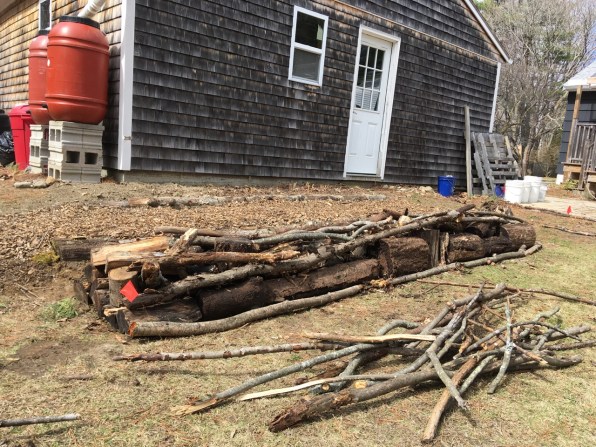
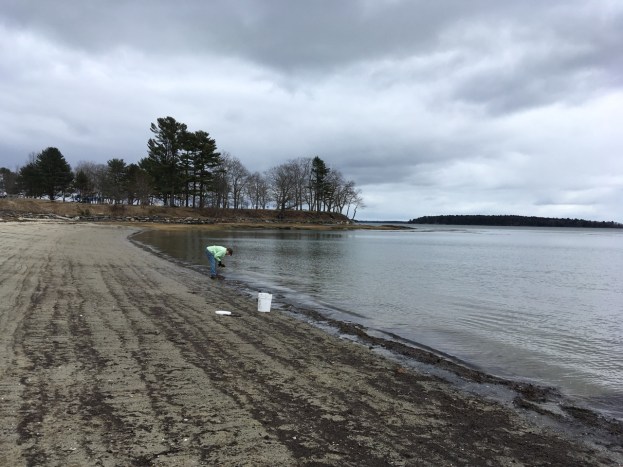
Oh, I should also mention that Wednesday Margy and I had a big outing–since we’ve been staying home for three weeks now. We went out to Winslow Park beach, and gathered seaweed, and got to see the beautiful ocean. All that seaweed will go into the hugelkultur too. One of my favorite things about permaculture is that nothing is wasted–what we might think of as waste is passed along as food for another part of the cycle of life. So rotten logs, brush, dead seaweed, fallen leaves, cut grass, vegetable scraps–all of it goes back to help create fertile soil. That is something beautiful to perceive.
 A few fun surprises this week in the garden. Way back in May, I had inoculated the wood chips near the fruit trees with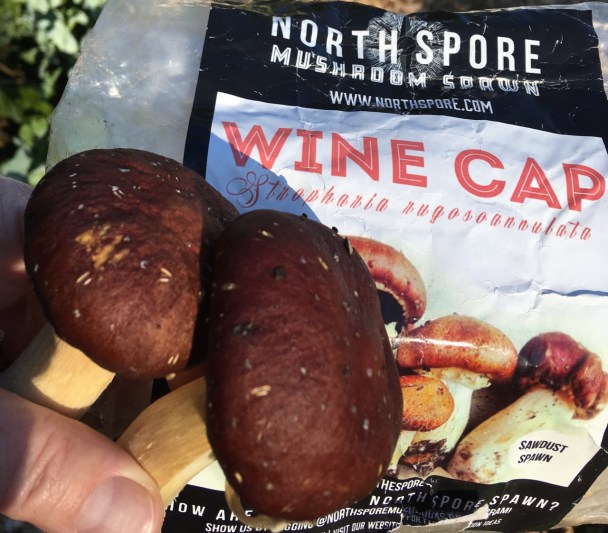

 This week there were a few exciting new developments in the garden. We harvested our very first elderberries—maybe a whole half cup of them! Earlier in the summer, I was worried about whether something was wrong with the elder flowers, and perhaps there was, but eventually they created a spotty bunch of green berries. I must admit, I hadn’t gone by the bush for several days, but when I went out the other day, they were purple. I ate one that was quite sweet, but Margy tasted a sour one, not as ripe.
 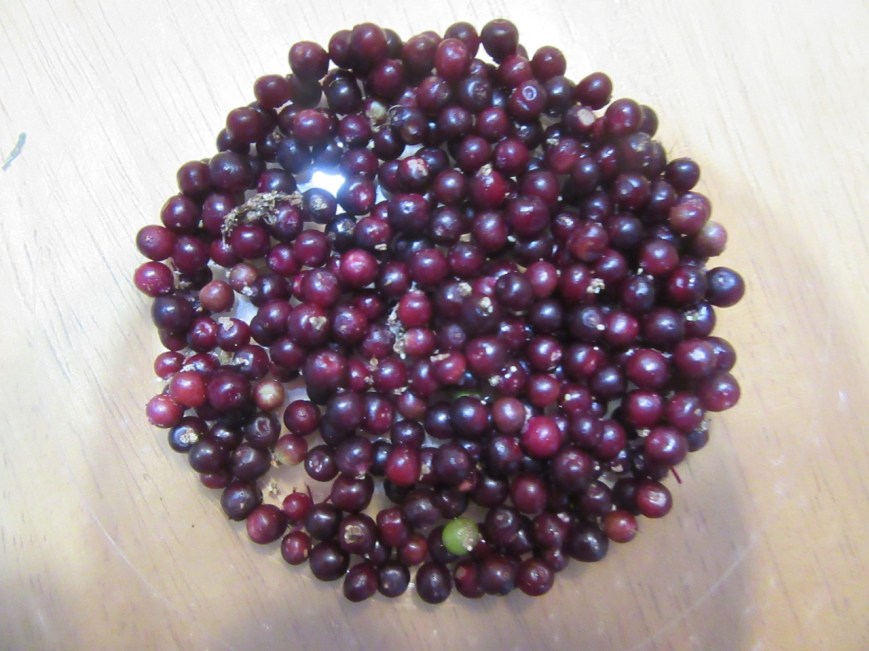 Not enough to make elderberry syrup, or really much of anything, but enough to be enthused about future possibilities. Margy and I will have to celebrate with a berry eating ritual.
 There are only a few catkins right now, but they are a harbinger of future crops of hazelnuts. In my last batch of pesto, I used hazelnuts from the Food Coop to add to basil, parsley, chives and garlic from the garden, plus olive oil and lemon of course. So we can’t quite do it only from our garden, but maybe more and more.

 The esplanade, the

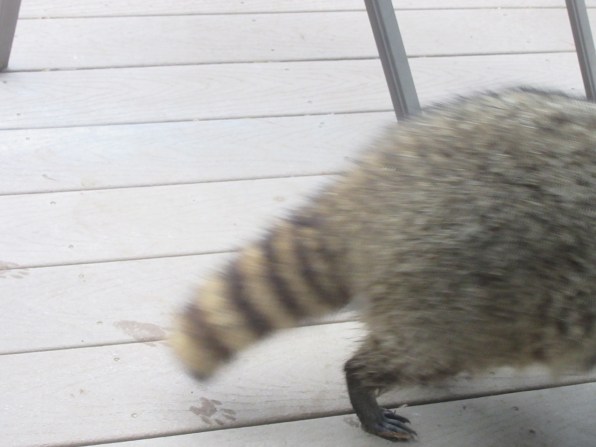
 The Passamaquoddy word for raccoon is Espons, and it means the one who leaves a mess. I pulled on my boots to go outside to see if Espons had left any messes anywhere in our garden–but the only thing I found was a tiny hole dug into the side of our compost barrel. It looks like that compost is ready.