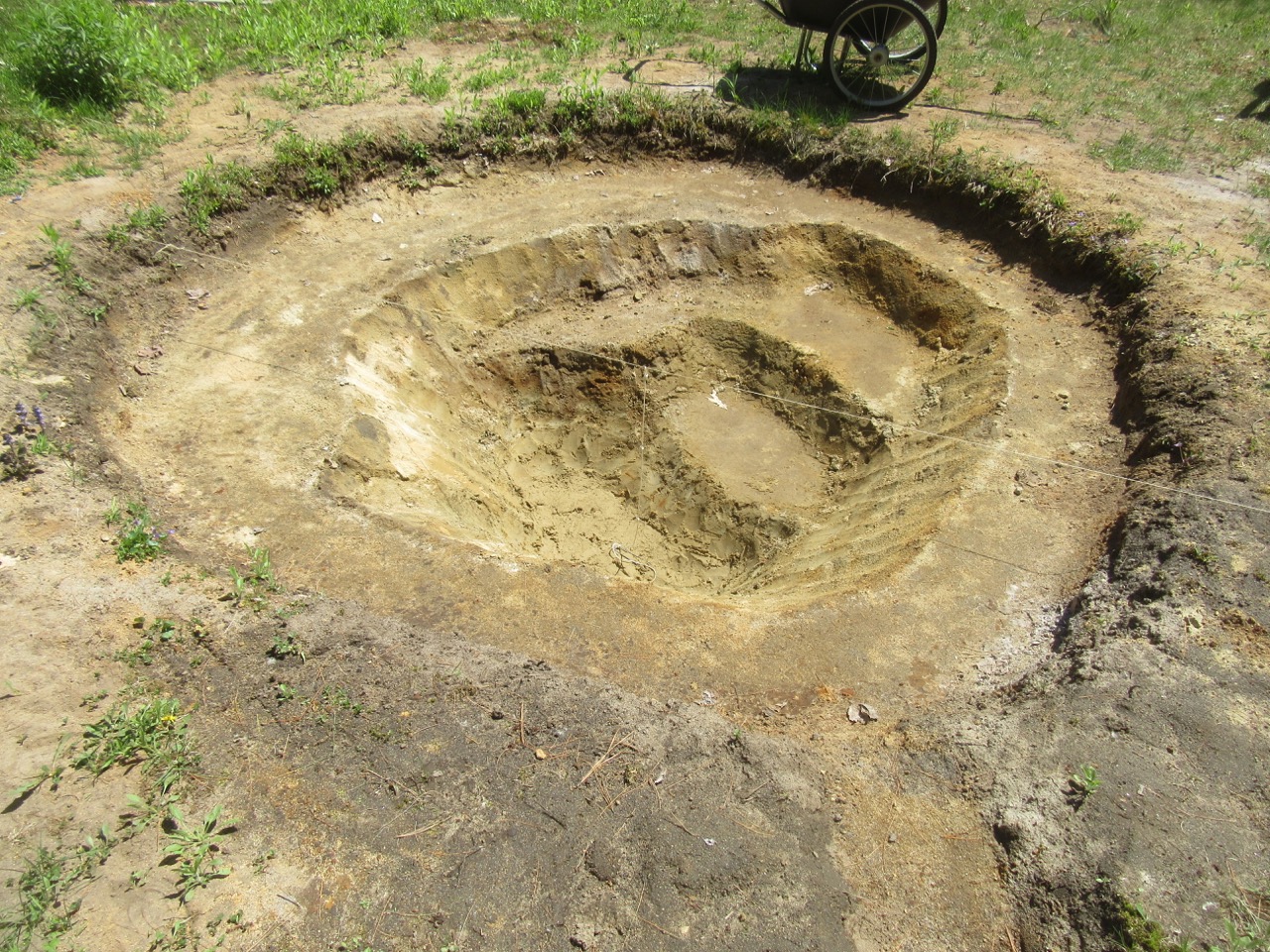
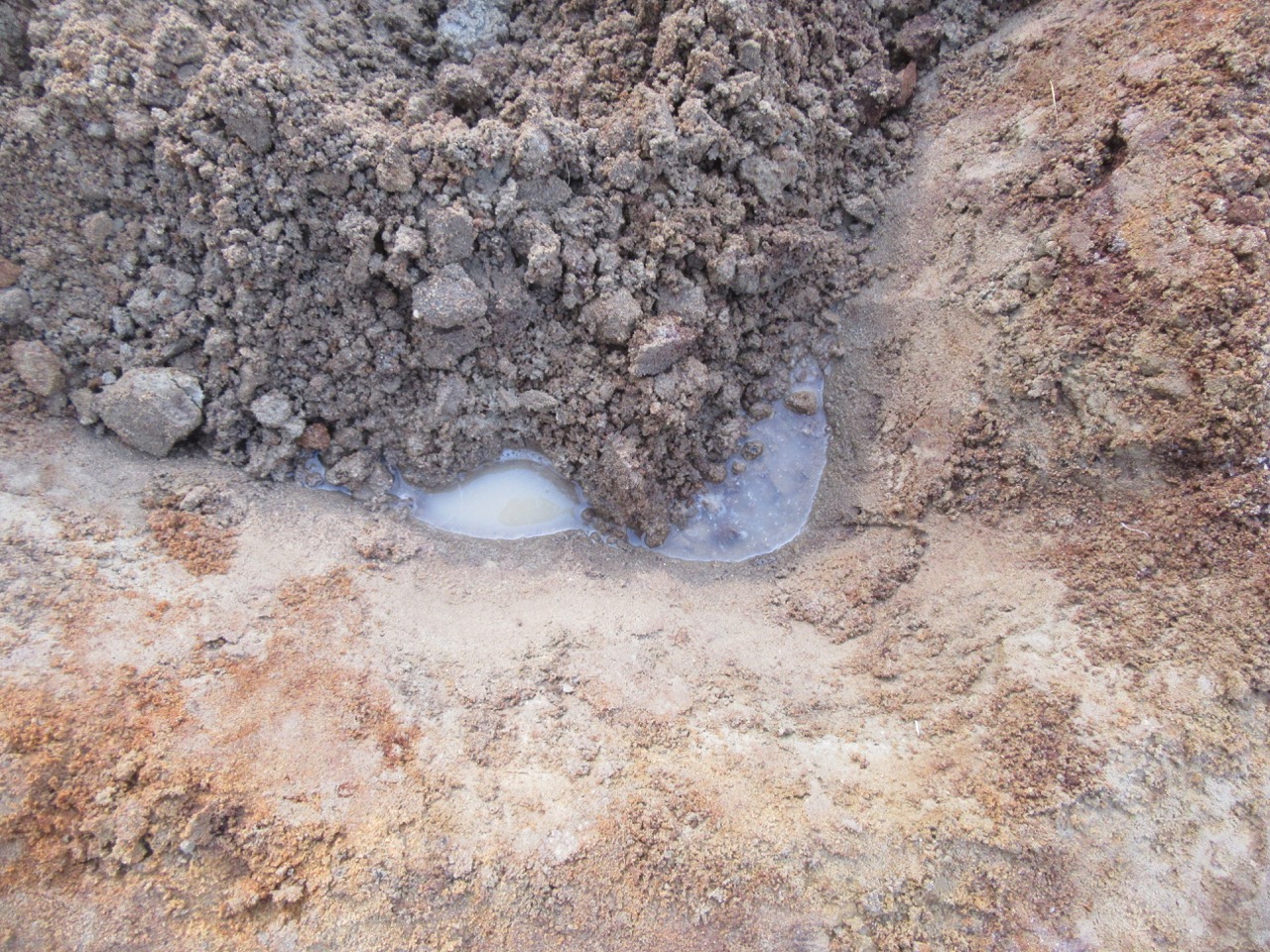
Hurray! I’ve been back to digging the pond the last couple days, and today I finished the bottom layer! I hit clay soil at about 2 1/2 feet down, and went a little deeper in one spot. For those who were wondering about the water that showed up in the bottom, I learned, after consulting other folks, that it’s probably not really a bit deal. It might possibly lift the liner in the spring a small amount, but on the other hand, the water in the pond might have enough weight to counter that. In any case, over the last several days of not much rain, there is no standing water, though the soil I’ve dug out has been damp.
So I ended up with four levels: first level all around the edge for planting (at about 10 inches down), second for a step, plus another spot to plant pond lilies, third another step down, and fourth the very bottom. The bottom is about 2 ft. 10 inches feet deep, though more like 2 1/2 feet from the top of the water once filled, since there is an overflow channel about 4 inches down from the top. I decided to let the clay soil be my guide for stopping at that depth. The very thin white line you can see across the pond is my measuring-depth-device–a string anchored in the ground at each side, and then another string looped onto it, marked with knots at each foot, and weighted so it hangs down.
It has been a lot of hard work to do the final levels, because each damp shovel-full had to be carried up the steps to the top step to put it in the wheelbarrow. And then, when I wheeled it all to the mound where it was going, I had to shovel it onto the mound. (Eventually I will add compost to the mound, and plant some sort of ground cover.)

The next step will be to cut old carpet into strips, to layer over the ground to keep roots from coming through, and to protect the pond liner. And surprisingly, there were small bittersweet roots all the way down to the bottom level. I have a pile of old carpet that I collected from willing volunteers (via Freecycle and Buy Nothing) last week, that is sitting on the patio, waiting for me.
But for now, I am coming inside to rest, with sore muscles but a happy heart. It has been so satisfying to be digging down into the beautiful earth, imagining a place for water.


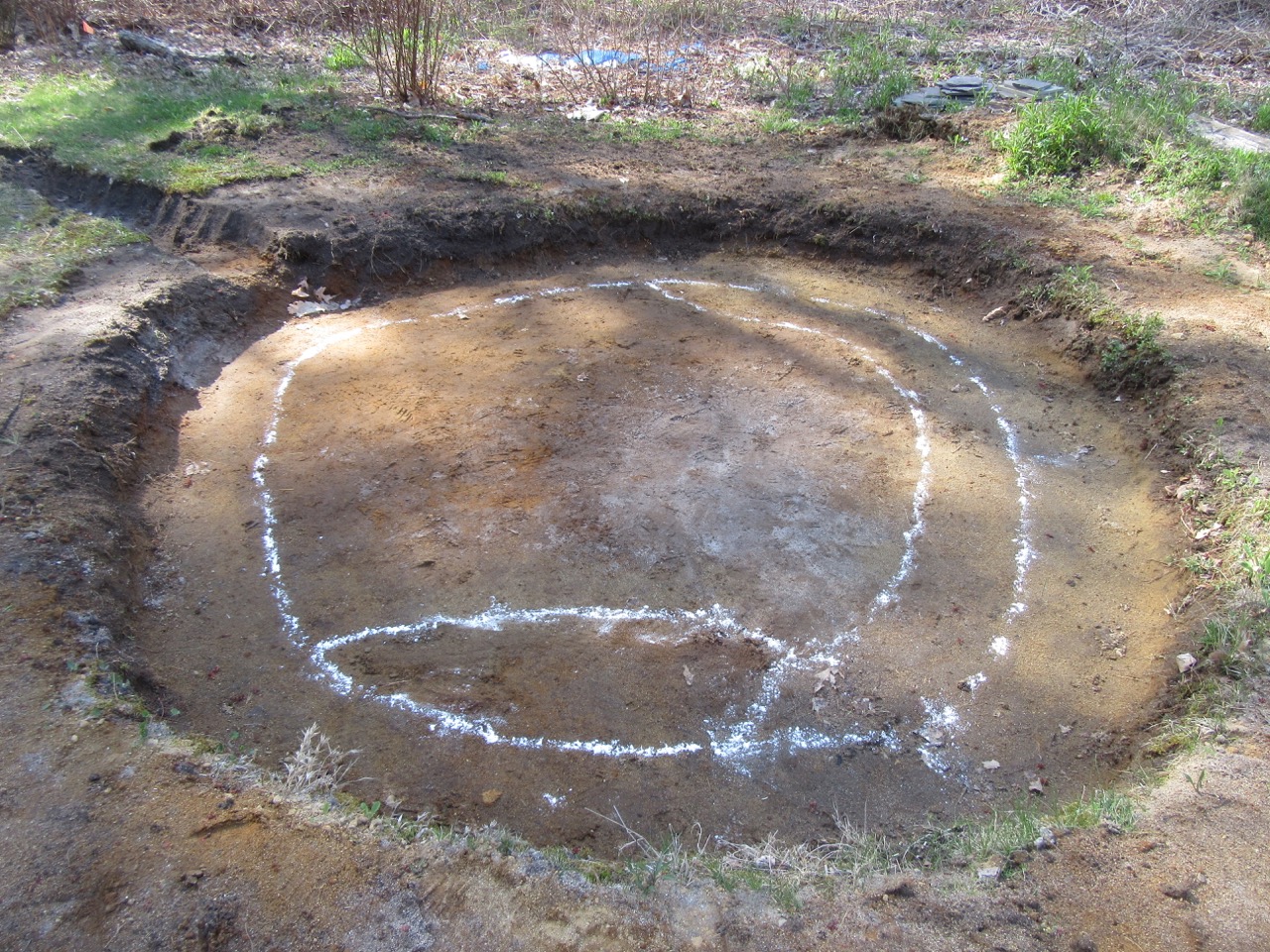


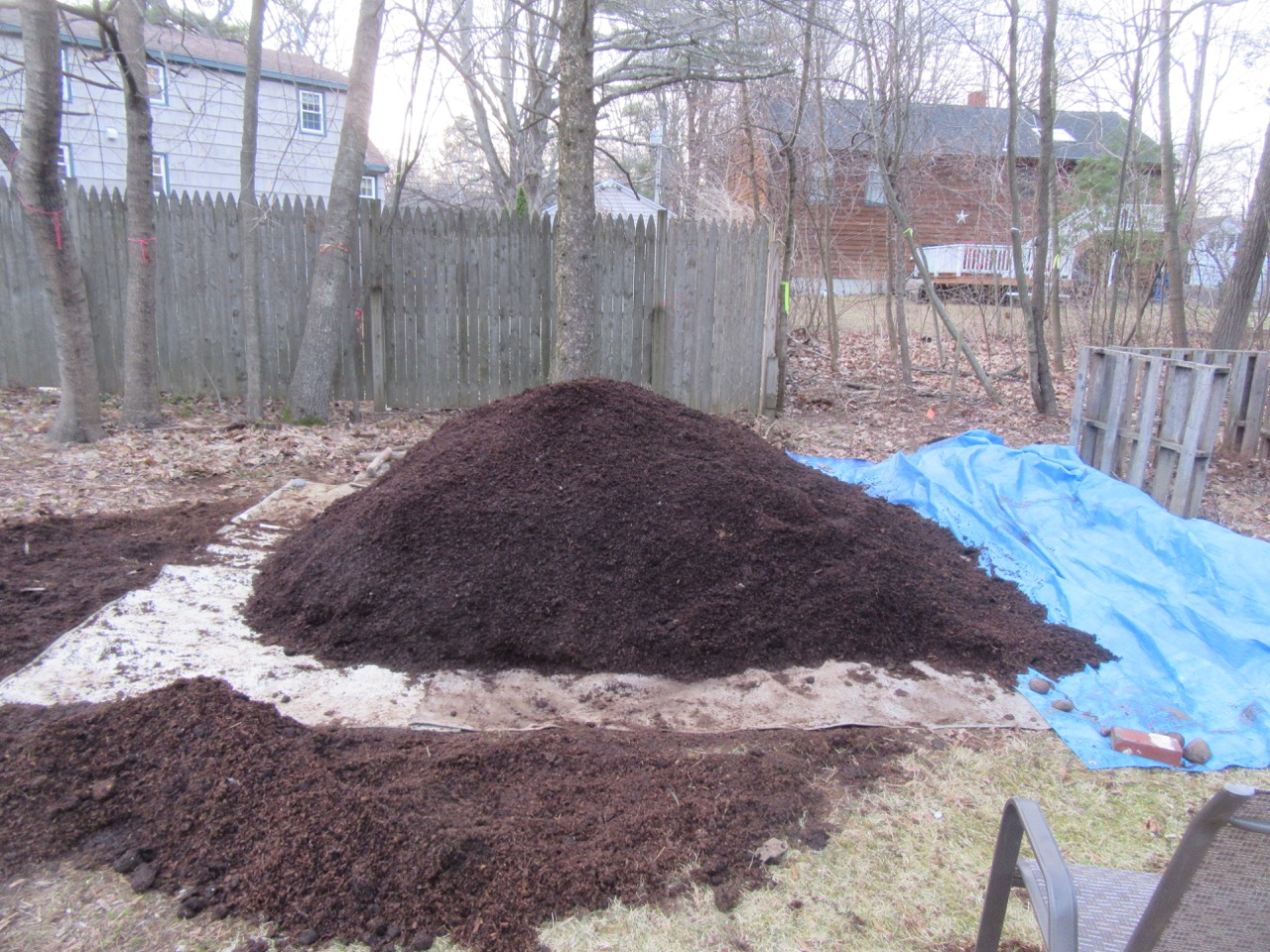





 The last few days I have been working on a garden bed for two future high bush blueberry plants. This was the toughest project so far, in terms of physical stamina. I was following the guideline of Michael Phillips in the Holistic Orchard. His first step is to dig a bed one foot deep and 3-4 feet in diameter per plant, (so for me that meant about 7-8 feet long and 3-4 feet wide).
 Once I had dug the hole, I came upon bittersweet roots, so then spent some time strategizing about what to do for that. I eventually decided to clip them off where they emerged, and then line the sides of the hole with cardboard. Since I was also making paths around the bed, I bent the cardboard so that it covered the path as well.
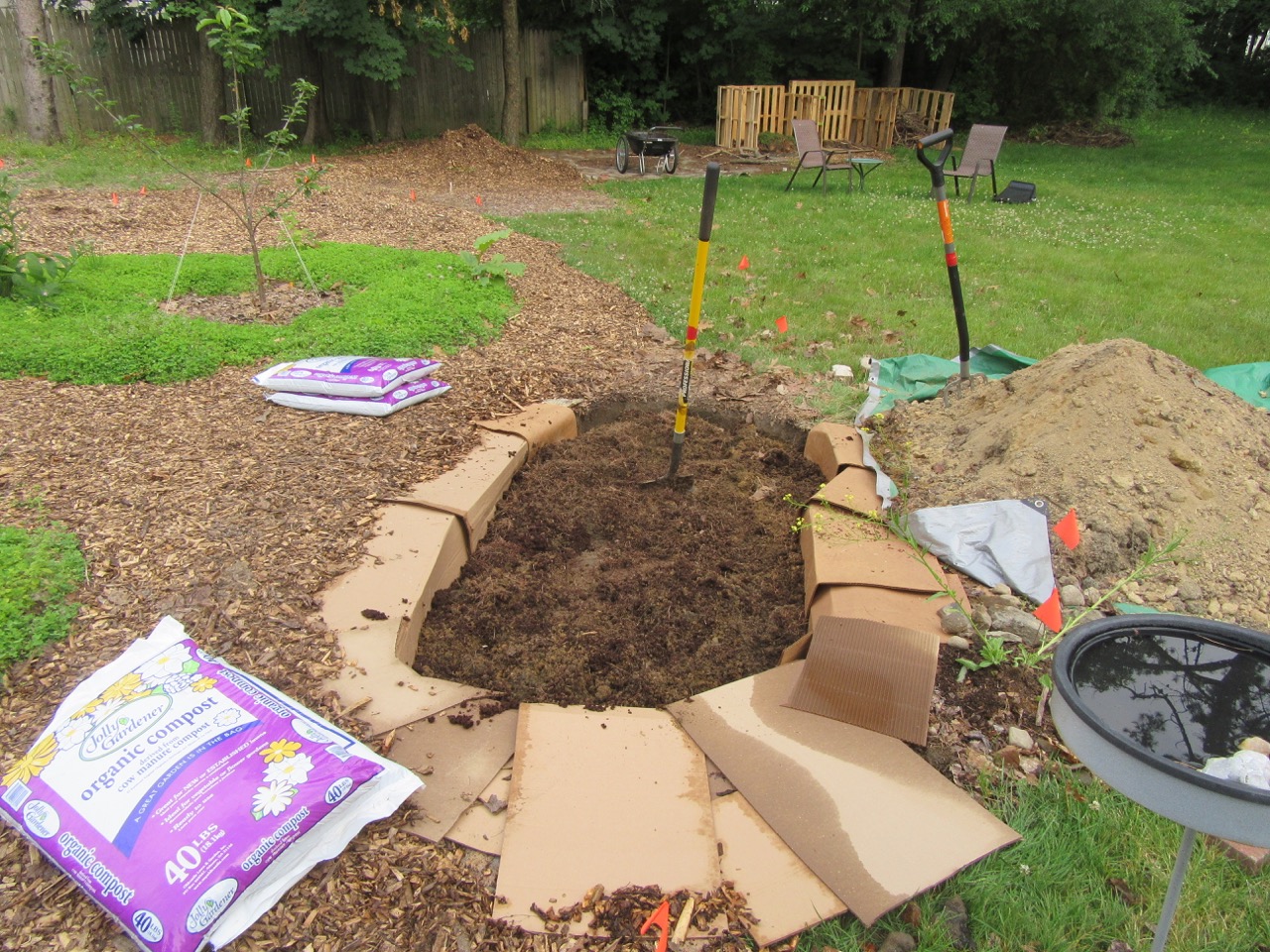 And it is a lot of work to dig out a hole, then fill it with other stuff, and then “stir” it around, which really means turn the soil over and over. I am glad I only have to do it once. So I would do what digging I could, and then stop and rest for most of the day, and return to it in the evening if I could. After the peat moss, soil, & compost mix was in, I added 2 cups elemental sulfur, 4 cups green sand, and 2 cups rock phosphate, all organic nutrients. This whole mix is meant to create the type of soil that blueberries love, with an acid leaning ph, and the nutrients they need. (You may notice that I purchased more composted manure, because we used up our big pile.)


 Finding Our Way Home