Sun and Moon

Campsite View

Morning View from our Campsite

One summer, I was sitting at our campsite at Winslow Park, watching the sun rise over the water. It was a day without a lot of plans, so I could sit and watch the sky and water for a long time. I noticed how fast the sun seemed to move up the sky. I heard somewhere that you can estimate the time by holding up your fist sideways, and counting each fist width from the horizon to the sun as an hour. In a simpler world, it was enough to tell time by noticing where the sun was in the sky.

Curious about this, I discovered that actually, if you took a picture of the sun at noon every day for a year, you’d find that it wasn’t in the same spot at all. Rather, you’d have a photo of an elliptical shape, like a lopsided figure eight. People call this path of the sun an analemma. It is formed from the fact that our orbit is not an exact circle, but an ellipse, and our planet is tilted relative to its orbit around the sun. So we have the seasons, and each day from June to December the sun rises a few minutes later, and a little bit further to the south, passing by due east on Equinox.

The natural world is full of these movements that follow their own intricate rhythms and orderly patterns. As I become aware of them, I begin to feel myself as a part of a vast dance with the sun, the earth, the moon, the stars. Our spiritual journey is such a dance—it too follows intricate rhythms and mysterious patterns. We may imagine that we are going forward, but perhaps we are dancing round and round like the moon.

Each day, the moon rises on average fifty minutes later than the previous day, and the high and low tides are changing at a similar pace. Winslow Park has a tidal beach, so we pay attention to the tides in the summer. You can only swim for about two hours before and after the high tide. One of our city friends didn’t understand about tides. We were planning to go swimming with her on a Wednesday. Two days before, she was visiting the beach and called us from there to make plans. “The sign at the beach house says high tide is at 2 p.m.,” she said, “Shall we meet at 2 on Wednesday?” We had to explain to her that the tide would be later in two days, closer to 3:40 p.m.; that it changes every day.

Once, years ago, I created a moon calendar for my stepdaughter Stephanie, who was six years old at the time. I was curious myself about why the moon was sometimes seen in the morning, and sometimes in the evening, and I thought it would be fun to learn about it and share it with her. So I tracked it, and began to understand its pattern.

The full moon rises at sunset and stays in the sky all night, setting at sunrise. Then, as the days go by, the moon begins to grow smaller, and it rises about fifty minutes later each day, until you can only see it in the morning just before and after dawn. About two weeks after the full moon, the moon rises unseen with the sun and sets invisibly with the sun. The night is dark. This is called the dark moon or the new moon. Then a day or two later, a thin waxing crescent appears in the western sky just after sunset and sets soon after. Each day it is seen in the evening for a little longer time until we come round to full moon again.

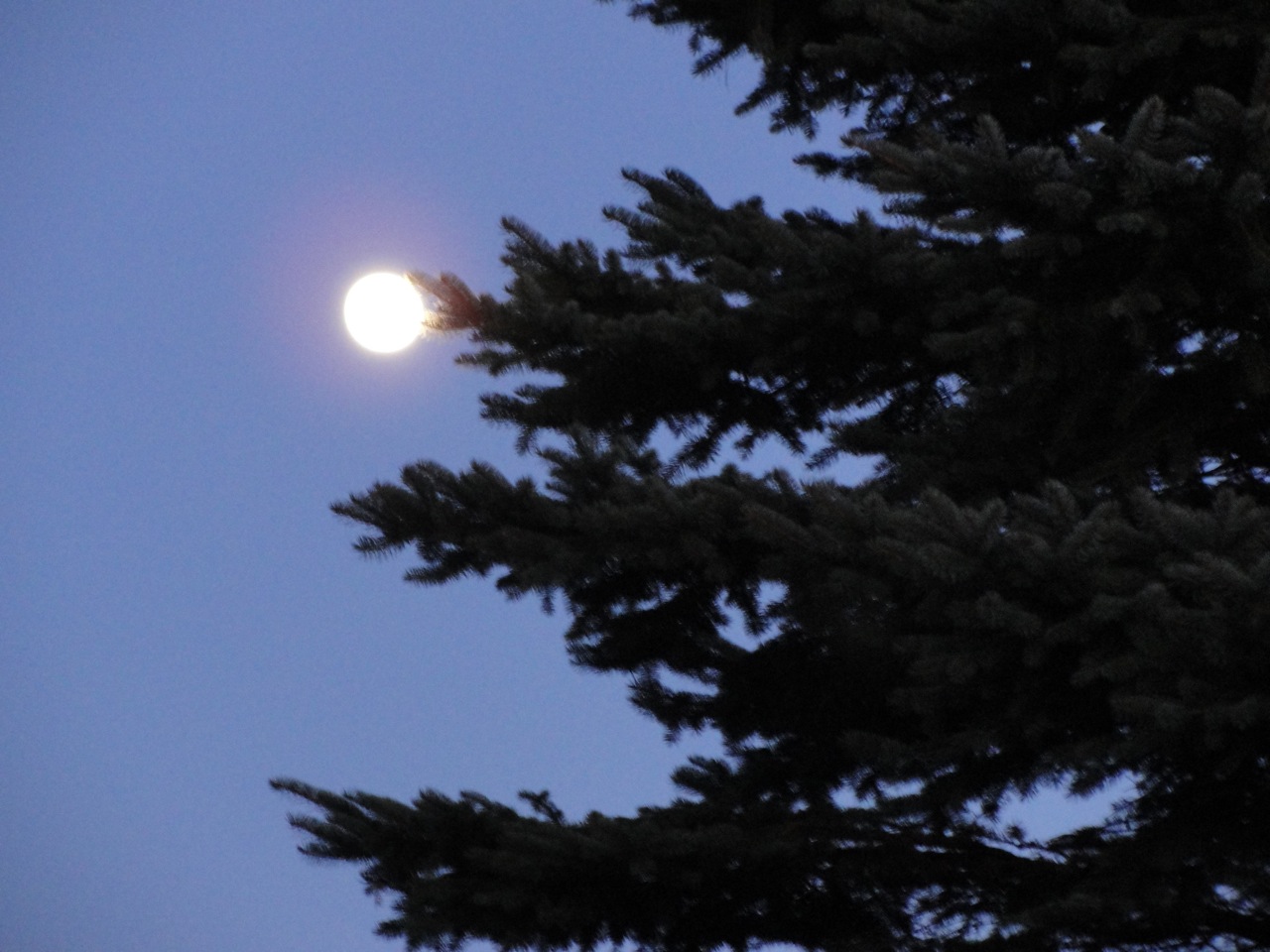
Full Moon

Life Moves In Cycles

Curve of waterNothing moves in a straight line,
But in arcs, epicycles, spirals and gyres.
Nothing living grows in cubes, cones, or rhomboids,
But we take a little here and we give a little there,
And the wind blows right through us…
Marge Piercy

My colleague the Rabbi fell on some ice in the parking lot of her congregation in December of 2009. Several months later, she was diagnosed with a brain injury, and was unable to work any longer. In 2011, she started a beautiful blog called Brainstorm. In her blog, she described one of the curious ways that her brain is different now. She writes:

I didn’t notice that I no longer broke time up into chunks like minutes, hours, days. In, fact, I didn’t notice there was such a thing as time at all. I still don’t feel time. I don’t know what day it is. I have a watch that tells me and I am learning to memorize that information in rehab. If you and I meet and begin to talk, I will be totally present. I have attained Buddha-hood; there is no before or after — only now.2

Later, she asks, “How long is a year anyway? Is it before lunch or after? And is February leaves, snow, mud or sun? That is how I tell time. … We are either in leaves or mud right now. it is hard to tell.” “Soon we will stack logs for the wood stove. Put on socks and fleece, sit on the porch swing and drink tomato soup in the mugs the children made.  I do not feel months, days or dates, but I haven’t lost the seasons. I never knew how precious they were until I lost every other marker of time’s passage.”

We think that time moves relentlessly in a straight line, going from past to present to future. Similarly, we might imagine our spiritual journey as a going forward from one thing to another. But our relationship to time is mysterious, located in a spot in our brain which can be damaged or destroyed. If that happens, then linear time disappears. But the circular patterns of movement are still observable. All around us there is evidence that life moves in cycles: the earth spinning around its axis each day and night, planets spinning around the sun, tides going in and out, the stars circling round the night sky.

Some cycles are easier to notice than others. Here in Maine, the autumn comes with bright colors and the falling of leaves. Winter is cold and snowy, spring full of mud and new plants, summer warm and full of plentiful greens. These seasonal changes register in a deep layer of our minds.

Poem Excerpt from Marge Piercy, “I Saw Her Dancing,” in Available Light, p. 118.

Imaginal Buds

Change is already happening. There are millions of people and groups who are in some way involved in a new vision of community, and we can be a part of it. David Korten calls our attention to the familiar story of the caterpillar and butterfly. We all know the story. The caterpillar spends its days gorging itself on nature’s bounty. But then it attaches to a twig and forms a chrysalis around itself in order to become a butterfly. What we might not know is what’s happening inside the chrysalis to shape the butterfly.

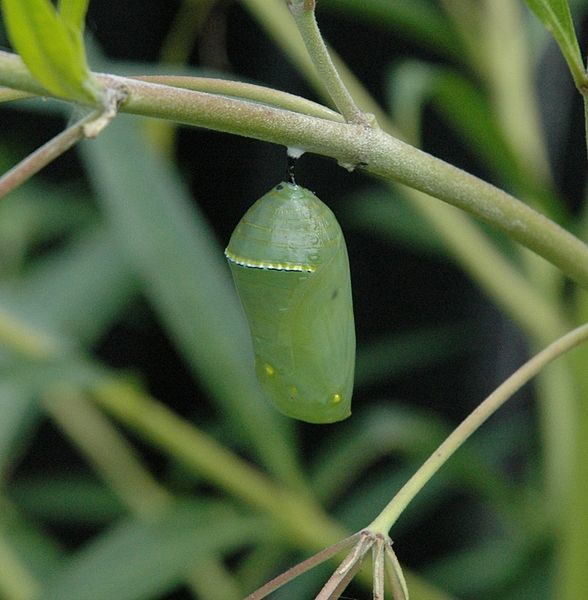
Monarch Butterfly Chrysalis Photo by Armon, Licensed via Wikimedia Commons

Monarch Butterfly Chrysalis
Photo by Armon, Licensed via Wikimedia Commons

Korten, drawing on the work of evolution biologists writes:

The structures of its cellular tissue begin to dissolve into an organic soup. Yet, guided by some deep inner wisdom, a number of organizer cells begin to rush around gathering others cells to form imaginal buds, initially independent multicellular structures that begin to give form to the organs of a new creature. Correctly perceiving a threat to the old order, but misdiagnosing the source, the caterpillar’s still intact immune system attributes the threat to the imaginal buds and attacks them as alien intruders.

The imaginal buds prevail by linking up with one another in a cooperative effort that brings forth a new being of great beauty, wondrous possibilities, and little identifiable resemblance to its progenitor.

Korten sees our cultural transformation in a similar vein. Individuals wake up from the prevailing social systems, and begin to align their lives with the values of partnership and earth community. At first they experience a sense of isolation, but eventually they find others who share those values, and form what Parker Palmer calls “communities of congruence.” Those small beginnings attract others—they are like the imaginal buds of the new culture.

The old culture perceives them as a threat and often attacks their work. But as they network with others who share in the new cultural values, change begins to happen. Korten says that the cultural transformation we need is already in process—we can see the evidence of its beginnings in the great social change movements of the last half of the twentieth century—for civil rights, women’s equality, peace, environmental balance, and economic justice.

I saw a cartoon the other day. Four people were sitting in a boat that had tilted precariously and was filling with water at one end. The two people at that end were bailing furiously. The two people at the other end were sitting high and dry—and one said to the other, “It’s good that our end of the boat isn’t leaking.”

We are all in the same boat—this planet earth. The only real security we can create is a common security. When we finally realize that we are one family, one interconnected whole, essentially united with each other and with the earth, we will be able to find a way forward together. I believe we are already on the path. May we find the courage to take the next steps before us.

David Korten quotes from The Great Turning, p. 74-75, & 84-85.

The Work That Reconnects

Sunset Friends

Photo by Margy Dowzer

The Great Turning described by Joanna Macy is in essence a spiritual transformation. She has offered a process for people to work on that transformation together—The Work that Reconnects

It begins with the practice of gratitude. Macy says that gratitude is revolutionary in a world that tells us we are not enough, and we don’t have enough. Gratitude is a remedy for rampant consumerism. Gratitude is how we open our eyes to the beauty of what is now—the beauty of the shining sun and the nourishing rain. The gifts of creativity and relationship. The gifts of friendship and community, the food we eat, and the shelter over our heads. Gratitude can heal our souls, and give us strength to face the challenges of our time.

The second part of this spiritual work is to honor our pain for the world. When we open our eyes to the suffering being caused by the system as it is, we do feel incredible pain; we feel pain when we see how far we are from the future we can imagine. Macy reminds us that our pain comes from our sense of connection, and connection is what will save us. We hope to deepen our awareness of our connection with all people and all beings on this earth. And yet, as we deepen our awareness, we deepen our compassion, and we feel even more that pain of the world. We must choose not to run away from that, but to honor our pain as a signal of our connection.

That leads us directly into the third part of this spiritual work: to see with new eyes, to feel ourselves a part of the larger whole. We awaken to the reality that we are connected to all other human beings, that we belong to this earth, this beautiful living planet, and we have the power to make a difference on the earth.

The fourth part of the spiritual work is to go forth and use our gifts to participate in some way in the Great Turning. Macy identifies three areas of this work.

Tar Sands Protest

Tar Sands Protest
Photo by Margy Dowzer

There are what she calls “holding actions” like protests and lobbying on behalf of the environment, or against foreclosures. Some people need to be sitting in trees and marching in the streets.

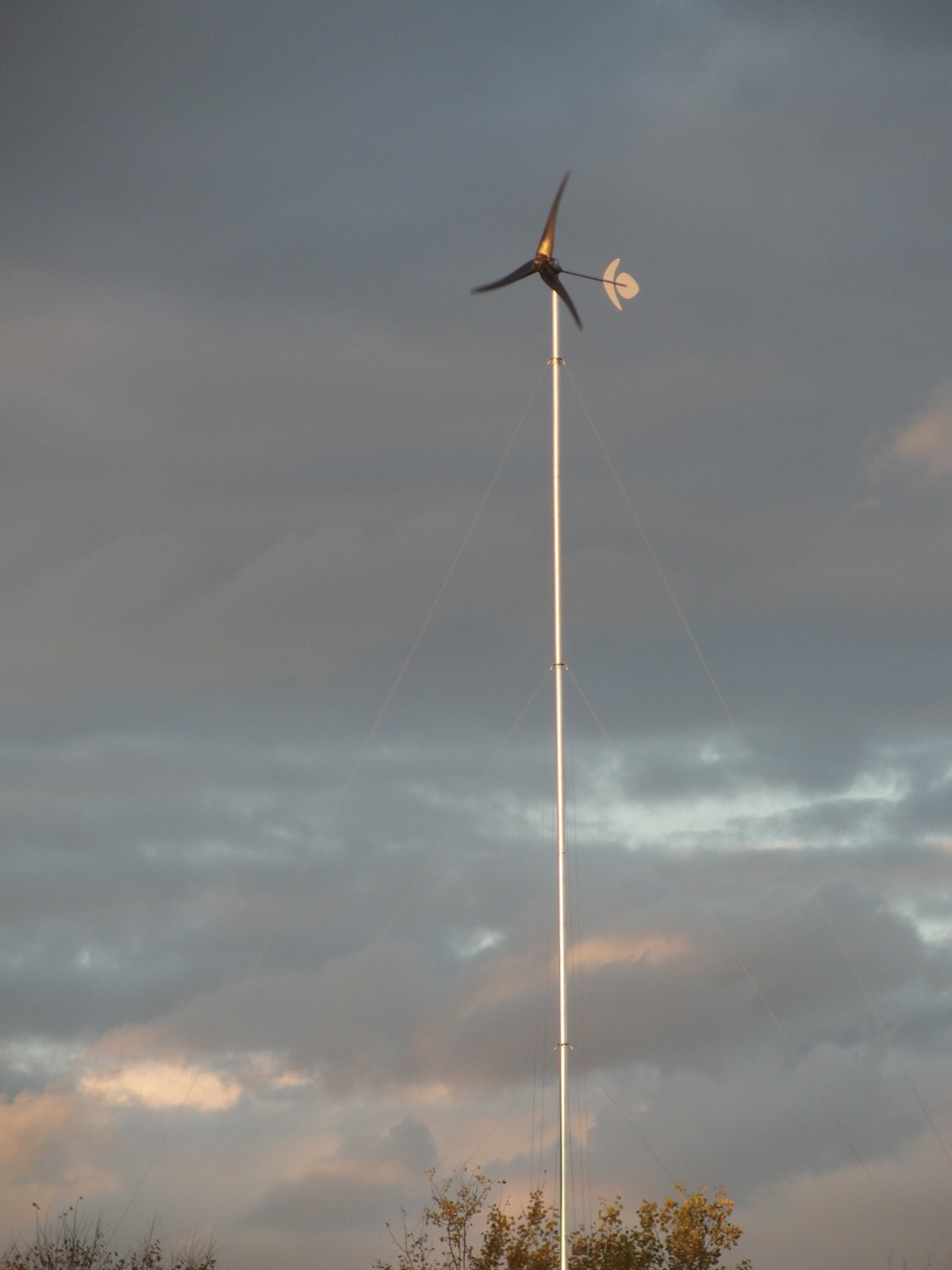
Wind Turbine

Wind Turbine

There are also experiments in what Macy calls, “Gaian structures,” new, or sometimes very old, ways to live that are sustainable and connected.  Some people need to be gardening, and building carbon neutral houses, and installing solar and wind power.

There is also the important work of shifting the consciousness of those around us. Some of us need to be writing books, and creating songs, and teaching young people about how to live as if we are a part of everything else.

Because there is so much to do, we can do that which most calls to us.

Resilience Circles

There are many people who are already hard at work building connections based on partnership and sustainability. In the fall of 2010 I had the opportunity to participate in a facilitator training for “Resilience Circles.” Resilience Circles are groups of ten to twenty people who gather together in regular meetings to support each other through economic and ecological changes.

Resilience Circle Training/ Licensed by Creative Commons

Resilience Circle Training/ Licensed by Creative Commons

Our trainer Chuck Collins wrote:

The dominant messages in the U.S. economy are “you are on your own” and “some people are going to be left behind.” Countering this isn’t easy. For many, talking about their economic anxiety and asking for help is difficult and shaming. But to survive the coming period of uncertainty, we must regain use of our mutual-aid muscles, many of which have atrophied from lack of use.

The three main functions of Resilience Circles are to increase our understanding of the larger economic forces on our lives, to open up opportunities for mutual aid and support for local economic challenges, and finally, to engage in social action to create changes that can bring about a more secure and sustainable future.

We explored questions like: Why is the economy in distress? What is our vision for a healthy, sustainable economy? What are the sources of real security in our lives? What can we do together to increase our economic security at the local level? How can we help our neighbors facing foreclosure or economic insecurity? What public policies would make our communities more secure?

Social scientists say that the stronger our social networks, the more resilient we will be in a crisis. When I was working in direct support of homeless people, I noticed how often someone became homeless because of isolation—they did not have a strong social support system, and so a crisis became a catastrophe.

There are many ways that working together can enhance our economic well-being. The Resilience Circles begin with small mutual aid projects. For example, one idea was a weatherization round robin—a team of five people agree to help each other get ready for the winter. Each host buys materials such as caulk and plastic sheeting, and then the group spends a few weekends getting all their homes ready. Another idea was a babysitting coop, where parents take turns watching each other’s children, keeping track with tokens for hours of childcare. Tool sharing, job swapping, meal exchanges, bartering—the resources we have among us are many, and the options are only limited by our collective creativity.

The underlying principle of Resilience Circles is that our greatest source of security and wealth is in our connection to each other, and our shared stewardship of the earth.

Turning Toward Partnership

A revolution is underway because people are realizing that our needs can be met without destroying our world. … Future generations, if there is a livable world for them, will look back at the epochal transition we are making to a life-sustaining society. And they may well call this the time of the Great Turning.   Joanna Macy


Planting the Seeds

Photo by Margy Dowzer

Joanna Macy believes that the essential adventure of our time is the shift from our industrial growth society to a life-sustaining civilization. She calls it the Great Turning. She says that “the ecological and social crises we face are inflamed by an economic system dependent on accelerating growth,” on “how fast materials can be extracted from Earth and turned into consumer products, weapons, and waste.” Based on this analysis, the mainstream arguments about how to revive the economy and the financial markets miss the point. Rather, the trouble in the markets is linked to a deeper trouble—a whole economic system based ultimately on the destruction of our environment.

In 2006, David Korten published a book, called The Great Turning, to further reflect on this transition that Macy had articulated. He describes our work in this time as a shift from the ways of Empire to the ways of Earth Community. He warns that even if we fail to change our ways, the world will change. But it will be known as the Great Unraveling, because “profligate consumption [will lead] to an accelerating wave of collapsing environmental systems, violent competition for what remain[s] of the planet’s resources, a dramatic dieback of the human population, and a fragmentation of those who remain into warring fiefdoms ruled by ruthless local lords.”

The other possibility, the Great Turning, involves unlearning the practices of empire, of systems based on hierarchy, competition, and domination, and adopting systems that support Earth Community: “a life-centered, egalitarian, sustainable way of ordering human society based on democratic principles of partnership.” If we recognize that we are all connected to each other and to the earth, we must embrace this sustainable, partnership path.

Fending for Ourselves?

There are strong pressures in our society to keep us fending for ourselves rather than finding common purpose with our neighbors. Think about some of the beliefs we have been taught about economic success and failure:

Economic struggles are a reason for personal shame.
You are on your own.
Don’t talk about your economic reality with anyone else.
You can pull yourself up by your bootstraps.
Watch out for people less fortunate than yourself—they will want to take your stuff.
Government programs will encourage laziness.

Sound familiar? These beliefs go back a long time. Chip Berlet, author of Right-Wing Populism in America, writes that the anti-collective attitudes currently expressed in the Tea Party movement find their roots in earlier Protestant theologies of America.

“If you read Protestant sermons from the late 1800s, they sound like Glenn Beck on a good day. They’re anti-government, anti-collective, anti-union. The idea is that good Protestants don’t depend on the government. Individualism and hard work and capitalism are seen as a kind of package deal.”

He goes on to describe how our social safety net was not constructed until Franklin D. Roosevelt pushed back against the banks and financial sector during the depression. “That was a real change in how Americans looked at government.” And even then there was “a campaign against Roosevelt, claiming that big government was the road to socialism and fascism.” These fears had a basis in the socialist movements in Germany and Russia that had produced totalitarian governments during the 1930s and 40s.

Individualists propose that we let the market work it out. Give free reign to businesses and corporations with the expectation that, unencumbered, they will restore the economy to prosperity. Then, stock prices and jobs will rebound, and all will be well again.

Unfortunately, the problems with this analysis are extensive. One problem is that it ignores the vital scaffolding of common resources that we share and take for granted. Our economic and personal well-being is directly dependent upon things like good roads, traffic control, public transportation, community fire departments, and public schools; police protection, libraries, and public parks—all of these commonly held resources make our individual and corporate initiative possible. Yet they are not figured into the cost and benefit accounting in the market economy.

House Fire

Photo by dvs Licensed under Creative Commons

If these common resources are not protected, hazards abound. In 2010, a family in Tennessee lost their home to a fire because they had not paid their subscription cost to the local fire company. The fire fighters were under orders to let it burn down. Is that the future we want?

Another even more fundamental problem for the wellbeing of the human community is that we have treated the earth as a limitless resource to be used with no regard for future needs. Clean water, fresh air, thriving forests, and fertile soil are the underpinning of all economic and personal wellbeing, and human beings have been destroying them at an unprecedented speed. An economic model based on using up the water, air, forests, and soil is no longer feasible. An economic model based on continuous growth, as ours has been, is no longer feasible. There is only one earth, and its resources are finite. We cannot deal with this common crisis only as individuals.

Natural environmental limits are beginning to create tensions around the world. In just one of many examples, fierce battles are beginning to be waged over how we will manage increasing shortages of water in many places. While private interests are clamoring to control ownership of these resources, other are asserting that such fundamentals must belong to all Life. They cannot be separated and sold for the profit of a few.

Chip Berlet quotes from an Interview by David Barsamian, published in The Sun, November 2010: “Brewing Up Trouble: Chip Berlet on the Tea Party and the Rise of Right-Wing Populism”

Economic Insecurity

Tree uprootedOur individualistic society has brought us to a time of increasing economic insecurity. In our culture, we are taught to keep our individual economic lives a secret—more than religion or politics or sex—we just don’t talk about our income or debt or other monetary realities. But millions of people have lost jobs, or have family members who cannot find jobs, or are struggling financially. We know that millions of families nationwide have lost their homes. Many people have had to cancel retirement because their savings were decimated by the stock market collapse. It has been a collective crisis.

In my own family, two sisters in Michigan lost their jobs within the last few years. One of them was about to get married, and so had the safety net of her new husband’s income. The other sister moved to my parent’s home in West Virginia, and though she found some part-time work for a while, she was left without income, health insurance, or other resources.

Jacob Hacker has written about how common insecurities have been increasingly shifted to individuals and families as many of our social institutions have been dismantled. For example, in 1980, the majority of employers at medium to large companies paid 100% of family health insurance. Now, less than a quarter do. Medical costs were a factor in as many as 700,000 personal bankruptcies in 2001, and that situation has only gotten worse. Employer pension plans are declining and more and more families are on their own to figure out retirement options.

Fewer workers have long-term employment, and more and more are working in temporary or low-paying underemployment. Wages have been stagnant or falling, and more households have had to rely on two incomes to cover the same needs. Parents with children are most at risk for bankruptcy and foreclosure, and single parents are especially vulnerable. Support systems such as extended families are disrupted by geographic distance.

In the midst of these economic insecurities, there are basically two paths before us—in one, we each hunker down, and try to fend for ourselves as individuals and families. In the other, we turn to our neighbors, and make a common purpose to find a way forward. Ultimately, I believe the path of common purpose is the only one that will help us survive.

Figures from Jacob Hacker, The Great Risk Shift

Compete or Connect?

Monopoly BoardWhen I was ten, my younger sisters and I all got chicken-pox at the same time. My mom helped to keep us entertained at home by playing with us the board game Monopoly. My sister Nita and I were great little capitalists, and played the game to win. We would try to get as many properties and houses and hotels as we could, so we could charge huge rents when the other players landed on our spots. The goal was to bankrupt the other players until one of us was the last player in the game.

But my mom and my sister Vonnie had a totally different approach. They were tenderhearted, and didn’t want anyone to have to leave the game. So if someone was about to lose all their money, my mom and Vonnie would loan them some of their own Monopoly money to keep them in the game.

I remember this now and think—what a picture in miniature of the conflict of values in our larger society! One message we learn, even as children, is to try to get as much as we can, and try to win out over all the other people. Compete and consume. But my mother was bringing us another value, one that many parents want to teach their children, the value of connection and cooperation. She wanted to keep all of us at the table, so that everyone had a good time while we played our games.

What changes when we wake up to the reality that we are all connected to one another? 

Waking Up to Joy

I realize not everyone is attuned to rise at dawn. We each have our own circadian rhythms. Scientists have found that individual rhythms have a genetic basis and are incredibly difficult to change. Some people naturally rise early, they call them the larks, while others are tuned to a later cycle, they call them the owls.

So I am not suggesting that everyone should start rising at dawn. I am still not even sure if I can shape my life in that way. But what I notice is that whenever I take some small step toward attuning myself with the larger earth, I feel blessed by it—I feel more beauty and joy.

And yet, for each small step, I also feel challenged—aware of how broken off I am. Aware of how broken off we are as a people from this earth that is our whole life. I have to believe that awakening to this beauty and brokenness is the essence of the spiritual journey. We cannot have one without the other. My greatest hopes trigger my greatest fears. My greatest fears call forth my greatest hopes. I believe that when we enter that place between our greatest fears and our greatest hopes—when we encounter our own vulnerability, and call out for help, something can rise in us like the dawn… and this is the place where God lives.

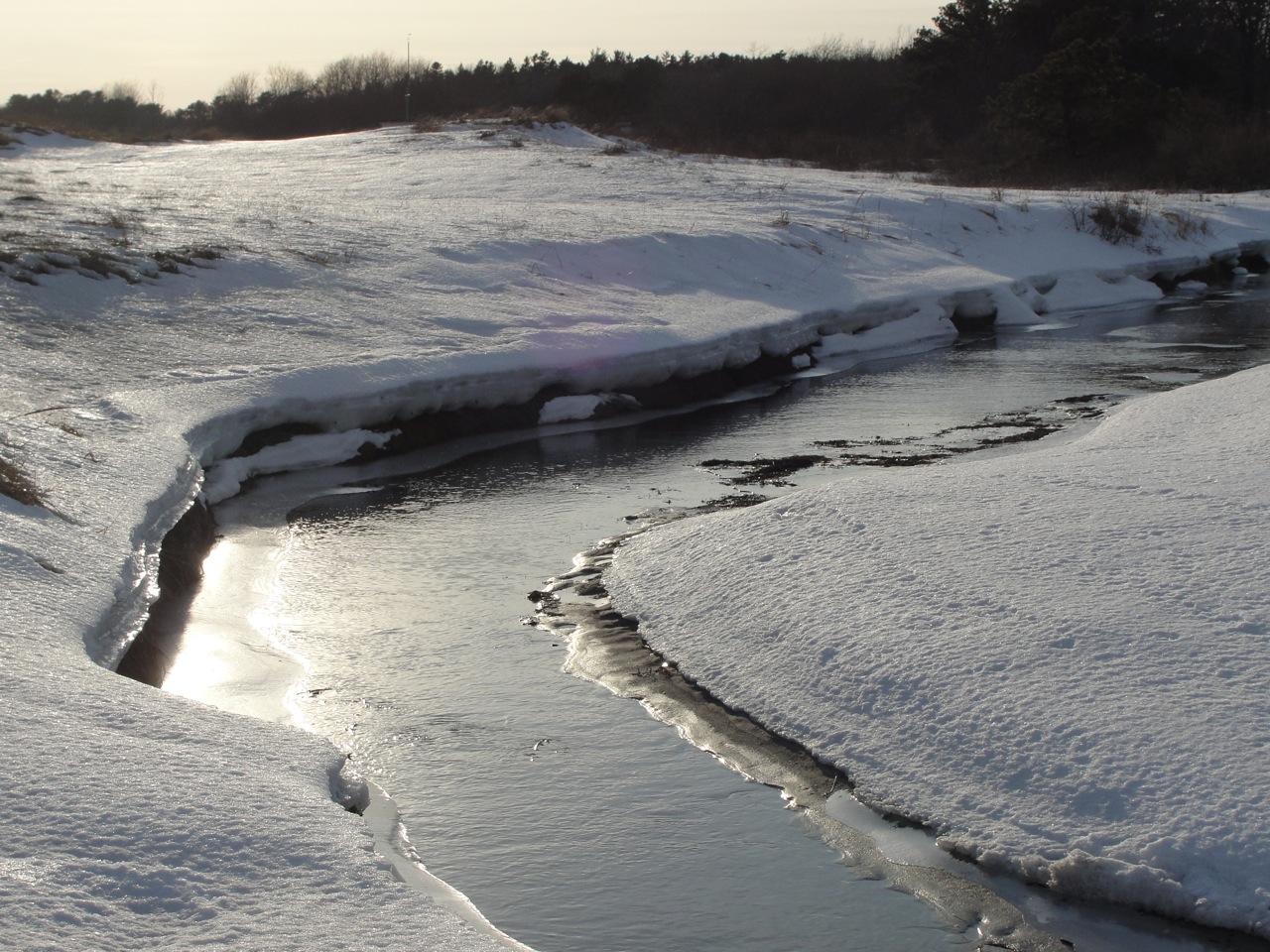
I am still on this journey. When the days are shorter, the dawn comes later. But then it is too cold to go sit outside like I sat outside during the summer. So I am not sure how it will unfold. Sometimes I sit by the window and watch the sunrise from the comfy chair in my room, a tiny black cat curled up in my lap. But I remember the message of the cardinal singing at dawn: Come outside! May sadness be dispelled, may joy and beauty be awakened in us.Snowy Sunrise