Mysterious Illness and Melting Ice

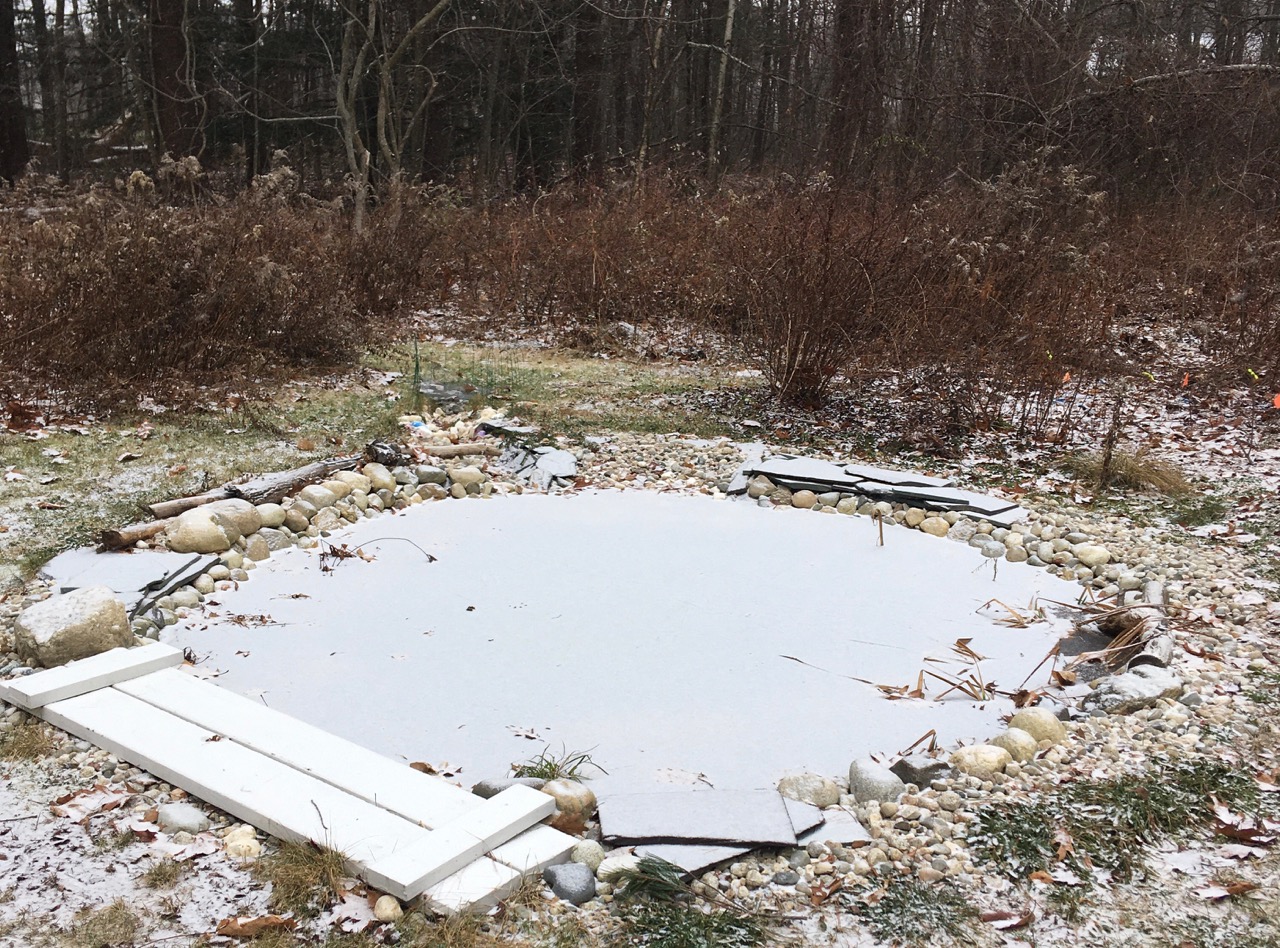
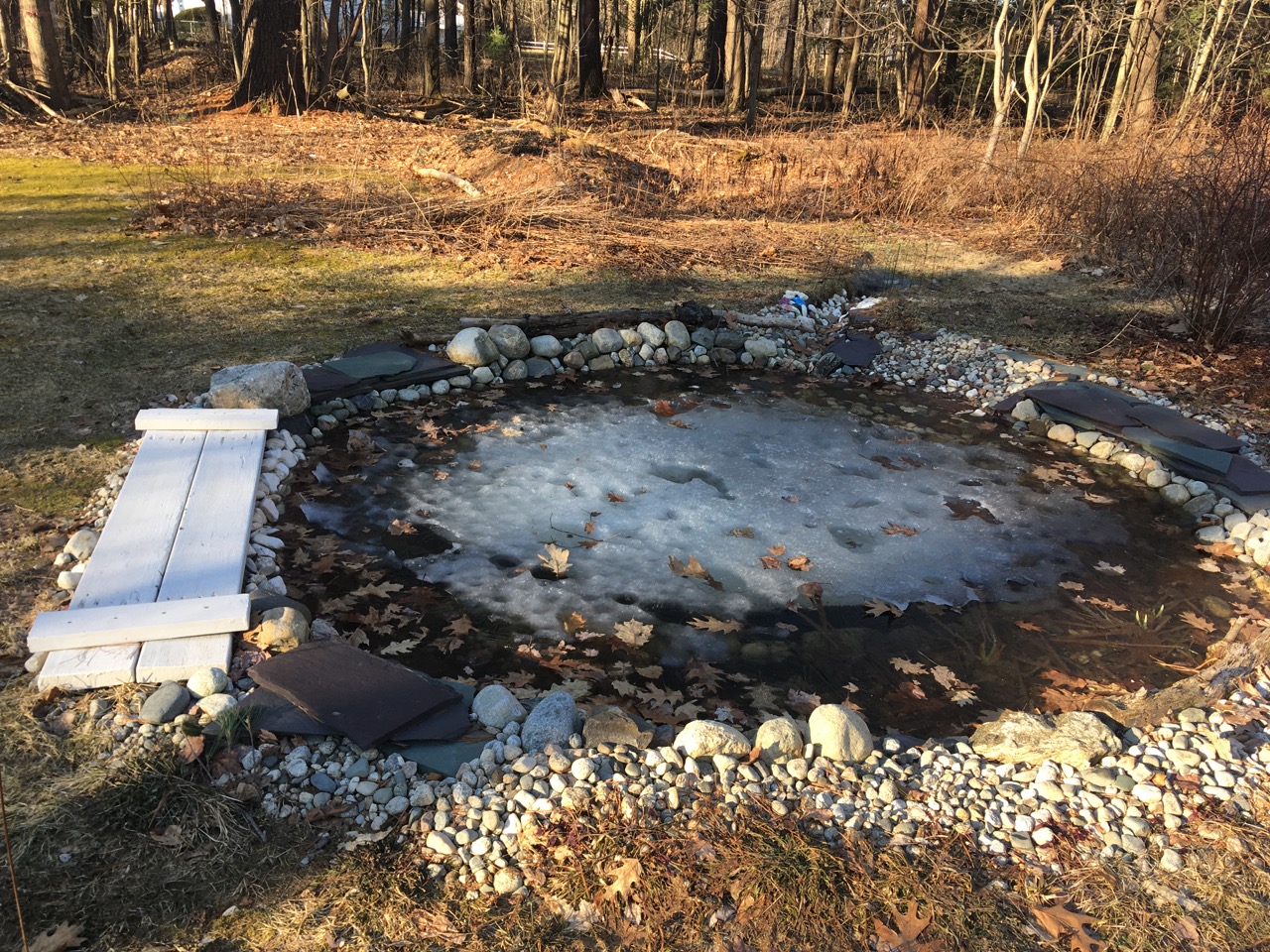
Ice slowing melting & refreezing in our pond (March 22, 2022)

I recently read Sarah Ramey’s memoir, The Lady’s Handbook for Her Mysterious Illness. Published just last year, it is described this way:

“In her harrowing, darkly funny, and unforgettable memoir, Sarah Ramey recounts the decade-long saga of how a seemingly minor illness in her senior year of college turned into a prolonged and elusive condition that destroyed her health but that doctors couldn’t diagnose or treat. Worse, as they failed to cure her, they hinted that her devastating symptoms were psychological. …Ramey’s pursuit of a diagnosis and cure for her own mysterious illness becomes a page-turning medical mystery that reveals a new understanding of today’s chronic illnesses as ecological in nature, driven by modern changes to the basic foundations of health, from the quality of our sleep, diet, and social connections to the state of our microbiomes.”

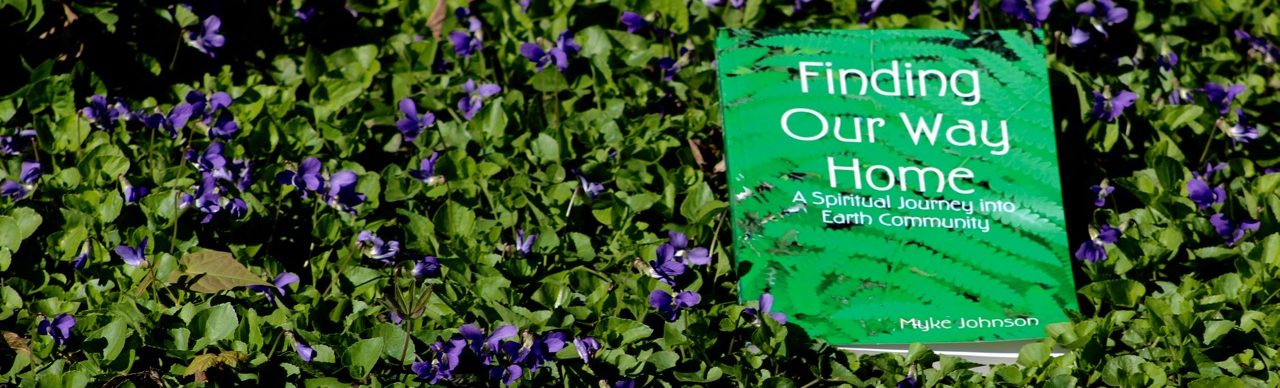
Book Jacket Cover

I haven’t experienced the horrifying stories she recounts with medical personnel, but I know others who have. I think it helped that I was usually drawn to alternative practitioners, though Sarah had her own horror stories with alternative practitioners. She finally found help with practitioners of Functional Medicine, and my own primary care nurse practitioner is aligned with that field. For that I am grateful.

I identified with the mysterious nature of auto-immune chronic conditions–when I reflected on it, I realized that they have been a part of my life for many years–most recently, Hashimoto’s thyroid disease, SIBO, adrenal fatigue, and borderline diabetes, but earlier in my life there was endometriosis, polycystic ovary syndrome, and gradually developing multiple chemical sensitivities, and multiple food sensitivities. For most of my life, I managed to work and keep my balance, but it became more and more difficult. Finally, when I turned 65, and could access Social Security and Medicare, I retired from my work as a full-time minister.

I wondered at the time if being released from the stress of full-time work might bring me relief from the illnesses, but that was not to be the case. Instead, I was better able to manage living with the illnesses. But it is a delicate balance. If I eat well (for me that means no refined sugar, no gluten, low carb, lots of vegetables, and meat, while avoiding the list of specific foods that give me problems), if I rest when I am weary (which is spending some variable part of every day lying on the couch), if I take certain natural supplements (for example, I take Berberine, which has been shown to be as effective as Metformin for helping blood sugar balance), and if I don’t overdo it anywhere, well then, I have some energy to do things I love, to write, to garden a bit, to learn new things, even the miracle of building our little pond last year.

Sometimes, I can forget that I have these illnesses. Some days I wake in the morning rested and glad to greet a new day. I might have several hours to work on projects. I tend to get more weary and achy as the day goes by. And during these two years so far of COVID, I have been glad for the many opportunities that the world on Zoom provided. But then, something happens that upsets the balance, and I am sunk into a lower level of functioning, just barely able to cook my meals and take care of the basics. Most recently, I think that my body might have reacted badly to my second Shingrix vaccine. The last four weeks have been mostly couch weeks: reading books and watching British mysteries on Roku. I hope that I am emerging from that now. It is not easy to know what upsets the balance–all I can do is respond to it.

Because I am always asking questions about meaning, I appreciated the connection that Sarah Ramey made between our chronically ill bodies, and the larger ecology of the earth. I think about that too. I wonder if my own body is mirroring the afflictions of the earth I love, is somehow sensitive to the larger web–global warming, the prevalence of forever poisons, the loss of communal connections, the ecological balance which human beings have undermined. If that is the case, can I love my body as I love the earth? Can I grant her that self-care that has been neglected for too long?

One aspect that Sarah Ramey sees as critical is our need for human connection. I was reflecting on how for much of my life I made connection through activism, through shared work. I still feel the impulse to act for justice, in small ways, but there are less opportunities now for the connection that used to be a part of it. I have also felt more isolated since retiring, and, of course, since COVID. Maybe I need to learn something new–to nurture connection that is not at all about work or social justice, but about something more elementary. Can I be cherished, not for what I do, but for my being? Can I cherish others in this way? Can I also cherish myself in just this way? Perhaps it will require a kind of spring melting of some other kind of hidden ice. May it be so.
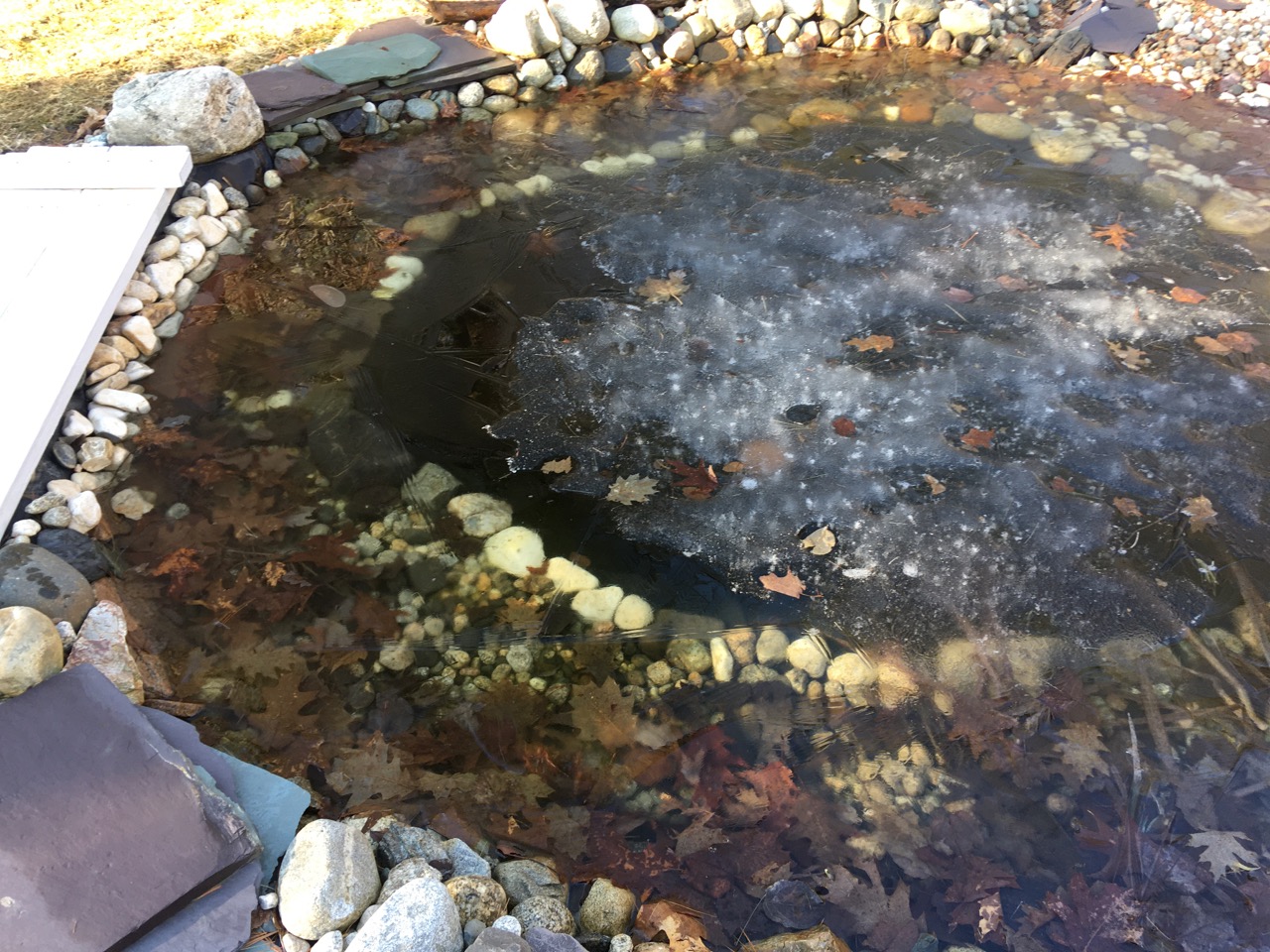
Hard to see, but there is a thin clear layer of ice on the surface of the pond this morning, but more of the winter ice is melting each day. March 26, 2022

Ocean Love

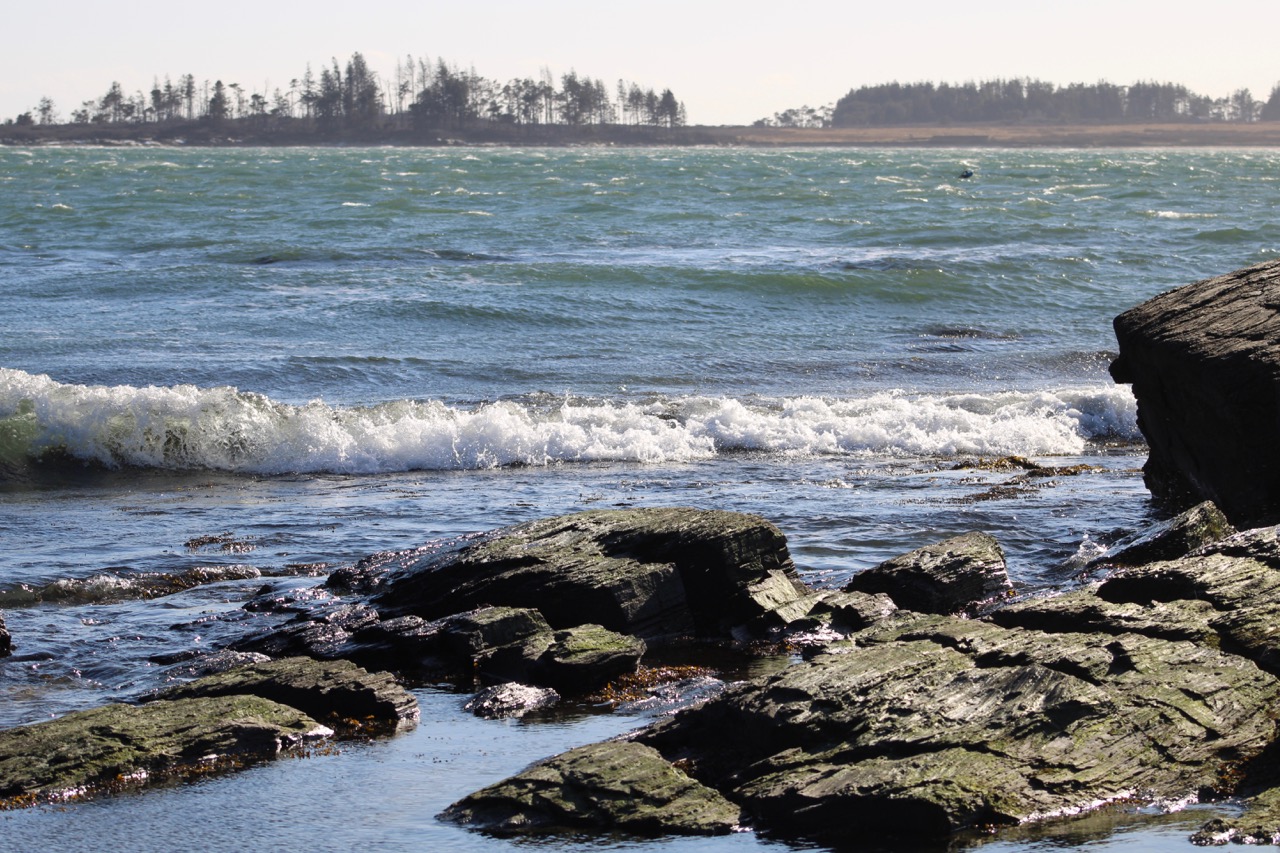
Photo: Kettle Cove: blue-green sea, white breaking waves, rocks near me, island trees at the back

February in Maine, and it is 60 degree weather today. It isn’t really supposed to be like this. We went to Kettle Cove, where dozens of people were out at the beach. A few even went into the water in their swim suits–but not us. Margy was inspired to collect some seaweed for the garden. I decided to sit on a lovely rock, and take photos of the waves and rocks.

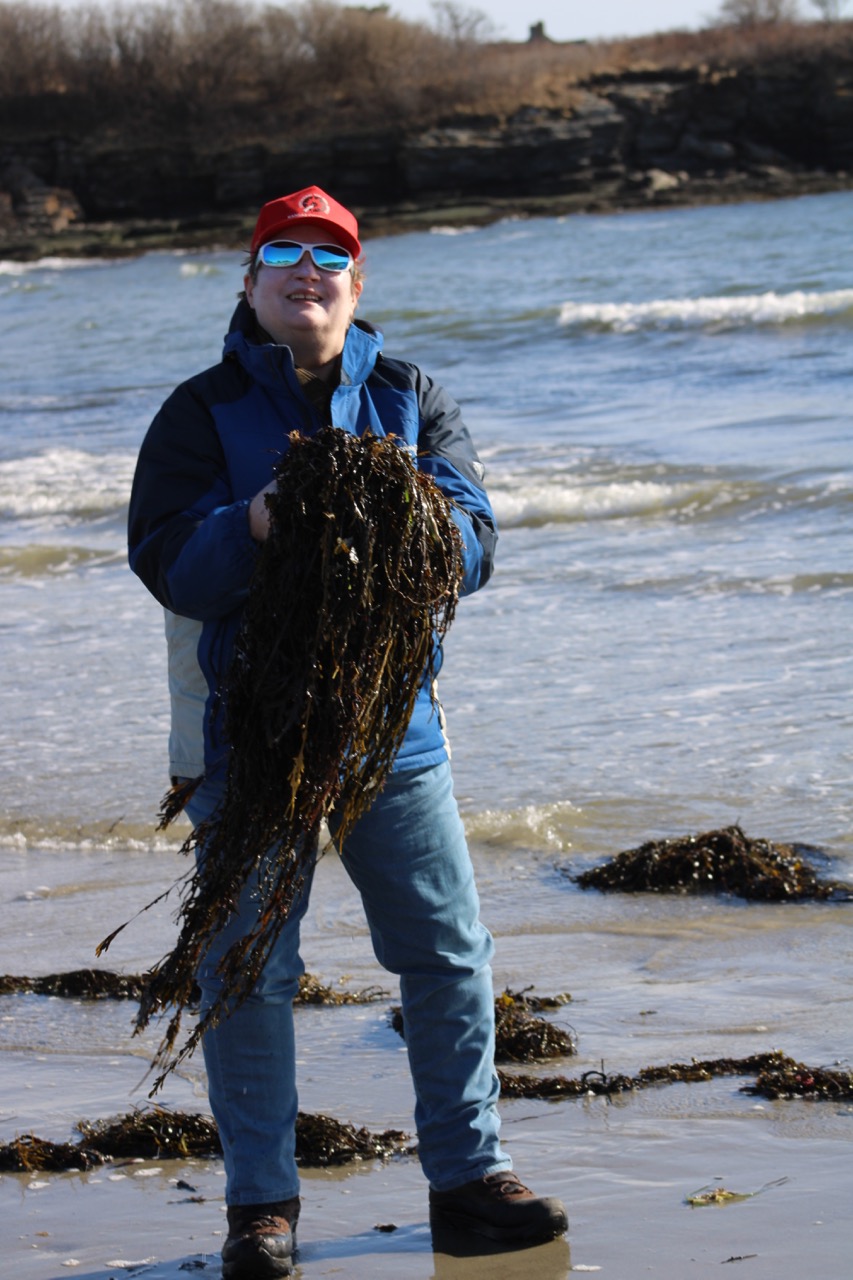
Margy holding seaweed at the beach.
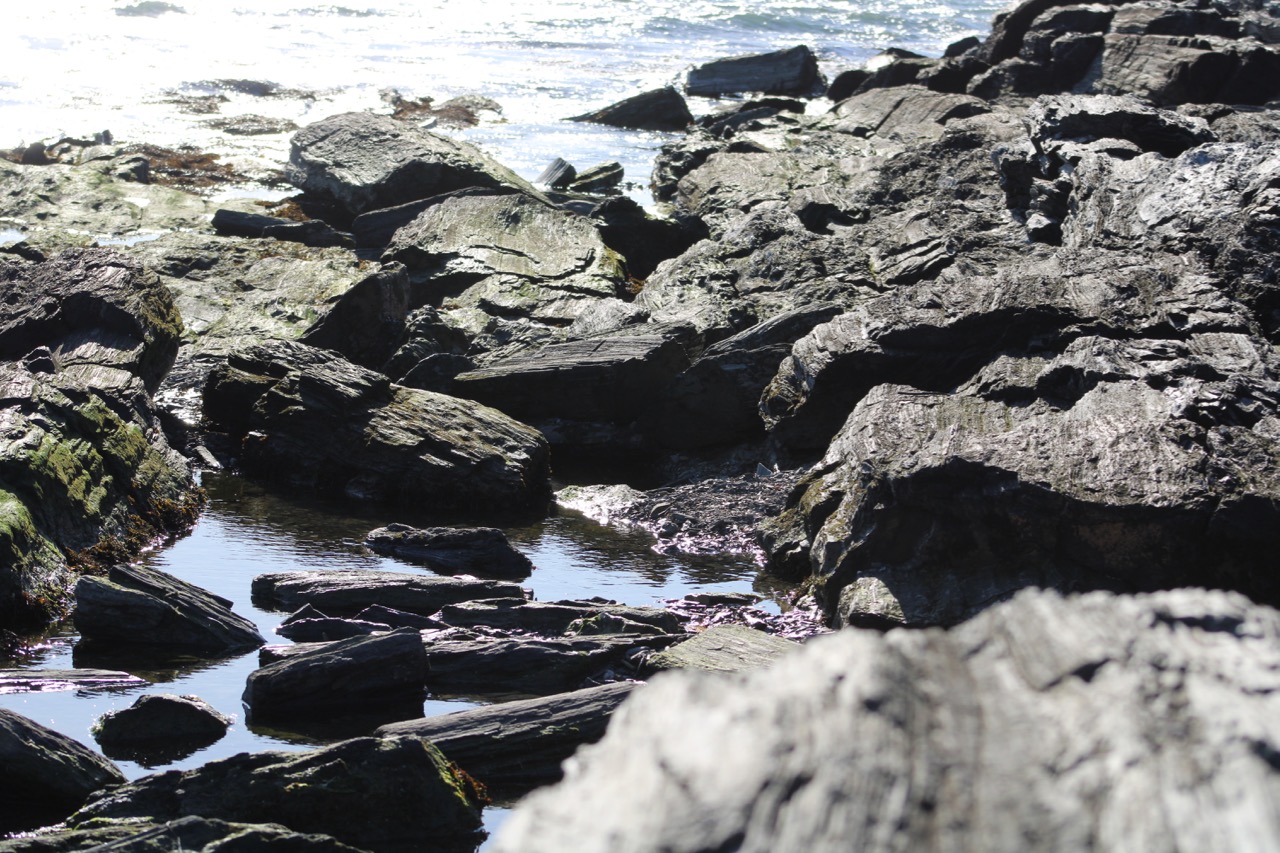
Rocks to sit on, with tide pool.

It was so restorative–wind, sun, rocks, water–all the elements. And the sound of the waves calming the spirit like a deeper kind of silence.

I was thinking about climate change and how the weather has become so chaotic. Tomorrow we’re back in the freezing zone, between the teens and twenties, and Friday a snowstorm is on the way. But the message I felt from the sea was not about worry. It was to love the earth just as she is in this moment, to love the weather as it comes–not to always think on how it is supposed to be different, but to embrace the changes as they emerge, to embrace every amazing aspect of this beautiful planet.

I don’t fully understand this message, the activist that I am. So often I grieve for what is happening to the earth because of the greed and destruction of some human beings, all of us trapped in this pattern. And I still grieve. But the other side of that grief is this love.

The message was that we must never cease to love the earth in all of her mysterious flowerings, her beauty everywhere, even when we cannot perceive it. So what a joy when we can feel that beauty all around us. It was that kind of day, that kind of visit to the ocean.

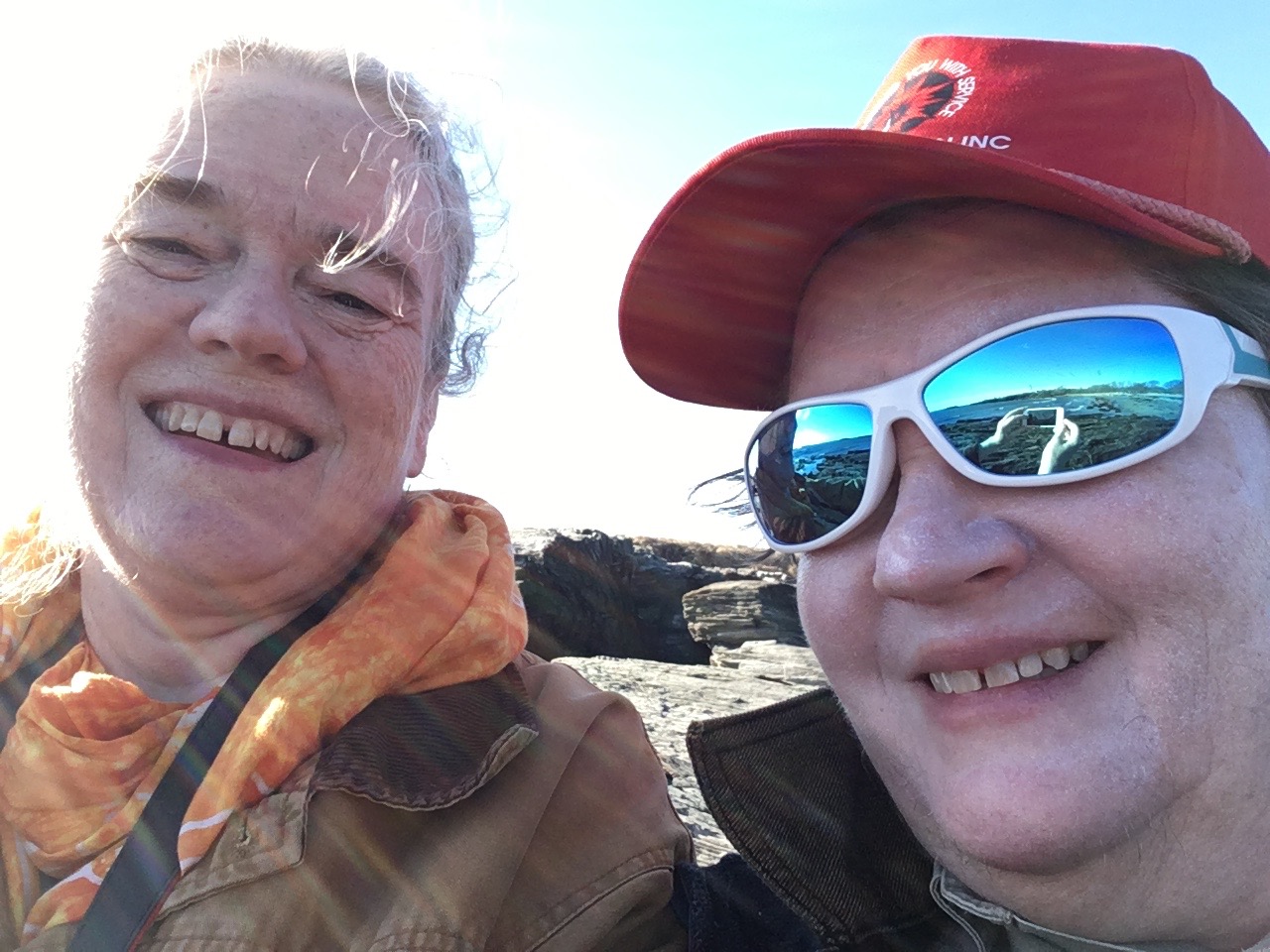
Myke & Margy smiling, with rocks behind us, and the ocean reflected in Margy’s sunglasses.

Healing Turtle Island

Two deer browsing in the trees behind our yard.

Tonight I feel grateful to participate in the virtual opening ceremony for the Healing Turtle Island gathering. Songs, prayers in Indigenous languages, stories of grief, woundedness, devastating loss, and yet, gratitude. How do we bring healing, bring back balance in our relationships, with each other, with the earth, with spirit? This weekend will be filled with many speakers… (anyone can join on Facebook, or on Zoom, just follow the link). I don’t have a lot of words right now but one of the strange blessings of the pandemic is that because this gathering is virtual, I am able to participate. I was present for the very first gathering here in Wabanaki land, the eastern door. There will be 21 gatherings all together.

This photo is of two deer whom we sighted in our backyard on Tuesday–there were four all together. They were a gift in the midst of a painful week. I found myself just sitting on the back porch watching as they took their time amidst the trees and brush. Sitting still and watching. I feel the presence of such a compassionate Spirit through these visitors from the natural world.

Offerings

I wasn’t able to capture most of them with my camera, but I want to speak of bird visitors nonetheless. This morning little winter goldfinches, with their olive feathers, were flocking to our bird feeder, and to the water, and to the dead heads of bee balm never cut down, and likely full of lovely little seed breakfasts. The seeds, and the water kept liquid by electric warming, are our offerings to the creatures with whom we share this land.

I think of February 1-2nd–Imbolc, Brigid’s Day, Candlemas, Groundhog Day–as the day the birds start singing again. The light returning. Still, even though something is stirring anew, this year there were many birds and other creatures who frequented our little offerings of seed and water during the dark of winter as well. There were a couple days mid-January when flocks of robins appeared. I only managed to photograph this one getting a drink of water, but there were likely a dozen. They love our neighbor’s crabapple tree. The birds also love to perch in our fruit trees branches nearby.

Photo: dark day, robin drinking water

The cardinals have stayed throughout the winter, and I often see the female cardinal at the feeder. The other day she and other smaller birds were jockeying for position—if three were on the roost, the seed door would close—so they chased each other off long enough to get a snack. Of course, the squirrels always have to take their turns–they’ve mastered the acrobatic positions needed to keep the door open. So smart.

Storms seem to increase the number of creatures who seek out our offerings. During our last blizzard, as dusk enveloped our yard, Margy called me to the back door, where we saw two deer walking so quietly near the bushes. The next morning, I saw their tracks leading to the seeds and water. I have heard it said that one of the rituals of Brigid’s day is to give food offerings to the spirits of the land. I hope our seeds and water might be a blessing to all the creatures who visit or call this place their home.

Winter Solstice Dawn

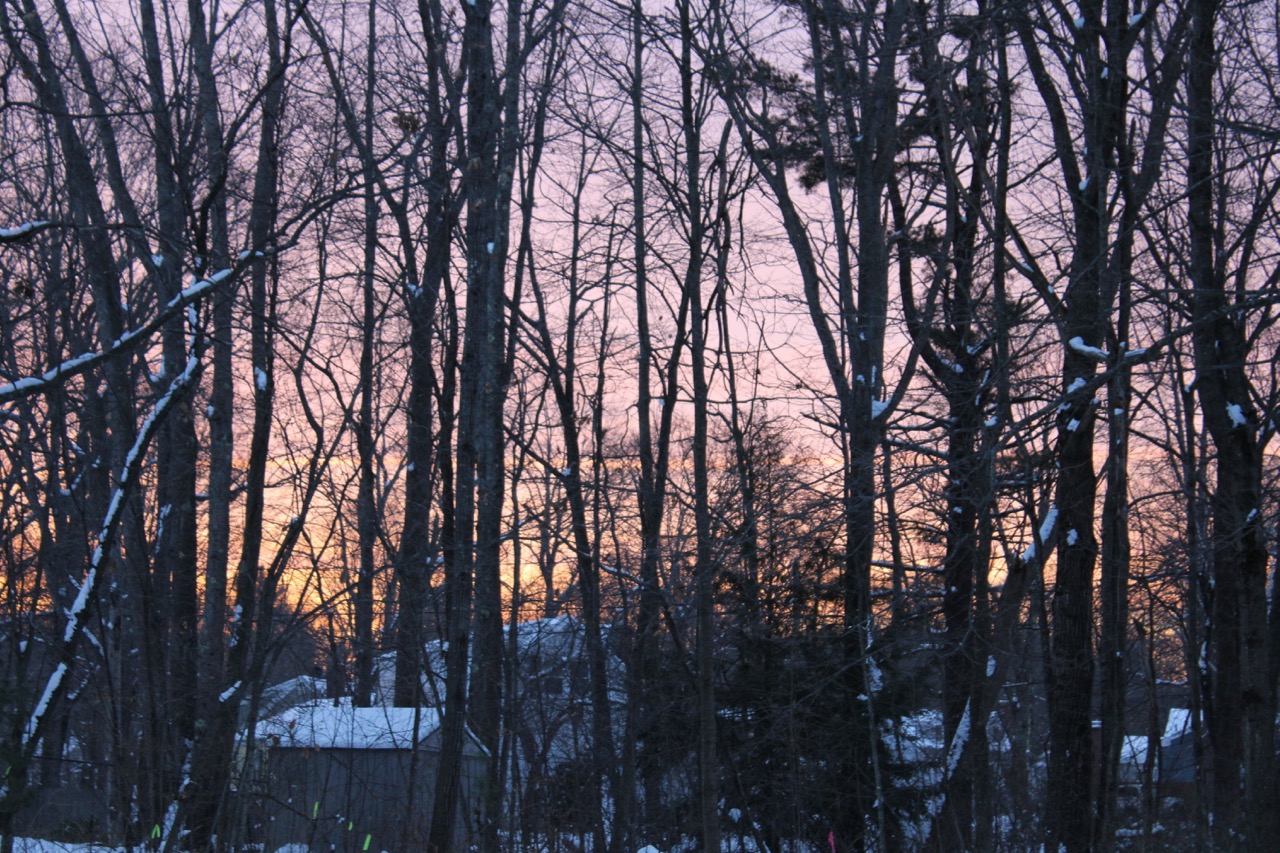
Photo: Solstice dawn seen through trees in our town.

After the longest night, the shortest day dawns with beauty in the sky, and draws me outside into the cold and colors of morning. Snow is covering the ground at last, which has brightened up these last few dark days. Margy and I are learning to play backgammon for holiday fun during the isolation of COVID. After our first full game, we ate a Solstice Eve celebration dinner last night. Traditionally pork is eaten at this season in honor of the European goddess Freya. Later, we pulled out runes for a message for this turning of the seasons. My rune was Gebo, the rune for giving and receiving, for love and partnership.

As the light returns, and the days lengthen, may our human hearts turn toward generosity and compassion, in reciprocity with all of the beings with whom we share this planet.

Climate Catastrophe in Disguise

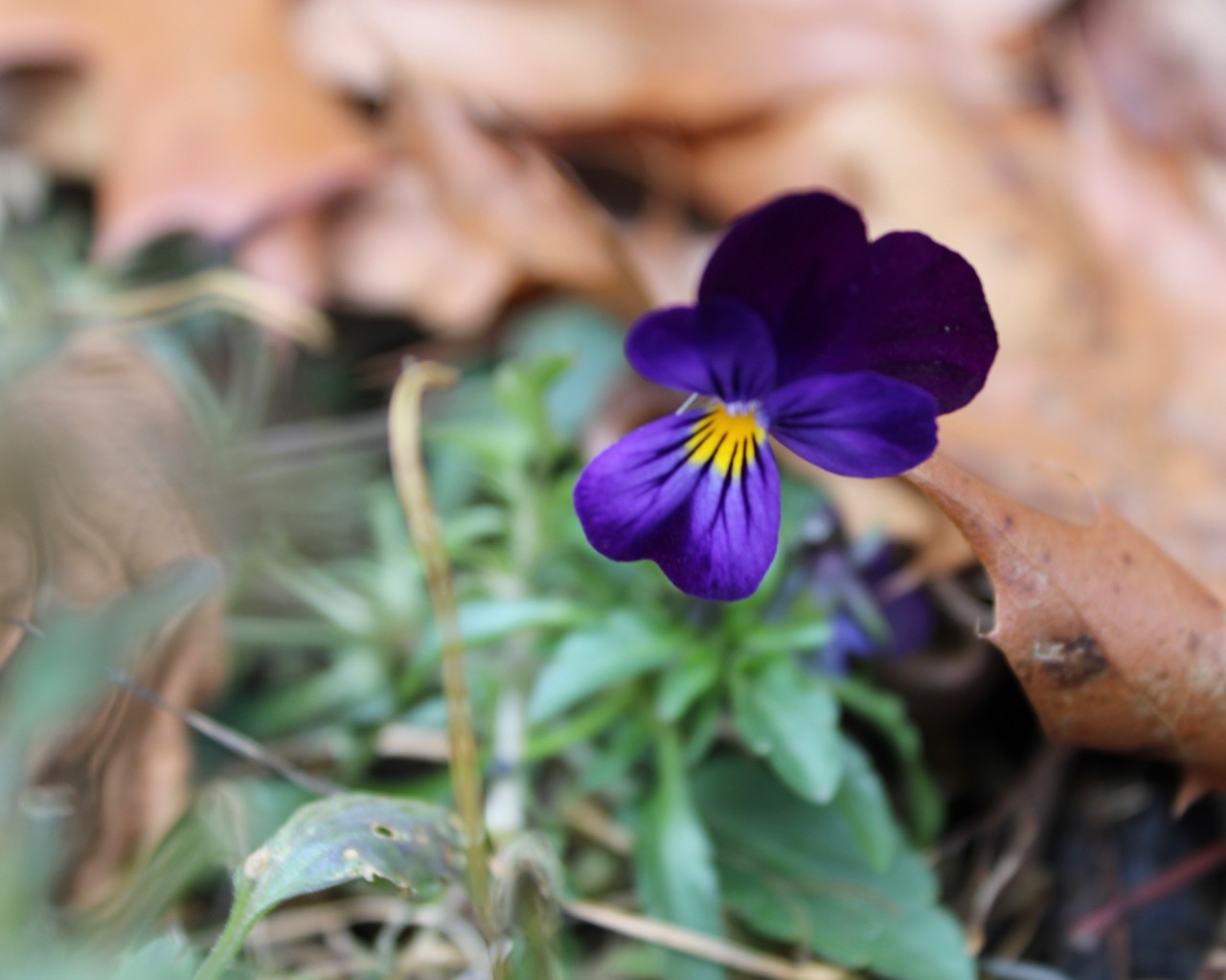
Wild pansy purple and yellow, blooming in December

A climate catastrophe sometimes shows up as the fragile beauty of a wild pansy blooming in mid-December in Maine. I took a photo this morning, before the snow arrived this afternoon, our likely first plowable snow of the season. Very late for us. The unseasonably warm days feel bright and pleasant, nothing dangerous. But I am thinking of the deadly storms that blasted through the midwest last week, tornadoes killing dozens of people in an unprecedented long trail of destruction. I am thinking of giant raging wildfires in the west, and monster hurricanes in the Atlantic. Sometimes the change feels like nothing much at all, unless I stretch my eyes to take in the bigger picture.

We arrived at our current house and yard six years ago after a 4 month search to find greener housing. We were able to downsize, to add insulation, to cover the south facing roof with solar panels, to install energy efficient heat pumps, to create a garden. Our actions fit the best choices we could make at that time, to align with our love for the earth and all her creatures. In that, they were like a prayer, like a magical spell to further the possibilities of earth community based in mutual respect. On a spiritual level, I have to hope that our small choices can ripple out for good.

But these individual actions don’t make a dent in the greater physical scheme of things. The giant polluters of greenhouse gases continue to ignore the limits of earth to push for expanding profits. We, as a planet, have already exceeded the hopeful atmospheric carbon dioxide goals of environmental organizations like 350.org. Now we’re at 415 parts per million. We’re on the way to unmitigated disasters that we can no longer walk our way back from. Scientists can make some predictions, but no one really knows how the increase in global temperature will play out in the next years and decades.

From where I sit, I can feel overwhelmed and helpless. I don’t have the energy to be out in the streets anymore, an activist like in my younger days. I don’t have the money to donate to activist organizations like I used to when I was working. Many activists I respect talk about the coming collapse of economies and civilizations, even within the next decade. I don’t imagine that I have the physical capacity to survive such a collapse, given my age and health. So what is there to do?

What helps is to recognize my limitations, to take in the very smallness of my being. What helps is to see young activists in the street, sharing their anger and love with loud voices. What helps is to remember that Indigenous people the world over have already experienced the collapse of their economies and civilizations. Pay attention to their advice. What helps is to recognize the smallness of my being, and yet remember how I am interwoven with the ancestors and all the interrelated beings of earth. What helps is to keep on loving the trees and birds and frogs and even the squirrels of this small place we are lucky to share with them. What helps is to offer bird seed as a prayer in the morning. What helps is to imagine the unimaginable largeness of the Earth, our mother, and her mysterious powers that we cannot measure or predict.

Our pond, frozen, with light snow cover.

Wenuhc? Wen nil?

I have been posting recently about my latest research concerning my Innu third great grandmother, and because of that I want to write today some clarification about identity and relationship. The more I am learning about Indigenous people–through study, through language, through cultural sharing by Indigenous people–the more I understand that I am not Indigenous. This might not even need to be said, except that there is currently a problem of people with ancestors even more distant or nebulous than mine trying to use those ancestors as a way to claim status as Indigenous or Métis, to get benefits from governments, or preference in hiring or hunting rights, for example. Sometimes they actually use this to try to take away benefits from Indigenous communities.

Years ago, when I was still just beginning to learn about all this, I wasn’t sure if I was permitted to claim an Indigenous identity, or a Métis identity. A few times I did, out of my own ignorance. And it is not simple for those of us who are mostly something else, but want to honor our Indigenous ancestors. Even so, I can’t imagine trying to use it to take something away from Indigenous or Métis communities. What I hope for is to be a good relative, a friend, to use my position in this society to act in support of Indigenous communities.

For my latest presentation in our Passamaquoddy language class, I found myself drawn to a word in Passamaquoddy that has been used to describe non-Indigenous people: “Wenuhc.” What does it mean? Some definitions say, “white person.” And that is partly true—it refers to white people. But, its roots come from an old meaning. When, they say, strangers came here to Wabanaki land, the Native people said, “Wenuhc?” It meant, “Who are they?” It also held a question, like, “Where are they from?”

When I ask the question of myself, it comes out: “Wen nil?” “Who am I?” The traditional way to introduce oneself is by naming the place where you come from, and your relatives, the people you come from. But for me, as a wenuhc, that wasn’t so simple. The more I played with the concepts, the more confusing it became—which certainly is a characteristic of many of us living in the mainstream culture of the United States. I want to share some of what I wrote—but mostly just the English translation:

The early strangers said, “We are Englishmen.” I speak English, but my roots are not English—so am I English? Wen nil? Who am I? Three of my grandparents have Germanic roots. But, I can’t speak German. I have German roots, but am I German? Wen nil? Who am I? My grandmother came from Quebec, and she spoke French. I can speak French, a little. I have French roots, but am I French?

Wen nil? Who am I? My grandmother’s great grandmother is named Marie Madeleine. She was Innu. She spoke Innu. Now, I know how to speak Innu a little, only a very few words. I have Innu roots, but am I Innu? Now, I can also speak Passamaquoddy a little, but I am not Passamaquoddy.

Wen nil? Who am I? I don’t know. I am a wenuhc woman, a “who are they?” woman. I am far away from family. Sixteen years ago, I came to Wabanaki land in order to work. Now, I am done working. So, what am I doing? Am I a preacher? Am I a witch? Am I a writer? Am I a gardener? Wen nil? Who am I? Tama nuceyaw? Where am I from? All my grandparents lived in cities. Now, I live in the city, Portland. Am I lost? How do I find myself? Am I a stranger? Am I your friend? Am I foolish? Am I wise? I don’t know. Wen nil? Who am I? I am confused.

What I learn from this Passamaquoddy writing process is that I am not well connected to a place or to my relatives. My being a lesbian, my being a justice activist, my moving around a lot, all contributed to a feeling and reality of being disconnected from place and family. And given the injustice I found all around me in “American” culture, I don’t regret the need I felt to resist it, to break away from it. But in some ways, that is a very “American” way of being. “America” celebrates individual identity and mobility. It defines who we are by what we do.

When I seek to find my way into relationship with the earth, with all beings of the earth, with the ancestors, with spirit, when I begin to value this relatedness, I see more clearly how I have been cut off from places and people that I might have been from. And I see more and more clearly how I am not Indigenous. I am wenuhc. I am “Who are they?”

And that truth is real, it is okay. “Who am I?” is an open question. It is why I make a spiritual journey into earth community. I can learn. As I learn to be thankful for everything, I begin to feel how I am related to everything, despite being wenuhc.

Note: I first learned about the word “wenuhc” from my Passamaquoddy language teacher Roger Paul. More recently, the organization I volunteer with, Wabanaki REACH, posted about this word on its Facebook page, quoting Rebecca Sockbeson (Penobscot), 2019.

Photo: Pileated woodpecker on a pine tree near our house. The woodpecker is a symbol of friendship for Wabanaki people.

River Otters at Evergreen Ponds

River otter eating a fish, within a small rock enclosure in the small pond.

Our area of Maine loves nature news. So when we heard in the news that there were visiting river otters in the ponds at Evergreen Cemetery, we joined many other Portland residents to go to the cemetery to see if we could see them. And we did! We saw this one in one of the small upper ponds, diving under the water to fish, and then emerging in this little rock cave to eat. We also saw one in the big pond, walking on the iced areas in between diving beneath the open water to fish.

River otter on the ice near a thawed opening in the water.

It has been a while since we’ve been to the cemetery. I used to walk over to these ponds frequently, but haven’t had the energy for an hour-long walk lately, so we drove over this time. Sometimes it is wonderful to be alone in the natural world, to see the secrets of plants and animals revealed to a quiet human visitor. But sometimes it is just as wonderful to be with other humans who love these secrets, and can’t resist our animal relatives. There is a sense of kinship with each other, we chat about the sightings, we notice how skilled the otters are at catching fish, we share our tales with new arrivals. There are children and elders, and every age in between. Outside with each other.

Finally, when the otters had hidden behind the back of a little island, I took a walk around the big pond, carefully making my way over tree roots. I couldn’t resist also taking photos of this lovely blue heron–much easier to catch than otters, since it likes nothing better than standing still on its perch on the log.

Great blue heron standing on one foot, perched on a dead log in the pond.

When we first arrived, before we saw the otters, I also happened to catch her scratching her head. Maybe wondering about the sudden abundance of humans wandering around her pond. But not letting that disturb her equanimity and perfect balance.

Blue heron scratching her head, while standing on a log in the pond.

May our animal relatives find all they need to thrive that they may live long upon the earth. May we human animals wake up to our interconnection with all beings, that we may find a way to turn from destruction to mutuality.

All Hallow’s Eve/Samhain

Fresh cedar sprigs under a pair of cardinals welcome sign on our white front door.

Today we welcome the ancestors with special foods, with herbal incense, and with a fire in our fire circle! For herbal incense I use cedar–I’ll use a dried bundle I made before, and burn it in our fire circle. Cedar was widely used by my Innu ancestors, and so I think their spirits will especially appreciate it. We also have a cedar tree right on the edge of our own yard, so I ask the cedar tree for permission to cut some sprigs to make more cedar bundles, and also to put cedar on our front and back doors for protection from harm, and welcome to benevolent spirits.

The special food I made is bannock, a traditional Innu bread, called ińnu-pakueshikan, which they adapted from the Scottish. Since I can’t eat wheat bread, I used 1/2 oatmeal flour (which is actually what the Scottish used) and 1/2 almond flour. Here is my recipe, adapted from several I found online. It is a very simple bread with many variations. Mix all ingredients together.

  • 1 1/2 cup oat flour (made in a blender from GF rolled oats)
  • 1 1/2 cup almond flour
  • 1 Tablespoon baking powder
  • 1/2 tablespoon salt
  • 1 1/3 cup water (this might have been more than I needed)
  • 1 cup frozen blueberries.

I put it in a greased skillet, and let it bake in a 375 degree oven for 55 minutes. After about 40 minutes, I cut it in four, and turned the sections over in the pan. A small dish is all set to go outside for the spirits, for when we have our fire. It is crusty on the outside, and a bit mushy on the inside. Tasty with butter.

Blueberry bannock in cast iron pan, cut.

I have been continuing my search for my Innu ancestor Marie Madeleine’s family. Lately this has been by hunting for as many details as I can about Marie Madeleine Katshisheskueit, which means “hard-working-woman”, who was born 11/11/1795, and baptised in Portneuf 6/28/1796. I was finally able to see an actual image of her baptism record, and discovered her actual parents, Jean-Pierre Utshinitsiu (Utshinishkushu=whirlpool?) and Veronique Kaskanieshtshist. (Kashkanatshish=rock ptarmigan) (The earlier source had directed me to another set of parents entirely.) So I began hunting for the rest of their family and found a few more generations, and many cousins.

This was a relief to me because I also discovered that Marie Madeleine Katshisheskueit’s mother died in 1797, when she was only two years old. I was filled with grief for this toddler, and wondered how she would be able to survive such a loss. Then I remembered that my Passamaquoddy teacher Roger Paul said that the whole community always cared for all the children. They didn’t divide into small nuclear families, but rather in extended families. I saw that her godmother, Marie Madeleine Iskuamiskuskueu, was the cousin of her father (and also the mother of another Marie Madeleine that is not my ancestor). So she was likely taken care of and loved by all these relatives.

I haven’t been able to find other records of her life after 1800, so far, which means there is nothing to rule her out. It might mean that she disappeared somewhere, or it might possibly mean that she is my own ancestor, showing up in 1830 without any surname or Innu name that would clarify her identity to me. The hunt continues, only now I am looking at her family members, to get a picture of their relatedness.

Finally, another update: I had been wondering what to do about the frogs in the pond, as winter approaches. Well, it turns out they are doing it for themselves. The last time we saw frogs in the pond was a week ago, and just two small ones remaining. We don’t know where they went, but they must know how to take care of themselves, perhaps find some mud to bury in, or someplace protected for the winter. Our pond is probably too shallow, with too little mud for that purpose, I assume. So the pond is getting colder, and the frogs are gone. Hopefully, we’ll see them again in the spring.

May the blessings of this season be with you, may your ancestors bring you blessings when you open your heart to them, and may we survive the coming cold with grace and peace! Blessed Samhain! Now I’m going outside to the fire circle.

Two small frogs on a rock near iris stalks, with fallen leaves in the water.

A Kettle of Hawks

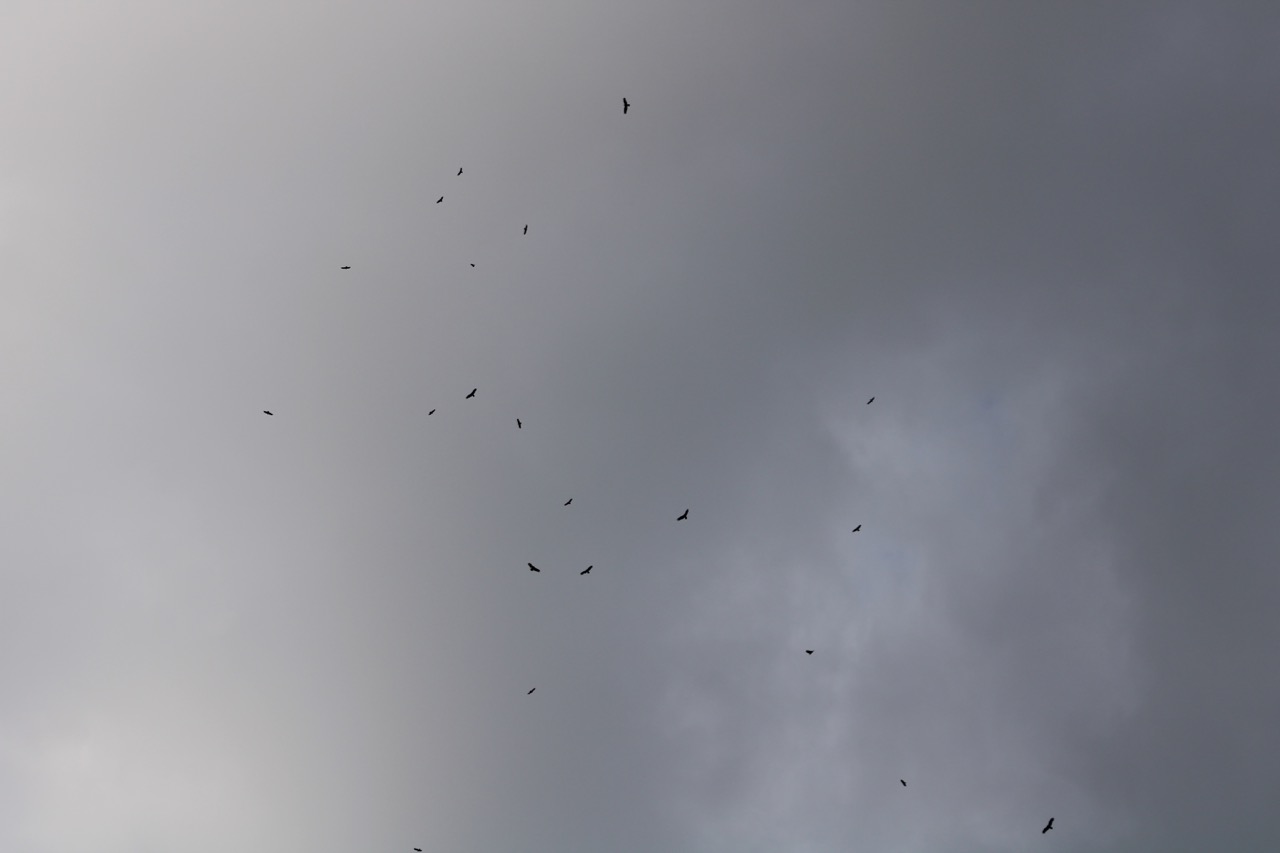
Over 20 hawks high in a cloudy sky.

I was outside lying in the hammock two days ago, when I saw a hawk flying overhead, and then more and more hawks, higher and higher. I understand that a group of hawks is called a kettle of hawks, and only occurs during migration. It was amazing to see! A reminder that the seasons are changing. I am writing this outside today on a sunny day, but wearing my winter jacket.

I think I may have found an important clue in my search for the roots of my third great-grandmother Marie Madeleine. In the record for the baptism of her son Simon, in 1833, in Jeremy Islets, she is identified as “sauvage du dit poste,” which means, translating the racist imagery, “Indian of said post.” And just above that record, Jeremy Islets is the post in question. I just want to say that it took a lot of close handwriting inspection to pull out those four words, but I am fairly confident in them now. And so it seemed to me it might be identifying her place of origin. (Now, on the other side, I know that her husband Peter McLeod was a clerk of that post in 1833. But she, along with two other Indian couples baptizing their children were all identified as Indians of that post.)

To further clarify, generally speaking the Innu went into the woods in fall, winter, and spring to hunt, and came to the posts to trade and to connect with the priests who did the baptisms, marriages, burials, and such. And they didn’t just go to one post, while necessarily avoiding others. But following the clue, of the several Marie Madeleines in my list of possibilities, one was connected to Jeremy Islets, in the right time frame. She was identified in her baptismal record as Marie Madeleine Napeteiashu, baptised June 26, 1803, when she was about 7 years old, they said, which would put her birth about 1796. Napeteiashu was actually said to be her father’s name, with no Christian name attached, and her mother was identified as Catherine Mitisku.

After searching through hundreds of other records, I found a Catherine Mistiku, born in 1773, and baptized in 1786 in Jeremy Islets. She was married to Stanislaus Mishtanapeu, baptized in 1778 in Jeremy Islets. In other records, they are identified as Catherine Mistigu or Mitigu, or Stanislas Tshiuapan (actually the name of his son Paul). I think this is likely the same couple, though in this process, one can’t be positive. I found baptism and marriage records for sons Simon (b 1794, bap 1796) and Paul (b 1798), but no other links for Marie-Madeleine. (And why would Paul be baptized in 1798, but not Marie Madeleine until 1803?) In the marriage record for Paul, in 1817, Catherine is said to be deceased.

Along with the genealogy hunt, I have also been exploring the possible meanings of their Innu names. Mistiku (likely now spelled Mishtiku) can mean, a tree (animate), or a log (inanimate), or possibly a French Canadian or white person-(though Catherine would not be French, but someone might be called this perhaps because she was hanging around the French?) (I think the French were called this because of wearing wooden clogs.) Mishtanapeu means a remarkable man. Napeteiashu was harder to decipher–“nape” refers to a male, and if I stretch the spelling, it could mean a male fox–napeiatsheshu. Spelling was not a hard science in those days. I couldn’t find any other references to Napeteiashu. The one possibility was a marriage with no details attached of Catharina Matshiskueu to Nipituashu. No dates/places/or parents. Matshiskueu means “she is an ugly woman”. So you see, it’s all very mysterious and uncertain.

By the way, several of the names I was researching seemed to have “negative” connotations. I wondered if it was some kind of internalized oppression, or if maybe there was a function of the name to protect the child by acting as if it were not valuable in some way. There was a lot of oppression by the priests. For example, when an “illegitimate” child was baptized, often they did not even name either of the parents at all in the record. Some priests took more care than others. I think the earlier Jesuits learned the Innu language and taught people to read and write in their language. Later priests did not know the language at all.

But as for me, I was so excited to find this possibility. Maybe it was really her, with a place and parents! Then today, I was slowing down to remember that this process of search will continue, and I have to pace myself, to live with each possibility as it emerges. There are hundreds of pages of records, much of it not indexed, so I go through page by page looking for names–and with new names, that means all new searches. Still, I am amazed that these ancestors feel closer to me now, even if they are still like the hawks flying in the sky so far above me that I can’t see the individuals very well. Am I related to a tree, a fox, an ugly woman, a very remarkable man? Am I related to the place called Jeremy Islets? In Innu, Ishkuamishkᵘ, which is similar to the word for a female beaver ishkuemishkᵘ. And how does this all relate to my life as a white woman in Maine, in Wabanaki territory? Still, it does feel like one part of my own journey of finding our way home into the earth community.

A fox near the Capisic brook, surround by trees and other greenery. (This photo was taken in 2018)