
Going Back to School

USM IDI have a feeling of glee because I am taking a class at the University of Southern Maine.  Well, actually I am auditing it.  I discovered that anyone 65 and over can audit classes almost for free (compared to actual tuition costs).  I had to pay a $55 “transportation” fee, and then learned that with my student ID (I have a student ID!) I can take the metro bus for free.  So many new things, and it reminds me of my excited feelings of going back to school when I was a kid.

But I am especially excited about this class, Wabanaki Languages, taught by Roger Paul, whom I got to know through the Decolonizing Faith project in which I am involved.  Roger is really fun and funny and is a native speaker of the language, and a fountain of history and understanding. We’ll be learning “oral history of Wabanaki languages and stories of Wabanaki elders passed from generation to generation,” along with vocabulary and pronunciation and the like.

For those who are not from this area, the Wabanaki peoples are the Indigenous people of Maine, and there are four distinct modern tribal communities, but as Roger tells us, they are not really so distinct.  It was Europeans who thought of them as different from each other.  The people lived in villages where the food supply would support them (mostly hunting, fishing and gathering) and when the group grew too large for that system, they would start a new village down river or at the next river.  So the languages are variations of the same tongue, and the people were identified by the places they lived, or by characteristics of those places.

Most of the students in the class are Wabanaki tribal members learning to speak their own language, as much was lost during the era of boarding schools.  Now there are efforts among children and adults to revitalize the language while there are still Native speakers.  Roger has been involved in teaching children on the reservation.  But why am I interested, as a white person, to learn this language?  Years ago, when I was first learning about the challenges that face Indigenous people, I got involved in the issue of cultural appropriation–the theft of Native spiritual practices by non-Native peoples, especially in New Age settings. (See more on that at Wanting to Be Indian.)

I remember one Indigenous writer saying, “If you really want to learn about our spirituality, learn our language.” I’ve learned a lot from Native authors such as Robin Wall Kimmerer talking about some of the key differences between Indigenous language and English.  Particularly, Kimmerer speaks about the idea of animacy and inanimacy as embedded in the syntax.  Trees, animals, plants, rivers are never referred to as “objects” or as “it” in her language.  They are alive, animate.  All the verbs and pronouns are organized around whether you are referring to something alive, or inanimate.  The language we speak affects how we think about our world.  The English language has colonized this place, made the land and water and creatures into “its.”

I want to learn Wabanaki Languages to better understand Wabanaki people and culture, and this place in which I live, the language native to this place.  I want to help decolonize my mind, and learn to think in a new way.

Loving the Body

Sassy and Billy bath

Today is a day when I chose to stop my plans and just love my body and follow what it needed.  My teachers were our cats Billie and Sassy who were having a cuddle and a nap in the sun on the bed, washing each other’s faces.  I lay down next to them, and took a few photos with my phone.  Sometimes, even in this desperately wounded world, we must honor the demands of our bodies, first of all.  This I what I am learning about illness or whatever it is that has taken hold of my body.  My own tendency is to want to figure it out and fix it. But some things can’t be easily figured or fixed.  And so we are faced with other choices.

When my partner Margy and first I got to know each other, she had been dealing with chronic illness for a long time already.  She has been my teacher in what that means, and how to cope, how to live in the midst of it all.  But in that process, I took on the role of the “well” one, the one who would carry things when she could not. But now, I also have some sort of chronic illness, and it’s a new chapter for us, a new chapter for me.  I haven’t really ever identified myself as having a chronic illness, because that was her identity.  I know that sounds a bit illogical, but it never seemed that I had it bad enough to call myself ill.

But then there are these days, more now than before, when I just can’t follow my plans, can’t work in the garden, can’t go to the beach.  When I ache all over, or feel weary and slow.  As I said, mostly my impulse has been to try to figure it out–what did I eat? what did I do?–that might have triggered all this. What can I do to make it better? But today, I thought, just follow the lead of the body, just love the body and do what it wants to do.  Rest, lay in the sun, watch mysteries on the television. No shoulds.

I am remembering Paula Gunn Allen writing about this, and I found the quote, an excerpt from “The Woman I Love Is a Planet; The Planet I Love Is a Tree,” from her book, Off the Reservation.  I love how she links our love of the body to our love of the planet–even when we can’t even go outside.

Our physicality—which always and everywhere includes our spirituality, mentality, emotionality, social institutions, and processes—is a microform of all physicality. Each of us reflects, in our attitudes toward our body and the bodies of other planetary creatures and plants, our inner attitude toward the planet. And, as we believe, so we are. A society that believes that the body is somehow diseased, painful, sinful, or wrong, a people that spends its time trying to deny the body’s needs, aims, goals, and processes—whether these be called health or disease—is going to misunderstand the nature of its existence and of the planet’s and is going to create social institutions out of those body-denying attitudes that wreak destruction not only on human, plant, and other creaturely bodies but on the body of the Earth herself….

Being good, holy, and/or politically responsible means being able to accept whatever life brings—and that includes just about everything you usually think of as unacceptable, like disease, death, and violence. Walking in balance, in harmony, and in a sacred manner requires staying in your body, accepting its discomforts, decayings, witherings, and blossomings and respecting them. Your body is also a planet, replete with creatures that live in and on it. Walking in balance requires knowing that living and dying are two beings, gifts of our mother, the Earth, and honoring her ways does not mean cheating her of your flesh, your pain, your joy, your sensuality, your desires, your frustrations, your unmet and met needs, your emotions, your life.

Sassy and Billy nap

Hell Strip to Esplanade

Planting the roadside strip

Lisa & Myke at work, photo by Margy Dowzer

Last month, Margy and I were talking about the crabgrass that has overrun the lawn in so many places, including the strip between the sidewalk and the street. This strip seems to be referred to by many names–from “hell strip” to “esplanade.”  She is working on other strategies for other places, but I had the idea (after some internet research and an appreciation of what someone in our neighborhood had done to theirs) to see if hardy perennials might eventually outcompete the crabgrass and solve the problem. Then it truly would be shifting from a hell strip to an esplanade!

I started off by moving some turkish rocket from our backyard garden to the front. Turkish rocket is a fast growing perennial vegetable with beautiful yellow flowers. I had planted some last year, excited to try it, but this spring discovered that I didn’t really like the taste of the greens–they were too sharp and bitter for me.  But the flowers were amazing.  So I decided that I’d move it from the food forest to the strip.  Another friend came by and transplanted some yellow day lilies and blue cornflower that needed a new home!

I put out a call on our permaculture meet-up, and was gratified when another member, Sandi, responded by saying she had a lot of perennials that needed dividing and we could have them. That’s the thing–so many wonderful perennial flowers multiply of their own accord and expand out of the area they are originally planted.  So why not use that spreading habit to achieve a better use of the roadside space–for pollinators and for beauty. So I went out to her house and we dug up a whole bunch of plants.

That weekend, our friend Lisa was visiting, and she jumped in to help me with the transplanting effort.  And it was a big effort!  In the end, we had 24 new plants along the strip, mostly with blue or yellow flowers, which we tended to alternate.  Several patches of Siberian iris and several patches of allium; anise hyssop, heliopsis, calendula, white ruffled iris, goats beard, astilbe, mallow, and lady’s mantle.  The other day, I added some catnip–another plant that can spread, but hey, maybe it will outcompete the crabgrass, and we’ll also have catnip for the cats.  The whole thing doesn’t look like much yet–a bunch of scraggly transplants, only a few with any flowers right now–but we’ll see how it goes next summer.  If we can get a load of wood chips, we may put down some cardboard and wood chips between the plants.  But that can happen later too.  I will let you know how it goes.

IMG_7917

Rainbow Visit

Rainbow in Cushing

Margy and I have been visiting with friends in a cabin on the water in Cushing, Maine. This was the view from the cabin the other day, as a rain shower passed through, quickly followed by bands of sunshine, creating a magnificent full rainbow.  It has also been a “rainbow” visit because we are lesbians of a certain age just hanging out and talking and laughing and sometimes bemoaning the state of the country.  While I would never want to lose the wealth that comes from loving friends of all ages and experiences, I have also been appreciating this time filled with the familiarity of shared life experiences.  It is a sense of being understood and understanding, that we “get” each other, from our coming out stories to the advertising jingles that got stuck in our brains long ago.

What is the role of identity in our social justice struggles?  Maybe too big a question to ponder while on this mini-vacation.  But we got talking about the Michigan Women’s Music Festival, which was so empowering and life changing for so many women–including me–but has more recently been the subject of attacks from those who claim it excluded and oppressed Trans women.  And then I also happened to read an article posted yesterday by a friend on Facebook that raised this challenge:

Identity politics have made organizing in social movements almost impossible, as division and suspicion are increasingly encouraged and groups splinter as a result.

That article linked to another, by Lauren Oates, “How Identity Politics is Destroying the Left and Being Used By the ‘Alt-Right.”  I liked some of her points, but I couldn’t rest easy with her concluding question, which seemed to me to misunderstand our struggle to end racism:

It’s about whether you want the world to be perpetually hyper in tune to race — the position identity politics advocates — or whether you want the world to eventually be blind to race.

I don’t think the goal of ending racism is to eventually “be blind to race.”  However, she linked to another article from last year that offered a more nuanced and compelling analysis, Safety Pins and Swastikas by Shuja Haider.  I was particularly drawn in by his critique of the idea of cultural appropriation, since I have been deeply involved in raising that issue in regards to non-Native people’s use of Indigenous spiritual practices.  (In 1995, I first published the essay, Wanting to Be Indian: When Spiritual Searching Turns into Cultural Theft.)

He talks about how the Right has mocked it, “Among the many silly ideas of young leftists who want to appear good without the hassle of doing good, ‘cultural appropriation’ stands alone,” quoting the National Review.  But then, of more import, he points out that “the rhetoric of mainstream antiracism is itself susceptible to appropriation by the Right.”

The eligibility of people to make certain kinds of claims is dependent on the set of criteria that fall into the category of “identity.” Your right to political agency is determined by your description.  We’re left with a simple rubric for determining the truth-value of a statement. Who said it, what group do they belong to, and what are members of that group entitled to say?

…It should go without saying that left-liberal identity politics and alt-right white nationalism are not comparable. The problem is that they are compatible.

I am pulling these quotes a bit out of context, and I encourage anyone concerned with the struggle for justice to check out the full articles.  I would be interested in your thoughts in response to them.  I am genuinely curious about the role of identity in liberation struggles–it has been a compelling question throughout my years as an activist.  Hierarchy, power, liberation, alliance…How do we acknowledge our location? How do we come together with those whose struggles are different from our own?

Forgive me for this meandering thought journey, in which I haven’t fully unpacked anything. But before I conclude for now, I want to come back to one of the most hopeful examples of people working together, both acknowledging and moving beyond “identities,” to face the crisis of our country, the moral fusion movement started in North Carolina by the Rev. Dr. William J. Barber II.

Rev. Barber laid the groundwork for a state-by-state movement that unites black, white, and brown, rich and poor, employed and unemployed, gay and straight, documented and undocumented, religious and secular. Only such a diverse fusion movement, Rev. Barber argues, can heal our nation’s wounds and produce public policy that is morally defensible, constitutionally consistent, and economically sane.

This quote is from the description of Barber’s book, The Third Reconstruction:  How a Moral Movement is Overcoming the Politics of Division and Fear.  You can find out more about this movement at Repairers of the Breach.  Oh, let’s not forget that a rainbow is a sign of hope!

Update on Kale

Kale choppingSo right after my last post, I went outside, and cut about 40 big leaves off my kale plants–always from the lower part of the stems.  In between making and eating breakfast and washing dishes, I washed the leaves in groups of ten (by variety), and chopped them up, then washed them again in a salad spinner, which they filled up.

Kale washAfter doing the first batch, which used a lot of water, I figured out that I should save the wash water and bring it out to the garden, where I put it on the kale plants! Then I spinned the kale pieces to dry them, and sautéed them in our big cast iron pan.  I had to start with about half of the batch, then add the second half after the first had cooked down a bit.  I had green curly kale, red or purple curly kale and a double batch of lacinato kale. After sautéing, I cooled them in a bowl in the refrigerator before putting in bags. On the recommendation of other online gardeners, I used a straw to pull out all the air in the bags.
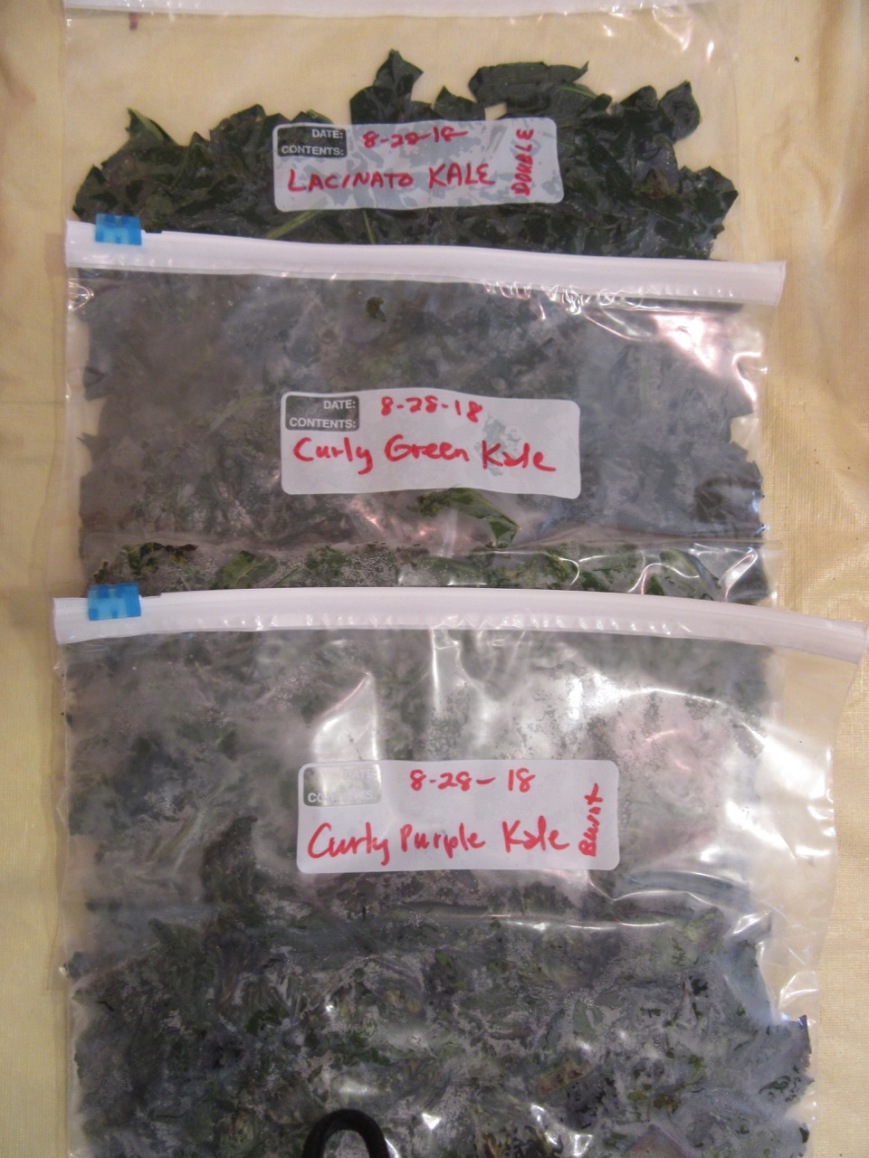
I still have plenty outside on the plants, but now I have these in the freezer.  Ten leaves only filled half a bag, at about 1/2 an inch thick.  That would be about three or four servings in our house, so this is a total of 12-16 servings.    This winter, I will see how they taste.Kale to freeze

Abundance

Myke with kale

[Photo by Margy Dowzer]

The kale has gone crazy this year! I eat some every day, and we’ve given a lot away, but it is still up to my waist in abundance. Not to mention the basil plants, also a few feet tall. Harvesting has always felt like the most challenging part of gardening–how to keep up with everything the earth is producing. I see posts of friends who are canning and drying and freezing–that is all still something I need to learn more about.  I search online for instructions, so information is not the main issue–just the time and energy to keep up with it and carry it out.

Most of our garden this year isn’t even to that stage yet–the fruit trees and bushes are still babies, the asparagus is in its first year.  And perennial herbs will keep coming back each year, whether I harvest them now or not.  In fact, I’ve got thyme drying in the basement, and will probably do some oregano after that is done.  I finally dug up the garlic that I had planted as companions to the fruit trees to help keep away pests.  But I especially feel a responsibility to the annuals like kale and basil.  This is it for them. And they are shining.

Last week, I experimented: I sautéed a dozen large leaves of kale, which cooked down quite a bit, and then I froze it–it only filled a small part of a plastic freezer bag.  I should be doing that with whole bunches of it, but it takes time to wash and cut and sauté and cool and bag.  We’ve been eating basil this week–especially yummy with an heirloom tomato we bought from the coop.  I learned not to put it in the refrigerator, but to keep cut stems in a vase with water.

For now, I just want to say thank you to the earth for creating such abundance!  Give me the strength to receive and cherish and preserve your gifts.  I’d better get outside and harvest some more!

A wing and a prayer

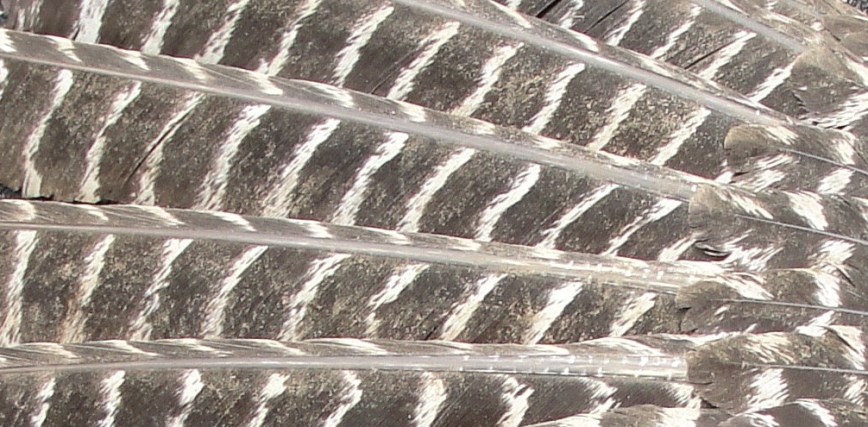
A poem & photo reflection from eight years ago that I found again today.  (Photos by Margy Dowzer.)Bird WingI think of the wing of a bird

the wing I found by the side of the road 

          of a bird now dead

the wing so intricate and beautiful

           now in decay

I imagine this–the millions of birds–

           beautiful

           coming into being, fading away

the artist painting a billion paintings

the stories wondrous, tragic

the story of that bird—alive, 

           growing feathers, flying, eating

            alive and then dead,

            and then the materials un-forming

so brief a story, so brief a life


I imagine The Life

creating itself into a billion forms

and then re-creating another billion forms 

          with almost infinite variation

a kaleidoscope of beauty and diversity

and different ways of being conscious of the work

and different ways of participating in creating

              making choices

Can you feel the inner creative energy in each one?


So now I am creating and seeing as Myke

          (and how beautiful I am

            eyes looking out at this world

            heart capable of love

             making changes, healing, choosing)

and I will dissolve and disintegrate too

and I will reform into a new being


The larger I Am –it sounds so static, in a way–

yet it is not static

it is creating, evolving, engaging, weaving, curious

dare I say hopeful?

(Is there a goal to which it strives?)

(Or is it playing to see what happens next?) 

(Am I?)

The stories, billions of stories

Can the stories appreciate the magic

            be full of wonder and gratitude

            enjoy the show?


I am that

I am the bird who grew feathers and died

          and was seen by the Myke

          and was photographed by the Margy

I want to wake up


Holy One,

open my body and emotions and intellect

to be united in awareness with my Larger Self

with the Creator

with the Limitless One

Help me to remember who I Am

          as the I

          as the Myke

Each being is beautiful

We are all one Being

Each story is beautiful

We are all one Story

Bird Wing closeup

Herbal Gifts

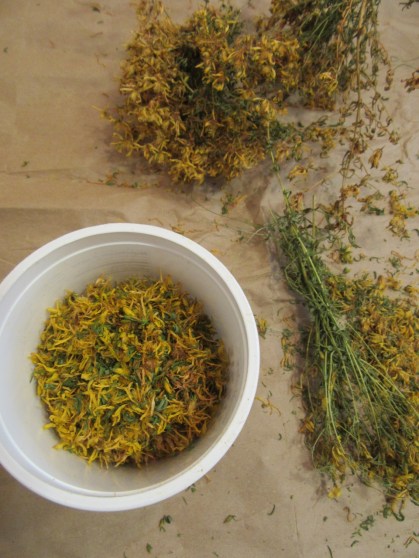
St. John's Wort DriedToday I finished the harvest of St. John’s Wort–all from plants that grew up wild in our yard, or down the street from our home.  I had cut the flowers with a little bit of plant attached, back when they were in full bloom, in early July.  I dried some of it in tied bunches hanging in the garage, and some of it in loose bunches on an extra window screen laid flat in the basement. (Take note: I definitely preferred the screen method for later processing ease.)
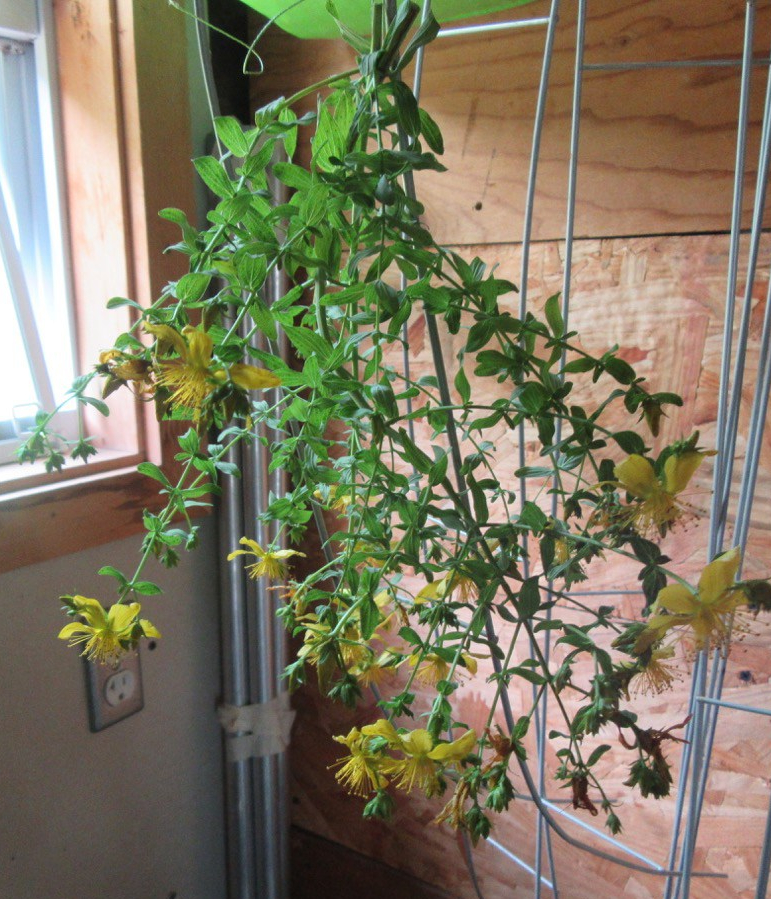
So today, I spread out some paper on the kitchen table, and put all the bunches onto it.  Then I sat and rubbed the leaves & flowers off the stems, stem by stem.  I was listening to podcasts about healing and self-care, which somehow seemed appropriate to the task.  Two hours later, I was still at it, and then I listened to a few short podcasts from an old friend, Lee Ann Hopkins, with whom I recently reconnected on Facebook.  I am not much of a podcast listener, (I usually like to read instead) but working with my hands in these herbs while listening to uplifting messages seemed just right.  The purpose of Lee Ann’s website, Hooray Weeklyis “to encourage and lift up individuals and communities in this time of resistance and change, both collectively and personally.”  She is a kindred spirit still.

It seems particularly apt since St. John’s Wort is an herbal remedy for depression and other mood difficulties, along with several other uses.  According to WebMD,

St. John’s wort is most commonly used for “the blues” or depression and symptoms that sometimes go along with mood such as nervousness, tiredness, poor appetite, and trouble sleeping. There is some strong scientific evidence that it is effective for mild to moderate depression. St. John’s wort is also used for symptoms of menopause such as hot flashes and mood changes.

If you are interested, there is a lot more information on that website.

With the cruelty and destruction we observe every day in the wider world around us, those of us who are sensitive to it can find ourselves very weary and down-hearted, heavy burdened by it all.  Isn’t it amazing that nature offers these bright yellow flowers in the midst of high summer, to bring with us into the long dark of winter?

St. John's Wort drying

St. John’s Wort plant freshly cut, hung to dry.

Asparagus Update

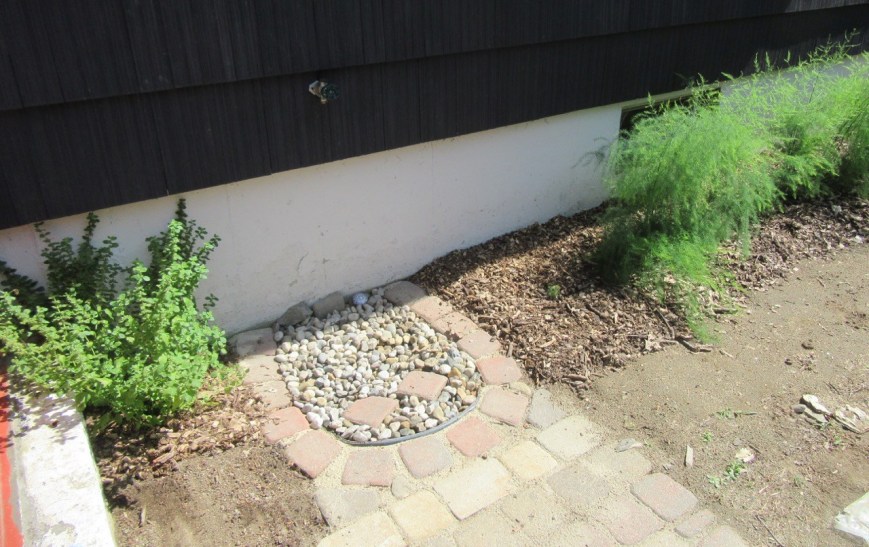
asparagus-bed-spigot-stones-after.jpg

What a pleasure to finally complete the asparagus beds, along with setting pavers and stones into the area under our outdoor water spigot! With so much always “in process” in the garden, little completions are quite satisfying. That is also true for me in other areas. Yesterday, I finally figured out our financial budget for retirement, and that feels so grounding as well, like I am really retired now.

Asparagus Bed BeforeI blogged about planting the crowns last April, near the walls behind the house and next to the garage. [Here is a picture of the “before” trench behind the house.] The instructions were to let the asparagus plants grow in the trench, and add compost and soil bit by bit as they got taller, keeping at least 2 inches above ground.  This was complicated by the fact that some of the plants bolted up in a flash, while others were tiny babies for such a long time–even still.

Asparagus protectorBut last week, with more compost and soil, I finally brought the beds up to level, and then finished them off with a layer of wood chips. In the bed near the garage, I actually created two little pockets with cut out pots for the ones that were still too small, so I could fill the soil around them up to level. They would have been buried! Hopefully, they’ll get enough sun and water to keep growing and come back next year with a flourish.

I also moved our lemon balm plant from near the cherry tree over to the small area just left of the water spigot.  It looks and smells so cheerful there, and will be nicely contained for a plant that I learned has a spreading habit.

We are in the season in which life is bursting out all over, even as we can start to feel the shift toward the autumn.  Days are shortening, and everything seems to be growing as much as it can.  It is amazing to think that all these green plants die back in winter, seal themselves in their roots, and hide as if they didn’t exist at all, only to re-emerge in spring.  So now they are making the most of sun and heat and rain, turning sunlight into sugar for all life in the neighborhood.  The asparagus will die back too, in the winter, but come to life again in the spring–and we’ll be able to share in their bounty from that season forward. I love perennials!

In Between

Banner with cardinalTransitions create a liminal time, a time on the threshold between old and new, between past and future, a sacred time, perhaps a dangerous time.  Yesterday, I turned in my keys to the congregation where I had ministered for 13 years.  My retirement is official.  But who am I now?

It is not that I didn’t have any ideas about what I might like to be doing after I finished that work.  I imagine I will still be on A Spiritual Journey into Earth Community, what this blog is all about.  But what I notice, and have been noticing the last few weeks, is a sense of floating or flying, a sense of directionless.  I haven’t been able to put it into words.  But artist Cathryn Falwell captured it in this beautiful banner she created for me as a retirement gift.  (Thank you Cathryn!) The red cardinal is flying over the terrain of earth, hills, trees, clouds, water.  The landing is not yet in sight.

It is not a fearful time, nor sad really, though I have moments of sadness about letting go. It is not really excited or joyful either. I am not doing a happy dance.  It is “in between” everything. I remember that I wanted to have a sense of spaciousness, an empty space before I filled it with new things.  So perhaps it is a spacious time, though it doesn’t quite feel spacious yet.

I realized a few days ago that summer in Maine always carries a sense of urgency. There is such a short growing season, and the garden clamors for attention. We have reached the solar festival of Lammas, the early harvest celebration.  The garden is full of harvestables–huge kale plants, and basil; the oregano and thyme herb clusters have expanded and gone to flower to the delight of all bees; volunteer blackberries are starting to ripen in the back of the yard and down the street at a vacant lot.  We are also overgrown with crabgrass and could never finish all the weeding that one might do. Plus there are always practical things to attend to–meals, dishes, bills, household maintenance.  Not to mention that the beach also calls us to swimming during these hot sunny days that end so quickly.

So what is spaciousness? How do I float along in this empty and full terrain?  Perhaps I just float along.  Perhaps I just float along, until the next sacred thing emerges.